
What Have You Done For Me Lately?
Segment #1055
The Trump Administration: Comprehensive Record of Actions and Accomplishments
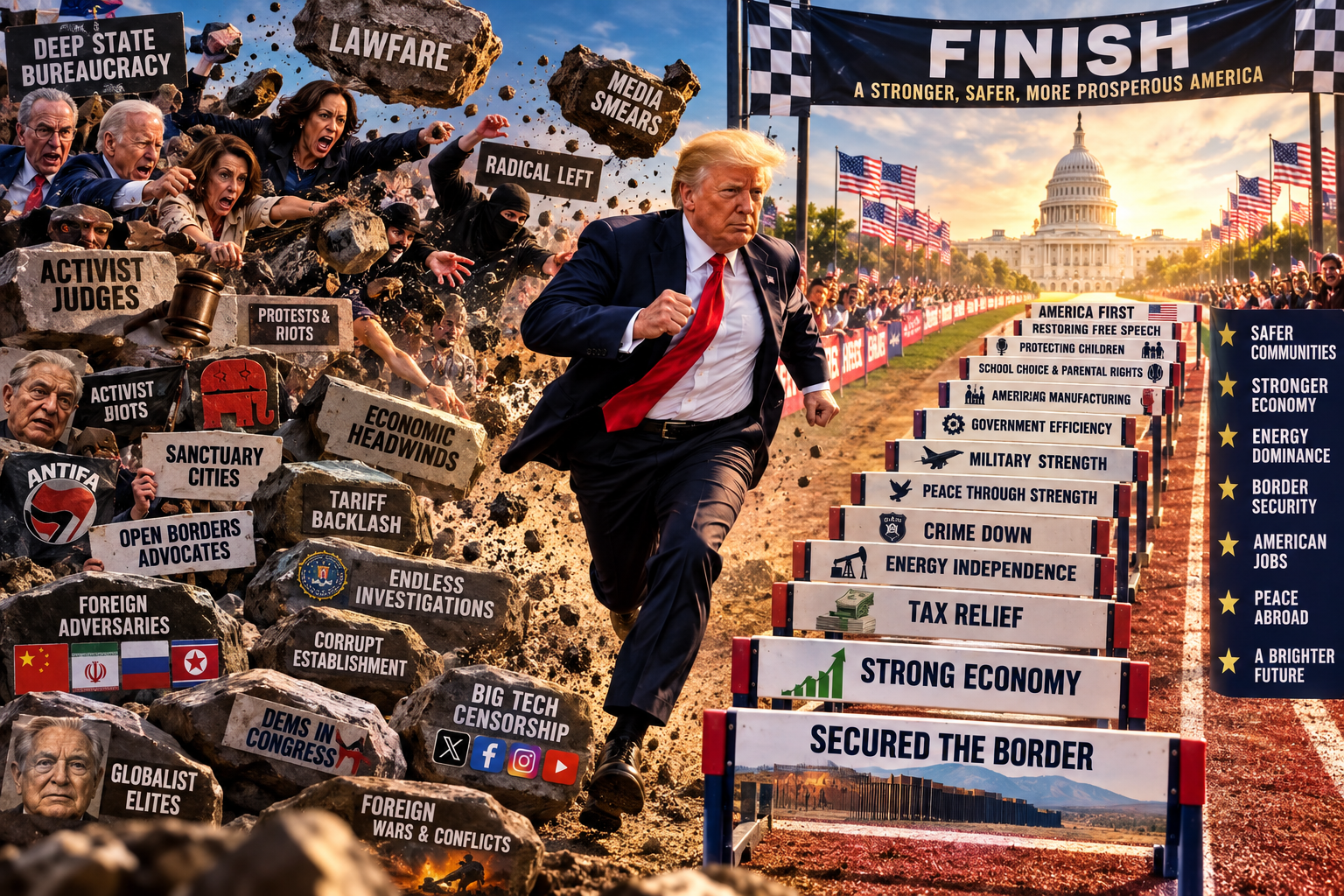
January 20, 2025 – October 11, 2026
Trump has done a lot for you lately. Now you need to ask the question will you be better off either in the Midterms or the presidential voting Dem. Rarely the Dems offer a policy for the voter. Rarely do the Dems debate the issues. There is no data suggesting that the Dems are right and and Trump is wrong. Obviously if they had that data we would have heard about that before attempted assassinations, lawsuits, impeachments, and their frequent failure to condemn political violence.
1. Border security and illegal immigration
This has been one of the administration's most extensive areas of policy change.
Declared a national emergency at the southern border.
Deployed additional military personnel and resources to border operations.
Reinstated the Remain in Mexico policy framework.
Ended the CBP One appointment process previously used by migrants seeking entry at ports of entry.
Restricted asylum access at the southern border.
Expanded expedited removal procedures.
Increased ICE immigration enforcement operations nationwide.
Increased detention and removal of people unlawfully present in the United States.
Expanded cooperation between federal immigration authorities and local law enforcement.
Pursued enforcement actions against sanctuary jurisdictions.
Restarted and expanded construction of border barriers.
Expanded surveillance and military support along the border.
Signed the Laken Riley Act, requiring federal detention of certain noncitizens arrested for or charged with specified crimes.
Increased scrutiny of immigration applications and visa holders.
Expanded visa revocations.
Imposed additional restrictions on entry from designated countries.
Increased scrutiny of H-1B visa petitions and introduced a $100,000 payment requirement for certain petitions.
Designated several international drug cartels as terrorist organizations.
Expanded operations against human trafficking and smuggling networks.
Pursued agreements with other countries for accepting deportees.
Encouraged voluntary departures through new administrative programs.
Issued an executive order attempting to restrict birthright citizenship; the policy faced constitutional litigation and should not be counted as a fully implemented change.
2. Taxes, personal income, and family finances
The principal legislative achievement was the One Big Beautiful Bill Act, signed July 4, 2025.
Made major provisions of the 2017 Trump individual income-tax cuts permanent.
Extended lower individual income-tax rates.
Increased the standard deduction.
Increased the child tax credit for eligible families.
Created a federal income-tax deduction for qualifying tip income, subject to limits.
Created a deduction for qualifying overtime compensation, subject to limits.
Created a deduction for qualifying interest on loans for certain American-made vehicles.
Created an additional deduction for eligible seniors.
Increased the state and local tax deduction cap, subject to income limits and scheduled changes.
Continued expanded estate and gift tax exemptions.
Extended favorable tax treatment for qualifying pass-through business income.
Restored or expanded certain business depreciation deductions.
Restored more favorable treatment of some domestic research and development expenses.
Created tax-advantaged Trump Accounts for eligible children.
Authorized an initial federal contribution for qualifying newborns under the Trump Accounts program.
Changed several education-related tax and student-loan provisions.
Extended tax incentives intended to encourage domestic investment.
3. Business, manufacturing, investment, and trade
Introduced the America First Trade Policy.
Imposed extensive tariffs on imported products.
Increased tariffs on certain Chinese goods.
Imposed additional trade restrictions on steel and aluminum.
Expanded trade measures affecting automobiles and auto parts.
Negotiated new bilateral trade frameworks.
Announced a U.S.–United Kingdom trade framework.
Pursued new arrangements with European and Asian trading partners.
Increased customs enforcement against duty evasion.
Restricted duty-free treatment of low-value imported shipments.
Signed legislation ending the statutory basis for the de minimis exemption, with the permanent repeal scheduled for July 2027.
Promoted domestic steel production.
Encouraged foreign companies to build manufacturing facilities in the United States.
Promoted domestic semiconductor and advanced manufacturing investments.
Expanded incentives for businesses to purchase qualifying equipment.
Prioritized American-made products in federal procurement.
Pursued deregulation of manufacturing and industrial projects.
Promoted new investments in shipbuilding and critical minerals.
Pursued trade negotiations aimed at increasing foreign purchases of American products.
4. Energy, oil, gas, coal, and nuclear power
Declared a national energy emergency.
Expanded federal support for oil and natural gas production.
Pursued additional oil and gas leasing on federal lands.
Encouraged offshore energy development.
Accelerated permitting for certain energy infrastructure.
Reversed restrictions on fossil-fuel development.
Supported expansion of liquefied natural gas exports.
Promoted additional pipeline infrastructure.
Expanded federal support for coal production.
Sought to extend the operating lives of some coal-fired power plants.
Reversed several Biden-era energy regulations.
Reduced federal support for certain renewable-energy programs.
Changed tax incentives for electric vehicles and renewable energy.
Supported expansion of nuclear energy.
Promoted advanced nuclear reactor development.
Sought faster approval of nuclear power projects.
Expanded support for domestic critical-mineral production.
Promoted increased domestic electricity generation for AI data centers.
Advanced policies intended to prevent data-center electricity costs from being shifted to residential customers.
Pursued reductions in regulatory costs affecting energy producers.
5. Military, national defense, and veterans
Increased emphasis on military readiness and combat effectiveness.
Advanced the Golden Dome missile-defense initiative.
Secured initial funding for Golden Dome.
Negotiated a NATO commitment to a new 5% of GDP defense and security spending target by 2035.
Expanded efforts to strengthen the American defense industrial base.
Promoted increased domestic ammunition and weapons production.
Advanced military shipbuilding and naval modernization.
Pursued expanded Arctic security cooperation.
Reached an icebreaker-production agreement with Canada and Finland.
Increased military support for border security.
Changed military personnel policies concerning gender identity.
Eliminated DEI offices and programs within the Defense Department.
Changed military recruiting and personnel standards.
Pursued changes to military procurement procedures.
Expanded efforts to counter Chinese influence in the Indo-Pacific.
Announced the relocation of U.S. Space Command headquarters to Huntsville, Alabama.
Expanded certain veterans' access-to-care initiatives.
Pursued changes to VA administrative operations and claims processing.
6. Foreign policy, diplomacy, and military operations
Restored a maximum-pressure sanctions policy against Iran.
Conducted U.S. military strikes against Iranian nuclear facilities.
Participated in diplomatic efforts to end the June 2025 Israel–Iran war.
Advanced a Gaza ceasefire and hostage-release framework.
Supported negotiations concerning Gaza's postwar governance.
Helped broker an agreement between Armenia and Azerbaijan.
Facilitated diplomatic agreements between Rwanda and the Democratic Republic of Congo.
Participated in ceasefire diplomacy involving Thailand and Cambodia.
Participated in diplomatic efforts during the India–Pakistan confrontation.
Conducted negotiations aimed at ending the Russia–Ukraine war.
Pursued arrangements involving Ukrainian critical minerals.
Increased pressure on NATO allies to expand defense spending.
Conducted strikes against Houthi targets in Yemen.
Reached an arrangement intended to halt Houthi attacks against U.S. shipping.
Redesignated the Houthis as a foreign terrorist organization.
Conducted counterterrorism operations against ISIS leadership.
Pursued international operations against narcotics-trafficking organizations.
Authorized military strikes against suspected drug-trafficking vessels.
Conducted an operation that captured Venezuelan leader Nicolás Maduro.
Expanded sanctions and enforcement against Venezuelan oil operations.
Pursued arrangements involving Venezuelan oil exports.
Negotiated the release of Americans detained abroad.
Expanded cooperation with Gulf states on investment and security.
Pressured Panama to distance itself from China's Belt and Road Initiative.
Withdrew the United States from the Paris climate agreement.
Initiated withdrawal from the World Health Organization.
Reduced American participation in several international institutions.
Reorganized American foreign assistance and reduced USAID operations.
7. Crime, policing, drugs, and public safety
Expanded federal operations targeting violent crime.
Established the D.C. Safe and Beautiful Task Force.
Conducted expanded federal enforcement operations in Washington, D.C.
Launched the Memphis Safe Task Force.
Expanded federal law-enforcement operations in Chicago.
Conducted targeted operations in New Orleans.
Increased attention to MS-13 and Tren de Aragua.
Expanded cartel-related investigations and sanctions.
Designated fentanyl as a weapon of mass destruction through executive action.
Increased emphasis on prosecuting violent offenders.
Expanded federal efforts to locate wanted fugitives.
Increased enforcement against drug trafficking.
Reversed certain previous federal law-enforcement policies.
Directed renewed attention to capital punishment in federal cases.
8. Federal government reform and spending
Created the Department of Government Efficiency initiative, known as DOGE.
Conducted agency-by-agency spending and personnel reviews.
Reduced federal staffing through layoffs, buyouts, and attrition.
Expanded return-to-office requirements for federal employees.
Eliminated numerous federal DEI programs.
Canceled certain federal consulting and service contracts.
Reviewed federal grants and nonprofit funding.
Reduced foreign assistance expenditures.
Signed a roughly $9 billion rescissions package.
Reduced federal support for the Corporation for Public Broadcasting.
Attempted to reorganize or close selected federal agencies and programs.
Increased political oversight of federal agency operations.
Changed civil-service classifications and personnel policies.
Expanded regulatory review and repeal initiatives.
Directed agencies to identify unnecessary regulations.
Reduced certain environmental and business compliance requirements.
Ordered the Treasury to stop production of new pennies.
Reduced operations of the Consumer Financial Protection Bureau.
Changed federal contracting priorities.
Launched additional fraud investigations and recovery efforts.
9. Education, universities, and civil rights policy
Directed the Education Department to pursue a major reduction in federal education bureaucracy.
Expanded federal support for school choice.
Included a federal tax-credit framework for qualifying scholarship contributions in the 2025 tax law.
Changed federal student-loan repayment provisions.
Changed certain graduate and professional student borrowing rules.
Eliminated federal DEI initiatives in education.
Directed federal agencies to enforce policies based on biological sex.
Restricted federal support for certain gender-related programs involving minors.
Changed federal policy on transgender participation in women's sports.
Increased scrutiny of universities over antisemitism complaints.
Opened investigations into university civil-rights compliance.
Pursued federal funding restrictions against selected universities.
Increased scrutiny of foreign financial contributions to universities.
Increased scrutiny of foreign students' visa compliance.
Expanded investigations concerning campus protests and immigration status.
Sought stronger federal enforcement of campus civil-rights requirements.
Changed federal policies on race-conscious programs and preferences.
Several university funding and civil-rights actions have been contested in federal courts. Executive directives should not automatically be interpreted as completed institutional reforms.
10. Health care, prescription drugs, and public health
Established the Make America Healthy Again initiative.
Created the MAHA Commission.
Directed federal agencies to examine chronic disease and childhood health.
Increased scrutiny of food ingredients and additives.
Pursued changes to federal nutrition guidance.
Promoted changes in federal health research priorities.
Advanced policies intended to reduce prescription drug prices.
Pursued international reference pricing for selected medications.
Encouraged domestic pharmaceutical manufacturing.
Launched initiatives related to pharmaceutical pricing transparency.
Changed Medicaid eligibility and work-requirement provisions through the 2025 tax and spending law.
Approved funding for a $50 billion rural health transformation program.
Pursued additional investigations into health care fraud.
Reorganized selected federal health agencies and programs.
Changed federal vaccine advisory and public-health policies.
Restored the Presidential Physical Fitness Test.
Expanded initiatives concerning childhood nutrition and exercise.
11. Technology, artificial intelligence, cryptocurrency, and space
Announced an American AI Action Plan.
Pursued faster permitting for AI infrastructure.
Promoted American semiconductor production.
Encouraged expansion of data-center construction.
Supported domestic electricity generation for AI facilities.
Pursued restrictions on foreign access to sensitive American technologies.
Negotiated a U.S. government equity stake in Intel.
Pursued a restructuring of TikTok's American operations.
Signed the GENIUS Act establishing a federal framework for payment stablecoins.
Established a Strategic Bitcoin Reserve for qualifying government-held assets.
Reversed several previous cryptocurrency regulatory policies.
Signed legislation repealing a cryptocurrency broker-reporting rule.
Encouraged financial innovation involving digital assets.
Promoted additional wireless spectrum availability.
Supported expansion of American telecommunications infrastructure.
Promoted American leadership in space exploration.
Reaffirmed the objective of returning American astronauts to the Moon.
Expanded government attention to commercial space technology.
12. Agriculture, farming, fishing, and rural America
Expanded federal support for American farmers facing financial pressures.
Announced approximately $12 billion in direct agricultural assistance.
Negotiated agricultural purchase commitments with foreign trading partners.
Pursued increased American soybean exports.
Expanded emphasis on agricultural trade enforcement.
Introduced the National Farm Security Action Plan.
Increased scrutiny of foreign ownership of American agricultural assets.
Promoted domestic fertilizer and agricultural input production.
Reduced selected regulatory burdens on agricultural businesses.
Expanded commercial fishing access in certain federal waters.
Pursued policies supporting American seafood production.
Advanced rural health care funding.
Supported rural broadband and infrastructure development.
13. Religious liberty, culture, and social policy
Established additional federal religious-liberty initiatives.
Created a White House Faith Office.
Expanded federal attention to antisemitism.
Pursued policies protecting religious expression in federal institutions.
Reversed certain Biden administration gender-identity policies.
Directed agencies to recognize two biological sexes for specified federal purposes.
Removed DEI requirements from numerous federal programs.
Changed federal policies concerning abortion-related funding.
Reinstated restrictions on certain federal funding for international abortion-related services.
Changed policies involving gender-related medical interventions for minors.
Reversed selected federal affirmative-action and contracting requirements.
Initiated planning for America's 250th anniversary celebration in 2026.
Expanded federal initiatives highlighting American history and patriotic education.
14. Additional developments in 2026
The White House's October 2026 update identifies several further actions and announcements:
Announced recovery or cancellation of nearly $1 billion in spending associated with immigration and DEI programs.
Reported more than 250,000 visa revocations.
Launched America.gov as a federal information platform.
Announced a proposed $15 billion Iowa steel mill project.
Continued expansion of Trump Accounts.
Advanced additional measures involving electricity costs and large technology companies.
Expanded efforts against federal payment and contracting fraud.
Continued negotiations over critical-mineral supply chains.
Advanced additional investment and manufacturing agreements.
15. Economic indicators and reported outcomes
The following are particularly relevant when separating policy announcements from observable results.
Border encounters - White House reports approximately 96% decline
Net migration - White House reports negative net migration in 2025
Homicides - Substantial decline during 2025
Overdose deaths - White House reports 21% decline
Third-quarter 2025 real GDP - 4.3% annualized growth
Stock market - Major indexes reached record highs during portions of Trump's second term
Tax legislation - Major tax package enacted July 4, 2025
NATO defense commitments - Allies agreed to a 5% GDP target by 2035, including defense-related spending
Manufacturing investment - Large new commitments announced; implementation varies
Federal government - Major staffing, spending, and regulatory changes undertaken
16. The administration's own comprehensive records
For a substantially more exhaustive accounting, the White House has published the following primary-source documents:
January 20, 2026 — The administration's numbered account of 365 first-year achievements, covering immigration, economics, defense, health, education, and foreign affairs.
September 2026 — Updated account of major policies and results, including developments beyond the first year.
October 2026 — An additional 32 policy and administrative developments reported by the White House.
Executive Orders and Presidential Actions
Independent legislative and executive-action tracker. As of October 9, 2026, it records 289 executive orders, 89 memoranda, and 188 proclamations.
Scope of this accounting
This is a broad inventory of 245 distinct actions, policy changes, initiatives, and reported developments, not a complete enumeration of every federal decision since January 2025. Some entries are overlapping components of larger policies, and some initiatives remain incomplete or subject to litigation.
The administration's own 365-item report and its September and October updates provide the most extensive statements of its claimed accomplishments. The presidential-action tracker is useful for checking the underlying executive orders.
A fully documented record would go further by identifying the exact executive order, statute, agency action, effective date, legal status, and measurable outcome for each item. That distinction is especially important for separating promises made, actions taken, and results achieved.