Update on Serious Biden Era Cases
Segment # 1061
The Evidence, the Exposure, and What Comes Next
The Gouveia video raises a potentially explosive question: Were federal investigations and congressional hearings used to establish the truth, or did some officials manipulate evidence and testimony to produce politically useful conclusions?
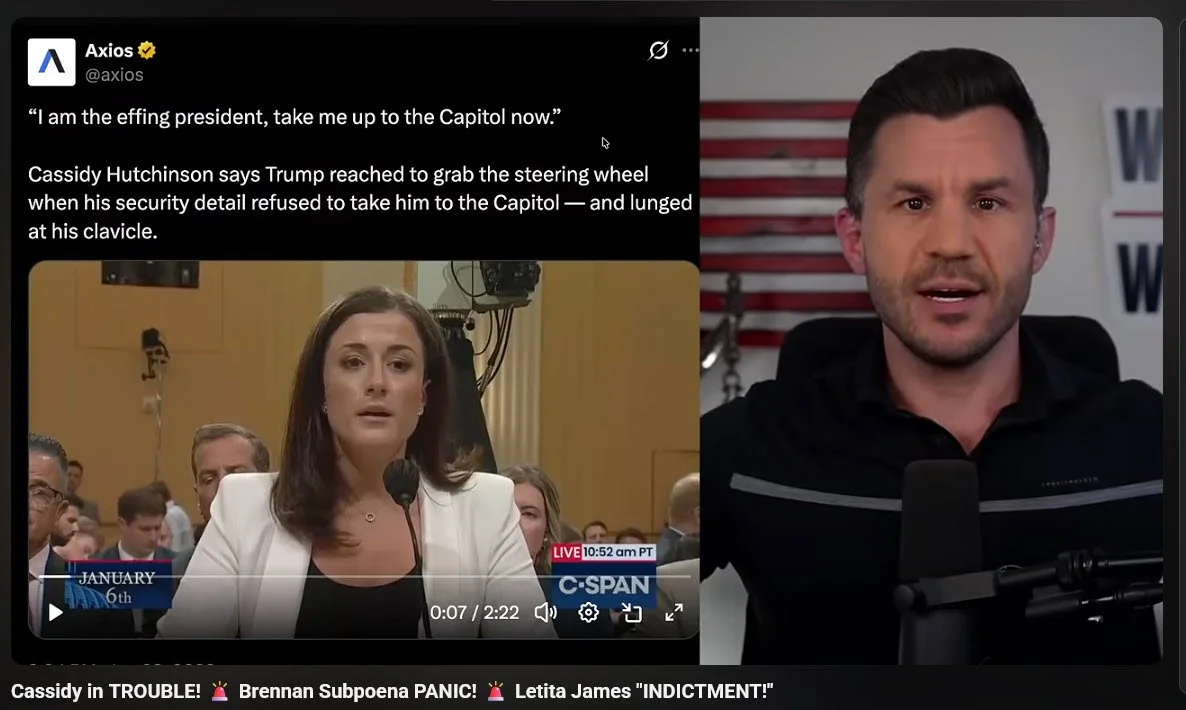
Three individuals face distinctly different questions.
Cassidy Hutchinson: Her testimony presents the most direct question of possible criminal exposure. Conflicting Secret Service accounts, the disputed handwritten note, and inconsistencies in her descriptions of events provide investigators with specific statements to test. If prosecutors can demonstrate that she knowingly made material false statements under oath, the issue moves beyond credibility into possible perjury or false-statement charges. The critical obstacle is proving deliberate deception rather than mistaken recollection or reliance on inaccurate secondhand information.
John Brennan: The central issue is whether he accurately represented intelligence findings and his involvement in their preparation. Investigators would need to establish that any material misrepresentation was knowing, not merely a disagreement over intelligence judgments. His reported contact with Jack Smith's team warrants documentation and scrutiny but does not itself establish misconduct.
Jack Smith: The key questions concern the legal foundations of his investigations, the scope of surveillance and subpoenas, and whether investigators withheld or misrepresented material evidence. Aggressive investigative tactics can be lawful. Criminal or professional liability would require proof of specific violations, not simply evidence of political controversy.
New evidence makes the stakes considerably higher
As of October 18, 2026, three developments stand out:
Hutchinson: Federal prosecutors have presented evidence to a grand jury and are considering perjury and obstruction charges. The investigation has moved beyond congressional criticism into potential prosecution. No indictment has been confirmed.
Brennan: He remains under investigation, and a federal judge dismissed his attempt to compel preservation of DOJ investigative records. That dismissal leaves the investigation proceeding but establishes no guilt.
Smith: Senator Chuck Grassley reports that subpoena returns reveal the collection of information involving at least 639,000 Republican donors, voters, and supporters. Other disclosures concern congressional communications and thousands of donor checks. Smith maintains that his office followed applicable procedures for obtaining non-content phone records. The central unresolved issue is whether the scope of these demands was justified by legitimate investigative needs.
Where this is heading: Hutchinson faces an active grand jury process; Brennan faces continuing federal scrutiny; and Smith faces expanding congressional examination of his investigative methods. Further document releases, testimony, and legal challenges are concrete next steps. Criminal charges against Brennan or Smith remain unconfirmed.
The central implication is substantial: Investigative powers reached well beyond Trump himself, encompassing lawmakers, political organizations, and large numbers of supporters. The government must be able to demonstrate why that information was necessary and lawfully obtained. If evidence ultimately establishes that officials knowingly exceeded their authority or misled courts, the consequences could extend well beyond political embarrassment to disciplinary action and criminal proceedings.
The decisive question is no longer simply whether these investigations were politically controversial. It is whether the underlying records establish lawful investigative necessity—or deliberate abuse of federal power.