Segment #738
Bottomline Did It Make Sense
Overall, short-term outcomes favor U.S. leverage, with the alliance reacting defensively rather than aggressively, as evidenced by their inaction during the raid.
brookings.edu +1
Likely Long-Term Outcomes (1–5 Years and Beyond)The raid could mark a turning point, weakening the bloc's cohesion and accelerating shifts in global alignments, though outcomes depend on U.S. follow-through and internal resilience.
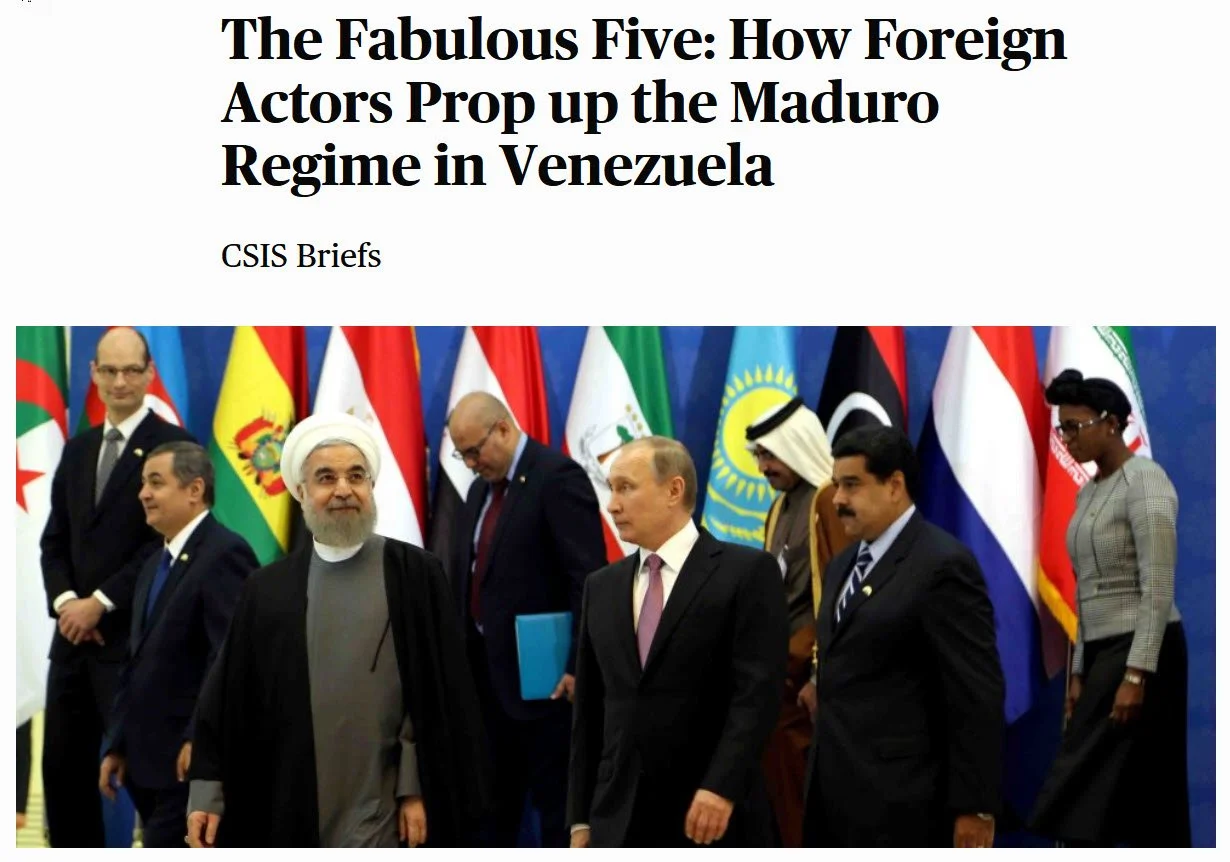
Historical Background of the RelationshipsThe interconnected relationships among Cuba, Venezuela, China, Iran, and Russia trace back to the Cold War era but intensified in the post-9/11 world as a counterweight to U.S. hegemony. This "axis of authoritarians" or "fabulous five" (as dubbed by analysts) emerged from shared ideological opposition to Western liberalism, mutual economic needs, and strategic opportunism, particularly under Venezuela's Hugo Chávez (1999–2013) and Nicolás Maduro (2013–2026).
csis.org +1
Cuba-Venezuela Core Alliance: This forms the ideological backbone, rooted in Fidel Castro's mentorship of Chávez in the 1990s. Cuba provided Venezuela with intelligence, medical personnel (tens of thousands of doctors and teachers), and security advisors in exchange for subsidized oil—up to 100,000 barrels per day at peak, covering 60% of Cuba's energy needs.
csis.org +1
This "oil-for-doctors" deal, formalized in 2000 via the ALBA bloc (Bolivarian Alliance for the Peoples of Our America), helped Cuba survive post-Soviet economic collapse while bolstering Chávez's socialist revolution. By the 2010s, Cuban advisors embedded in Venezuelan military and intelligence structures ensured regime loyalty, but this deepened both countries' isolation from global markets.
cnn.com +1
Russia's Entry: Moscow's involvement revived Cold War-era ties, with Venezuela serving as a Latin American foothold. Starting in 2005, Russia sold billions in arms (e.g., S-300 missiles, fighter jets) and invested in oil via Rosneft, holding stakes in key fields.
cfr.org +1
Putin used Venezuela to project power, conducting joint military exercises (e.g., 2008 naval drills) and providing debt relief to Cuba. In return, Maduro recognized Russia's annexations (e.g., Crimea in 2014) and hosted Russian bombers. This alliance peaked during the Ukraine war, with Venezuela offering rhetorical support and Iran facilitating drone tech transfers to Russia via Venezuelan channels.
diplomatmagazine.eu +1
China's Economic Anchor: Beijing's role began in the mid-2000s with "loans-for-oil" deals, lending over $60 billion to Venezuela since 2007—more than to any other Latin American country—in exchange for discounted crude.
cfr.org +1
China also invested in Cuban infrastructure (e.g., ports, telecoms) and provided non-lethal aid to Russia and Iran. This fits China's Belt and Road Initiative, using Venezuela as a resource hub and strategic pivot against U.S. influence in the Americas. By 2020, China had become the largest buyer of sanctioned Venezuelan and Iranian oil, evading U.S. restrictions through ship-to-ship transfers.
theendofhistory.net +1
Iran's Ideological and Resource Ties: Tehran's alliance with Venezuela dates to the 2000s, united by anti-imperialism and OPEC membership. Iran supplied gasoline during Venezuela's shortages (e.g., 2020 tanker convoys) and engaged in gold-for-oil swaps to bypass sanctions.
diplomatmagazine.eu +1
Venezuela hosted Iranian missile tech and Hezbollah networks, while Iran provided drones to Russia (routed via Venezuela) and shared nuclear know-how subtly with the bloc. Cuba and Iran aligned through anti-U.S. forums, with Havana supporting Tehran's positions in the UN.
zocalopublicsquare.org +1
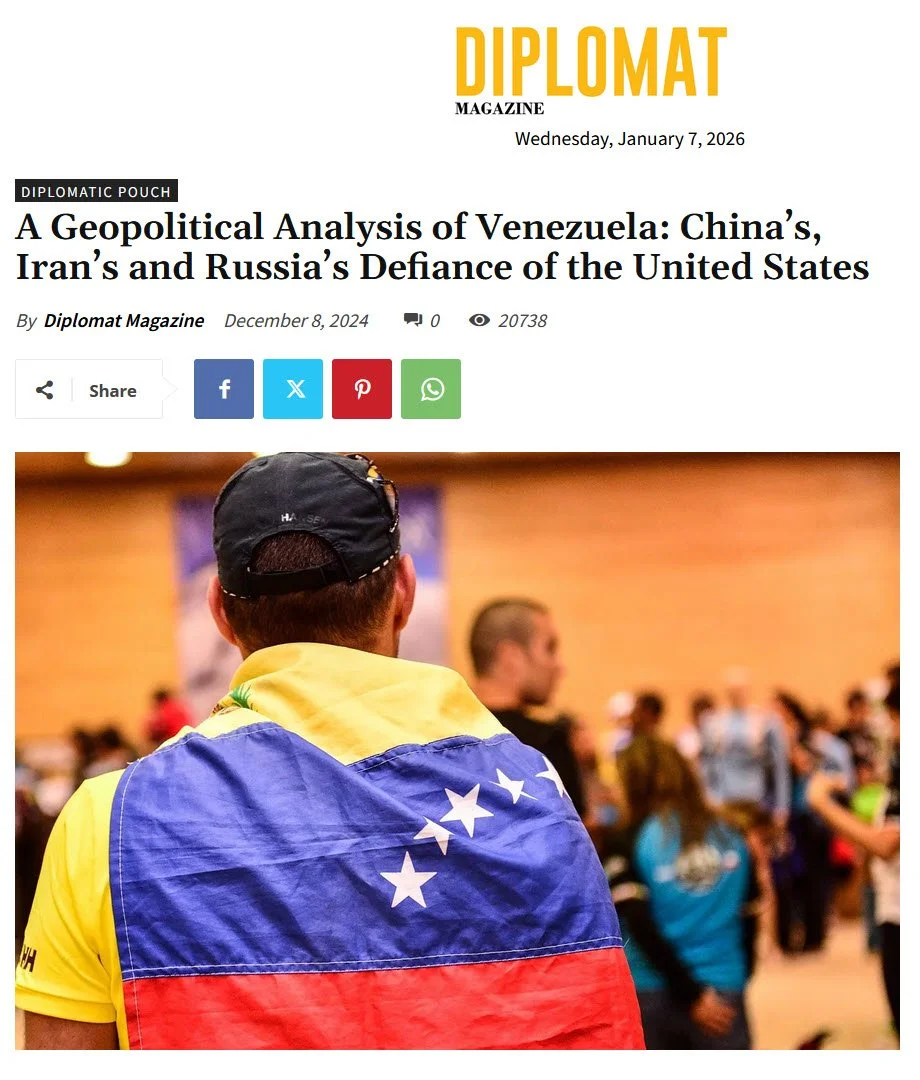
These ties evolved into a resilient but brittle network by the 2010s, sustained by sanctions evasion, military pacts, and diplomatic cover (e.g., in BRICS, where China, Russia, and Iran are members).
wilsoncenter.org +1
However, overreliance on Venezuela as a hub—due to its oil wealth and geographic position—created vulnerabilities, as economic mismanagement and U.S. pressures (e.g., sanctions since 2017) eroded stability.
cnn.com
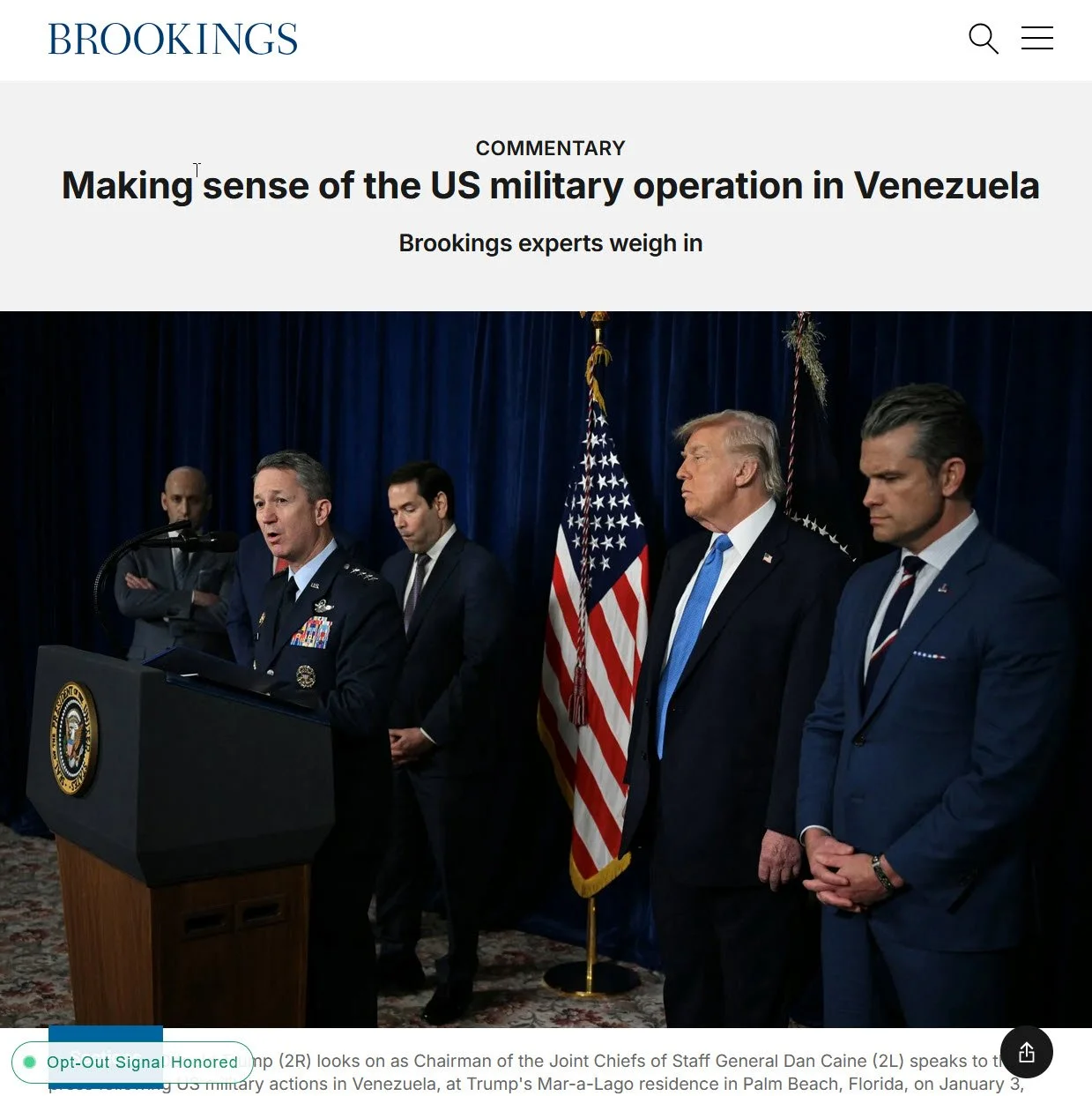
Likely Short-Term Outcomes (Next 6–12 Months)The U.S. Operation Absolute Resolve on January 1, 2026, which captured Maduro with minimal resistance, has already triggered immediate disruptions, exposing the alliance's fragility.
brookings.edu +1
Analysts describe it as a "shock wave" that humiliates partners and forces rapid adjustments.
foreignaffairs.com
Diplomatic and Security Fallout: The U.S. is pressuring Venezuela's interim government under Delcy Rodríguez to expel advisors from China, Cuba, Iran, and Russia, halt oil shipments to Cuba, and sever military ties.
csis.org +1
This includes intercepting defiant tankers, as seen on January 7.
nytimes.com
China faces embarrassment after its delegation met Maduro hours before the raid, signaling intelligence failures.
bbc.com +1
Russia and Iran's supplied defenses (e.g., S-300s) failed spectacularly, damaging their arms export reputations.
@HutsulPower
Cuba lost 32 personnel in the operation, exacerbating domestic shortages as oil flows dry up.
@MsRobotoFL
Economic Disruptions: Oil prices could drop short-term due to U.S.-backed Venezuelan production increases, hurting Russia and Iran (major exporters).
thehill.com +1
China risks $20–30 billion in unpaid Venezuelan debts, prompting write-offs or renegotiations.
bbc.com
Cuba may face blackouts and protests without Venezuelan fuel, while Iran loses a sanctions-busting partner.
csis.org
Rhetorical condemnations from the group (e.g., Russia/China at the UN) are expected but unlikely to escalate, given their overextension (Russia in Ukraine, Iran in Middle East conflicts).
aljazeera.com +1
Internal Instability: Venezuela's transition could turn chaotic if Rodríguez resists U.S. demands, potentially leading to further interventions.
atlanticcouncil.org
Allies like Nicaragua may distance themselves to avoid similar fates, while public opinion in Cuba and Iran—already protest-prone—could sour on foreign entanglements.
Overall, short-term outcomes favor U.S. leverage, with the alliance reacting defensively rather than aggressively, as evidenced by their inaction during the raid.
brookings.edu +1
Likely Long-Term Outcomes (1–5 Years and Beyond)The raid could mark a turning point, weakening the bloc's cohesion and accelerating shifts in global alignments, though outcomes depend on U.S. follow-through and internal resilience.
foreignaffairs.com +1
Erosion of Influence in Latin America: Venezuela's fall as a hub diminishes Russia, China, and Iran's regional footprint, reviving a de facto Monroe Doctrine.
csis.org +1
Russia loses a proxy for challenging U.S. dominance, potentially forcing concessions in Ukraine or elsewhere.
aljazeera.com
China may pivot to more stable partners (e.g., Brazil), but faces uncertainty in resource access, complicating its energy security amid domestic slowdowns.
bbc.com
Iran and Cuba, already isolated, could see regime pressures mount—Cuba's government is seen as "ready to fall" without Venezuelan support, possibly leading to liberalization or collapse.
Economic Realignments: Stabilized Venezuelan oil under U.S. influence could lower global prices long-term, straining Russia/Iran's budgets and forcing diversification.
thehill.com
China might accelerate de-dollarization efforts via BRICS but risks overextension supporting weaker allies.
bbc.com
Cuba and Venezuela may integrate into Western economies, attracting investment but facing transitional pain like migration spikes.
Geopolitical Shifts: The alliance may fragment, with Russia and Iran focusing inward (Ukraine, Middle East), while China hedges by deepening ties with non-aligned states.
aljazeera.com +1
This could embolden U.S. actions elsewhere (e.g., against Iranian proxies), but risks escalation if the bloc unites defensively—though current weakness suggests retreat.
atlanticcouncil.org
Long-term, a multipolar world persists, but with diminished authoritarian cohesion, potentially benefiting democratic transitions in the region.
foreignaffairs.com