The Real Impact of Fraud
Segment #737
Yes, it is considered possible by federal prosecutors that fraud in certain Minnesota state-run programs could exceed $9 billion, though this is a preliminary estimate under active investigation and disputed by state officials.In December 2025, And we haven’t even really begun working on California, Illinois, and New York.
First Assistant U.S. Attorney Joe Thompson stated that 14 "high-risk" Medicaid-funded programs in Minnesota billed approximately $18 billion since 2018. He estimated that half or more of these billings could be fraudulent, potentially surpassing $9 billion. Thompson described it as "staggering, industrial-scale fraud" involving shell companies billing for non-existent services in areas like housing stabilization, autism therapy, and other social services. This builds on earlier cases, such as the Feeding Our Future pandemic meal program fraud, where confirmed losses are around $250 million (with over 70 defendants charged).
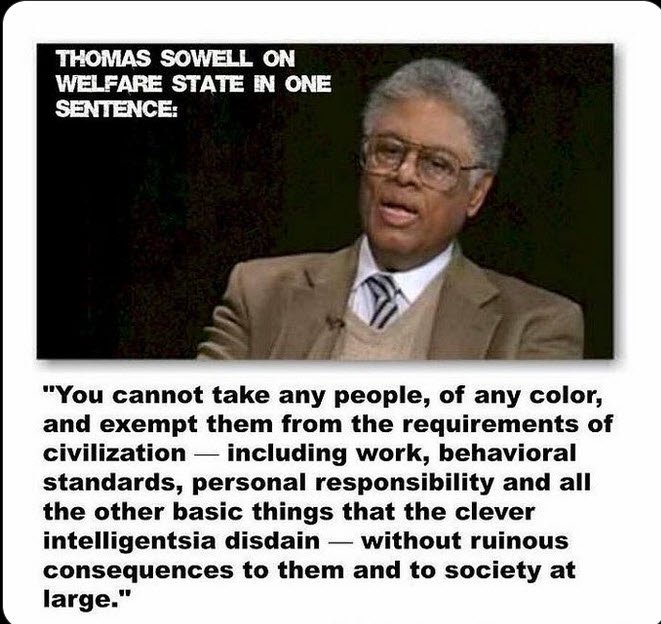
However, Minnesota Governor Tim Walz and Department of Human Services officials have called the $9 billion figure "sensationalized" and lacking evidence, stating that substantiated fraud in these programs so far amounts to tens of millions, not billions. They note that ongoing audits and federal investigations will determine the accurate total.The estimate has fueled national political debate, congressional probes, and federal funding pauses, but it remains unconfirmed as investigations continue into early 2026. Proven fraud across all related schemes is currently in the hundreds of millions to low billions, not yet at $9 billion.

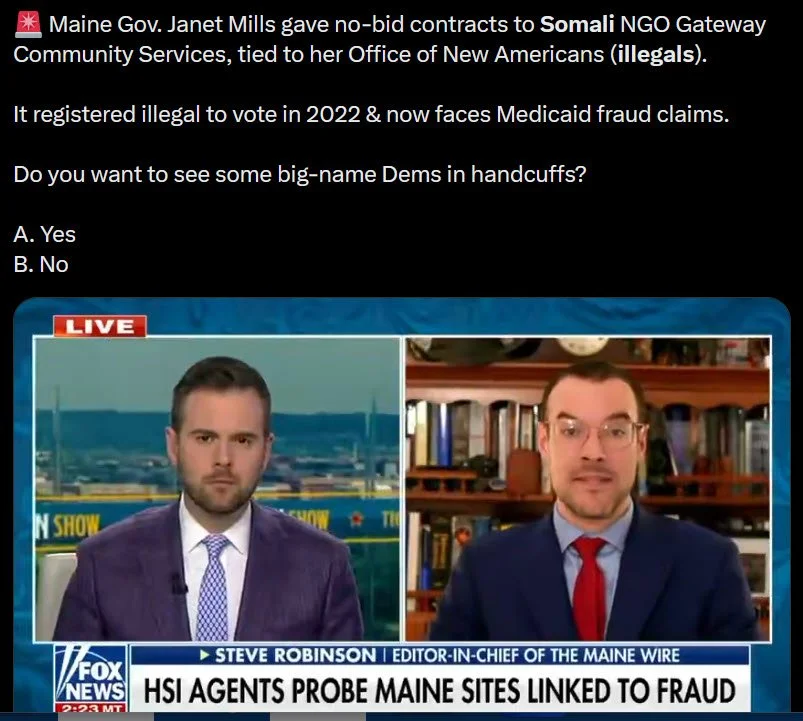

National estimates for Medicaid fraud in the US vary widely due to the distinction between improper payments (which include errors, waste, and abuse, not just intentional fraud) and confirmed fraudulent activity. Total Medicaid spending exceeds $800 billion annually, providing context for the scale. Here's a breakdown based on recent data from sources like CMS, GAO, DOJ, and independent analyses:Improper Payments (Broader Category Including Potential Fraud)
The Centers for Medicare & Medicaid Services (CMS) and Government Accountability Office (GAO) estimate improper Medicaid payments at approximately $31.1 billion for FY 2024, representing about 5% of audited expenditures.
judicialwatch.org
This is down from higher rates in prior years (e.g., 21.69% in FY 2023, or roughly $100-150 billion combined with Medicare).
gao.gov +1
Independent analyses suggest higher figures: Paragon Health Institute estimates $567 billion to $1.2 trillion in improper federal Medicaid payments over the past decade, equating to $56-120 billion annually (a 25% improper rate in some projections).
paragoninstitute.org +1
These are often cited in political discussions, with figures like $50 billion annually referenced as potential fraud (though this likely overlaps with improper payments).
kff.org
Not all improper payments are fraud—most stem from documentation errors, eligibility issues, or overpayments—but they indicate vulnerabilities that could enable fraud on a similar scale.Confirmed or Alleged Fraud
The Department of Justice's (DOJ) 2025 National Health Care Fraud Takedown—the largest in history—charged 324 defendants with $14.6 billion in alleged intended losses across health care programs, including Medicaid (e.g., schemes involving false claims for services, diagnostics, and medications).
oig.hhs.gov +1
This includes multi-billion-dollar cases, such as an $650 million Arizona Medicaid scheme.
kosu.org
Medicaid Fraud Control Units (MFCUs) across states reported $1.4 billion in recoveries in FY 2024 (with 1,151 convictions), returning about $3.46 for every $1 spent on investigations.
kff.org +1
Recoveries represent only detected and prosecuted fraud, so total undetected amounts are likely higher.
Broader DOJ False Claims Act recoveries (including Medicaid-related) exceeded $2.9 billion in FY 2024.
whistleblowerllc.com
Relation to Minnesota's CaseMinnesota's estimated $9 billion+ in potential fraud (across 14 high-risk Medicaid programs billing $18 billion since 2018) is described as "industrial-scale" and has highlighted systemic issues like weak oversight in areas such as housing, autism therapy, and child care.
axios.com +1
Reports indicate this has inspired similar schemes nationwide, with criminals sharing "hit lists" of vulnerable states.
washingtontimes.com
Minnesota represents about 1.7% of the US population and a similar share of Medicaid enrollees (~1.4 million out of 80+ million nationally), suggesting that if comparable vulnerabilities exist elsewhere, national potential fraud could scale to hundreds of billions over similar periods—far exceeding Minnesota's figure alone.
cato.org +2
Overall, while confirmed annual Medicaid fraud is in the low billions (based on prosecutions), the potential—factoring in undetected schemes and improper payments—could reach $50-100 billion or more per year, especially if Minnesota's high fraud rate (potentially 50% in targeted programs) reflects broader trends. Ongoing federal investigations and reforms (e.g., $915 billion in Medicaid cuts over 10 years) aim to address this, but estimates remain preliminary and debated.
ccf.georgetown.edu +1
Cost to the Average American Taxpayer
The numbers below are a little deceiving in that the cost really hits many taxpayers three times. First the fraud cost real money to each taxpayer. Second and in some cases more importantly some services are either withheld, slow to materialize, or just denied for economic reasons. See FEMA in North Carolina where some families are are still waiting for help. And we are now learning that more illegals are voting which clearly disenframchises American voters. And finally tax losses from local to federal have to be increased to cover shortfalls. America First is more than a slogan.
$100 billion in government fraud represents a significant loss of taxpayer funds that could otherwise reduce the federal deficit, lower borrowing needs, or allow for reduced taxes.To estimate the impact on the average American's taxes, divide the amount by relevant populations (using mid-2020s estimates with a U.S. population of approximately 345 million):
Per person (including children and non-taxpayers): $100 billion ÷ 345 million ≈ $290 per American.
This rough per capita cost spreads the burden across everyone, as government spending and deficits indirectly affect all through economic impacts.More precisely, since federal taxes primarily come from income and payroll taxes paid by workers and filers:
There are about 160-165 million individual income tax returns filed annually.
Dividing by ~163 million tax returns gives ≈ $613 per tax return.