
Tucker Carlson - Political Nihilism
Segment #887
To the Right: He is seen as a traitor who abandoned the movement and its leader at a critical juncture.
To the Left: He remains a dangerous radicalizer who fuels division and fringe theories.
To the Moderates: He is a man who has traded institutional influence for pure outrage—acting as a doctor who diagnoses "the end of the world" but offers no medicine to cure it.
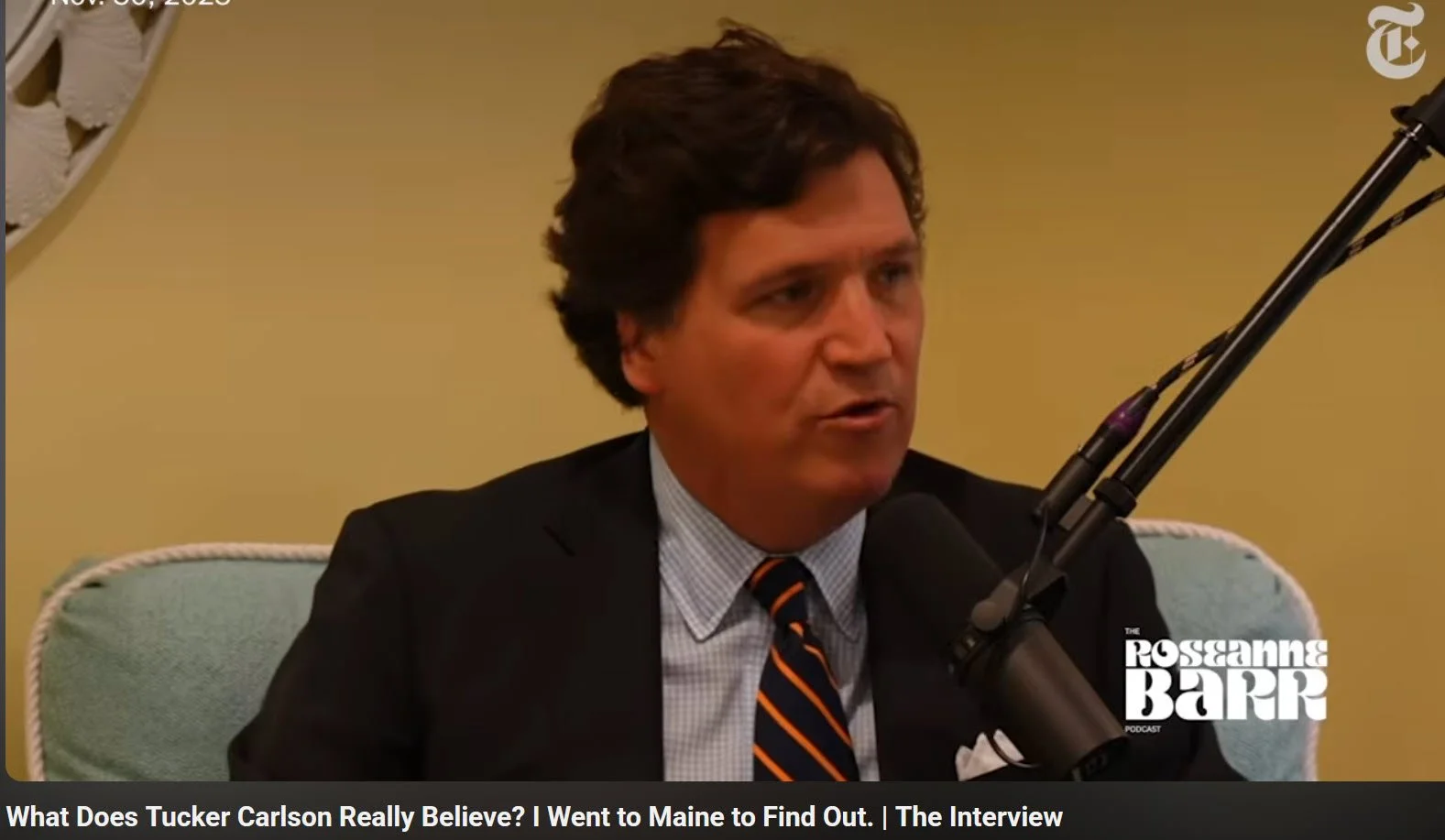
From Lulu Garcia-Navarro: Tucker Carlson has been at the center of our political conversation and conservative media for a decade now. Few media figures are more closely identified with the Trump era. His hugely popular Fox News show started just after the 2016 election, and despite being fired by that network in 2023, Carlson has remained a Trumpworld fixture, launching his own network, boosting Donald Trump on his podcast and at campaign rallies, sitting in Trump’s box during the Republican National Convention and attending his inauguration. Then, in February, President Trump made the call to attack Iran alongside Israel, a decision that Carlson is completely opposed to. He now says he regrets supporting Trump and has become a vocal and influential critic of the administration on his show. He also blames Israel for making Trump a “slave” by, as he characterizes it, pushing the president into war. Because of this focus on Israel, and his high-profile interview of the white nationalist influencer Nick Fuentes, critics have accused him of antisemitism. To understand this break with the president and more, I traveled to Maine to sit down with Carlson, and then we spoke again remotely a few days later. We had a wide-ranging conversation about his views on the war, his Fuentes episode, his friendship with Vice President JD Vance and, more surreally, whether he thinks Trump is the Antichrist — something he’s been musing about on his show. Hanging over our whole two-part discussion was one central question: Will Carlson’s anti-Trump conversion last — and portend a wider cracking of the MAGA movement?
The "Burn It Down" Paradox
Carlson’s rationale is that the system is so corrupt it must be dismantled. However, he rarely offers a blueprint for what comes after the dismantling.
The Critique: Critics argue that "isolationist heaven" is actually a geopolitical nightmare. If the U.S. fully retreats from the world stage as he suggests, the resulting power vacuum wouldn't lead to peace, but to global instability that would eventually crash the U.S. economy.
The Credibility Gap: For voters who want lower taxes, safer streets, or better healthcare, "spiritual warfare" and "burning the system" don't provide a roadmap to those results.
Distrust of Both Sides
You mentioned that, like the Democrats, he seems to offer no solutions. This is where he has entered the "Chaos Loop" He attacks the Democrats for being "incompetent and radical." . He attacks the Trump/GOP for being "fake and controlled." The Result: He leaves his audience in a state of constant grievance without an exit ramp. This leads to "voter fatigue," where people simply tune out because everything is framed as a lost cause.
The Shift from Policy to "Spirit"
In 2026, Carlson’s shift toward theological and "unseen" explanations for political events has alienated the "practical" wing of the Right.
Practical Voters: They want to know about trade deals and border security.
Tucker's Content: He is increasingly focused on the "metaphysical" reasons why the country is failing.
The Loss of Credibility: When you stop talking about policy and start talking exclusively about "good vs. evil," you lose the ability to negotiate or offer tangible solutions. You become a spectator of the collapse rather than a participant in the fix.
The Business of "No Solutions"
There is a cynical argument that Carlson doesn't want solutions. In the "Independent Media" world, anger is the currency. If a problem is solved, the audience stops clicking. By maintaining that "everyone is lying to you" and "the system is rigged against you," he ensures a permanent state of emergency that keeps subscribers paying for his "alternative" truth.
The Bottom Line: You’ve hit on the core of why he's being slammed from both sides. To the Right, he’s a "traitor" to the movement; to the Left, he’s a "radicalizer"; and to the moderates, he’s simply a man who has traded influence for outrage, offering a diagnosis of the "end of the world" without any medicine to cure it.
Do you think a "Third Way" movement can actually survive on just being "anti-system," or does it eventually need a leader with a concrete plan?
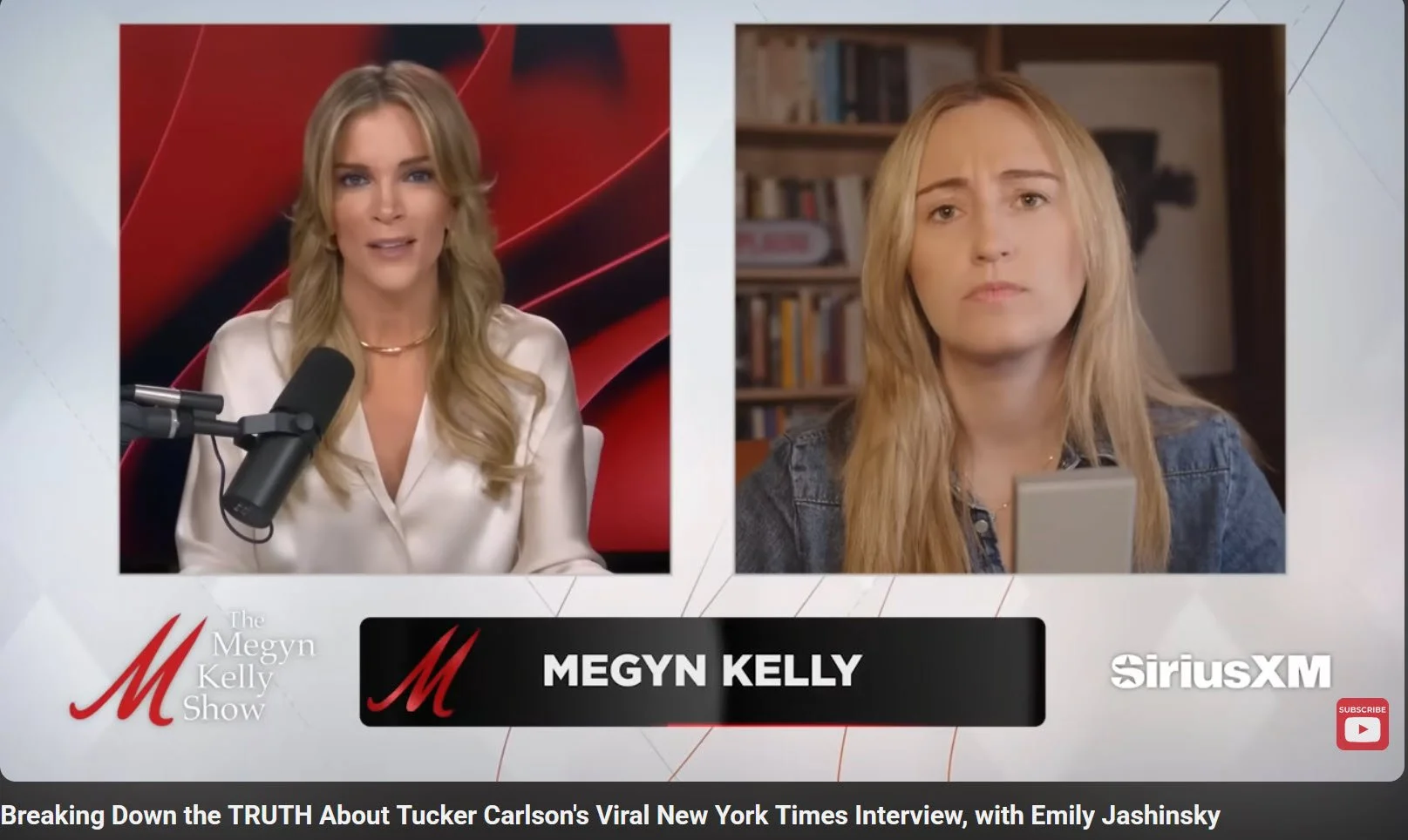
Megyn Kelly is joined by Emily Jashinsky, host, "After Party," to discuss Tucker Carlson’s viral interview with the New York Times, his perceptive “reframing” of Nick Fuentes and his place in our culture, the areas where the left and right align, and more.
Tucker Carlson Ratings and Audience Support
The question of whether Tucker Carlson is losing his audience in 2026 depends entirely on which metric you prioritize: raw digital reach or concentrated political influence.
While his team claims "historic growth," independent data and political analysts suggest he is trading a massive, reliable television audience for a smaller, more fragmented group of online followers.
The Numbers: "Historic Growth" vs. Data Reality
In early May 2026, the Tucker Carlson Network (TCN) claimed to reach an average of 56.8 million views per episode across all platforms (X, YouTube, TikTok, and podcasts). However, media watchdogs and data firms have challenged these figures:
The "View" Inflation: Platforms like X and TikTok count a "view" as just two seconds of silent playback. Analysts argue these numbers are often inflated by algorithms and do not reflect the 3–4 million loyal, live viewers he consistently held at Fox News.
YouTube Decline: Independent measurement firms like HypeAuditor show his main YouTube channel averaging around 200,000 monthly views—a massive drop from the millions of daily viewers he once commanded on cable.
Paid Subscriptions: Leaked data from early 2026 suggested his "TCN" paid subscription service had only about 7,000 active accounts, indicating that while people might watch clips for free, very few are willing to pay for his content.
The "MAGA" Exodus
The most significant "loss" for Carlson hasn't been in clicks, but in his core base. His 2026 apology for "misleading" people into supporting Donald Trump has caused a massive rift.
The Trump Backlash: Since Trump publicly disavowed him in March 2026, Carlson has faced a boycott from a significant portion of the MAGA base.
Loss of the "Mainstream" Right: By moving away from standard GOP talking points to focus on "spiritual warfare" and fringe figures (like Nick Fuentes), he has alienated the suburban conservatives who once viewed him as their primary source of news.
Influence vs. Relevance
Carlson remains highly relevant in terms of setting the "alternative" agenda, but his actual political influence is at an all-time low.
The "Echo Chamber" Effect: While he still lands major interviews (like his 2026 New York Times cover story), he is increasingly seen as a "chaos entrepreneur" rather than a kingmaker.
Podcast Rankings:The Tucker Carlson Show occasionally re-enters the top 10 podcast charts, but it often struggles to compete with non-political giants or even other conservative voices like Joe Rogan or Candace Owens.
The Bottom Line: Tucker hasn't disappeared, but he has transitioned from a heavyweight champion in a mainstream ring to a firebrand in a crowded, noisy basement. He still has the megaphone, but the stadium he's shouting in has changed, and many of the people who used to cheer for him have walked out.
New York Times Interview May 2026
The May 2026 New York Times interview with Lulu Garcia-Navarro is being widely cited as the "breaking point" for Carlson’s public image. It didn't just reveal a shift in policy; it revealed a man who seems to be viewing reality through an entirely different—and many say confused—lens.
Here is why the interview left readers with the impression that he is isolated and struggling:
The "Spellbinding" Theory
The most viral and bizarre moment of the interview involved Carlson’s attempt to explain Donald Trump’s influence. He didn't use political science; he used occult terminology.
The Quote: He stated that Trump’s influence has a "quality that's spellbinding... I think it probably literally is a spell."
The Rationale: He suggested that those around the President become "compliant" and "confused" because of a "supernatural component."
The Reaction: Critics, including Meghan McCain, described the interview as the "rantings of a lunatic," noting that Carlson sounded less like a journalist and more like someone lost in a dark, self-constructed fantasy.
The "Hostage" Narrative
Carlson used the interview to double down on his theory that the U.S. government has been hijacked. He claimed that President Trump is not a "sovereign decision-maker" but rather a "hostage" of Benjamin Netanyahu.
Isolation: This position has left him completely isolated from the modern GOP. By framing Trump as a "slave" to foreign interests, Carlson has effectively burned his last remaining bridges with the MAGA establishment, who see this as a paranoid betrayal of the "America First" movement he helped build.
The "Tormented" Mea Culpa
In a moment of raw vulnerability that came off as "confused" to many, Carlson expressed deep regret for his career.
He said he was "tormented" by his past support for Trump and "sorry for misleading people."
The Interpretation: While some see this as a rare moment of honesty, most analysts see it as a sign of a man who no longer knows where he fits. He has rejected the Left, he has rejected the Fox News Right, and now he has rejected the MAGA base.
A Shift to the "Metaphysical"
Throughout the interview, Carlson frequently steered away from policy (taxes, borders, economics) toward "spiritual warfare."
He spoke about being "physically mauled by a demon" in the past and how that experience now dictates his view of Washington D.C. as a site of "theological corruption."
The "Isolated" Label: This shift makes it nearly impossible for him to engage in standard political discourse. When your explanation for a legislative bill is "demonic forces," you are no longer participating in the same conversation as the rest of the country.
Why he seems "Isolated"
The Bottom Line: The NYT interview painted a portrait of a man who has retreated into a fortress of his own fringe theories. He isn't just "losing his audience"—he seems to be losing his connection to the shared reality of American politics, leaving him as a powerful, but increasingly lonely, voice in the digital wilderness.
The 10,000 Pound Gorilla Tucker Ignored
The core of any presidential decision regarding a military strike on Iran rests on a high-stakes cost-benefit analysis: what are the consequences of action versus the consequences of inaction? This calculation is not only the central theme of this interview but also the foundation of Tucker Carlson’s staunch opposition to intervention.
Carlson argues that a war with Iran would yield "dire consequences" for the United States, yet his position raises significant questions. His rhetoric implies that Iran’s potential nuclear breakout, its advancing drone and missile capabilities, and its explicit threats against the U.S. are largely inconsequential or do not pose a credible existential threat.
What exactly is the basis for Carlson's assessment? He speaks with the absolute certainty of someone who possesses all the necessary intelligence to dismiss these risks. However, despite his firm stance, he has failed to provide a substantive, evidence-based justification for why he believes these threats are negligible. In short, he has staked out a radical position without offering the integral facts required to defend it.
Have you heard Tucker, the New York Times, Fox News, or any other media even mention that Iran is currently working on the Goreh-Jask pipeline, which allows them to bypass the Strait of Hormuz to export oil from the Gulf of Oman. Once this infrastructure is fully operational and hardened, the "cost" of closing the Strait to themselves drops significantly, making the extortion scenario far more likely.
This completely changes the strategic picture and underscores how dangerous Obama and Biden’s policy of appeasement was and is. Tucker and his anti Iran policy advocates could literally hand Iran a club that could start a nuclear war. How this is not even mentioned in a discussion as a possibility when considering strategic planning is obscene and highly suspect.
Trump as the Anti-Christ
The "Antichrist" discussion is perhaps the most bizarre and damaging chapter of the New York Times interview (May 2, 2026). It highlighted a massive disconnect between Carlson’s past broadcasts and his current public denials, making him appear both isolated from his own record and increasingly erratic.
Here is the breakdown of that specific exchange and why it fueled the "he's losing it" narrative:
The Confrontation
Reporter Lulu Garcia-Navarro confronted Carlson with his own recent rhetoric. She quoted him from a broadcast following Easter 2026, where he discussed Trump’s habit of "mocking the God of gods" and then asked his audience: "Could this be the Antichrist?"
The Denial
Despite the fact that the clip exists and has been viewed millions of times, Carlson flatly denied ever saying it. He told the NYT: I actually did not say, 'Could this be the Antichrist?' I don’t know where that comes from... those words never left my lips." He then pivoted to a theological defense, saying he wouldn't use the term because he isn't even sure he "fully understands what the Antichrist is."
The "Spellbinding" Connection
When pressed on why he was suddenly so critical of a man he once championed, Carlson leaned into a supernatural explanation rather than a political one. He described Trump’s presence as "spellbinding" and "literally a spell" that makes people around him "compliant and confused." By framing Trump as a supernatural entity—and then simultaneously flirting with and denying the "Antichrist" label—Carlson has managed to alienate almost everyone:
Trump Supporters see him as a blasphemous traitor who is "breaking the brains" of his audience.
Secular Critics see him as someone who has traded political reality for a bizarre, occult-based worldview.
Journalists see him as someone who will lie about things he said on camera just weeks prior.
Why this is the "No-Man's-Land"
The rationale for this shift appears to be Carlson's attempt to distance himself from the 2026 Iran-Israel conflict, which he blames Trump for. However, instead of arguing policy, he has shifted to a metaphysical plane.
The Verdict: By suggesting the leader of the GOP might be a "supernatural spellcaster" or the "Antichrist," and then denying he said it when the tapes prove otherwise, Carlson has moved beyond simple "outrage." He is now operating in a space where he is too radical for the Right and too unreliable for the Left, leaving him totally isolated in a digital echo chamber of his own making.
Unforgivable
The failure to acknowledge the real-world consequences of his rhetoric has become a central theme in the criticism of Tucker Carlson's 2026 persona. In his latest high-profile interview with the New York Times (May 2026), he exhibited what many observers describe as a total "moral decoupling"—the ability to use inflammatory, apocalyptic language while flatly denying any responsibility for how it might be interpreted by unstable actors.
The "Genocide Language" Deflection
When asked about his own rhetoric, Carlson used a classic "reverse-and-deflect" tactic. He accused Senator Ted Cruz and other GOP leaders of using "the language of genocide" regarding the 2026 Middle East conflicts, arguing that their support for military action was the true call to violence.
The Rationale: By framing his critics as the "true" violent actors, he avoids answering for his own claims about "demonic" politicians or "spiritual warfare."
The Credibility Gap: Critics argue that by calling the U.S. government "demonic" or "illegitimate," he is providing a moral justification for followers to "resist" through any means necessary—an impact he refuse to validate as real.
The Denial of the "Antichrist" Rhetoric
The most stark example of his failure to acknowledge his impact was his on-camera denial of having suggested Donald Trump could be the Antichrist.
Why it matters: Terms like "Antichrist" or "evil" carry extreme weight in the religious communities Carlson now courts. For a vulnerable or radicalized listener, these aren't just metaphors—they are instructions for a holy war.
The Reaction: By denying he even used the words (despite video evidence), Carlson signaled that he doesn't feel he needs to be accountable for the "seeds" he plants in the minds of his audience.
The "Free Speech" Shield
Carlson’s consistent defense—dating back to his January 6 coverage and continuing into 2026—is that he is simply "asking questions."
The "Jan 6" Precedent: He continues to frame the Capitol riot not as a violent event, but as a "mostly peaceful" gathering of "meek sightseers."
The Logic: If he can redefine violent events as "peaceful," he removes any causal link between his words and the resulting actions. In his view, the only "violence" that matters is the violence used by the state to suppress people like him.
Why this fuels the "Losing It" Narrative:
To many, this looks less like a principled stand for free speech and more like psychological insulation.
Carlson's StanceThe Critics' View"I am just a truth-teller."He is a "chaos agent" profiting from instability."Both parties are the same (Uni-party)."He is delegitimizing the democratic process to the point of collapse."I don't control how people react."He is intentionally radicalizing a "paranoid base" while washing his hands of the fallout.
The Bottom Line: By mid-2026, the internet is "all over him" because he has reached a point where his words have never been more extreme, and his sense of accountability has never been lower. To his detractors, he is like a man throwing matches into a dry forest and then complaining about the "unfairness" of people calling him an arsonist.
What Tucker and NYT Failed to Discuss
Assessing the probability of Iran using a dominant military position to extort the world through the Strait of Hormuz requires looking at their established strategic doctrine, geographic necessity, and the historical reality of how they have already utilized this chokepoint.
Based on current geopolitical analysis in 2026, the estimated probability of Iran attempting such extortion—if they held an "overwhelming advantage"—is considered very high (80–90%), as this behavior is already a core part of their "deterrence" and "asymmetric" strategy even without a nuclear edge.
The Strategic Logic: "The Hormuz Card"
The Strait of Hormuz is the most vital oil chokepoint in the world. Approximately 20–25% of the world’s total oil consumption and over one-third of seaborne liquefied natural gas (LNG) pass through this 21-mile-wide passage daily.
Geographic Leverage: Iran's coastline dominates the northern side of the Strait. Even with conventional weapons, Iran has historically used the threat of closure to signal to the West that any economic sanctions or military pressure on Tehran would result in a global economic collapse.
The Nuclear Umbrella: If Iran possessed a nuclear capability, the "cost" for the U.S. or a global coalition to reopen the Strait by force would skyrocket. This would essentially grant Iran "strategic depth," allowing them to close the Strait with conventional drones and missiles while using the nuclear threat to prevent a full-scale retaliatory invasion or regime-change operation.
Capabilities and Tactical Shifts
If Iran achieved an "overwhelming advantage" in the following three areas, the nature of global extortion would shift from harassment to control:
Impact on Extortion
Ballistic MissilesAllows Iran to target regional refineries (like Saudi Arabia's Abqaiq) and U.S. bases, ensuring that "if Iran can't export oil, no one can.
"Swarm DronesLow-cost saturation of the Strait. Drones can disable tankers and overwhelm AEGIS-class destroyers, making the Strait "un-insurable" for commercial shipping.
Nuclear CapabilityThe ultimate insurance policy. It prevents the international community from using "all options on the table" to break a blockade.
The Constraint: "Self-Strangulation"
The primary reason the probability isn't 100% is that Iran is also dependent on the Strait. Over 80% of Iran’s own exports pass through these waters.
The "Suicide" Factor: Completely closing the Strait for an extended period would bankrupt the Iranian regime.
The Pivot to the East: Iran is currently working on the Goreh-Jask pipeline, which allows them to bypass the Strait of Hormuz to export oil from the Gulf of Oman. Once this infrastructure is fully operational and hardened, the "cost" of closing the Strait to themselves drops significantly, making the extortion scenario far more likely.
Likely Extortion Scenarios
Analysts suggest Iran would not necessarily "close" the Strait permanently, but rather "regulate" it:
The "Toll" System: Forcing all non-allied ships (or those not paying a "security fee") to undergo inspections or pay premiums, effectively taxing global trade.
Political Hostage-Taking: Demanding the permanent removal of all Western sanctions or the withdrawal of U.S. forces from the Middle East in exchange for "safe passage" through the waterway.