
Harvard Medial School - AI Beats Docs
Segment #888
Harvard Medical School: AI Beat Doctors for Emergency Room Diagnosis
By Lynn C. Allison | Tuesday, 05 May 2026 11:15 AM EDT
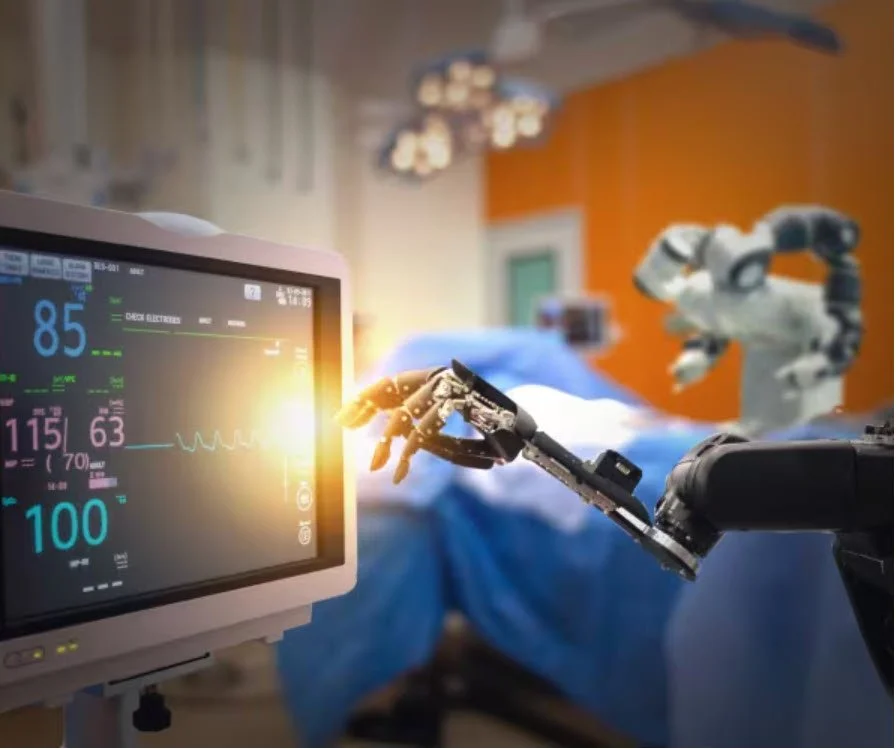
Harvard Medical School: AI Beat Doctors for Emergency Room Diagnosis | Newsmax.com
A new peer-reviewed study found that artificial intelligence may be able to match — or even outperform — physicians in diagnosing patients in emergency room settings. The research, led by scientists at Harvard Medical School and Beth Israel Deaconess Medical Center, found that large language model (LLM) AI systems performed as well as or better than doctors when evaluating real emergency cases. According to Fortune, diagnoses from both AI and physicians were reviewed by two independent attending doctors who were unaware of their source. The results favored the AI systems.
“We tested the AI model against virtually every benchmark, and it eclipsed both prior models and our physician baselines,” said Arjun Manrai of Harvard Medical School and a senior co-author of the study. The AI outperformed physicians in several areas, including identifying likely diagnoses, making emergency care decisions, and recommending next steps in treatment. Researchers say the findings highlight the growing capabilities of AI in medicine, but caution that the technology is not ready to replace human doctors.
“A model might get the top diagnosis right but also suggest unnecessary testing that could expose a patient to harm,” said first co-author Peter Brodeur of Beth Israel Deaconess. “Humans should be the ultimate baseline when it comes to evaluating performance and safety.” The study’s authors say the results support further testing of AI tools in real-world clinical settings, similar to how other medical advances are evaluated.
The research was published in the journal Science.
As of May 2026, AI is no longer just a futuristic concept in healthcare—it’s actively reshaping how the Emergency Room (ER) and your local doctor’s office operate. From "scribes" that listen to your visit to advanced reasoning models that can catch rare diagnoses, the technology is moving into a supportive role alongside physicians.
Here is the breakdown of how AI is being used in these two distinct settings:
In the Emergency Room (ER)
The ER is high-stakes and high-pressure, which is where AI’s ability to process massive amounts of data instantly becomes a major asset.
Triage and Prioritization: A groundbreaking 2026 Harvard study showed that advanced AI (like OpenAI’s o1 model) can outperform doctors in initial triage. It can scan a patient's vital signs and brief history to accurately predict the severity of their condition before they even see a doctor.
Catching "Hidden" Diagnoses: AI is proving better at spotting patterns humans might miss under stress. For example, if a patient with a complex history (like Lupus) arrives with lung issues, AI can quickly connect the dots to suggest specific complications that a busy ER doctor might initially mistake for a standard infection.
Imaging Speed: AI tools are now commonly used to pre-scan X-rays and CT scans for critical issues like brain bleeds or collapsed lungs, flagging them for the radiologist to look at first.
In the Doctor’s Office
In a standard clinic, the focus of AI is less on "life-or-death" speed and more on reducing burnout and improving the patient experience.
AI Scribes: One of the most popular tools is the "Ambient AI Scribe." It listens to your conversation with the doctor and automatically generates a structured medical note. This allows the doctor to look at you instead of typing on a computer.
Predictive Health: AI tools are being used to scan your long-term Electronic Health Record (EHR) to predict risks for chronic diseases like diabetes or heart disease, prompting your doctor to start preventative care earlier.
Managing the "In-Box": Many offices use AI to sort through patient portal messages, prioritizing urgent medical questions and drafting simple responses for the staff to review.
AI vs. Human Doctors: The Current Balance
While the tech is impressive, it is still viewed as a "co-pilot" rather than a replacement.
Data ProcessingSuperior; can read 10 years of records in seconds.Limited; prone to "information overload.
"Physical ExamCannot do; relies entirely on text/data input.Essential; observes distress, skin tone, and touch.
Empathy & ValuesSimulated; follows programmed logic.Authentic; understands personal goals and fears.
Error HandlingCan "hallucinate" or provide biased logic.Can make mistakes due to fatigue or cognitive bias.
The "Triadic" Model: Experts now describe the future of medicine as a three-way relationship: the doctor, the patient, and the AI system working together to verify facts and catch errors.