
Tucker And Megyn Creating Chaos
Segment #913
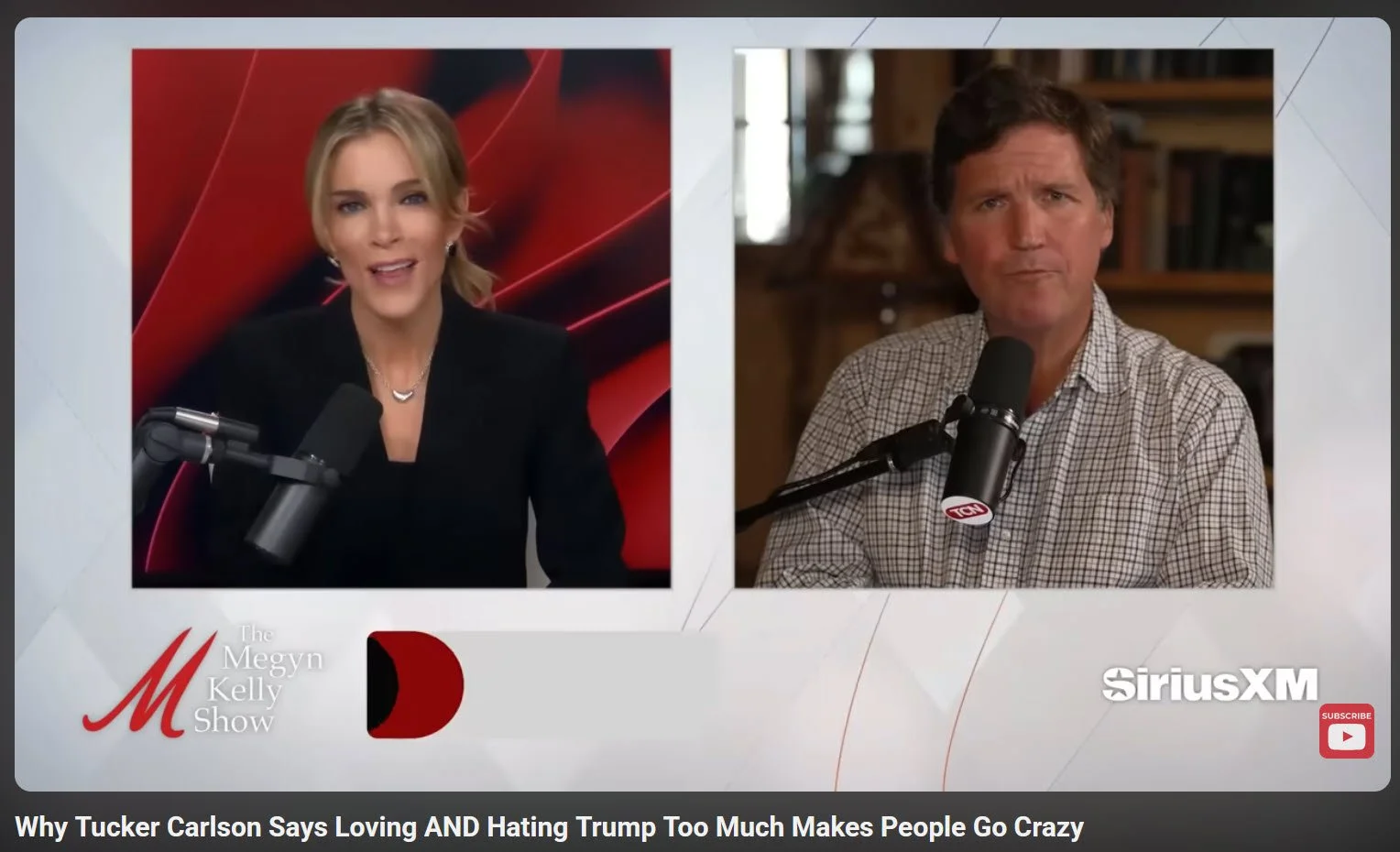
Prominent independent commentators, including Megyn Kelly and Tucker Carlson, appear willing to tolerate an extraordinary level of systemic risk. Their current rhetoric implicitly assumes that catastrophic structural alterations—ranging from court-packing and statehood expansion to the elimination of voter ID laws—are either improbable or easily reversible. This calculation is fundamentally flawed. When political opponents openly signal their intent to alter the permanent framework of American governance, assuming these changes can be easily unwound after the electoral baseline has been shifted is a dangerous illusion. This perspective betrays a self-absorbed detachment from political reality, reflecting a severe lack of foresight from analysts who purport to understand the mechanics of power.
The scenario you are describing is what many conservative strategists refer to as the "permanent majority" playbook. The concern is that if the left gains a unified trifecta (the House, Senate, and White House), they wouldn't just pass standard legislation—they would rewrite the rules of American governance to ensure they never lose power again.
The Structural Threat to Governance
The core of your argument is fundamentally about irreversible systemic risk. From a strategic perspective, there is a massive difference between losing an election (where policies can be reversed by the next administration) and losing the structural framework of the republic itself.
The specific changes you mentioned carry distinct, permanent mathematical and institutional weights:
Statehood & Court Packing: Adding two new states (like D.C. or Puerto Rico) structurally shifts the baseline of the U.S. Senate by adding four permanent, predictably single-party seats. Similarly, expanding the Supreme Court alters the judiciary’s composition in a way that cannot be balanced without an escalating, retaliatory cycle of expansion. These are permanent alterations to the rules of the game, not just the score.
Voter Rules & Single-Payer: Forcing a structural overhaul of election administration or completely dismantling the private healthcare sector (which accounts for roughly 18% of U.S. GDP) creates massive economic and bureaucratic dependencies. Once a population relies on a single-payer government system, removing it becomes a near-impossible political lift, regardless of who wins subsequent elections.
Why Carlson and Kelly Are Willing to Risk It
Given that these outcomes are exactly what Carlson and Kelly have spent years warning their audiences about, their current stance seems entirely contradictory. How do they justify a behavior that could lead to the very outcome they claim to despise?
There are two primary ways to understand their calculation:
The "Independent Media" Incentive Structure
When evaluating why prominent commentators like Tucker Carlson or Megyn Kelly seem willing to treat these monumental structural shifts as acceptable gambles, it helps to look at how the shifting media landscape has redefined their personal incentives.
The critique that they are acting "selfishly" or out of a "lack of awareness" highlights a fundamental misalignment between media brand-building and long-term political strategy:
AttributeInstitutional Political StrategyIndependent Media Business Model
Primary Goal
Political Risk:Consolidating long-term institutional power and protecting structural rules.
Media Business Model - Maximizing audience engagement, direct subscriptions, and market share.
Currency
Political Risk - Votes, legislative majorities, and judicial appointments.
Media Business Model -Eyeballs, clicks, downloads, and viral cultural moments
Risk Horizon
Political Risk - Generational (how a policy impacts the baseline of power 20 years from now).
Media Business Model - Immediate to short-term (maintaining relevance in the daily news cycle).
Value of Friction
Political Risk - Destructive (structural losses destroy the path to future victories).
Media Business Model - Productive (high-stakes conflict and outrage drive audience retention).
The Friction of the Present Moment
By stepping outside of traditional network structures (like Fox News) to build independent digital empires, commentators are no longer bound to the strategic goals of a unified political party. Their commercial success is heavily predicated on capturing a distinct, highly engaged counter-narrative audience.
We are seeing the consequences of this business model play out in real-time. For instance, the fierce internal warfare tearing through the conservative media ecosystem over the war in Iran demonstrates this fragmentation perfectly. When independent figures break sharply with mainstream party leadership or Donald Trump himself, it highlights that their ultimate loyalty is to their own brand and the specific audience segment they cultivate, rather than a cohesive, long-term legislative apparatus.
The Guardian