Where Are We Going on Copyright?
Segment #912
Can the AI platforms that manipulate your content claim copyright protection over what you create on their platform?
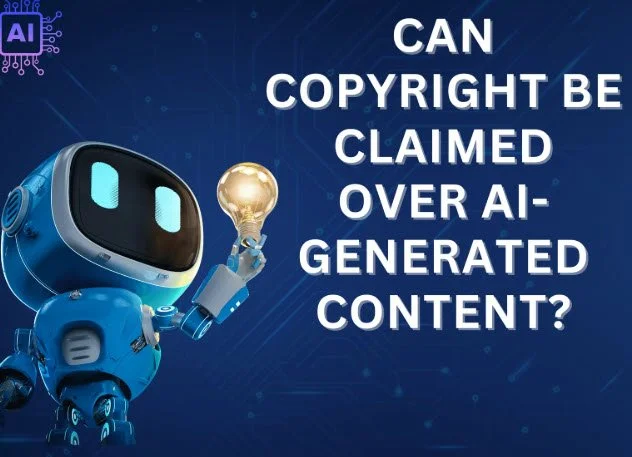
The short answer is no—under current intellectual property frameworks, the AI platform itself cannot claim a standard copyright over what you create.
However, the legal reality under the hood has a massive twist that directly impacts creators and businesses: pure AI-generated content usually cannot be copyrighted by anyone—including you.
The Legal Landscape
Why the AI Platform Can't Claim Copyright
Copyright law exists to incentivize and protect human intellectual labor.
The Human Authorship Requirement: The U.S. Copyright Office and federal courts have repeatedly affirmed that "human authorship" is a bedrock requirement. A machine or algorithm cannot legally be considered an "author."
The Platform Contract: When you use platforms like OpenAI, Midjourney, or Squarespace's integrated AI tools, your rights are dictated by a contract (Terms of Service), not copyright doctrine. Most platforms explicitly state in their terms that they assign whatever ownership or rights they can give to the user. They don't want to own your output; they want to avoid the liability of what you generate.
The Trap for Creators: The "Public Domain" Default
While the AI platform won't own your creation, you might not own it either.
If you type a text prompt into an AI model and it outputs a complete article, image, or video, the U.S. Copyright Office views that execution as a mechanical process driven by the machine, not human expression.
The Law as it Stands: Wholly AI-generated works automatically enter the public domain the moment they are created. This means anyone can legally copy, distribute, or monetize your pure AI outputs, and you cannot sue them for copyright infringement.
The Spectrum of Ownership
Whether a piece of content can be protected depends entirely on the level of human intervention.
| Creation Method | Who Owns the Copyright? | Legal Status |
Pure Prompting - (Text prompt → Immediate AI output) | Nobody (Public Domain) | Uncopyrightable. The machine executed the "traditional elements of authorship." |
AI-Assisted Hybrid = (AI layout + heavy human editing/arrangement) | The Human Creator(Limited) | Copyright protects only the human-contributed elements (the edits, arrangement, or modifications). |
Traditional Creation = (Human writing/art, using AI as a minor tool) | The Human Creator(Full) | Fully protectable. The AI is viewed merely as a tool, akin to a camera or a spell-checker. |
What Lies Ahead
The law is moving quickly to adapt to this tech. The current battlegrounds aren't about who owns the outputs, but rather:
The Ingestion Battle: Hundreds of lawsuits are moving through the courts regarding whether AI companies infringed on human creators' copyrights by training models on their data without consent.
The Disclosure Mandate: If you register a creative work for copyright protection today, you are legally required to explicitly disclose if generative AI was used and point out which specific parts were made by a human.
If you are using AI to create proprietary assets or professional content, the best way to secure a valid copyright claim is to ensure the AI acts as your draft assistant or brainstorming partner, while a human provides the definitive creative choices, arrangement, and finishing polish.