
AGS and Tick Problems This Summer
Segment #911
Alpha-gal syndrome (AGS) is a serious, potentially life-threatening allergic reaction that develops after people are bitten by certain types of ticks—most notably the Lone Star tick (Amblyomma americanum) in the United States.
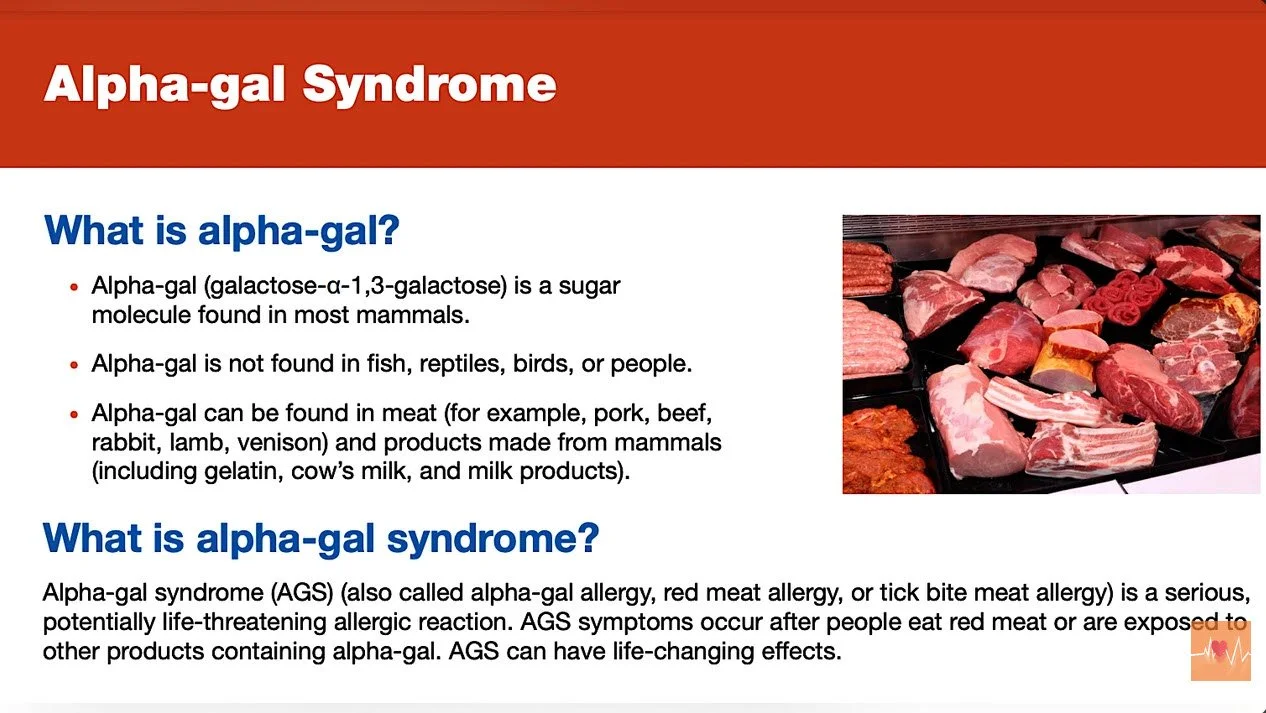
How Alpha-Gal Syndrome Works
Alpha-gal is a carbohydrate found in the cells of most mammals (like cows, pigs, sheep, and deer), but it is naturally absent in humans. When a tick bites a human, it can inject alpha-gal from its saliva into the person's bloodstream.
This exposure can cause the human immune system to create antibodies against the sugar. The next time that person consumes mammalian products, their immune system launches an allergic attack.
Key Characteristics of AGS:
The "Delayed" Reaction: Unlike typical food allergies (like peanut allergies) that trigger a reaction within minutes, AGS symptoms usually take 2 to 8 hours to appear after eating. This delay happens because it takes longer for the body to digest and absorb the alpha-gal fat molecules.
What to Avoid: Affected individuals must strictly avoid "red meat" (beef, pork, lamb, venison) and often mammal-derived ingredients like gelatin, milk, and dairy products. Poultry (chicken, turkey) and seafood do not contain alpha-gal, so they are perfectly safe to eat.
Symptoms: These can range from hives, skin rashes, and severe stomach pain/gastrointestinal distress to life-threatening anaphylaxis (difficulty breathing and a dangerous drop in blood pressure).
Bill Gates' Alleged Involvement: Fact vs. Fiction
The Grain of Truth (The Gates Funding)
The Bill & Melinda Gates Foundation does fund tick-related research. Between 2021 and 2023, the foundation awarded grants totaling several million dollars to a UK-based biotech firm called Oxitec.
The Goal: The project focuses on genetically modifying the Asian blue tick (Rhipicephalus microplus), also known as the southern cattle fever tick.
The Purpose: This specific tick transmits devastating, deadly diseases to livestock (like babesiosis), costing global cattle farmers billions of dollars and threatening food security in developing regions like sub-Saharan Africa. The research aims to introduce a "self-limiting" gene to shrink the wild tick population, protecting livestock.
Why the Conspiracy Doesn't Hold Up
Scientific and historical data completely disconnects the Gates-funded project from the rise in human red-meat allergies:
Two Different Ticks: The Gates-funded research involves the Asian blue tick, which primarily targets livestock and does not bite humans. Alpha-gal syndrome in the U.S. is overwhelmingly caused by the Lone Star tick, a completely different species that has nothing to do with the research program.
The Timeline is Wrong: AGS was first clearly identified and linked to tick bites in the early 2000s, with formal peer-reviewed scientific studies publishing the connection by 2009 and 2011. The Gates Foundation didn't fund any tick research until a decade later, starting in 2021.
The Real Reason for the Spike: Public health agencies and ecologists attribute the expanding footprint of the Lone Star tick (and the subsequent rise in AGS cases) to milder winters and shifting climate patterns, allowing the ticks to survive farther north than they historically could, alongside booming populations of hosts like white-tailed deer.
In short, alpha-gal syndrome is a naturally occurring, environmentally driven public health issue. Bill Gates' only involvement with ticks is funding lab-based biotechnology in the UK to protect cattle from an entirely different species of livestock parasite.
Because Alpha-gal syndrome (AGS) is a condition that builds up over time from tick bites rather than a contagious virus, it isn't technically an "outbreak" in the traditional sense. Instead, it is an emerging environmental health issue that is rapidly expanding.
The geographic prominence of the syndrome and the exact steps you should take to protect yourself or manage the condition follow a distinct pattern.
Where Alpha-Gal Syndrome is Most Prominent

According to the Centers for Disease Control and Prevention (CDC), the highest concentration of AGS cases forms a large, continuous band across the Southern, Midwestern, and Mid-Atlantic United States. This aligns perfectly with the home turf of the Lone Star tick.
The Top Hotspots:
The Epicenter (Long Island, NY): Suffolk County, New York (the eastern end of Long Island) surprisingly accounts for some of the highest raw numbers of cases in the country.
Highest Per-Capita Regions: The highest rates of cases per population are found in parts of Virginia, Kentucky, Arkansas, and Missouri.
The Broad Danger Zone: States like Oklahoma, Kansas, Tennessee, Mississippi, Indiana, Illinois, Maryland, and North Carolina also show heavily concentrated pockets.
Expanding Territory: Case numbers are creeping upward into northern states like Minnesota, Wisconsin, and Maine. Scientists suspect that while the Lone Star tick is moving north due to shorter, milder winters, other ticks—like the black-legged (deer) tick—might also play a minor role in spreading the allergy.
What Do You Do?
Prevention (If you don't have it)
Gear Up: When walking in tall grass, brush, or wooded areas, wear long sleeves and tuck your pants into your socks. Light-colored clothing makes it much easier to spot a dark tick crawling on you.
Use Repellent: Apply EPA-registered insect repellents containing DEET, picaridin, or IR3535 to your skin. Treat outdoor clothing, boots, and camping gear with permethrin (0.5%), which kills ticks on contact.
The Post-Walk Check: Always perform a full-body tick check on yourself, your children, and your pets after spending time outdoors. Showering within two hours of coming inside drastically reduces your risk.
Remove Ticks Immediately: If you find a tick attached, use fine-tipped tweezers to grasp it as close to the skin's surface as possible. Pull upward with steady, even pressure. Do not twist it or squeeze the body, as this can force its saliva into your wound. Clean the bite area thoroughly with rubbing alcohol or soap and water.
Management (If you have been diagnosed) - There is No Known Cure
If a blood test (which checks for alpha-gal specific IgE antibodies) confirms you have AGS, your daily routine will require a few adjustments.
Overhaul Your Diet: You must strictly avoid mammalian meats (beef, pork, lamb, venison, bison, etc.). Switch your protein sources to poultry (chicken, turkey), fish, seafood, or plant-based alternatives.
Watch for Hidden Ingredients: Depending on how sensitive you are, you may need to read ingredient labels very carefully. Lard, suet, mammalian gelatin (found in marshmallows and gummy candies), and sometimes dairy products or whey can trigger a reaction.
Carry an EpiPen: Because AGS can cause sudden, severe anaphylaxis hours after you eat, your doctor will likely prescribe an epinephrine auto-injector. Always keep one with you.
Check Your Medications: Many pills, capsules, and vaccines use mammalian gelatin or magnesium stearate as binders or casings. Always tell your pharmacist and doctors that you have an alpha-gal allergy so they can verify that your medications are mammal-free.
Avoid Future Bites: Getting bitten by another Lone Star tick can cause your antibody levels to spike again, resetting or worsening the allergy.
A Note of Hope: For some individuals, alpha-gal antibody levels can naturally decline over several years—meaning the allergy can occasionally fade or disappear entirely—if you successfully avoid getting bitten by another tick.