Trump Is Playing You for The Cause - MAGA
Segment #828
The Strategic Architecture of the Second Term: A Hard-Hitting Analysis
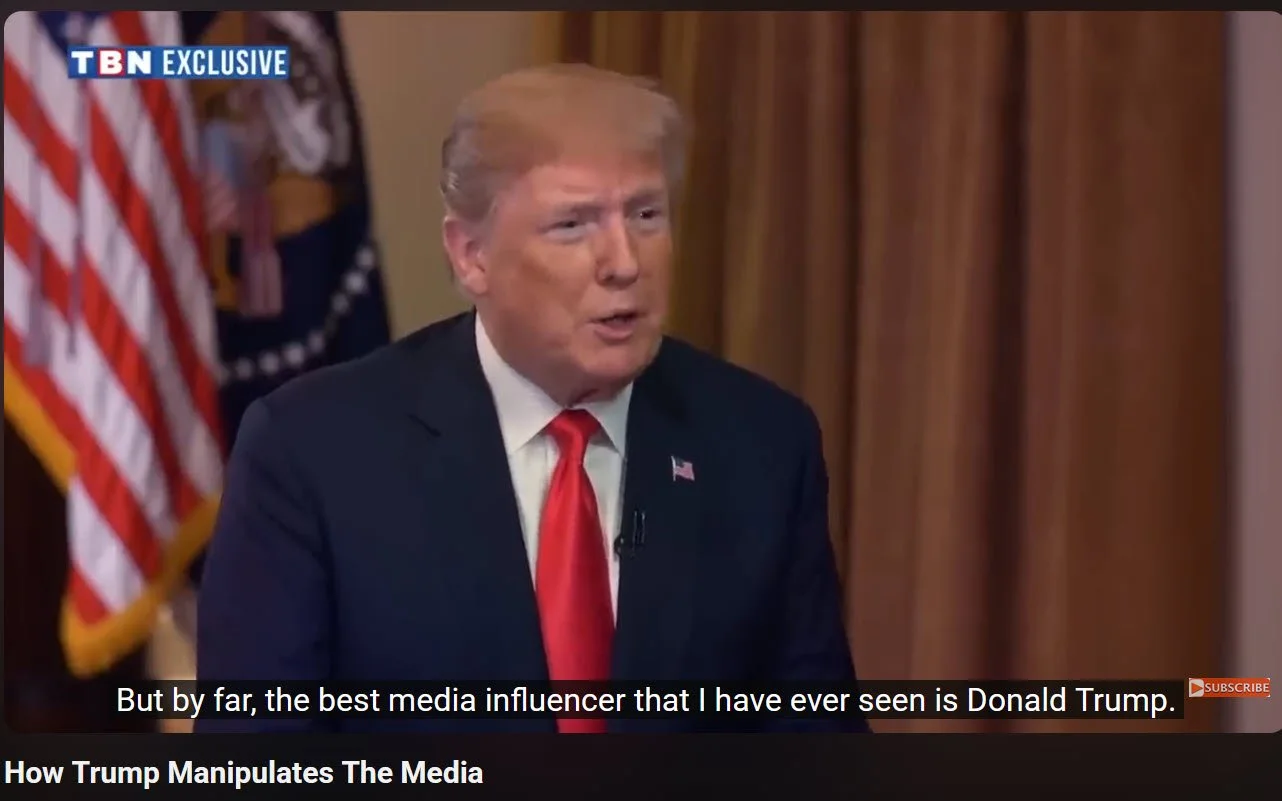
The legacy media remains structurally incapable of acknowledging the legislative and regulatory velocity of Trump’s second term. Their refusal to concede his effectiveness isn't just ideological—it’s existential. By bypassing traditional gatekeepers, Trump has effectively rendered the old-guard press irrelevant. As network ratings crater, a decentralized ecosystem of independent outlets and streaming ventures has rushed to fill the vacuum, signaling a permanent shift in how political power is communicated and consumed.
A sophisticated analysis suggests that Trump’s brilliance lies in his predatory ability to size up the psychological weaknesses of both allies and adversaries. He doesn't just manage people; he weaponizes their natural inclinations to serve his broader objectives.
The "3D Chess" of Foreign Policy and Internal Leaks
The recent maneuvering regarding Iran provides a masterclass in this high-stakes manipulation. Consider the possibility that the administration’s "chaos" is actually a calculated distribution of roles:
The Hawkish Lever: By allowing Lindsey Graham to beat the drums of war aggressively, Trump creates a credible "madman" threat, established a definitive red line that forces Iranian concessions.
The Backchannel Gambit: Simultaneously, the dialogue between independent figures like Tucker Carlson and Tehran functions as a deniable diplomatic pressure valve.
The Controlled Leak: Even the revelations regarding Joe Kent leaking information to Carlson may not be the security breach the media portrays, but rather a deliberate "strategic spill" designed to signal intent to the Iranians without official fingerprints.
Conclusion: The Businessman’s Doctrine
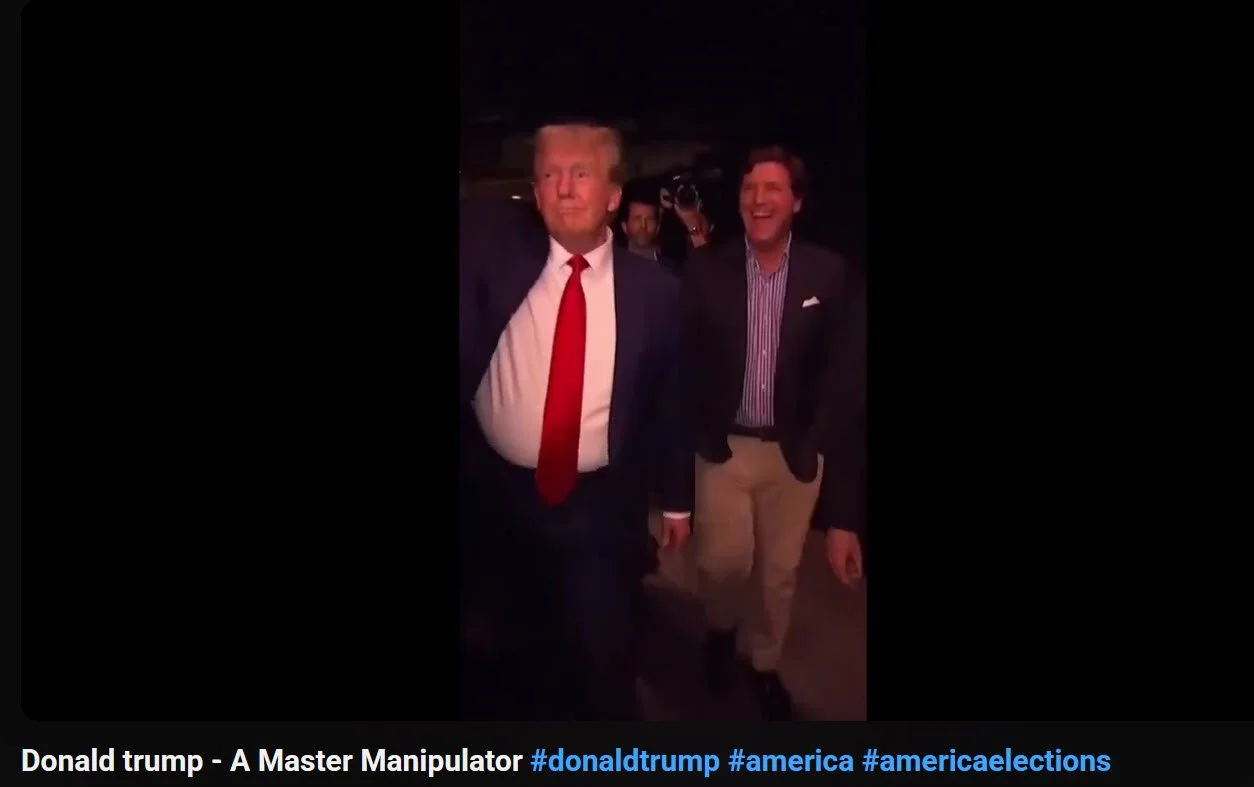
Some call Trump a master manipulator a politician's politician. the laziest man on Earth. that he makes Rasputin, Putin and Hitler look like amateurs. The only other person who seems to have this oh so heinous quality is a man who calls himself a Christian. Maybe the speaker of the house.? A small seemingly evil man living his best life. He could and probably will at some point rake in the money as a televangelist. He has all the traits of a self-serving servant of God. Whether that "God" is known as Jehovah, Trump, the GOP, or Johnson. I understand he is the apprentice of a pair of operators who are devoted to his rise in power. Trump need not have another compatriot in his endeavors, even his Cabinet cannot hold a candle to this charmers talents(?), but look out Trump he is ambitious. Two terms maybe your limit. and that is currently taking on the attributes of the servants leading the master.
To understand the current administration, one must stop listening to the hyperbole and start charting the results. Trump operates as a master manipulator who views the geopolitical stage through the lens of a ruthless corporate takeover. He uses the "weave" of his rhetoric to mask his true positions, moving the goalposts until his opponents are exhausted and his objectives are met.
The "businessman’s doctrine" you’re describing—the cold-eyed assessment of leverage and the use of extreme pressure to force a favorable "close"—is currently being stress-tested in real-time across both the Atlantic and the Pacific.
In this second term, the administration has pivoted from mere complaints to a policy of aggressive reciprocity, treating alliances and trade routes as assets that must yield a measurable return for the U.S.
Loyalty
In Trump’s first term he was burned by a cabinet that was loyal to their own agendas and not the President. He did not make that mistake again. There are countless stories of Trump going out of his way to show how much he cares for the people that are loyal to him. You can not underestimate the quality, leadership, experience and dedication of the men and women in Trump’s second term cabinet. You don’t want Trump for an enemy.
1. The NATO "Protection Racket" vs. Partnership
The 2025 NATO Summit in The Hague marked a tectonic shift. While the media focused on the friction, the "businessman" walked away with a historic commitment: NATO allies (with the exception of Spain) agreed to a 5% GDP defense spending target by 2035. This effectively doubled the long-standing 2% goal that European nations had ignored for decades.
The Leverage: Trump has been remarkably consistent in linking security to trade. He recently warned that "Spain will pay double" in future trade negotiations for failing to meet the threshold and suggested allies who don't pay "lose U.S. protection."
The Iran Stress Test: With the current conflict in the Middle East and the closure of the Strait of Hormuz, Trump is demanding that NATO and even China police their own "territory" (shipping lanes). By framing the Strait as their problem to solve, he is forcing them to choose between military involvement or economic strangulation from soaring oil prices—a classic squeeze play.
2. Trade: The "Reciprocal" Surcharge
Following the Supreme Court’s February 2026 ruling that struck down his use of the IEEPA for sweeping tariffs, Trump didn't retreat. He pivoted within 24 hours to Section 122, imposing a 10% global tariff (threatening to go to 15%) as a "temporary import surcharge" to address international payment imbalances.
The Sizing Up: The administration’s "Agreement on Reciprocal Trade" (ART) program is the tool used to dismantle existing barriers. For example, the recent deal with Indonesia is a template of this doctrine: Indonesia agreed to eliminate 99% of its barriers, accept U.S. standards, and—crucially—commit to bulk purchases of U.S. aircraft and energy. In return, the U.S. conceded virtually nothing.
USMCA Sunset Review: The upcoming July 2026 review of the USMCA is being used as a "red line" to force Mexico and Canada to close loopholes used by Chinese manufacturers (particularly in the EV and steel sectors).
3. Hyperbole vs. The Red Line
The hallmark of this doctrine remains the "weave"—the use of aggressive rhetoric to mask the actual deal-making. While the media focuses on the "madman" threats regarding NATO withdrawal or 500% tariffs on Russia, the actual policy moves (like the $1.5 trillion defense budget request for 2027) suggest a highly organized effort to rebuild the U.S. industrial base while shifting the global security bill to others.
The "sophisticated observer" sees that Trump is not trying to "save" the old world order; he is liquidating it to build a new one where the U.S. acts as the primary shareholder rather than the sole guarantor.
The characterization of Donald Trump as a "master manipulator" and "businessman" who prioritizes tangible deals over the ideological projection of Western values captures the core of his approach to governance and foreign policy in his second term. Analysts, critics, and supporters alike frequently highlight several defining features of this operational doctrine.
The Transactional Doctrine
At the heart of Trump's methodology is a move away from the post-Cold War commitment to promoting global liberal democracy. Instead, his framework is viewed as transactional realism.
Power as an Asset: Rather than viewing American soft power—such as alliances, international institutions, or the promotion of human rights—as a public good, his administration treats these elements as assets to be bartered.
The "Tributary" Shift: Some observers suggest the approach has evolved further into a "tributary" model, where other nations are expected to demonstrate deference or pay for U.S. security and economic cooperation, reflecting a hierarchical, business-like structure over traditional multilateral diplomacy.
Dismissal of Moralizing: The administration largely rejects the "moralizing" language of previous eras. Foreign relations are assessed by their direct impact on U.S. economic interests, border security, and material strength, rather than an alignment of values or governance systems.
Deal-Making and the Use of Leverage
Trump’s background as a real estate developer informs his use of international diplomacy as a series of high-stakes negotiations:
Strategic Unpredictability: By utilizing hyperbolic rhetoric and sudden, disruptive actions—such as threatening to withdraw from alliances or imposing blanket tariffs—he keeps counterparts off-balance. This "madman" persona creates leverage, forcing other leaders to either make concessions to avoid his wrath or to flatter him in order to secure favorable terms.
The "Weave" of Results: Supporters argue that what critics perceive as chaos is actually a calculated distribution of roles designed to maximize pressure. By allowing different voices—such as aggressive hawks to create a threat and independent channels to open backdoors—he achieves outcomes (like defense spending increases or trade adjustments) that traditional, incremental diplomacy failed to produce for decades.
Direct Intervention: He often bypasses established diplomatic protocols to engage in direct, leader-to-leader negotiations, viewing these as the most efficient way to achieve a "win" that can be presented to his domestic base.
Redefining "Peace"
In this doctrine, "peace" is often redefined not as the absence of conflict through shared normative values, but as the management of interests.
The "Business of Peace": By forcing nations to take primary responsibility for their own regional security (as seen with the pressure on NATO members), he aims to reduce the "cost" of American global involvement.
Transactional Stability: His ceasefires and settlements are often pragmatic, short-term arrangements rather than ideological solutions. The goal is to halt destabilizing violence that threatens U.S. interests, regardless of whether the underlying political or humanitarian issues remain unresolved.
Analytical Summary
To a sophisticated observer, this approach represents a fundamental transition from the "liberal international order" to a system defined by sovereign competition. Whether labeled as "populist realism," "transactionalism," or a "tributary" model, the administration's stated objective is clear: to prioritize the immediate, tangible interests of the United States.
In this view, the "businessman's doctrine" is not a lack of strategy, but a deliberate refusal to pay for the maintenance of a global system that the current leadership believes no longer serves the American bottom line.