Respected Experts Challenge Kent
Segment #827
Here’s a tight briefing-style summary of the Iran positions of the people you named — written in a way you can reuse in a memo/post.
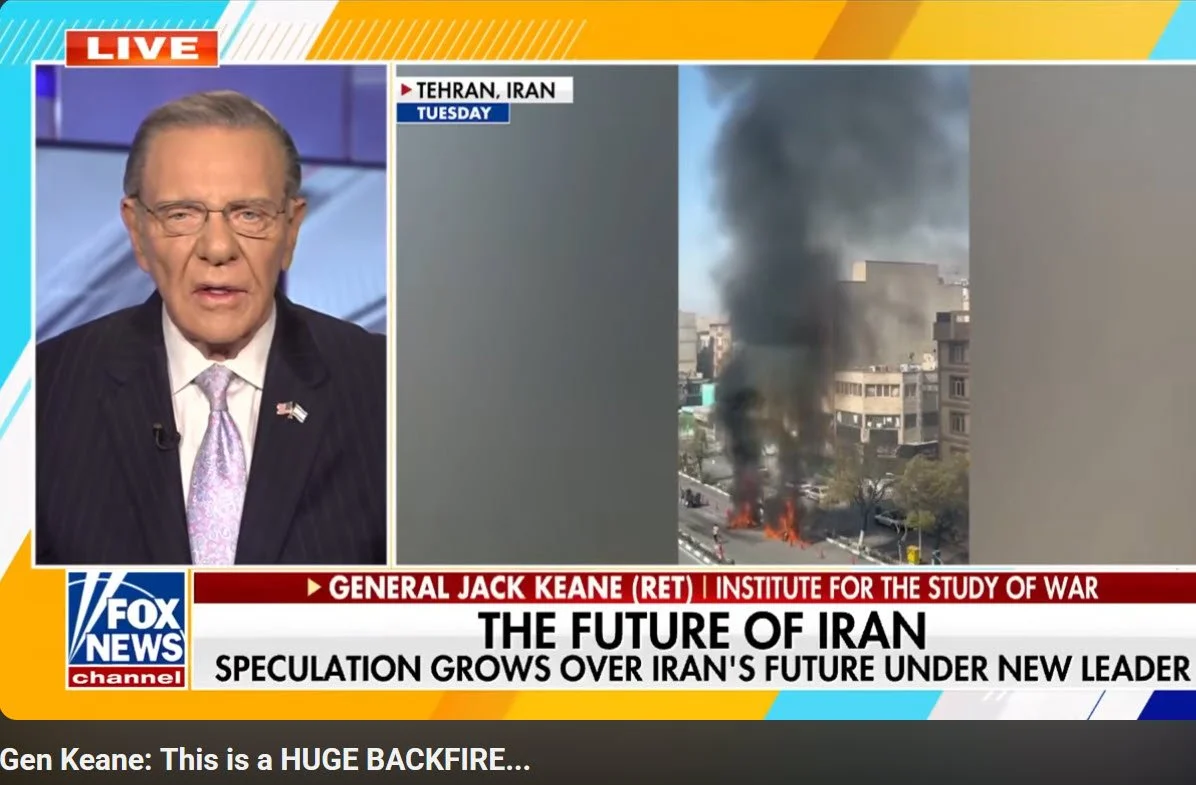
Retired four-star Army Gen. Jack Keane assesses the ongoing Operation Epic Fury against Iran
Donald Trump Stated Mission Objectives in Iran
Nuclear Weapons
Eliminate Iran's ability to obtain a nuclear weapon — This is consistently listed as a top (often the ultimate) objective. Trump has repeatedly stated Iran "can NEVER obtain a nuclear weapon," with strikes targeting enrichment facilities (building on 2025 actions that already set the program back years). Recent comments emphasize preventing any path to a bomb, including potential future missions to secure or destroy remaining nuclear material.
Straits of Hormuz
Eliminate Iran's ability to close the Straits of Hormuz — This is addressed head-on through the destruction of Iran's navy (the key tool Iran has historically used to threaten mining or attacking shipping in the strait). Trump and officials have reported sinking dozens of Iranian vessels (e.g., "10 ships" early on, up to 58 in some updates), explicitly tying this to securing Gulf shipping lanes and countering Iran's "gatekeeper" threats.
Military Buildup
Eliminate Iran's ability to project power through missiles or drone weapons — A primary focus is "destroying Iran's ballistic missile capabilities" and production facilities, along with related drone infrastructure. This is described as neutralizing the "conventional shield" Iran could use for regional threats or blackmail. Strikes have heavily targeted missile sites, launchers, and manufacturing.
Terrorism
Eliminate Iran's ability to support terrorism around the world — Explicitly stated as preventing Iran from "arming and funding outside terror proxies" (Hezbollah, Hamas, Houthis, etc.). This includes severing financial and operational support networks that fuel attacks across the region and beyond.
Summary of Iran Positions
John Ratcliffe
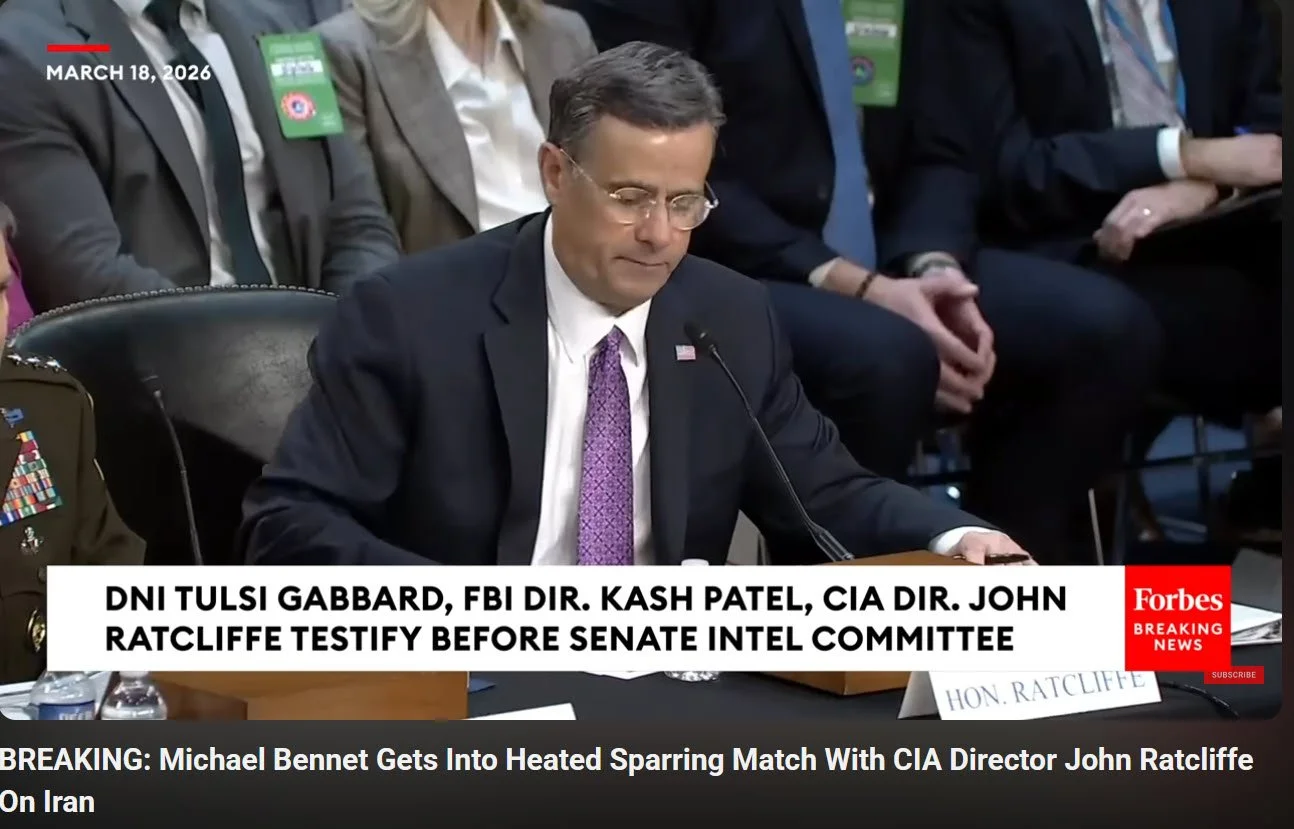
Position: Iran was a real and immediate threat, and Joe Kent’s “no imminent threat” line is wrong.
Core view: Ratcliffe’s reported testimony directly rebutted Kent’s claim, saying “intelligence reflects the contrary” — meaning the intelligence picture supported a threat case rather than Kent’s dismissal.
Bottom line:Institutional/national security rebuttal to Kent; pro-force if necessary, based on intelligence. (Reddit)
Dan Bongino
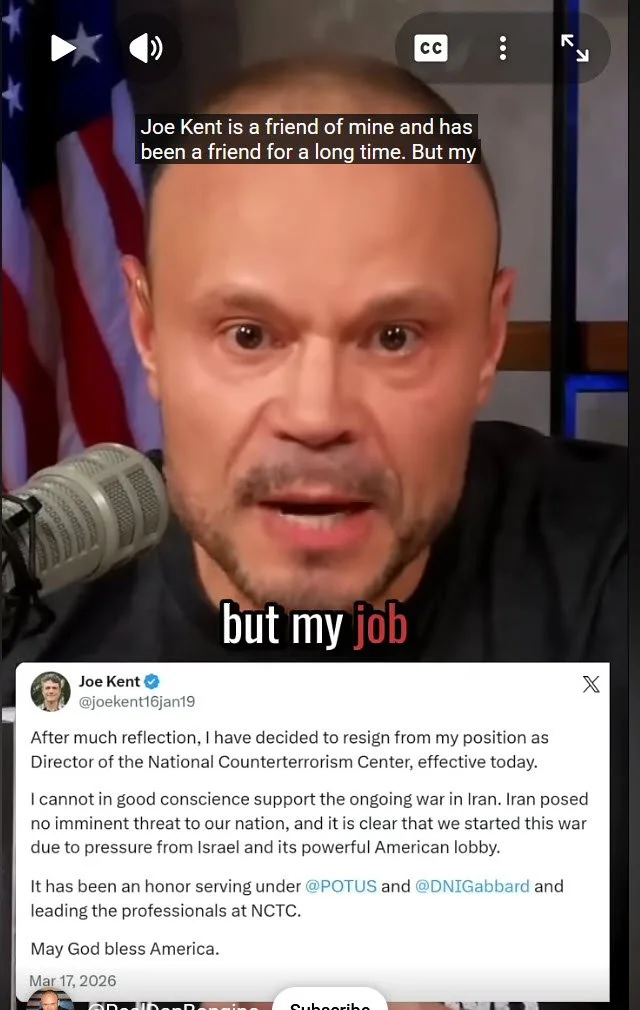
Position: Strongly supportive of Trump’s military action against Iran; argues critics are reacting before knowing the full intelligence.
Core view: In multiple early-March 2026 episodes, Bongino framed the strikes as decisive, justified, and strategically necessary, while attacking “doomer” and media criticism. He emphasized that outsiders do not have the full classified picture and that Trump acted under real security pressures.
Bottom line:Pro-strike, anti-isolationist in this case, trust-the-intel / trust-the-commander framing. (www.storytel.com)
Dave Rubin
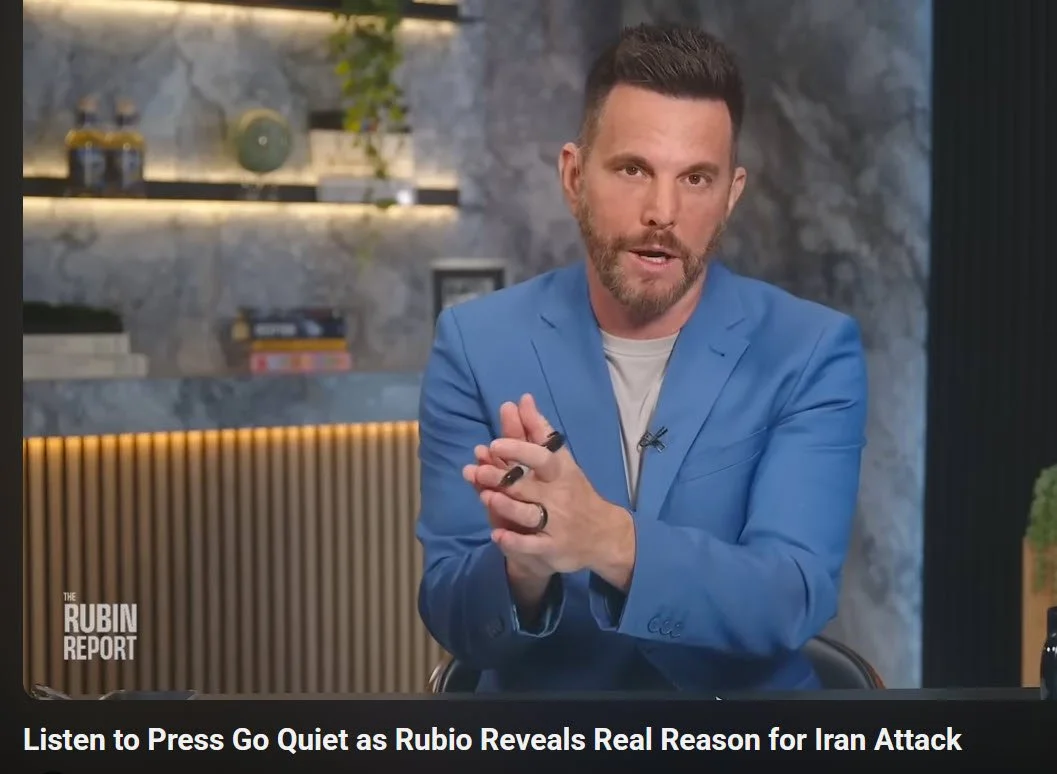
Dave Rubin of "The Rubin Report" talks about Marco Rubio silencing the press by explaining how Iran had been secretly stockpiling ballistic missiles for a plan to attack US sites; JD Vance explaining to Fox News' Jesse Watters why Iran hasn't felt the full unleashed power of the United States; Megyn Kelly and Tucker Carlson practically reading off the same script to blame Benjamin Netanyahu and Israel for forcing America into launching attacks and starting a war with Iran; "The View's" Elisabeth Hasselbeck getting Whoopi Goldberg and Ana Navarro to actually go silent as she shows them proof of what life was like for Iranian women before and after the Iranian Revolution; "The View's" Sara Haines reminding Sunny Hostin that it's not only Republicans who haven't gotten approval from congress before going to war; a resurfaced clip of CNN's Jake Tapper criticizing Barack Obama for appearing to pay Iran $400 million in ransom money for the freeing of hostages; and much more.
Position: Publicly aligned with the anti-Kent / anti-Tucker-style minimization of Iran line and generally supportive of confronting the regime.
Core view: Rubin has been positioned in the current conservative split as part of the camp rejecting the “Iran is not our problem / no threat” narrative and treating the Iranian regime as a genuine strategic danger.
Important note: I do not have a clean, primary-source quote in the search results above as strong as I do for Ratcliffe/Cotton/Rice. So for Rubin, I’d present him as a media ally in the pro-confrontation camp, but not your strongest evidentiary anchor unless you have a specific clip/post.
Bottom line:Use Rubin as a supportive media voice, not your lead evidence.
Tom Cotton
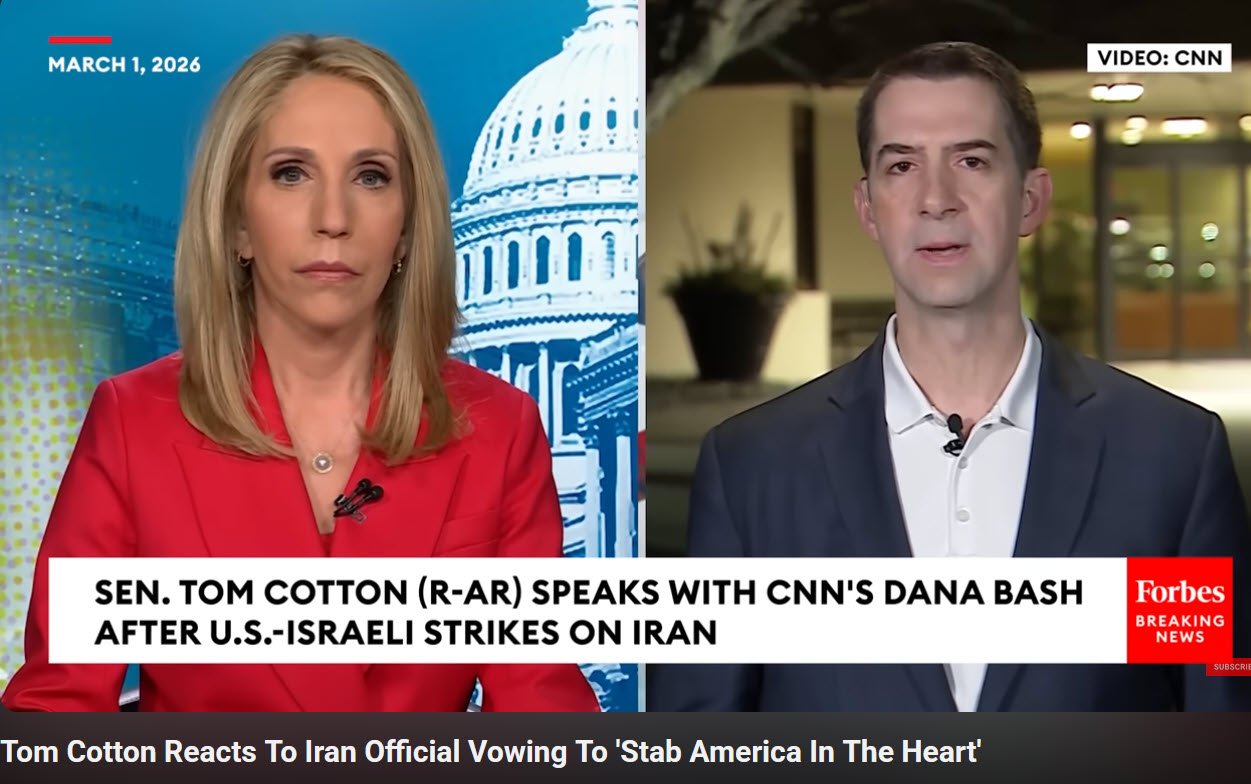
Position: Iran is a longstanding, active threat that must be degraded militarily.
Core view: Cotton has argued the campaign should focus on Iran’s missiles, launchers, missile manufacturing, and nuclear pathway, explicitly saying Iran cannot be allowed to retain either a nuclear weapon path or a vast missile arsenal. He also called this a chance for the Iranian people to rise up after regime weakening.
Most aggressive line: He even said Iran has posed an “imminent threat” for 47 years — rhetorically extreme, but very clear.
Bottom line:Hardline hawk: degrade capabilities, deny nukes, hit missiles, weaken regime. (Newsmax)
Mike Pompeo
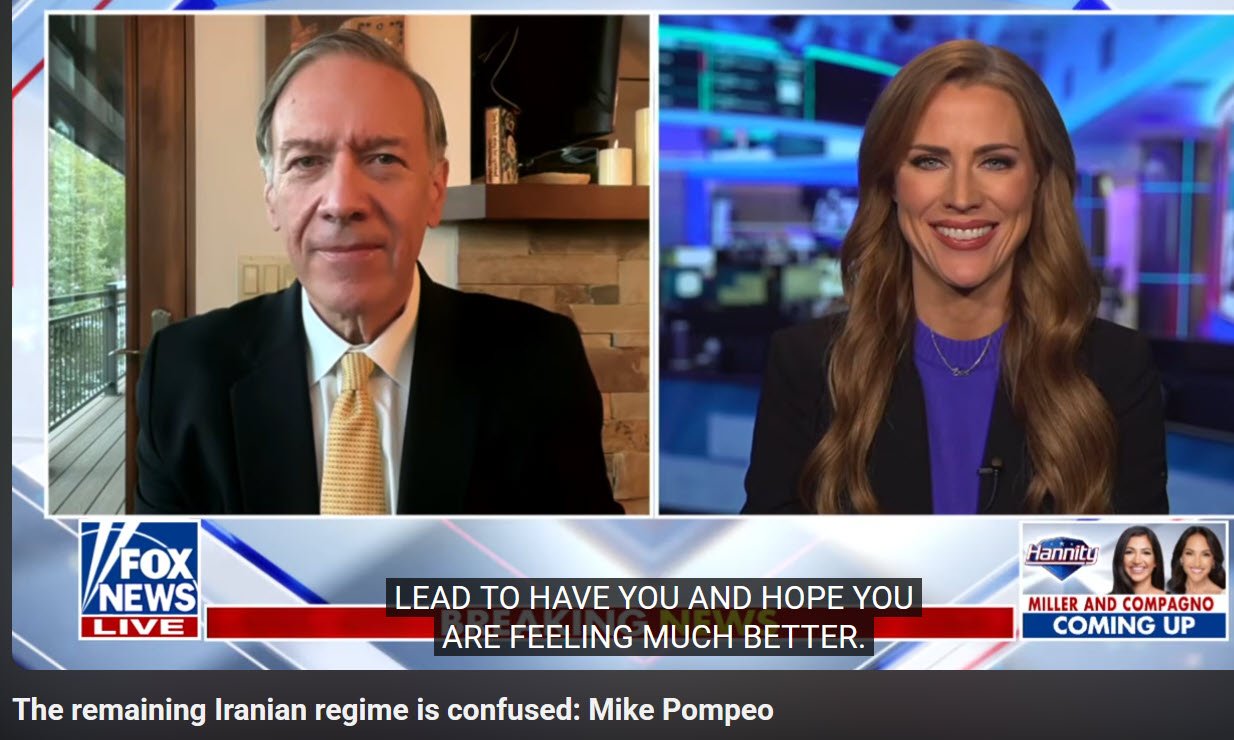
Position: The strikes were overdue, justified, and made the world safer.
Core view: Pompeo publicly described the U.S.-Israel action as “LONG OVERDUE” and, in earlier 2025 commentary, argued the world was safer after Israeli action against Iran. His long-running position is that Iran is a regime built around terror, proxy warfare, and nuclear ambition, and that deterrence requires willingness to hit back hard.
Bottom line:Maximum-pressure hawk: force is justified to stop nuclear progress and terror infrastructure. (YouTube)
Condoleezza Rice
Position: The strikes were a major credibility win for the U.S. and a strategic blow to Iran.
Core view: Rice called the strikes a “shot in the arm for American credibility,” said the evidence suggests Iran’s nuclear program was substantially damaged, and argued that a “crippled Iran is good for the region.” She is deeply skeptical that the regime wants peace, stressing decades of Iranian destabilization, proxy terror, and anti-American hostility.
Bottom line:Credibility + deterrence + regime skepticism; limited force seen as strategically beneficial. (New York Post)
Laura Ingraham
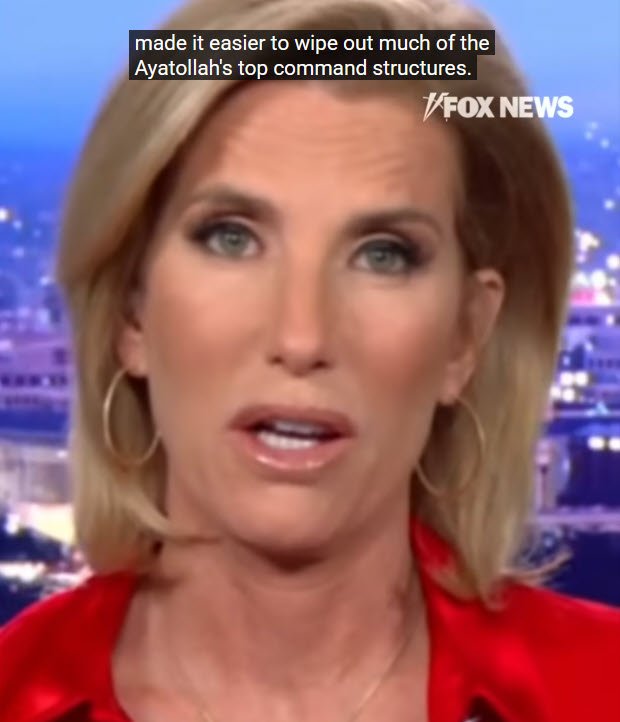
Position: Trump has already largely succeeded if the operation remains limited and does not become a forever war.
Core view: Ingraham framed the operation as already accomplishing core objectives: destroy or cripple Iran’s nuclear effort, missile arsenal, launchers, and naval capacity, while warning that public support collapses if it turns into a long, open-ended conflict. Her show repeatedly emphasized “not a forever war” while still backing decisive action.
Best quote/theme:“Trump has already won in Iran.”
Bottom line:Supports hard, limited strikes; strongly against prolonged occupation or endless war. (RealClearPolitics)
Patrick Bet-David
Patrick Bet-David’s position is broadly anti-Iran-regime and supportive of decisive U.S./Israeli pressure, but he frames it as a high-stakes geopolitical chess match — backing strength while constantly asking whether escalation is controlled or spiraling.
Best “vs. Kent” framing
PBD is not in the Joe Kent camp. His coverage treats Iran as a real strategic threat — especially to U.S. interests, global shipping, and regional stability — and he appears far more sympathetic to forceful deterrence than to Kent’s minimizatio