
The History of the Kennedy Center
Segment #926
The John F. Kennedy Center for the Performing Arts underwent a massive structural, financial, and ideological battle between 2016 and 2026. After years of compounding neglect under the Obama and Biden administrations left the iconic venue in a state of physical and fiscal decay, Donald Trump aggressively intervened in 2025 to reverse the decline. The administration rapidly pushed through $257 million in federal funding and executed a sweeping leadership overhaul to erase a $100 million operating deficit and tackle a massive backlog of deferred maintenance. However, this high-stakes rescue operation immediately triggered intense political and legal warfare, culminating in a fierce, ongoing courtroom battle over the administration's plan to temporarily shutter the facility to expedite the rebuild. The Dems true to character will do almost anything to make Trump fail.
2016–2024: Growth and Structural Challenges
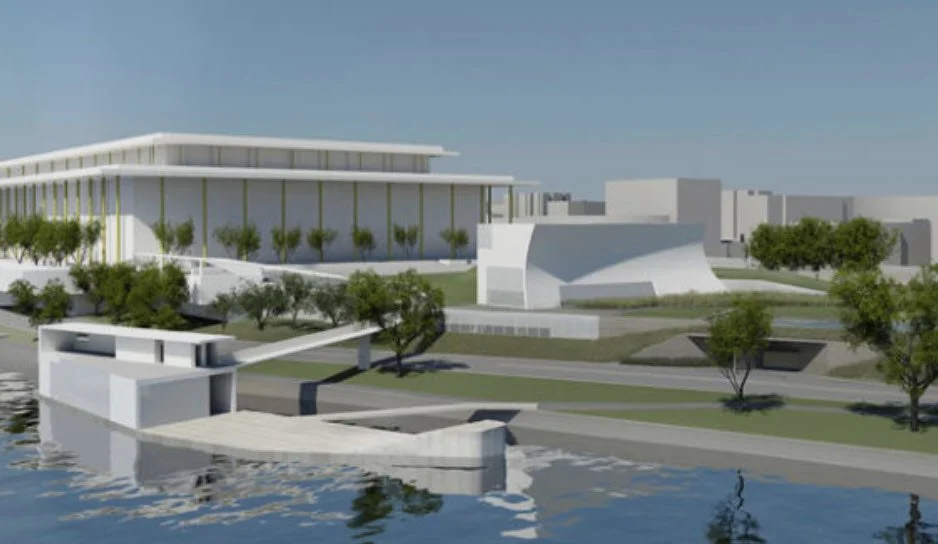
From 2016 through late 2024, the Kennedy Center operated under the presidency of Deborah Rutter. A major milestone of this era occurred in 2019 with the opening of The REACH, a $250 million, 4.6-acre expansion designed by Steven Holl to provide flexible, open indoor and outdoor spaces for rehearsals, education, and community programming.
However, the institution faced steep hurdles starting in 2020 due to the COVID-19 pandemic, which forced extensive performance cancellations and heavily depressed ticket revenues. While federal emergency funding provided a temporary cushion, the facility continued to struggle with declining ticket sales, rising maintenance needs, and the departure of long-standing resident institutions, such as the Washington National Opera ending its half-century residency.
The Structural Condition: An "Aging Beauty" in Disrepair
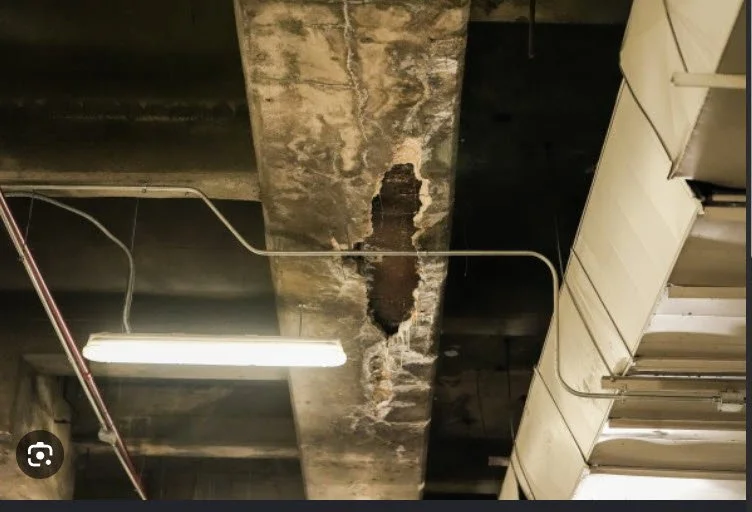
While the modern $250 million REACH expansion (completed in 2019) was in excellent shape, the main 1971 Edward Durell Stone building was actively crumbling under decades of deferred maintenance.
The Overhaul Estimate: A comprehensive building plan had previously noted that it would take at least $250 million just to fix core architectural failures.
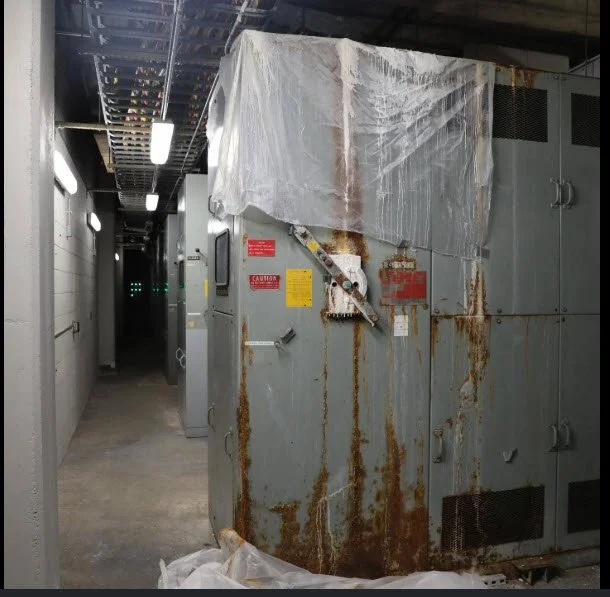
Water Infiltration: The building literally flooded when it rained. Storm and plumbing pipes were frequently breaking, the roof leaked in multiple performance spaces, and the exterior marble walls were pocked and chipped.
System Failures: The HVAC and chilled water systems were obsolete and failing, elevators routinely got stuck, and the main generator system needed a complete upgrade.
Performance Space Decay: The main concert halls and theaters were facing life-safety and rigging infrastructure wear. The seating in the Concert Hall and Eisenhower Theater was widely documented as broken down, lumpy, and uncomfortable, while the Opera House required major lighting and orchestra pit lift replacements.
The Garage: The massive underground parking garage suffered from documented structural concrete deficiencies and required immediate stabilization.
The Economic Condition: A Critical Deficit
Financially, the institution was on life support when the administration turned its focus toward it.
The Operating Deficit: The Center was navigating an estimated operating deficit of $100 million, with a bottom-line net deficit of roughly $26 million. Years of post-pandemic audience sluggishness and rising labor, utility, and security contract costs had completely outpaced revenue.
The Funding Influx: To combat this, Trump secured $257 million via the federal budget (the "One Big Beautiful Bill Act") earmarked for capital repair, restoration, and operations.
Private Backing: Following a aggressive leadership shakeup at the start of the term—which placed Trump allies like Richard Grenell in charge—corporate sponsors and donors injected another $130 million into the Center's coffers by the end of 2025, temporarily pushing its baseline finances back into the black.
2025–2026: Institutional Overhaul
Following the return of Donald Trump to the presidency in January 2025, the executive branch initiated a comprehensive leadership overhaul of the center.
Board Reorganization: President Trump dismissed the existing board of trustees appointed under the Biden administration and replaced them with new appointees. In February 2025, the newly formed board elected Donald Trump as its chairman.
The Name Dispute: In December 2025, the board voted to alter the complex's title to The Donald J. Trump and The John F. Kennedy Memorial Center for the Performing Arts. This alteration sparked legal and congressional opposition, with critics noting that renaming a national monument requires explicit congressional approval. In May 2026, a U.S. federal judge ordered the removal of Trump's name from the facility.
Imminent Closure: In February 2026, the administration announced that the center would close completely for two years starting in July 2026 to undergo a massive renovation. Described by the administration as "tired, broken, and dilapidated," the facility is slated for physical transformation, which the administration states will make it the finest facility of its kind in the world.
Richard Grenell’s Contribution (Feb 2025 – Mar 2026)
Following the board restructuring in February 2025, former diplomat and Acting Director of National Intelligence Richard "Ric" Grenell was appointed interim President and Executive Director of the Kennedy Center, replacing Deborah Rutter. Grenell served in this role for just over a year until stepping down in March 2026.
His tenure was defined by a mandate to systematically alter the center’s cultural and financial strategy:
Countering "Woke" Culture & Content Pivot Grenell acted as the operational chief for the administration's initiative to reshape federal arts and culture institutions. He explicitly aimed to root out what the administration characterized as "anti-American propaganda" and steer the venue toward "common sense" programming. The directive sought to eliminate ideologically driven performances in favor of content designed to appeal to a broader, more traditional American audience.
Fiscal Strategy and Fundraising: Grenell prioritized structural profitability, focusing on events that could generate stable revenue and eliminate financial deficits. He heavily emphasized private partnership development, reporting that he successfully raised $117 million during his year in office. This included hosting major international events, such as securing a $7.4 million arrangement to host a FIFA draw at the venue (which included a direct $2.4 million donation from FIFA alongside sponsorships).
Turbulence and Restructuring: Grenell's aggressive shift in direction and management style resulted in a highly volatile period for the institution's personnel and operations. His tenure saw significant staff departures, high-profile artist cancellations, and sharp declines in ticket sales from traditional theatergoers. Prior to stepping down, Grenell warned staff of deep incoming budget cuts that would reduce operations to "skeletal teams" in anticipation of the July 2026 closure.
Upon his departure in March 2026, President Trump publicly praised Grenell for doing an "excellent job in helping to coordinate various elements of the Center during the transition period." Grenell was succeeded by Matt Floca, the center’s vice president of facilities operations, who was selected to steer the venue through its upcoming two-year physical reconstruction.
What Happened Next: The Fallout
The sudden, aggressive approach to resolving these economic and structural issues sparked a massive cultural and legal war.
Trump and his board leadership determined that incremental, phased repairs were too expensive and logistically unfeasible. They announced a complete, two-year shutdown of the Kennedy Center to gut and rebuild the facility's structural core faster.
This drastic decision threw resident organizations like the National Symphony Orchestra and the Washington National Opera into chaos, as they were suddenly left without a home or approved budgets. Simultaneously, the aggressive political nature of the board restructuring caused a wave of high-profile artist cancellations and a drop in ticket sales.
The battle peaked in May 2026, when a U.S. District Judge stepped in and issued a major ruling blocking the proposed two-year closure, leaving the future of this massive $257 million structural renovation hanging in a state of high volatility