
Segment #925
The Illusion of Evidence: How Modern Medical Research Is Systematically Rigged Scientific research has provided immense benefit to society. However, as its success earned it unprecedented power, prestige, and funding, its core incentives shifted from advancing human health to protecting institutional status quos and maximizing pharmaceutical profits.
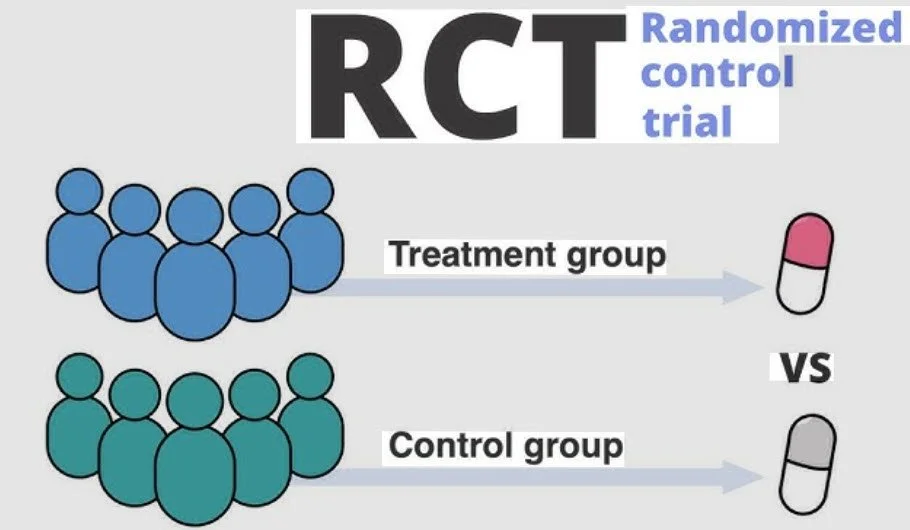
1. The Rise of RCT Fundamentalism
Central to modern medical orthodoxy is the belief that Large Randomized Controlled Trials (RCTs) are the sole arbiters of scientific truth. While RCTs are invaluable for detecting minute data signals across massive, homogeneous populations, treating them as the only valid form of evidence has severely marginalized medicine:
Monopolized Truth: Because a single high-quality RCT costs tens of millions of dollars, only pharmaceutical giants, national governments, and massive NGOs can afford to run them. Consequently, low-cost, off-patent, or individualized therapies are rarely studied.
Reductionist Bias: RCTs require strict standardization. Safe, highly effective, or context-dependent modalities (such as DMSO or holistic diagnostic frameworks) are systematically sidelined because they do not fit the rigid "one pill, one disease" paradigm.
The Suppression of Observational Data: A definitive 2014 Cochrane Review demonstrated that smaller, unblinded observational trials typically yield the same clinical results as large RCTs. Observational data is usually driven by clinical effects large enough for bedside practitioners to actually notice, yet it is routinely dismissed as "anecdotal quackery" by institutional gatekeepers.
2. Institutional Capture and Conflict of Interest
The regulatory bodies tasked with oversight are deeply enmeshed with the entities they regulate. The accountability framework has broken down due to several systemic factors:
Financial Dependence: Industry user fees now fund roughly 51% of the FDA's total budget, soaring to 77% for the prescription drug review program.
The Revolving Door: Executive and rank-and-file pathways are highly compromised. Every FDA commissioner since 2000 has eventually transitioned to employment or board positions within the pharmaceutical industry.
Financial Incentives: FOIA litigation revealed that between 2010 and 2023, over $2.685 billion in private royalty payments flowed from pharmaceutical companies to NIH institutes and individual government scientists.
Internal Suppression: Honest agency scientists who historically attempted to flag safety disasters (such as the Vioxx catastrophe) have faced aggressive internal surveillance, intimidation, and professional marginalization.
3. The Core Mechanics of Trial Rigging
When tens of millions of dollars are staked on a single trial, an immense incentive exists to guarantee a positive outcome. Over decades, a sophisticated "cottage industry" of data manipulation has emerged.
Designing the Trial
Comparator Rigging: Testing a new drug against a placebo rather than the best existing treatment, or deliberately handicapping competing older drugs through toxic overdosing or incorrect administration to make the new drug appear safer or more effective.
Reactogenic "Spiked" Placebos: Using a control substance that intentionally causes adverse effects (such as using an aluminum adjuvant or an existing reactive vaccine as the "placebo"). This equalizes side effects across both cohorts, masking the new drug's specific harms.
Cherry-Picking Participants: Utilizing highly restrictive exclusion criteria to filter out patients vulnerable to side effects while pre-selecting those most likely to respond. This guarantees ideal trial data that completely fails to match real-world outcomes once the drug hits the wider market.
Surrogate Endpoints: Measuring proxy markers (e.g., cholesterol levels, antibody responses, or temporary tumor shrinkage) rather than hard clinical outcomes like functional recovery, quality of life, or overall survival.
Manipulating Data Mid-Stream
Truncating Observation: Halting data collection early before long-term adverse trends or toxicities inevitably emerge in the dataset.
Stopping Trials Early: Halting a trial the moment an interim analysis catches a temporary, positive statistical fluctuation. Once stopped, the placebo group is frequently crossed over and vaccinated or treated, permanently erasing long-term, blinded safety data.
Biased Event Adjudication & Recoding: Using sponsor-controlled committees to reclassify serious adverse reactions into benign, vague diagnostic terms (e.g., reclassifying suicide attempts as "overdose," or vaccine-induced systemic injuries as "anxiety" or "functional pain").
Gaming the Analysis & Presentation
Relative vs. Absolute Risk Framing: Presenting drug benefits in relative terms to inflate tiny real-world improvements into massive percentages, while presenting drug harms strictly in absolute terms to make significant risks appear negligible.
Outcome Switching: Quietly changing what a trial measures after the data has been collected to highlight random, unexpected positive variations while burying the failed primary endpoints in appendices.
Burying Negative Results: Completely suppressing unfavorable trials while repeatedly publishing a single positive trial under multiple author lists to distort the evidence base.
4. Reclaiming Democratic Accountability
The strict informational monopoly previously maintained by medical journals, captive mainstream media outlets, and insulated "expert" consensus panels is beginning to fracturing.
The path forward requires structural and cultural shifts:
Diverse Evidentiary Standards: Re-establishing decentralized medical observation. Replicated, peer-to-peer observational studies must be recognized as valid, actionable evidence for off-patent therapies.
Regulatory Overhaul: Shifting regulatory focus firmly toward safety, purity, and manufacturing quality control rather than keeping effective, low-cost options off the market due to a lack of multi-million-dollar RCT financing.
Absolute Data Transparency: Refusing to accept sweeping public health policies or mandates based on obfuscated, proprietary patient-level data. Scrutiny and open replication are the bedrocks of true science.
Leveraging modern tools like AI to parse massive, dense medical texts and clinical trial protocols allows independent researchers, clinicians, and an informed public to bypass institutional gatekeepers, analyze foundational raw data directly, and demand genuine scientific accountability.