
Segrment #874
Senator Cassidy’s positioning is often described by his supporters as "principled realism" and by his critics as "obstinate gatekeeping." From the perspective of the MAHA movement, his refusal to entertain challenges to long-standing "settled science" is seen as a failure to recognize how often institutional consensus has been wrong in the past.
On April 30, 2026, President Trump officially withdrew Dr. Casey Means and nominated Dr. Nicole Saphier for Surgeon General. While Cassidy was the primary roadblock for Means, the outlook for Dr. Saphier is significantly different due to her profile and past interactions with the "mainstream" medical community. Unlike Casey Means—who had an inactive medical license and left her surgical residency to become an influencer—Dr. Nicole Saphier is a practicing radiologist and Director of Breast Imaging at Memorial Sloan Kettering.
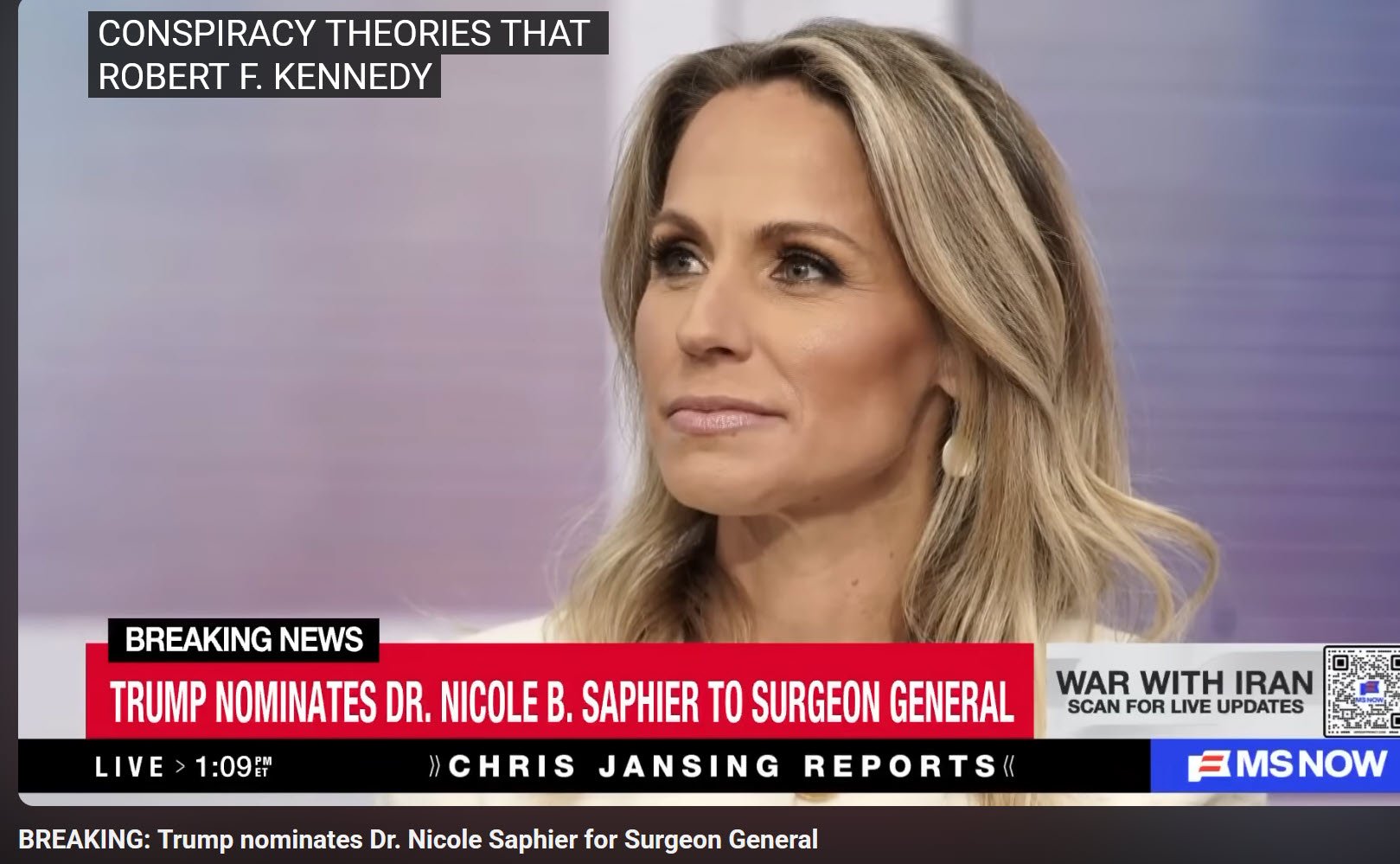
Unless Saphier takes a hard pivot toward the more controversial MAHA theories during her hearings, Cassidy is unlikely to block her. He will likely use her hearing to highlight her disagreements with RFK Jr. as a way to "re-center" the Department of Health. Cassidy is expected to support Saphier specifically because she represents a bridge between Trump’s "Health Reform" and the traditional medical establishment he belongs to. By confirming her, Cassidy can claim he isn't "obstructionist" to Trump’s goals—just to "unqualified" nominees.
Here is an analysis of why Cassidy maintains this stance and how it creates a direct conflict with the MAHA agenda without using Democratic talking points.
The "Doctor First" Filter
Cassidy is a physician, and his worldview is built on the clinical model where "standard of care" is the primary legal and ethical baseline.
Settled vs. Evolving Science: While MAHA proponents argue that science is a process of constant questioning, Cassidy views certain medical achievements (like the eradication of polio or the reduction of Hepatitis B, which he treated as a specialist) as closed cases.
The Threshold for Change: In his view, to move away from a "settled" norm requires a level of peer-reviewed data that the current MAHA leadership hasn't yet produced to his satisfaction. For Cassidy, "testing the science" shouldn't happen at the policy level until it has already succeeded at the laboratory level.
Guarding the "Institutional Process"
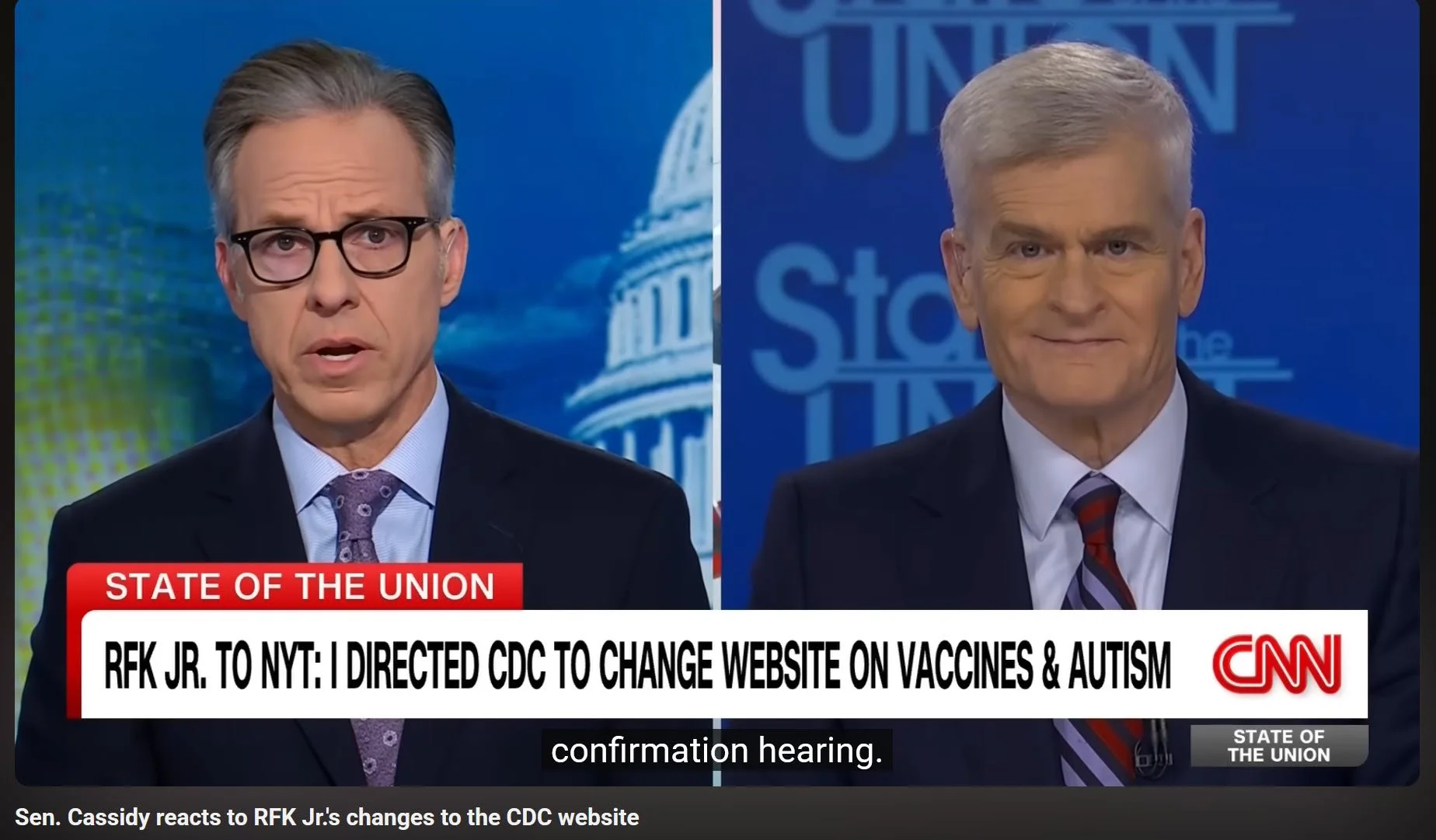
Cassidy often acts as a defender of the existing regulatory framework (FDA, CDC, and the NIH).
The MAHA View: The movement sees these agencies as "captured" by corporate interests and believes their "mainstream" science is tainted.
Cassidy’s View: He sees these institutions as the only thing preventing "medical anarchy." During the recent budget hearings with Secretary RFK Jr. (April 2026), Cassidy repeatedly pressed for guarantees that scientific decisions would remain with "independent" career scientists rather than political appointees.
The Conflict: By insisting that the current system is the only valid way to verify science, he effectively blocks the MAHA movement’s attempt to overhaul that very system.
The "Cost of Being Wrong"
From a conservative fiscal and social perspective, Cassidy argues that the risk of entertaining "alternative" scientific theories is too high for the government to sanction.
Measles as a Metric: Cassidy has pointed to the recent uptick in measles cases as "real-world proof" that questioning vaccine science has immediate, negative consequences.
Avoiding Liability: As a Republican who prioritizes efficiency and reducing government waste, he views the potential for widespread public health failures—and the resulting strain on the healthcare system—as a greater risk than the risk of maintaining a potentially flawed status quo.
The RINO vs. Reformer Tension
The friction isn't just about science; it's about the Republican identity.
Mainstream Conservative vs. Populist: Cassidy represents a brand of Republicanism that values institutional stability. He recently rebuked the American Medical Association (AMA) for "promoting political agendas" on gender-related care, showing he is willing to challenge mainstream medical groups when he believes they’ve abandoned science for politics.
Selective Skepticism: Critics note that while he is willing to challenge the AMA on "woke" policies, he refuses to apply that same skepticism to the CDC on vaccine or metabolic health policies. This "selective skepticism" is what makes him appear obstructionist to the Trump-MAHA base.
Tactical Positioning for 2026
Cassidy is currently facing a primary challenge from Trump-endorsed candidates in Louisiana. By standing his ground on "settled science," he is positioning himself as the "Adult in the Room" for moderate and traditional Republican voters. However, for the MAHA base, this looks like a refusal to admit that the "experts" were wrong about everything from food pyramids to COVID-19 protocols—making him a primary target for the movement’s $1 million "unseat" campaign. In short: Cassidy believes that "challenging the science" should be a slow, academic process. The MAHA movement believes it is an urgent, political necessity. Because Cassidy holds the gavel of the HELP Committee, his "wait-and-see" approach acts as a functional "stop" button for the MAHA agenda.
Statement From AFLDS - Simone Gold
When President Trump announced that he was withdrawing Dr. Casey Means as his nominee for Surgeon General and replacing her with Dr. Nicole Saphier, the reaction was immediate. Social media lit up, and the MAHA movement split almost instantly. Some celebrated the decision. Others were outraged. That reaction tells you something important, but it is not really about Dr. Saphier. It is about what Americans just lived through, and what they refuse to accept again.
Because the real question is not who holds the title of Surgeon General. The real question is who decides your medical care? Does that authority belong to you or to the government?
What we experienced during COVID was not simply a disagreement over vaccines or treatment options. It was the deliberate dismantling of informed consent, the very foundation of medicine itself. Americans were kept in the dark, doctors were punished for speaking openly, and millions were forced into taking the COVID shot under threat of losing their jobs, their education, and their place in society.
What we saw was coercion, plain and simple.
We now have the benefit of hindsight, and the facts are no longer in dispute. Children faced a statistical-zero risk of life-threatening COVID illness, early treatment options were actively suppressed, and known risks such as myocarditis were not openly discussed with the public.
If you and your family had been free to hear competing medical views and make your own decisions without threats, coercion, firings, or exclusion from society, the outcome in this country would have been much different.
This was never just about one product or one policy. It was about whether Americans would retain their God-given right to make decisions about their own bodies and for their children.
These are not optional principles.
Medicine must be grounded in informed consent, the honest pursuit of truth, and the right of patients to make their own decisions alongside a physician they trust. This is the standard, but it was stripped away while Americans were told to comply and stay silent. Even now, many of the same institutions want to move forward without accountability. They are asking you to forget what happened and to accept the same concentration of power that failed so many Americans. We refuse to do so.
At America’s Frontline Doctors, we are engaged in the legal battles that will determine whether these principles are restored and protected. We are defending the free speech of physicians , protecting the authority of parents, and confronting a system that replaced individualized care with top-down control. These battles are about your rights. Without clear rulings that restrain government overreach, what happened during COVID will happen again under a different name and a different justification.