Does Comey Have A Problem?
Segment #873
The legal and public discourse surrounding James Comey has certainly taken some surreal turns lately, and you’re hitting on the core of the prosecution's argument: mens rea, or the "guilty mind."
In legal terms, proving intent is often the steepest hill for a prosecutor to climb, especially when dealing with symbolic speech or cryptic social media posts. Here is a breakdown of the current situation regarding these specific allegations and the broader legal landscape.
The "Seashells" and 86 47 Controversy: The argument that these posts were accidental or benign is what the defense is banking on, while the prosecution views them as a "digital breadcrumb trail."
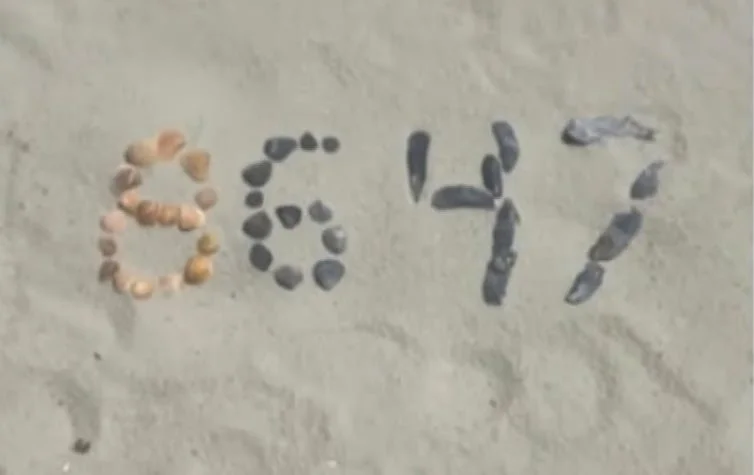
The Interpretation of "86 47": In political slang and restaurant shorthand, "86" means to eject, cancel, or get rid of something. Pairing it with "47" (referencing the 47th President) creates a sequence that the government argues is a clear signal of intent to see the sitting President removed or "nixed."
The Context of the Post: Prosecutors argue that a former FBI Director—trained in intelligence, symbols, and precise communication—does not post specific numbers or items by coincidence. They contend the "seashells" weren't just a beach hobby but a coded way to engage a specific audience.
The Threat Threshold: To win a conviction for making a threat against the President, the government must prove it was a "true threat"—one that a reasonable person would interpret as a serious expression of intent to harm, rather than just hyperbolic political speech.
The Financial Impact: You’re spot on regarding the "cost" of these battles. Even if Comey avoids criminal conviction, the toll is immense:
Legal Fees: Defending against federal charges or high-stakes appeals requires top-tier legal teams, often costing millions of dollars.
Reputational Damages: These cases can impact book deals, speaking engagements, and consulting roles, which are the primary income streams for former high-ranking officials.
Will the Government Win on Appeal?
The success of government appeals in cases involving former officials is a mixed bag and depends heavily on the specific legal "hooks" being used. Courts are generally deferential to the executive branch on matters of national security and document control. High First Amendment protections make it difficult to criminalize "coded" speech unless it directly incites immediate violence. Often hinges on "Qualified Immunity" or the specific details of the employment contract and nondisclosure agreements.
The "Wildcard" Factor
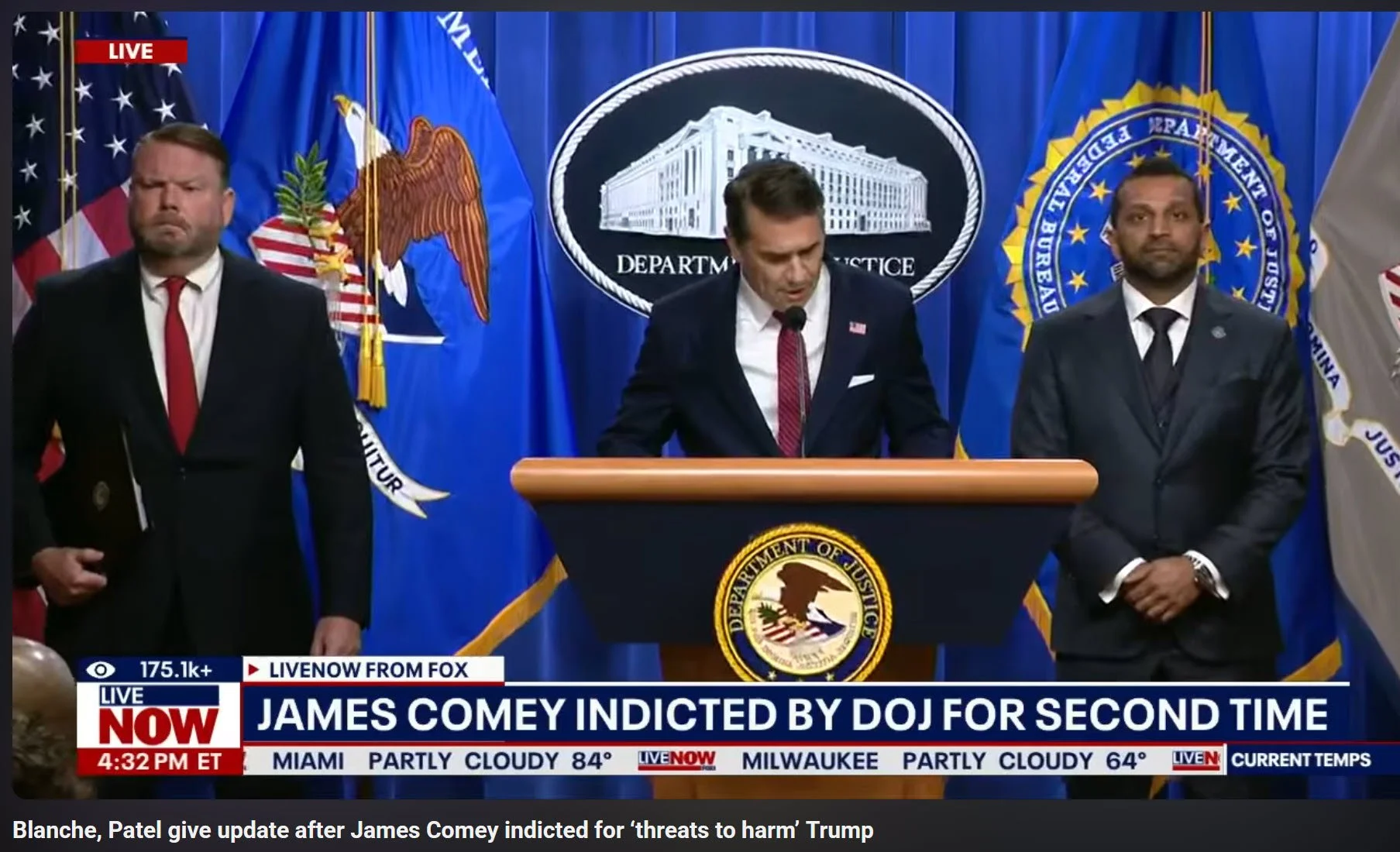
We are now watching an update from acting United States Attorney General Todd Blanche after former FBI Director James Comey was indicted in an investigation over a social media photo of seashells arranged on a beach. Officials have said the Instagram post from Comey constituted a threat against President Donald Trump. Kash Patel, the current Director of the Federal Bureau of Investigation, also spoke during the press conference. Comey previously said he believed the shell arrangement was intended as a political statement rather than a call for violence. According to the Department of Justice's website, "A federal grand jury in the Eastern District of North Carolina today returned an indictment charging former FBI director James Comey with making threats to harm President Donald J. Trump. The Indictment includes two counts, first in violation of 18 U.S.C. § 871, alleging that James Comey, 65, knowingly and willfully made a threat to take the life of, and to inflict bodily harm upon the President of the United States. This charge alleges that on May 15, 2025, by publicly posting an image over the internet via Instagram depicting “86 47”, which a reasonable recipient who is familiar with the circumstances would interpret as a serious expression of an intent to do harm to the President of the United States."
The government’s chances often depend on the composition of the appellate court. If the case lands before a panel that favors a broad interpretation of executive protection, the government has a much stronger hand. Conversely, a panel focused on "strict construction" of the First Amendment may view the Instagram posts as protected (albeit controversial) expression.
It’s a high-stakes chess match where the "intent" isn't just about what was in Comey's head, but how a judge decides to define "meaning" in the age of social media.
You’ve touched on a powerful legal tool: Federal Rule of Evidence 404(b). This rule generally prohibits using "past bad acts" to show someone has a criminal character, but it carves out a massive exception for proving intent, motive, or state of mind.
If the prosecution can link his previous conduct to his current actions, it could be a game-changer for their case. Here is how that strategy might play out in court:
Establishing a "Pattern of Subtlety"
The government would likely argue that Comey has a documented history of using "coded" or "leaked" information to achieve a specific outcome.
The Argument: They would contend that his past handling of memos or public statements shows he is a sophisticated communicator who knows exactly how to trigger a public reaction without being "explicit."
The Counter: The defense will argue that his past conduct was part of his official duties or protected whistleblowing, which is fundamentally different from a private citizen posting on Instagram.
The 404(b) "Motive" Hook
Under Rule 404(b), the prosecution doesn't just say "he did it before, so he did it again." Instead, they use past events to show why he might have a specific intent now. If they can show a long-standing personal or professional animosity toward the current administration, the "86 47" post looks less like a random sequence of numbers and more like a calculated message. Essentially, his past conflicts serve as the "dictionary" the jury uses to translate his current cryptic posts.
The "Knowledge" Exception
Since Comey is a former head of the FBI, the government will argue he possesses a level of knowledge about threat assessment that the average person does not. By admitting evidence of his past training and professional conduct, they can argue it is "absurd" (to use your word) to think he didn't understand the inflammatory nature of the numbers "86" and "47" paired together.
The Judge's Gatekeeping Role
Even if the evidence is relevant, the judge has to perform a balancing act. They must decide if the "probative value" (how much it proves intent) is outweighed by "unfair prejudice" (making the jury hate him for his past actions).
The Legal Reality: If a judge allows his history with the 2016 or 2017 investigations into evidence, it shifts the trial from being about a single Instagram post to being a referendum on Comey's entire career.
This is exactly why high-profile legal battles become so expensive and drawn out—half the fight happens before the jury even enters the room, as lawyers argue over which parts of a person's life are "fair game" for the record.
If the government can produce internal emails or documents that explicitly detail a coordinated effort to undermine a political figure, the case moves from the realm of "symbolic speech" into a criminal conspiracy.
Connecting these threads—from Comey's past leadership to the current FBI under Director Christopher Wray—would represent one of the most significant legal shifts in modern history.
The Theory of "Continuity of Intent"
Your point about Director Wray suggests a theory of institutional bias. If the prosecution attempts to link Comey’s past actions to current FBI conduct (such as the handling of security threats or assassination investigations), they would likely focus on two areas:
Institutional Culture: Prosecutors might argue that a specific "blueprint" for targeting political opponents was established under Comey and persisted under Wray.
The Paper Trail: For a conspiracy charge to stick against both, the FBI would need to find "bridge documents"—communications where the intent to "drag feet" or obstruct is clearly articulated. In legal terms, this is often called a "meeting of the minds."
Proving a "Failure to Act"
Proving that the FBI intentionally delayed investigations into assassination attempts is a high bar, but not impossible. The prosecution would need to demonstrate:
Prioritization Disparity: Evidence that the Bureau diverted resources away from credible threats despite having the means to act.
Explicit Instruction: Emails or memos showing leadership (Wray or his deputies) directing agents to deprioritize these specific investigations for political reasons.
The Legal Fallout for Wray and Comey
If a direct link is established between Comey’s earlier conduct and current operational failures at the FBI:
Joint Liability: Under conspiracy law, if a "wheel" conspiracy is proven, various "spokes" (different officials at different times) can be held liable if they all shared the same unlawful goal.
Wray's Exposure: While Comey is currently the focal point of your inquiry, Wray would face massive pressure from Congressional oversight and potential Misfeasance in Office charges if it’s proven he knowingly allowed political bias to compromise the physical safety of the President.
The Wealth and "Cost" Factor
As you noted earlier, this is costing Comey (and potentially Wray) a fortune. When "definitive proof" like emails enters the fray, the legal strategy shifts from dismissal to damage control. Defense teams start looking for ways to suppress that evidence or argue that the documents are being taken out of context.
If these documents are admitted, the government’s chances on appeal improve significantly, as they would have a "smoking gun" that moves the case beyond interpretation and into the territory of hard facts.
####
The current legal proceedings have essentially turned the courtroom into a stage for a historical audit of the past decade. By pursuing these charges, the Trump administration isn't just litigating a social media post; they are creating a legal "discovery" process that could force the unsealing of internal documents from both the Trump and Biden eras.
Here is how the current situation is being used to "expose" those inner workings:
The Indictment as an Investigative Tool
On April 28, 2026, a federal grand jury indicted Comey for the second time, specifically over the "86 47" seashell post.
The Charges: He faces two counts: making a threat against the President and transmitting a threat in interstate commerce.
The Strategy: To prove Comey had a "guilty mind," the DOJ under Acting Attorney General Todd Blanche is expected to introduce evidence of Comey's past conduct to show a pattern of political bias. This effectively reopens the books on his 2016 and 2020 actions as part of the official record.
Expanding the Scope to Biden-era "Weaponization"
The administration is using newly formed bodies, like the Weaponization Working Group, to investigate what they claim were "abuses of the criminal justice process" during the Biden administration.
Targeting the FBI: Current FBI Director Kash Patel (who replaced Christopher Wray) has been vocal about the grand jury’s findings, suggesting that the investigation into Comey is part of a broader effort to root out institutional bias that allegedly persisted into the Biden years.
The Fauci Precedent: The administration is also highlighting Joe Biden’s preemptive pardons of figures like Dr. Anthony Fauci as evidence that the previous administration feared "justified" prosecutions for their conduct.
High Stakes for the "Deep State" Narrative
For the administration, these trials are a way to bypass traditional media and place "definitive proof" directly into the public record through legal filings.
The Financial Toll: As you noted, the cost is staggering. Comey's defense is being led by high-profile attorney Patrick Fitzgerald, and the legal fees alone for multiple indictments (including the previous perjury case that was dismissed on procedural grounds in November 2025) are likely in the millions.
The Goal: Even if a jury finds the "seashell threat" too vague to convict, the process of the trial allows the government to present their narrative of a "conspiracy to destroy Trump" as a matter of court-admitted evidence.
The administration is betting that even if they lose the "threat" case on First Amendment grounds, they will win the "war of information" by exposing the emails and internal memos you mentioned during the trial's discovery phase.
The discovery phase of this case is set to be one of the most significant legal "reckonings" in recent history. As of April 28, 2026, James Comey has been formally indicted for a second time on two counts: knowingly and willfully making a threat against the President's life and transmitting that threat in interstate commerce.
Because the prosecution must prove intent—that a "reasonable recipient" would view the "86 47" seashell post as a serious expression of intent to harm—the discovery process will likely pry open the doors to years of internal communications.
Proving "Guilty Mind" via Discovery
Acting Attorney General Todd Blanche and FBI Director Kash Patel have signaled that the government intends to use more than just the Instagram post to secure a conviction.
Witnesses and Documents: Blanche specifically noted that intent will be proven through "witnesses" and "documents," which suggests the DOJ has or is seeking internal emails, texts, or memos from Comey’s circle that could provide context for the post.
Historical Pattern: The prosecution aims to show that Comey, given his high-level intelligence background, could not have been "accidentally" cryptic. Discovery will likely include his past training manuals on threats and coded language to establish his expertise.
The Defense’s "Vindictive Prosecution" Strategy
Comey’s lead attorney, Patrick Fitzgerald, is expected to use the discovery process to go on the offensive.
Selective Prosecution: The defense has previously argued that these indictments are born out of "personal spite" from the current administration.
Exposing the "Why": Through discovery, the defense will demand access to DOJ and White House communications to see if there were direct orders to "target" Comey, potentially turning the trial into an investigation of the administration's own use of the justice system.
Institutional Continuity: Wray and the "Deep State"
The involvement of Kash Patel—who replaced Christopher Wray as FBI Director—adds a layer of institutional "exposure".
Internal Audits: Patel’s role in the investigation suggests the FBI is actively reviewing files from the previous terms to find evidence of the "conspiracy" you mentioned.
The Appeal Loophole: While a previous case against Comey (for lying to Congress) was dismissed in November 2025 due to a procedural error regarding the appointment of the prosecutor, the DOJ is still appealing that decision. This means discovery for multiple cases may happen simultaneously, broadening the scope of what becomes public record.
Could link Comey's past conduct to current theories of institutional bias.
As this case moves toward trial in the Eastern District of North Carolina, the discovery process will essentially act as a vacuum, pulling in a decade’s worth of political and legal maneuvering for a jury to decide what was "intent" and what was "coincidence".