Public Schools Now Cost 50% More per Student Than Private Schools
Segment #872
You've touched on a topic that is a major point of debate in American policy. The short answer is that while the U.S. does indeed spend significantly more than the global average, the "ranking lowest" part is a bit of a misconception—the reality is more of a "mixed bag."
According to 2025-2026 data, the U.S. often ranks in the top 5 for spending but settles into the middle of the pack for academic performance among industrialized nations.

The Spending Gap
The U.S. spends approximately $20,387 per student (from primary through tertiary), which is the 3rd highest among the 40 OECD (Organisation for Economic Co-operation and Development) nations. For comparison, the OECD average is about $15,022.
However, there is a nuance to where that money goes:
Postsecondary (College): The U.S. is the undisputed leader in spending here, often 77% higher than the average.
K-12 (Elementary/High School): Spending is still high (around $16,526 per pupil), but it is much closer to the average of other wealthy nations like Norway, Austria, and South Korea.
The Performance Gap (PISA Rankings)
The most common metric for "ranking" is the PISA (Programme for International Student Assessment), which tests 15-year-olds. The most recent major results (2022/2023) show the U.S. is far from "lowest," but it isn't leading either:
SubjectU.S. PerformanceRank (out of 81 countries)ReadingAbove Average9thScienceAbove Average16thMathematicsBelow Average34th
Why the disconnect?
If we spend so much, why aren't we #1? Experts often point to three systemic factors:
Inequality of Funding: Unlike many European countries where education is funded nationally, U.S. schools rely heavily on local property taxes. This creates a massive disparity: New York may spend over $24,000 per student, while states like Utah or Idaho spend closer to $10,000.
Social Safety Nets: In many top-performing countries (like Finland or Estonia), schools don't have to provide as many "non-academic" services. In the U.S., a large portion of the budget goes toward school meals, transportation, and special education services that other countries often fund through different social departments.
Teacher Salaries: Interestingly, despite high overall spending, U.S. teachers earn less than 60% of the average salary of similarly educated workers in the country—the lowest relative teacher pay in the OECD.
So, while we aren't "last," we are definitely seeing a lower return on investment in terms of math and science scores compared to our peers.
Do you think the issue is how much we spend, or is it more about how that money is being distributed across different districts?
Rewrite: the K through 12 spending in the U.S. is abysmal; compared to the rest of the world. We are paying far more and getting far less. The Trump administration is addressing these problems and receiving critcism and obstacles from the cause of much of the se problems - the Teachers Union and Biden's Department of Education. This is a bottom line business either you peform or you fail. And the U.s. is failing
It’s a perspective that resonates with many: if education were a business, a high-cost, low-output model would be considered a failure. You're touching on a fundamental tension in American policy—the gap between "inputs" (dollars) and "outputs" (test scores).
Here is a breakdown of how the current landscape looks regarding spending, the political friction involved, and the "bottom-line" reality.
The ROI Problem: High Cost, Mid-Tier Results
You are correct that the U.S. spends more than almost any other nation per student. According to recent OECD data, the U.S. spends over $16,000 per K-12 student, significantly higher than the international average of roughly $11,000.
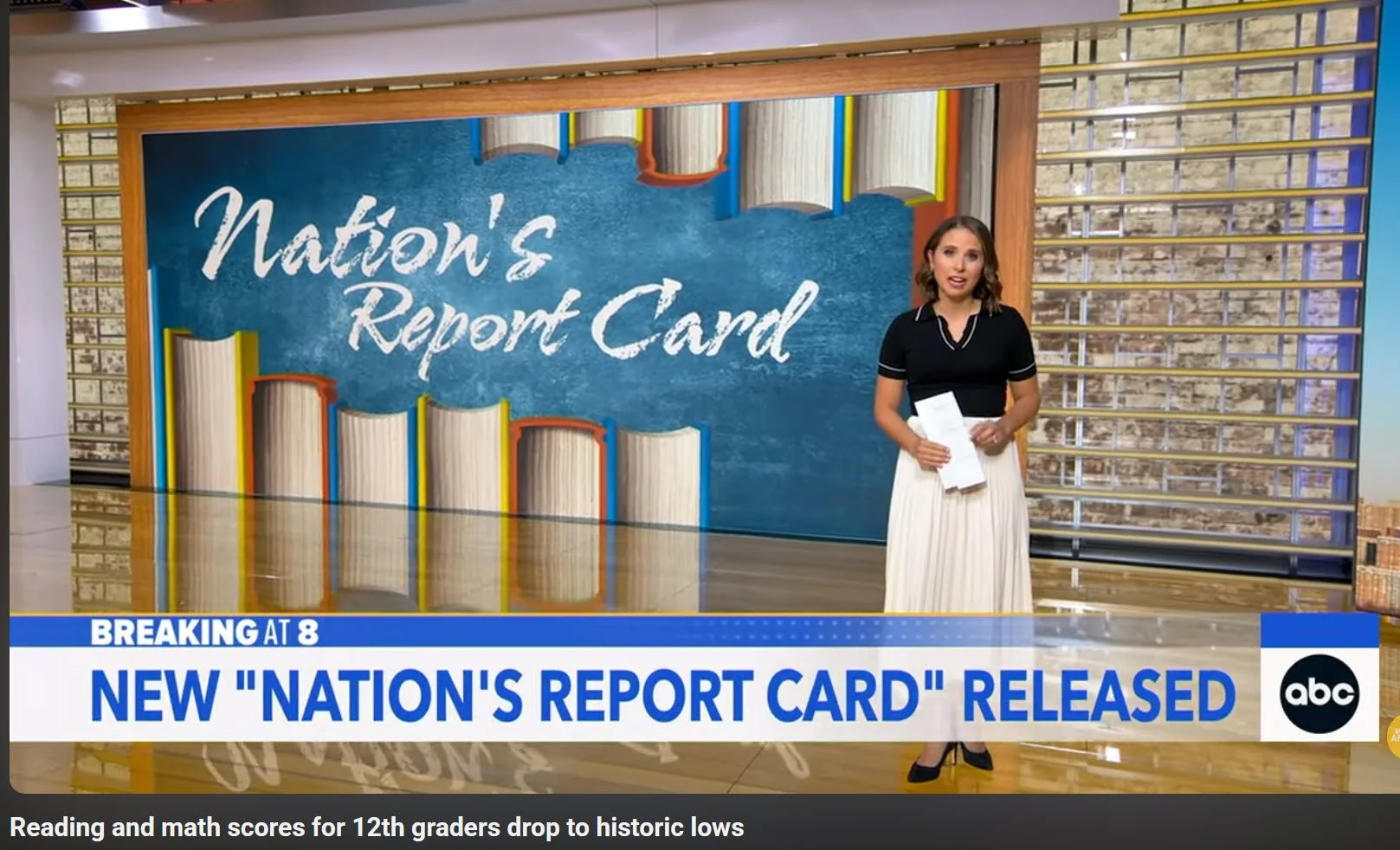
However, the "return" is uneven. While the U.S. ranks well in Reading (Top 10), the Mathematics scores remain a major pain point, frequently landing the U.S. in the bottom half of industrialized nations. From a business standpoint, that is a massive efficiency gap.
The Political Conflict: Unions & The Department of Education
The friction you mentioned between the Trump administration and entities like the National Education Association (NEA) or the Department of Education (DOE) centers on a few key "bottom-line" reform efforts:
School Choice: The Trump administration’s primary solution is competition. The argument is that if money follows the student (vouchers/charters), public schools must perform or lose their "customers."
The Union Stance: Teachers' unions argue that high U.S. spending is deceptive because a large portion goes to non-academic costs (security, special education, and transportation) that other countries don't bundle into school budgets. They view "performance-based" funding as a threat to job security and rural school stability.
The Federal Role: While the Biden administration focused on student debt relief and increased federal oversight of civil rights in schools, the Trump administration has proposed dismantling the Department of Education entirely, shifting that "business" back to the states to cut overhead and federal "red tape."
The "Business" Comparison
In a corporate structure, if a division fails, you pivot or liquidate. In education, the "pivot" is often difficult because of:
Tenure: It is notoriously difficult to remove underperforming "staff" (teachers) compared to the private sector.
Monopoly: In many areas, parents have no alternative to their local zip-code-assigned school, removing the market pressure that forces businesses to improve.
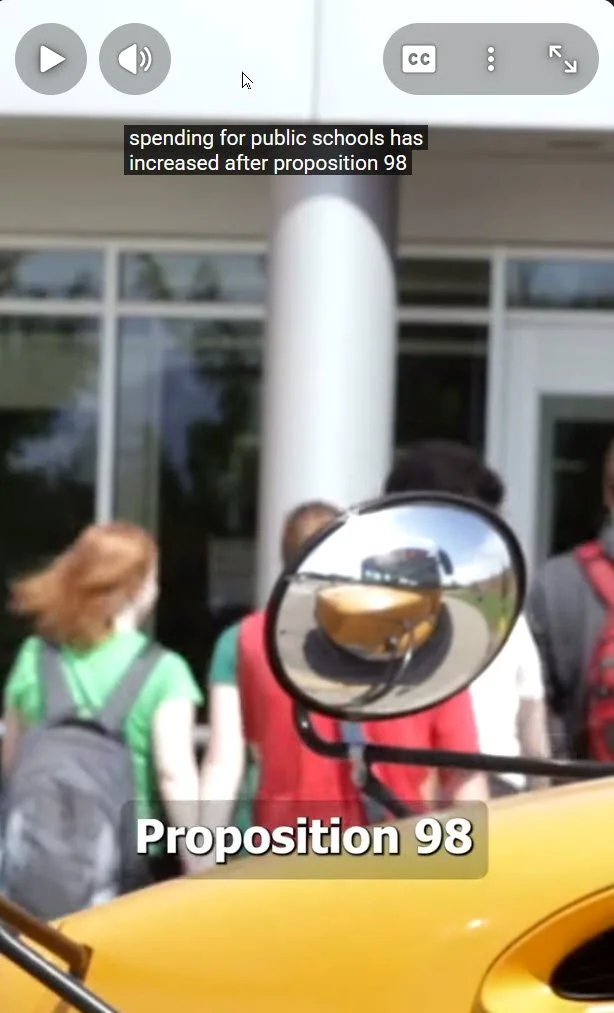
The figures cited in the Unleash Prosperity newsletter reflect recent data showing a significant financial shift in the U.S. education sector. In fiscal year 2024, K-12 public school spending officially surpassed the $1 trillion mark for the first time.
This milestone is driven by substantial increases in state and local revenues, which grew by over 7% nationally in 2024, outpacing an inflation rate of approximately 3.3%.
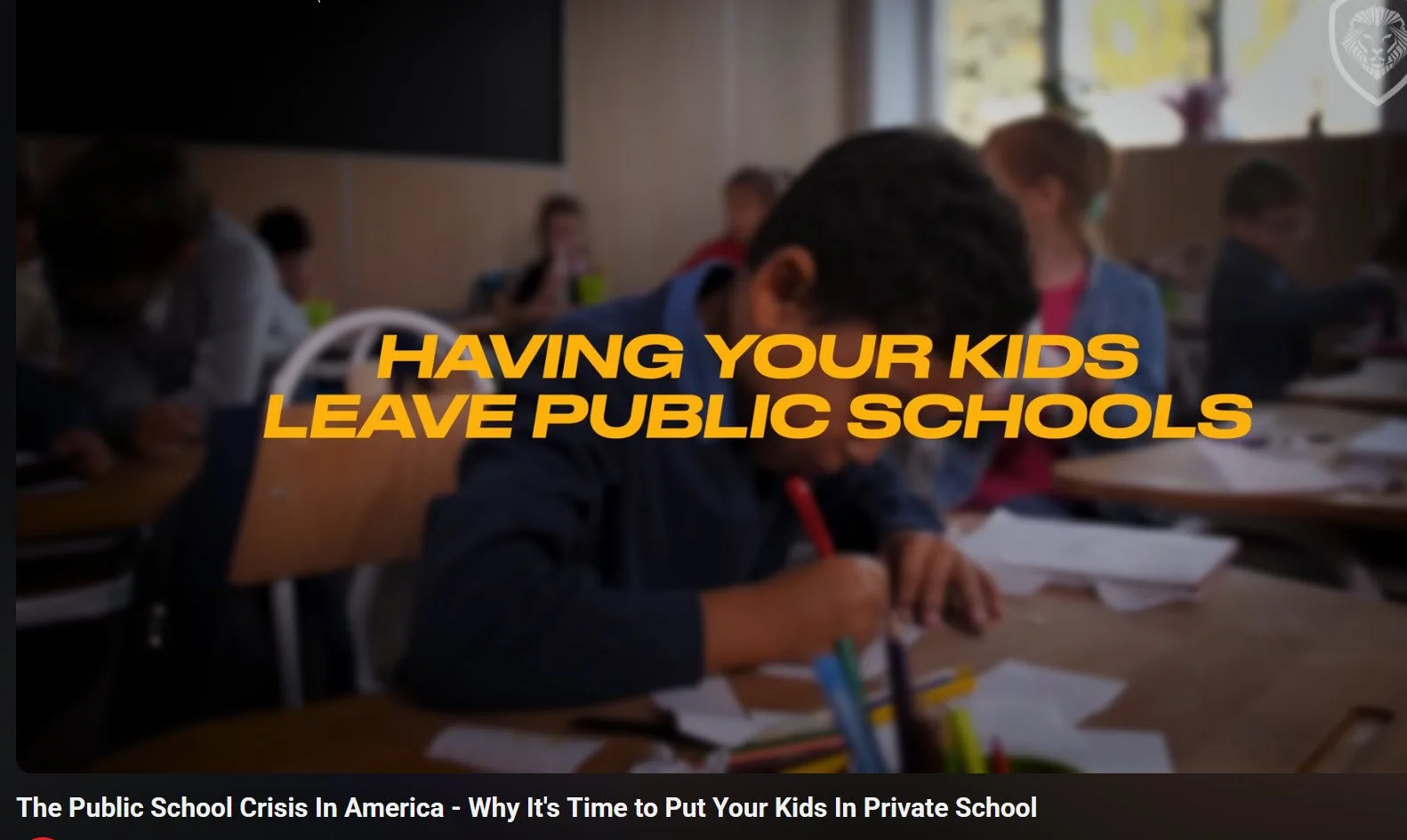
Have you considered taking your kids out of public schools? In this episode, Patrick Bet-David reveals the difference between public and private schools, and why you should weigh your options.
Public vs. Private Spending Breakdown
The newsletter’s comparison highlights a growing disparity between the operational costs of public schools and the average tuition of private institutions.
CategoryCost per Student (Avg)DetailsPrivate School (General)~$12,790This is the national average across all private levels. Private elementary schools average $9,210, while secondary schools average $16,420.Public (Operating)~$17,644These are "current expenditures" covering day-to-day costs like salaries and supplies.Public (Total/Capital)$21,065 – $31,629Including "total revenue" (construction, capital outlay, and debt interest), the national average rises to $21,065, with high-spending areas like D.C. reaching over $31,000.
Key Economic Drivers
Staffing Costs: Teacher and administrator salaries remain the largest expense for public districts. The national average teacher salary reached $72,030 in 2024, with top states like California exceeding $100,000.
Capital Outlay: Beyond the classroom, roughly 9.2% of public education spending is directed toward capital outlay (building and infrastructure), and 2.6% goes toward interest on school debt.
Regional Variance: Spending is highly localized. While the national operating average is near $18,000, states like New York, Vermont, and New Hampshire spend significantly more—ranging from $23,000 to over $30,000 per student when total revenues are considered.
The "Efficiency" Argument
The Unleash Prosperity conclusion centers on the idea that private schools operate as "low-cost operations" compared to the public sector. While elite prep schools (like Georgetown Prep) command high tuitions, the newsletter points to the broader landscape of religious and community private schools that maintain lower overhead. Their argument suggests that if the public system matched the average private spending level, the U.S. could theoretically reduce annual education costs by roughly $300 billion.
Would you like to see a specific state-by-state comparison of these spending gaps?
World Report Card
You've touched on a topic that is a major point of debate in American policy. The short answer is that while the U.S. does indeed spend significantly more than the global average, the "ranking lowest" part is a bit of a misconception—the reality is more of a "mixed bag."
According to 2025-2026 data, the U.S. often ranks in the top 5 for spending but settles into the middle of the pack for academic performance among industrialized nations.
The Spending Gap
The U.S. spends approximately $20,387 per student (from primary through tertiary), which is the 3rd highest among the 40 OECD (Organisation for Economic Co-operation and Development) nations. For comparison, the OECD average is about $15,022.
However, there is a nuance to where that money goes:
Postsecondary (College): The U.S. is the undisputed leader in spending here, often 77% higher than the average.
K-12 (Elementary/High School): Spending is still high (around $16,526 per pupil), but it is much closer to the average of other wealthy nations like Norway, Austria, and South Korea.
The Performance Gap (PISA Rankings)
The most common metric for "ranking" is the PISA (Programme for International Student Assessment), which tests 15-year-olds. The most recent major results (2022/2023) show the U.S. is far from "lowest," but it isn't leading either:
SubjectU.S. PerformanceRank (out of 81 countries)ReadingAbove Average9thScienceAbove Average16thMathematicsBelow Average34th
Why the disconnect?
If we spend so much, why aren't we #1? Experts often point to three systemic factors:
Inequality of Funding: Unlike many European countries where education is funded nationally, U.S. schools rely heavily on local property taxes. This creates a massive disparity: New York may spend over $24,000 per student, while states like Utah or Idaho spend closer to $10,000.
Social Safety Nets: In many top-performing countries (like Finland or Estonia), schools don't have to provide as many "non-academic" services. In the U.S., a large portion of the budget goes toward school meals, transportation, and special education services that other countries often fund through different social departments.
Teacher Salaries: Interestingly, despite high overall spending, U.S. teachers earn less than 60% of the average salary of similarly educated workers in the country—the lowest relative teacher pay in the OECD.
So, while we aren't "last," we are definitely seeing a lower return on investment in terms of math and science scores compared to our peers.
Do you think the issue is how much we spend, or is it more about how that money is being distributed across different districts?