Politics of Oil - Strait of Hormuz and Gulf of Oman
Segment #889
As of May 2026, the Goreh-Jask pipeline is operational but is functioning far below its intended strategic capacity. While the pipeline was designed to move 1 million barrels per day (bpd), the actual volume of oil currently moving through it and being processed at the Jask terminal is significantly lower.
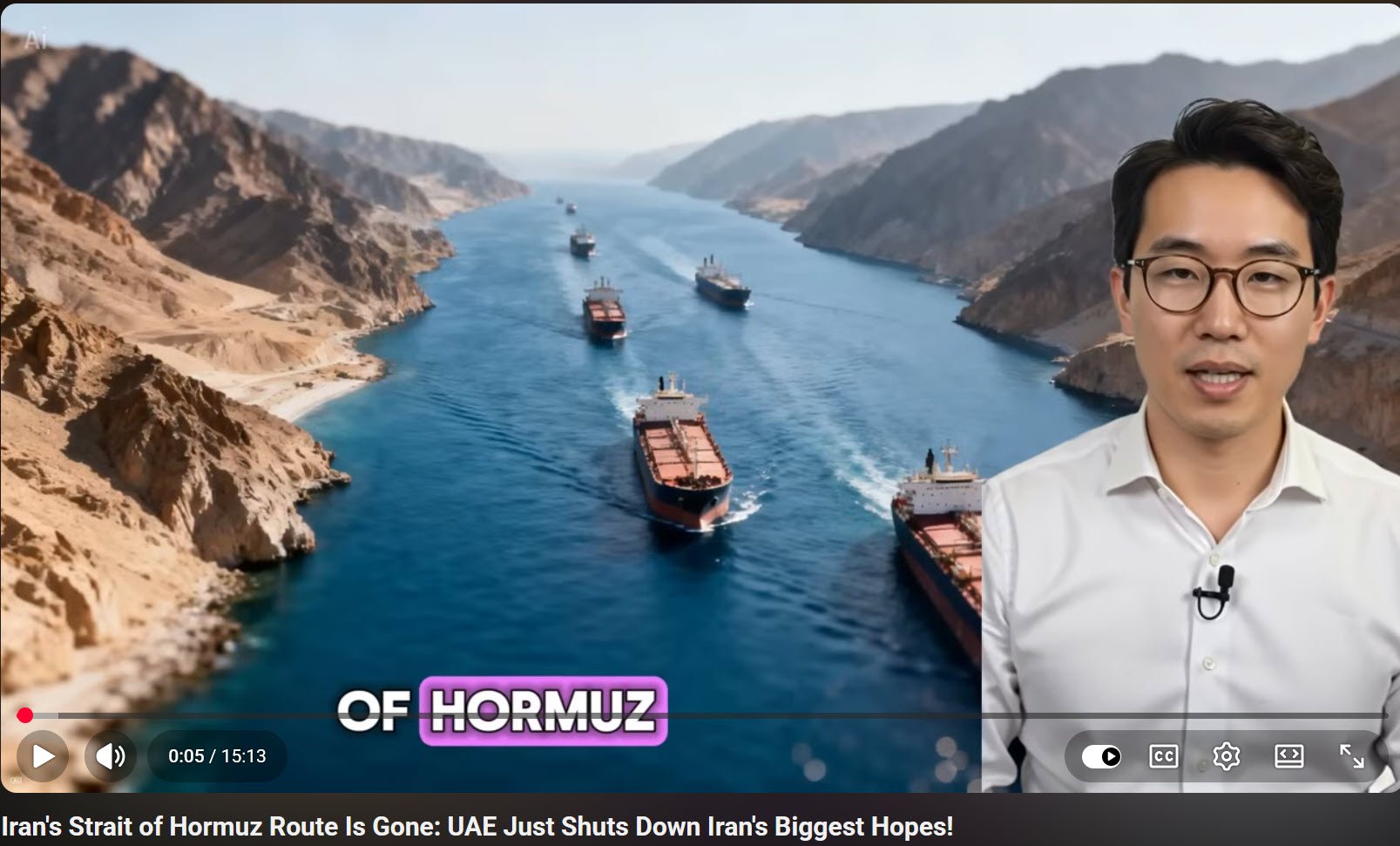
The geopolitical landscape of the Middle East has been permanently altered. As of May 2026, the United Arab Emirates has officially "shut down" Iran's greatest source of leverage by fully operationalizing the expanded Habshan–Fujairah pipeline network. This move allows the UAE to bypass the Strait of Hormuz entirely, moving millions of barrels of oil directly to the Gulf of Oman, far beyond the reach of Iranian "toll" threats and naval harassment. In this deep dive, we analyze why this is a catastrophic blow to Tehran’s strategic ambitions. We break down the UAE's recent integration into the "Strait Security Protocol"—a multinational initiative involving the UK and Ukraine that utilizes autonomous "Octopus" naval drones to secure maritime trade. With the UAE effectively proving that the Strait can be bypassed and protected through high-tech alliances, Iran’s $1 million "passage fee" and its "fast-boat" swarm tactics have become obsolete. Is the era of Iranian dominance over global energy routes officially over?
Current Flow and Processing Data
Actual Throughput: Recent data from March and April 2026 indicates that Iran is moving approximately 70,000 to 80,000 bpd through the pipeline.
Total Share of Exports: This represents less than 5% of Iran's total crude exports (which currently hover around 1.6 to 1.8 million bpd).
Primary Hub: The vast majority (over 84%) of Iranian oil is still being loaded at Kharg Island, which requires tankers to transit the Strait of Hormuz.
The Gap Between Design and Reality
The reason for the discrepancy between the "1 million bpd" design and the current low usage is primarily technical and logistical:
FeatureDesign Target2026 RealityPipeline
Capacity1,000,000 bpdFunctionally capped at ~300,000 bpd due to pump station limitations.
Storage at Jask20 million barrelsConstruction of the full storage farm is incomplete; currently relying on smaller tanks and floating storage.
Loading FacilitiesMultiple SPM (Single Point Mooring) buoysOnly one SPM is consistently operational for "test" and "sporadic" loadings.
ProcessingLocal RefineriesMost oil is exported as crude; the planned Jask refineries are still in early-to-mid construction phases.
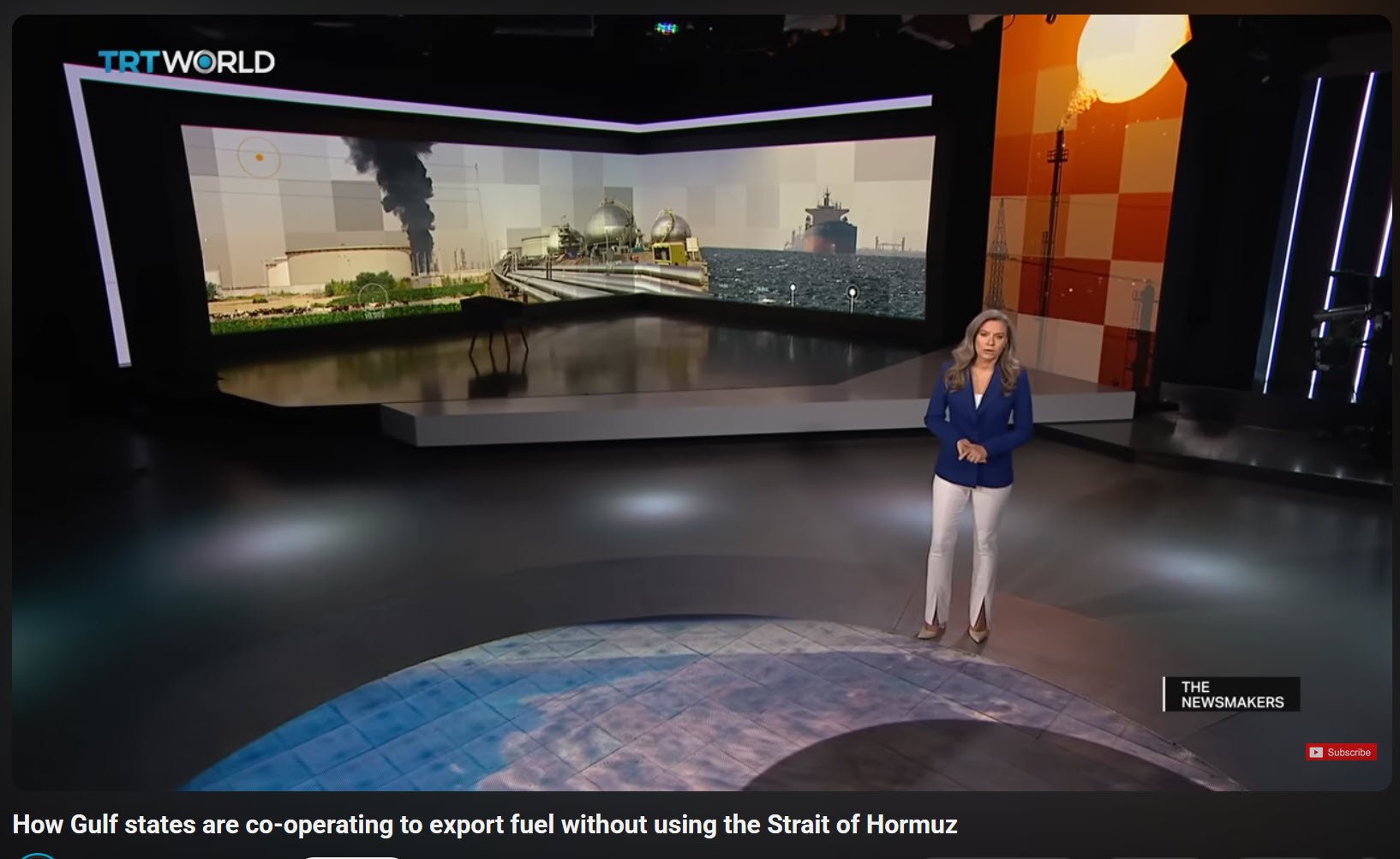
The Strait of Hormuz crisis has underscored the danger of global energy supplies being so heavily dependent on a single maritime chokepoint. The massive disruption to global shipping in the key waterway has prompted countries in the region to restructure cargo routes and look for alternatives. Gulf countries, including Saudi Arabia, the UAE and Oman, are already revisiting costly plans for pipelines to bypass the strait, and continue to export oil and gas. What are the real costs and risks of this strategic restructuring? And how long could alternative routes take to build before a potential serious global economic crisis hits?
Strategic Implications in 2026
While the pipeline was built to "change the strategic picture," it currently serves more as a "Plan B" backup rather than a replacement for the Strait of Hormuz.
Sporadic Use: Loadings at Jask have been described by maritime analysts as "sporadic." They tend to spike only when tensions in the Persian Gulf make loading at Kharg Island too risky or when insurance premiums for the Strait become prohibitive.
The "Hormuz Trap": Because Iran has not yet achieved the 1 million bpd throughput at Jask, it remains economically tethered to the Strait of Hormuz. If Iran were to close the Strait today, it would still lose 95% of its own export revenue, as the Goreh-Jask pipeline cannot yet absorb the redirected volume.
Summary: The pipeline is a "relief valve" that is currently being used at roughly 1/10th of its potential, meaning the strategic shift is underway but far from complete.
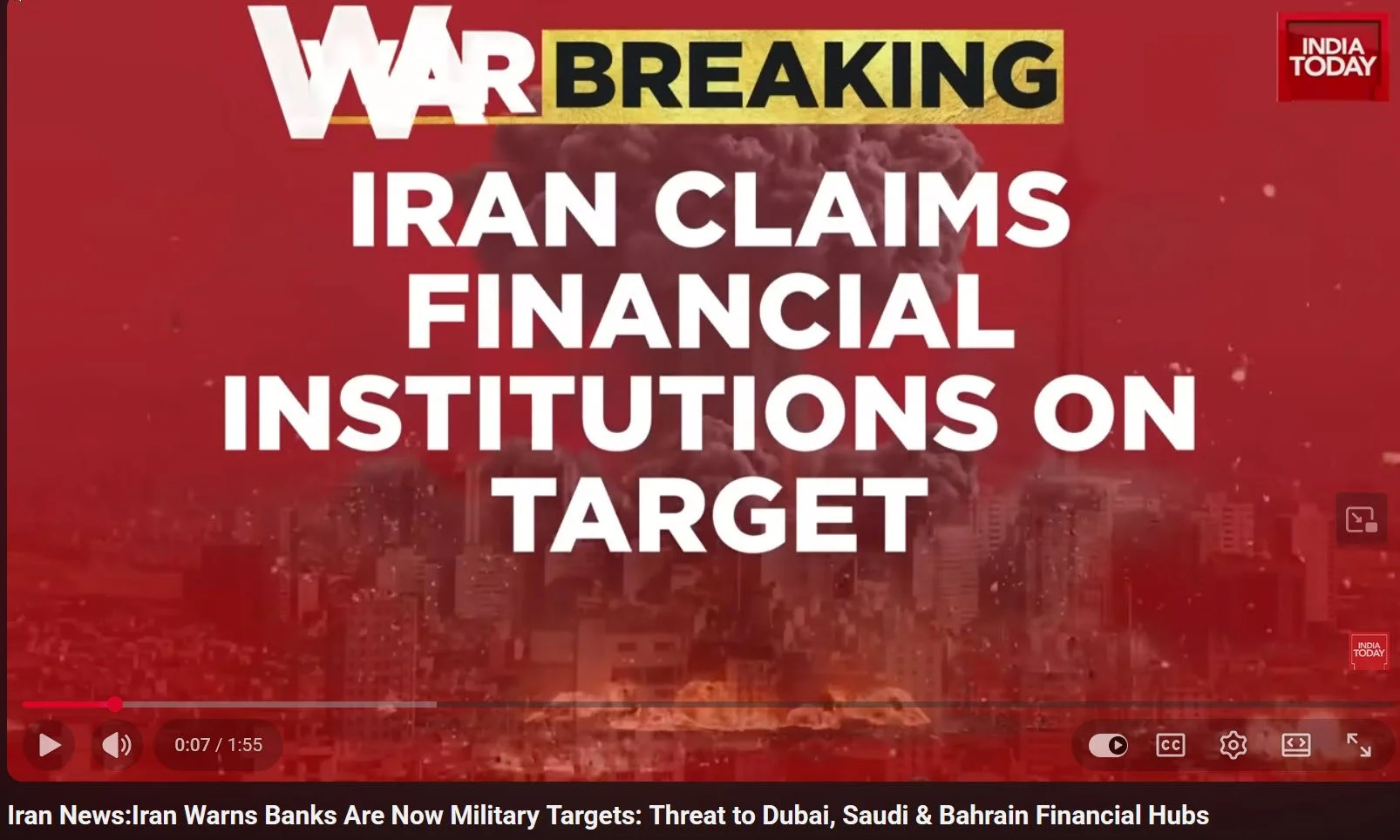
Iran's joint military command has warned that banks and financial institutions in the Middle East are now military targets. The Khatam al-Anbya headquarters issued a statement after Iranian media reported that staff at a bank in Tehran were killed in what Iran described as Israeli-American airstrikes. The threat could particularly affect Dubai, home to many international financial institutions, as well as Saudi Arabia and Bahrain. A spokesperson for the Khatam al-Anbya central headquarters stated that the targeting of a bank was an 'unlawful and unconventional act of war' that has given Iran 'the green light' to strike at American and Israeli economic centres and banks in the region. The statement warned that 'Americans should brace themselves for our retaliatory actions' and advised people to stay at least one kilometre away from banks in the area.
To move 2 million barrels per day (bpd) through the Goreh-Jask pipeline is a massive technical leap that likely won't be realized until the late 2020s or early 2030s, if at all.
Currently, the project is struggling to maintain even its original "Phase 1" goals. Here is the breakdown of why hitting 2 million bpd is such a long-term challenge:
The Physical Bottleneck (Today vs. Goal)
The pipeline was built with a "nameplate capacity" of 1 million bpd. As of May 2026, the actual flow is estimated at only 300,000 bpd due to incomplete pump stations and technical failures.
To reach 1 million bpd: Iran needs to finish all 5 planned pump stations and stabilize the power grid along the 1,100km route.
To reach 2 million bpd: Iran would likely need to build a second parallel pipeline or significantly upgrade the existing one with advanced "drag-reducing agents" and nearly double the pumping horsepower—a task that would take 3 to 5 years of intensive construction under ideal conditions.
The Storage Deficit
You can’t move 2 million barrels a day if you have nowhere to put them at the end of the line. The Jask terminal currently lacks the massive "tank farm" required to buffer that much oil. Loading a Very Large Crude Carrier (VLCC) takes roughly 2 million barrels. To move that much daily, you would need to have multiple ships loading simultaneously 24/7, which requires at least 3 to 4 operational Single Point Mooring (SPM) buoys. Currently, Jask only has one reliably tested SPM.
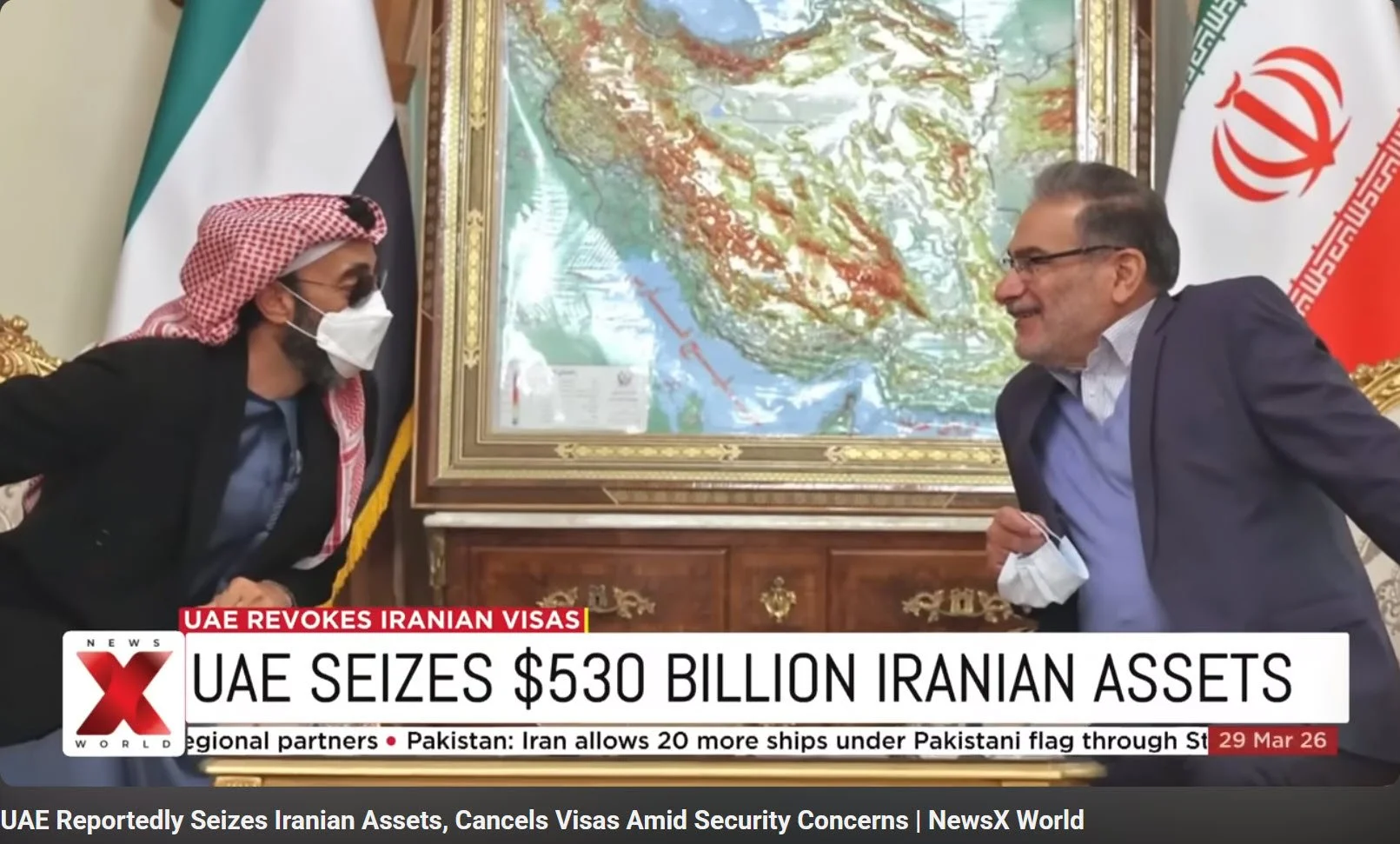
Reports claim the United Arab Emirates has seized Iranian assets and revoked visas amid security concerns. The measures, unconfirmed officially, may be linked to ongoing regional tensions. The Seizure: On May 4, 2026, following naval skirmishes, the UAE began actively dismantling Iranian economic networks. While a specific total isn't public, analysts estimate the UAE could effectively lock down $10 billion to $15 billion in Iranian-linked commercial liquidity.
Sanctions and Hardware
Reaching 2 million bpd requires high-tech, high-capacity pumps and control systems. Because of ongoing sanctions and the recent escalations in 2026, Iran has had to rely on domestic "reverse-engineered" parts. These have proven less reliable for high-pressure, high-volume operations, leading to frequent maintenance shutdowns that keep the "real" capacity low.
Timeline Summary
MilestoneEstimated
RealizationStatus
300,000 bpdAchieved (Early 2026)Current operational "stress test" level.
1,000,000 bpd2027–2028Requires completion of all storage tanks and pump stations.
2,000,000 bpd - 2030+Requires a second pipeline or massive technological overhaul.
The Strategic Reality
While the pipeline is a "game changer" in theory, it is currently more of a psychological tool than a total replacement for the Strait of Hormuz. Even if Iran reached 1 million bpd, they would still need the Strait to export the other half of their production capacity. Moving 2 million bpd would make them truly independent of the Strait, but the infrastructure simply isn't there yet to support that volume.
China and Iran did sign a massive 25-year, $400 billion Strategic Partnership Agreement in 2021, which theoretically covers exactly this kind of infrastructure. However, as of May 2026, the Chinese have been surprisingly hesitant to go "all-in" on fast-tracking the Jask terminal.
The reasons are less about friendship and more about cold, hard geopolitical math:
The "Middle East Balancing Act"
China is the world's largest oil importer. While they buy nearly 90% of Iran's exported oil, they also have massive, multi-billion dollar trade deals with Saudi Arabia and the UAE. If China builds a "Hormuz Bypass" for Iran, they are effectively handing Tehran a weapon to close the Strait of Hormuz without hurting its own economy. Closing the Strait would devastate the economies of Saudi Arabia and the UAE—China's other major partners. Beijing doesn't want to be seen as the "architect" of a project that enables Iran to destroy the regional oil market.
Sanction "Contagion"
Chinese state-owned giants like Sinopec and CNPC operate globally. If they were to officially and openly take over the Jask project, they would face massive secondary sanctions from the U.S. Instead of "official" help, China prefers a "Shadow Partnership." They provide technology, equipment, and "ghost" financing behind the scenes, which is much slower and more prone to delays than a full-scale, expedited construction blitz.
Vulnerability to Airstrikes
Military analysts in 2026 have pointed out a glaring flaw: the entire Jask terminal currently relies on a single 17-meter-wide loading buoy (SPM). From a Chinese investment perspective, it’s a "squandered $2 billion" risk. A single cruise missile or drone strike could knock out the entire terminal's export capability for months. China is hesitant to sink billions into a "strategic project" that is so easily neutralized by the U.S. or Israel in the event of an escalation.
Iran’s "Resource Nationalism"
There is significant internal friction in Tehran regarding Chinese involvement. Hardliners in the Iranian government are wary of handing over "sovereign" energy infrastructure to a foreign power. Iran has a history of kicking out Chinese firms (like CNPC in the past) if they feel the project is moving too slowly or the terms are too predatory, leading to a "trust deficit" on both sides.
The Current Compromise: "Oil for Infrastructure"
In late 2025 and early 2026, reports surfaced of a secret "Oil-for-Infrastructure" arrangement involving the Chinese state insurer Sinosure. China is helping, but they are doing it through:
Barter: Paying for oil with engineering services rather than cash.
Piecemeal Progress: Providing the pumps and steel, but leaving the risky on-site construction to Iranian firms.
The Bottom Line: China wants Iranian oil to be available, but they don't necessarily want Iran to be strategically invincible. By keeping the Jask project on a "slow simmer," Beijing maintains leverage over Tehran while avoiding a total break with the rest of the Middle East.