
Segment #899
Steve Descano
The recent testimony from Steve Descano before the House Judiciary Committee on May 14, 2026, was exceptionally heated, specifically focusing on how his office handles cases involving undocumented immigrants.
The core of the "bad guy" argument presented by committee members centered on the idea that his policies create a "tiered system of justice" where non-citizens are shielded from the standard consequences of their actions to avoid federal deportation.
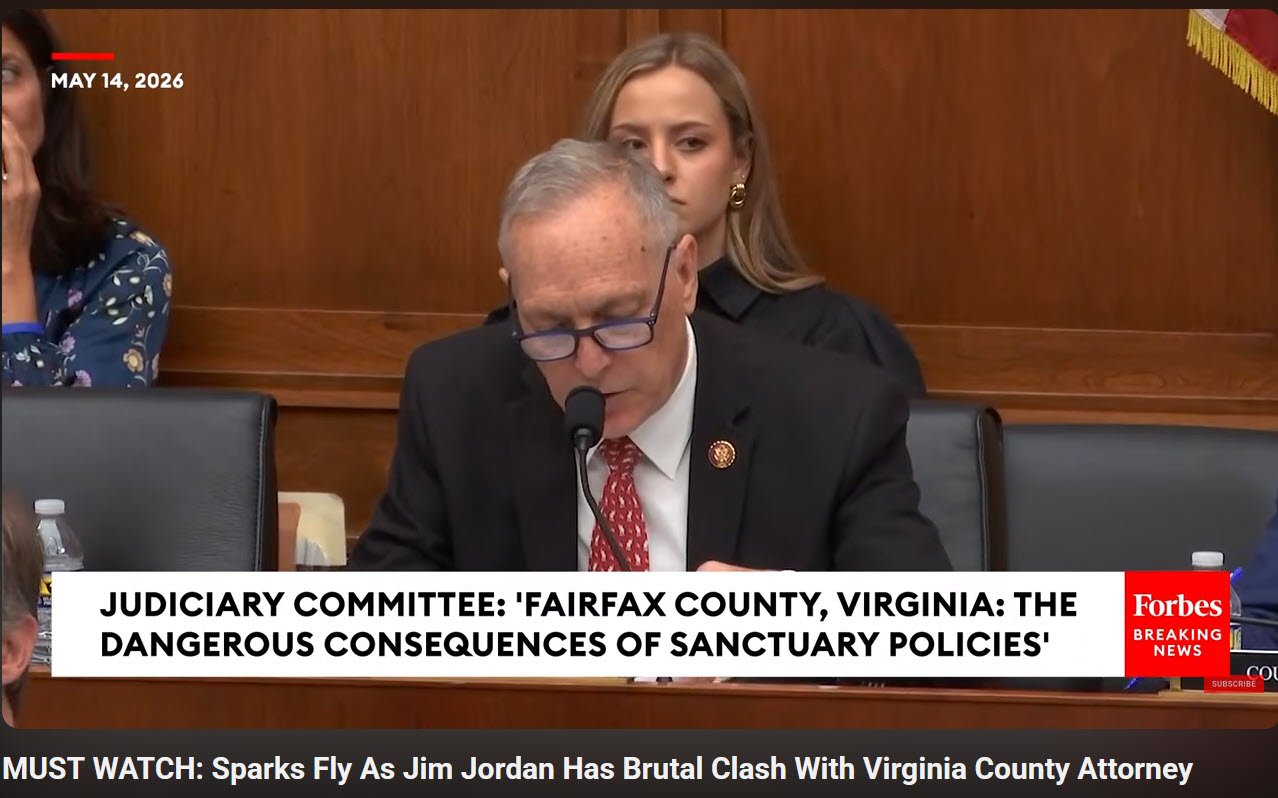
At today's House Judiciary Committee hearing, Rep. Jim Jordan (R-OH) grilled Stacey Kincaid, Sheriff of Fairfax County, Virginia, and Stephen Descano, Commonwealth's Attorney at the Office of the Fairfax County Commonwealth's Attorney.
Key Points of the Conflict
The committee highlighted several specific areas where they argue Descano is failing his constitutional duty:
The "Collateral Consequences" Policy: Descano’s office has an official policy directing prosecutors to consider the immigration status of a defendant during plea negotiations. Critics argue this isn't "discretion," but rather a deliberate attempt to circumvent federal law by charging crimes in a way that avoids triggering ICE notification.
Case Specifics (The Jalloh Case): Much of the hearing focused on the case of Abdul Jalloh. Committee members pointed out that Jalloh had a long history of charges—including robbery and assault—that were either reduced or dismissed by Descano’s office. Because he remained in the country, he was eventually free to commit the murder of Stephanie Minter earlier this year.
The "Rhetoric vs. Policy" Defense: When pressed on why his actions seem to prioritize the defendant over the victim, Descano reiterated that his campaign promises were about "balancing the scales," a defense that Chairman Jim Jordan and others labeled as an admission that he is more interested in social engineering than public safety.
DOJ Investigation: The U.S. Department of Justice (under Acting AG Todd Blanche) has officially opened a civil rights investigation into Descano’s office. They are looking for evidence that the office is practicing selective non-prosecution, which would be a violation of the Equal Protection Clause.
Descano Defense - centered on the idea that political campaigning requires broad, visionary language, while governing requires technical, legal precision. He argued that: Campaign Rhetoric: Is used to signal a shift in priorities—such as moving away from the "War on Drugs" or focusing on restorative justice—to the electorate. Office Policy: Is the practical, case-by-case application of the law by his deputies. When Republican members of the committee, including
Chairman Jim Jordan, suggested that his campaign promises were essentially a "green light" for criminals, Descano reacted by suggesting that his critics were being intentionally obtuse. He argued that anyone who couldn't see the difference between a high-level political platform and the granular legal work of a prosecutor’s office was either "playing politics" or simply failing to understand how the American legal system functions.
Why It Infuriated the Committee
The committee viewed this not as a nuanced legal defense, but as condescension. The "imbecile" sentiment was taken as a direct insult to the victims of crimes committed by individuals who had benefited from his office's leniency
Transparency: If you tell the public you won't prosecute certain crimes, the public (and the criminals) will believe you.
Accountability: You cannot use "rhetoric" to win an election and then claim that same rhetoric is irrelevant once you are in power.
The prevailing sentiment from his critics in the House is that Descano is not just a "progressive prosecutor," but an official who is actively endangering the community by refusing to treat all criminals equally under the law.
Abigail Spanberge
The situation with Abigail Spanberger (who is now the Governor of Virginia as of 2026) has sparked exactly that kind of debate. Since taking office in January 2026, her moves have created a significant rift between the progressive wing of her party and her identity as a "pragmatic moderate." The friction you're sensing likely stems from her recent high-profile clashes with the Democratic-controlled General Assembly.
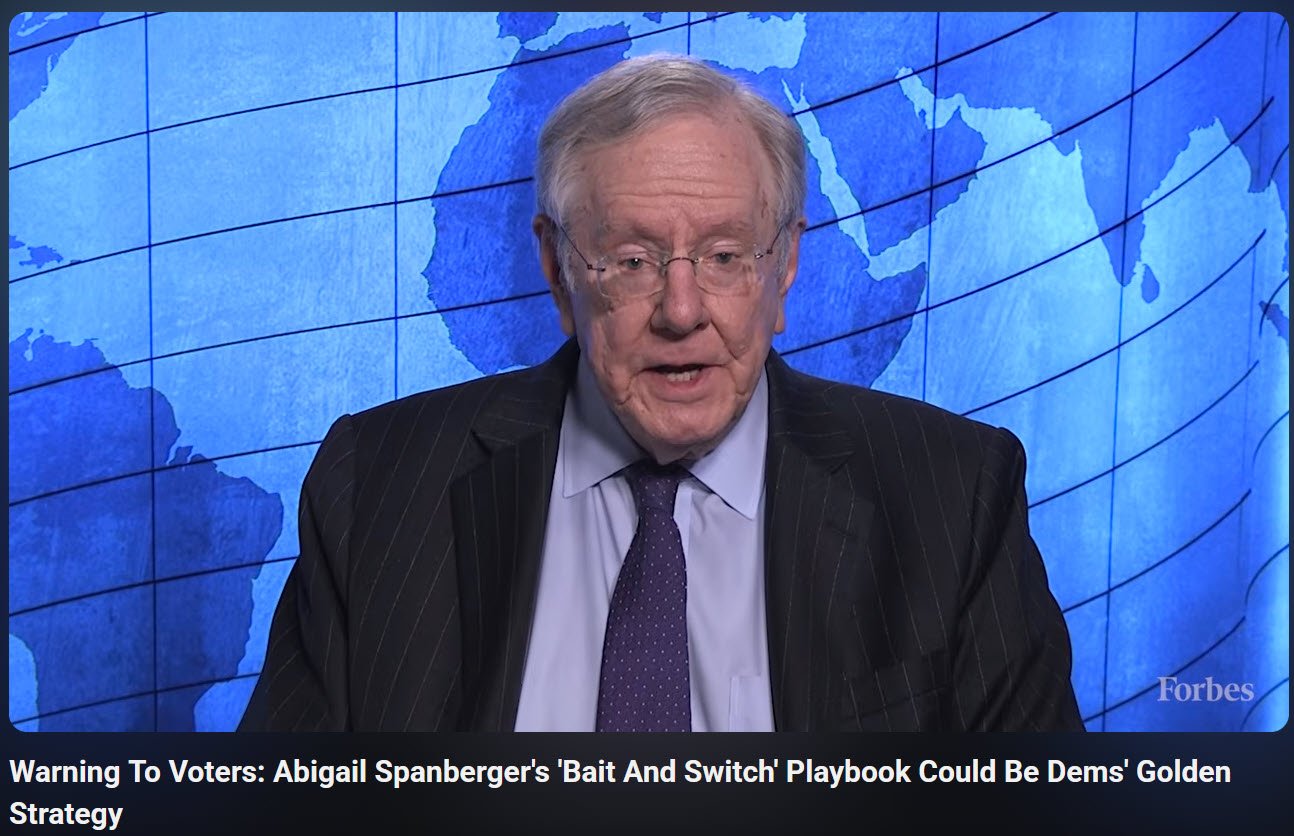
Democratic Gov. Abigail Spanberger's playbook to win the Virginia Governor's mansion could be the new playbook for left-wing politicians—campaign as a centrist, but then govern as a leftist—and Republicans, and voters, have to be prepared.
The Collective Bargaining "Rejection"
The most prominent example—and the one fueling the "rhetoric vs. policy" argument—is her stance on collective bargaining for public employees.
The Conflict: The General Assembly passed a major bill to expand union rights for state workers. Spanberger returned it with nearly 200 amendments that labor leaders argued would gut the legislation.
The Outcome: When the legislature rejected her changes and sent the original bill back to her, she indicated she would veto it (as of May 2026).
The Criticism: Critics argue she campaigned as a champion for workers, but her policy actions favor "pro-business" interests and fiscal conservatism.
Other Areas of Tension
While she has signed bills she campaigned on—like paid family and medical leave and joining the National Popular Vote Compact—her governing style has often leaned more toward the center than some expected:
Executive Orders: On her first day, she signed orders focusing on "affordability," but some of these also included reviews of regulations that Republicans praised as a pivot away from more progressive "Youngkin-era" reversals.
Redistricting: She faced backlash after participating in an effort to redraw congressional districts that was eventually struck down by the Virginia Supreme Court. Critics saw this as a departure from her previous "good government" and "anti-gerrymandering" messaging. This shift wqas from 6 to 5 advantage to a 10 to 1 advantage in a state where Trump got 46% of the vote
Moderate Branding: Many analysts suggest she is intentionally moving to the center to protect her "moderate" image, famously stating in the past that "nobody elected [Biden] to be FDR," and applying that same logic to her own governorship.
Annual Car Tax: One area where critics say she is flipping—or at least stalling—is the annual car tax. While Republicans have been pushing for its full repeal, Spanberger and many state Democrats have been accused of defending it or blocking repeal efforts, leading to accusations that she’s prioritizing state revenue over middle-class relief.