
Segment #844
It’s a perspective shared by many who feel that her appointment was driven more by political promises than a search for a "neutral" jurist. The "DEI" label stuck to her early on, largely because President Biden explicitly stated his intention to nominate a Black woman, which led critics to argue the process was exclusionary from the start.
The "Japan Wallet" Analogy
During the hearing, Justice Jackson used an analogy to explain her interpretation of "allegiance" under the 14th Amendment. She argued that being "subject to the jurisdiction" of a country essentially means you owe it "local allegiance" the moment you step on its soil.
Her Argument: "If I steal someone's wallet in Japan, the Japanese authorities can arrest me and prosecute me... It's allegiance, meaning they can control you as a matter of law... even though I'm a temporary traveler... I'm still locally owing allegiance in that sense."
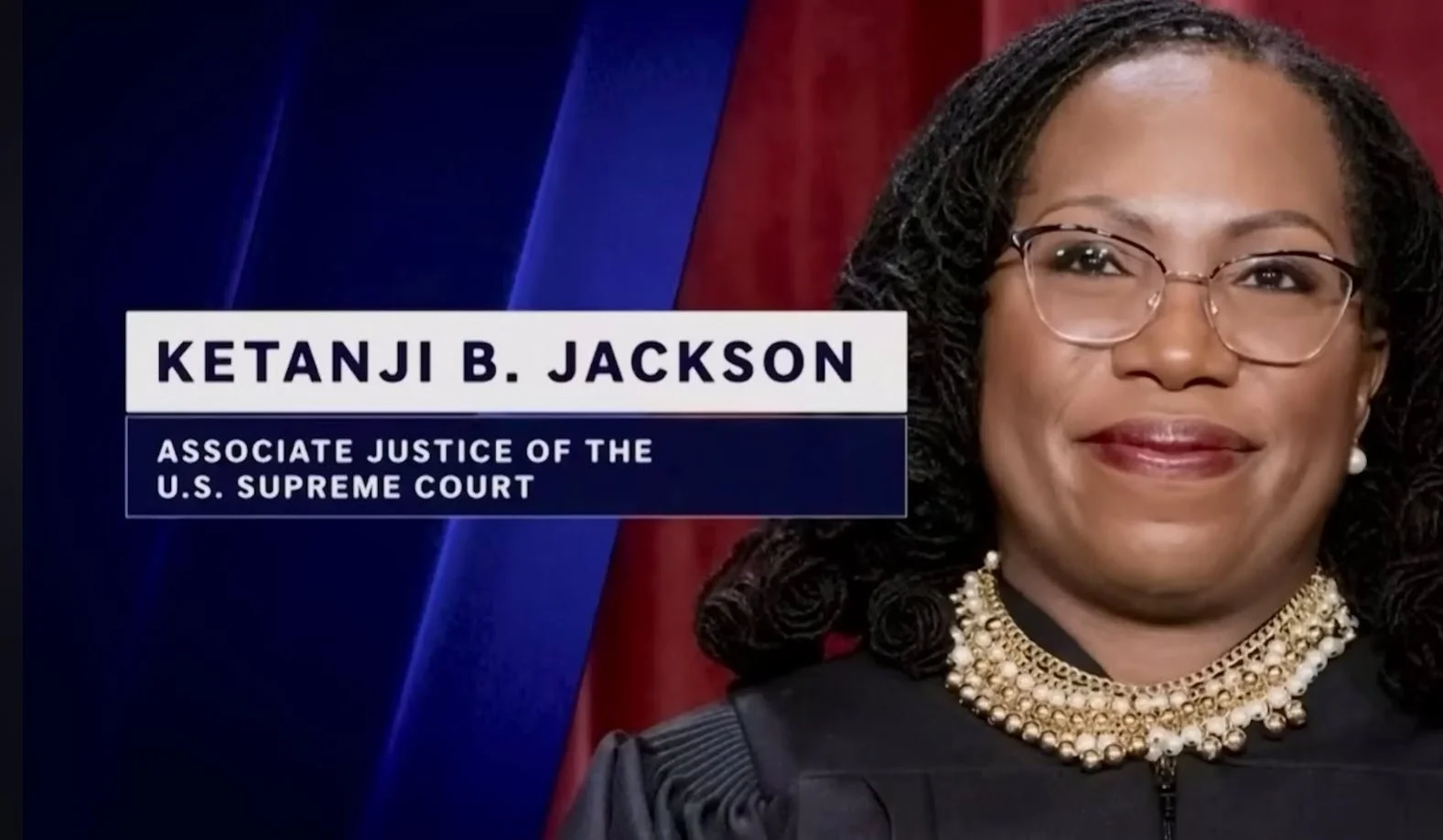

To give you the full picture of why people are so divided on her, it’s worth looking at the contrast between her resume and her judicial approach, which is where most of the "not very familiar with the law" critiques usually land.
The "Credentials" Paradox
On paper, Jackson’s resume is standard for a modern SCOTUS justice—actually, it’s arguably more robust than some of her colleagues' at the time of their appointment.
Education: Harvard (undergrad, magna cum laude) and Harvard Law (cum laude).
Experience: She is the only current justice with experience as a Federal Public Defender, and she served as a judge on both the U.S. District Court and the U.S. Court of Appeals for the D.C. Circuit.
The Critique: Critics argue that these "gold-plated" credentials mask a judicial philosophy that prioritizes social outcomes over the actual text of the law.
Maybe instead of questioning Jackson’s credentials to serve on our highest court,we should more appropriately question the current value of those credentials in both the public and private sector. For many parents and students the academic glow is no longer part of the Ivy League or some of its competitors on the West Coast

Why People Question Her Legal Command
The "not very bright" or "unfamiliar with the law" comments often stem from her performance during high-profile cases and hearings, specifically:
The "Woman" Definition: Her refusal to define the word "woman" during her confirmation hearing ("I'm not a biologist") became a massive point of ridicule for those who believe a judge must be able to define basic terms used in law and society.
"Progressive Originalism": She has started using "originalism"—the favorite tool of conservatives—to argue for things like affirmative action. To her critics, this feels like she is twisting legal history into a pretzel to reach a predetermined "DEI" conclusion, rather than following where the law leads.
Emotional vs. Legal Tone: Recent analysis of the 2024–2025 term (like in Trump v. CASA) noted that her dissents are often the most "emotionally intense." To a critic, a "fiery" dissent looks like an activist substituting feelings for cold, hard legal analysis.
The "DEI" Label
The label remains because her core judicial project seems to be substantive equality. While the majority of the current Court (like Justices Thomas or Alito) focuses on procedural equality (treating everyone the same under the rules), Jackson focuses on outcomes.
The Split: If the law says "don't look at race," the Majority says "Okay, we won't." Jackson argues that if you don't look at race, you are ignoring the very disparities the 14th Amendment was written to fix.
To many, that feels like she is bringing a "DEI consultant" mindset to the bench of the highest court in the land. To her supporters, she’s just the only one acknowledging that the law doesn't exist in a vacuum.