Americans are being poisoned
Segment #843
Roundup (glyphosate) in US vs Europe: Americans are being poisoned
Years ago I started investigating the differences between food products sold in America versus Europe, and what I found really opened my eyes to how much Americans are being poisoned.
Food companies have reformulated their products for our friends overseas to sell them safer versions of the same products, while they continue selling Americans the more toxic versions. They are literally poisoning us for profit.
The more I dug into this, the more I realized this wasn’t just happening with the processed ingredients put in our food. It runs the gamut between pesticides sprayed on our crops, chemicals in our plastics, the drugs and feed given to farm animals, and even the substances in our cookware and food packaging.
We have pesticides linked to cancer that are banned across Europe still being sprayed freely on American crops, growth hormones in our meat that have been banned in Europe since the 80’s, PFAS “forever chemicals” in our food packaging that Europe has moved to eliminate, and artificial dyes that require warning labels in Europe but not here. The double standard is everywhere.
One of the most perfect examples of how Americans are being poisoned more than our friends overseas is Roundup weedkiller (The main ingredient: glyphosate).
This is the most widely used pesticide in the world, and in America, it’s everywhere. Farmers went from spraying 12.5 million pounds of it in 1995 to 250 million pounds by 2014. Today, the U.S. uses up to 280 million pounds a year and sprays it at nearly twice the rate per acre compared to the global average. (1) No other pesticide in history has come close to this level of use.
There is a practice called pre-harvest spraying, which is where American farmers spray Roundup directly on food crops like oats, wheat, lentils and chickpeas just days before harvest to dry them faster. This practice is said to account for the majority of glyphosate residues in our food. (2)
Glyphosate has now been found in 60% of food in America (3) and in the urine of 80% of Americans tested (4) – and research has linked it to cancer, hormone disruption, gut damage, and neurological effects.
The foreign corporation Bayer sells Roundup to farmers in both the United States and Europe. It’s the same brand, with the same active ingredient of glyphosate in agricultural formulas – but the rules around how it can be used, what goes into it, and how much can end up in your food and environment are much stricter in Europe – and Americans are paying the price. The differences are maddening.
Let’s break down the differences…
1. Pre-harvest spraying: Banned in Europe, allowed on 70+ crops in America
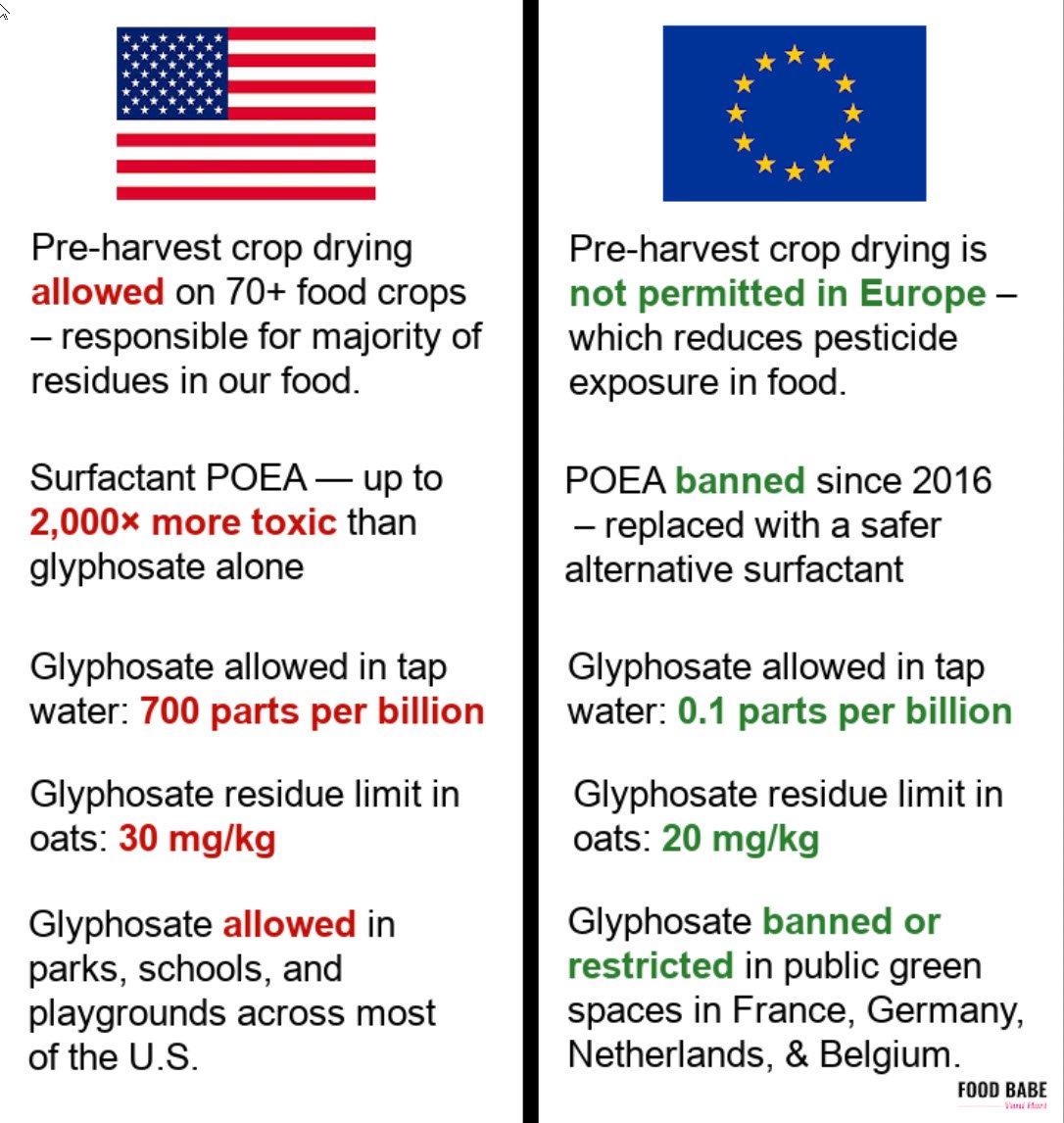
In the United States, pre-harvest spraying to dry crops is allowed on over 70 food crops. It is not being used to kill weeds…it is being sprayed directly onto the food we eat, just days before it reaches your grocery store. When you spray it directly on a food crop days before harvest, the residues are more likely to end up in our food.
In Europe, this practice is not permitted. Several countries including Italy and Austria had already banned it years earlier, and in 2023 the European Commission prohibited it EU-wide. (5)
Meanwhile, American regulators not only approved it, but actually RAISED the allowable limits of glyphosate residues allowed in our food to make room for the practice. So, while Europe was protecting its citizens, America was making it easier to poison ours.
2. A toxic ingredient banned in Europe is still in American Roundup
Roundup isn’t just glyphosate. It contains other ingredients – called surfactants – that help the herbicide penetrate plant cells. One of these surfactants, POEA, has been shown in studies to be much more toxic to human cells than glyphosate itself. (13) Research has also found that POEA can be contaminated with carcinogenic impurities, including a chemical called 1,4-dioxane, that’s formed during the manufacturing process. (6)
The European Union banned POEA from glyphosate-based herbicides in 2016 due to safety concerns and gaps in risk assessment data. (7) They replaced it with a safer alternative.
In the United States, Bayer is not required to make that same change, so they haven’t. POEA is still in the American formulation, not because it has been proven safe, but simply because no one has forced them to remove it.
3. Glyphosate allowed in tap water is 7,000 times more in US than Europe
The European Union limits each individual pesticide in drinking water to 0.1 parts per billion, a standard they set over 40 years ago and have maintained since. Glyphosate falls under this same limit. (8)
In America, only a handful of pesticides have enforceable limits in drinking water at all. Glyphosate is one of them, and that limit is 700 parts per billion. (9) That’s 7,000 times higher than Europe and it hasn’t been lowered since the early 1990s.
4. Glyphosate residue limits in oats are 50% higher in the US than in Europe
The glyphosate residue limit for oats in America is 30 parts per million (ppm) – compared to 20 ppm in Europe. (10)
The original U.S. limit was just 0.1 ppm. The EPA raised it 300 times over – first in response to a petition from Monsanto, and again in 2008 – as pre-harvest spraying became more common. (11) They essentially changed the rules to fit the practice rather than protecting the people eating the food.
Independent lab testing has repeatedly found glyphosate residues in popular oat-based American products including Cheerios and Quaker Oats. Organic options consistently tested with lower or undetectable levels.
5. European countries are banning glyphosate from public spaces, while America isn’t
In France, Germany, the Netherlands and Belgium, glyphosate has been banned or restricted in public green spaces, parks, schools and playgrounds where children play and families spend time. These governments decided the risk was not worth it.
Meanwhile, in most of the United States there is no such protection. Glyphosate can be and is sprayed in public parks and on school grounds in most communities across the country. Only a small number of cities and counties have put their own local restrictions in place. At the federal level there is no requirement to protect the places where our children play.
Why are Americans being poisoned at an alarming rate compared to Europeans?
I’ll tell you one big reason why. Europe operates under the “precautionary principle”, which means when there’s evidence of potential harm, they act to protect their citizens first and ask questions later. The United States does the opposite. It allows companies to essentially self-regulate and waits for proof of harm, which can take decades. Americans are being treated like lab rats while other countries protect their citizens.
Bayer knows of the health risks linked to glyphosate, and they play by the stricter rules in Europe. Shouldn’t we ask them to do the same here in America? Don’t we deserve the same protections, if not better, than European citizens have?
Don’t we deserve a government that puts our health before the profits of foreign chemical corporations? Especially when that corporation has already paid tens of billions to cancer victims?
Homeowners, landscapers, farmworkers and others who were exposed to Roundup have been suing Bayer because they developed cancer, especially non-Hodgkin’s lymphoma. Nearly 180,000 lawsuits have been filed and Bayer has already paid over $10 billion to settle cancer claims (and are now proposing another $7.25 billion settlement to resolve remaining claims). More than 60,000 cases are still pending and the number continues to grow. (12)
Instead of taking accountability, Bayer is doing everything in its power to avoid it.
They are using the courts, Congress, statehouses and the White House to get a legal shield that would prevent Americans from holding them accountable for failing to warn about cancer risks.
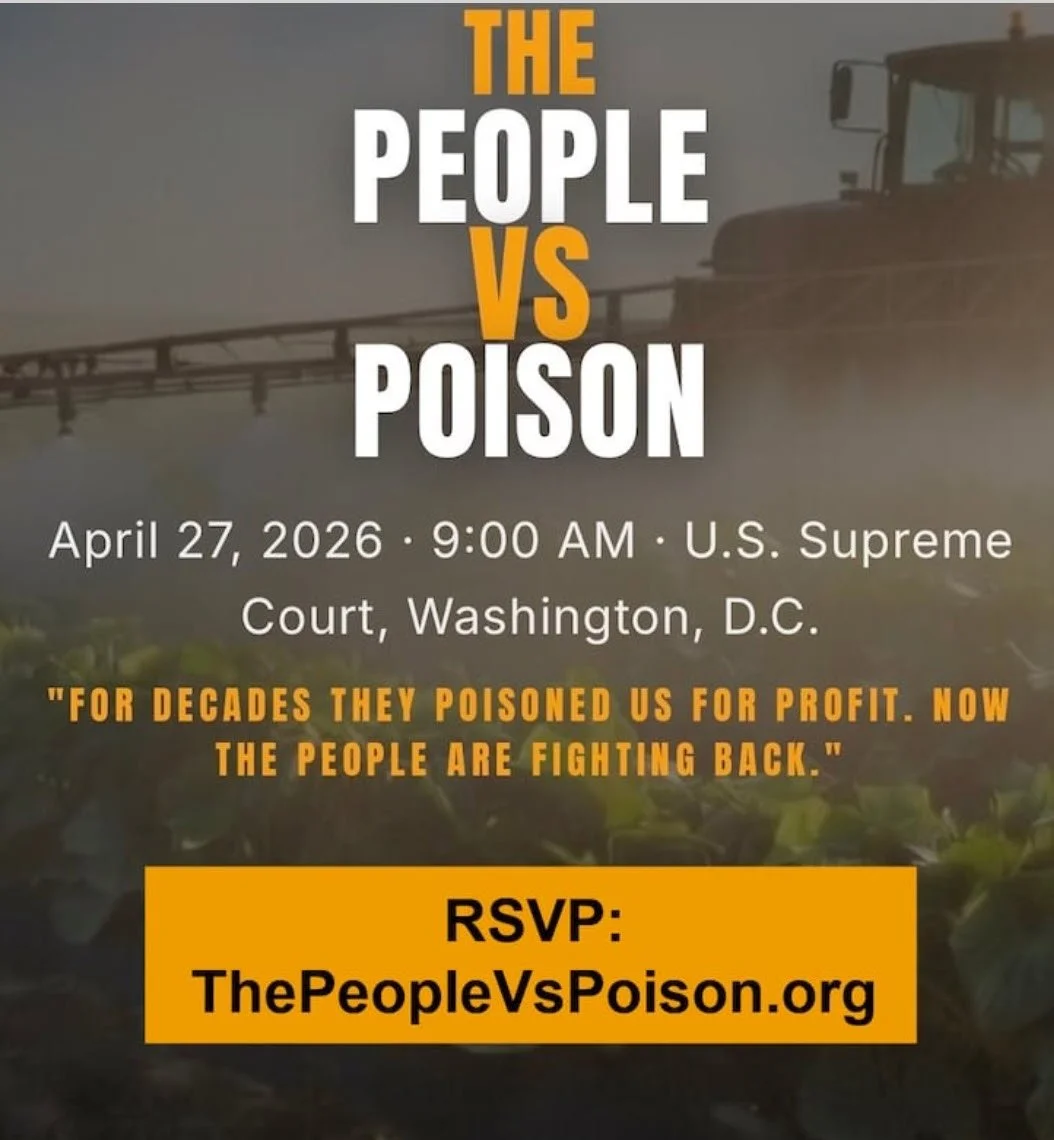
On April 27th, the U.S. Supreme Court will hear Monsanto v. Durnell. Bayer, the German company that now owns Monsanto, is asking the Court to rule that EPA approval of Roundup shields them from cancer lawsuits. If they win, it could strip Americans of their right to sue.
And this goes far beyond Bayer and glyphosate.
If Bayer wins in the Supreme Court, it would set a precedent. Pesticide companies in America could use EPA approval as a shield to avoid accountability, no matter what their products do to people’s health.
I truly believe this is one of the most important issues of our time and Americans need to stand together to fight against this.
Join Me! Investigate Your Food
Food Babe - Who Is She?
About Vani Hari
Hi there! First of all, I want to say welcome and thank you for stopping by.
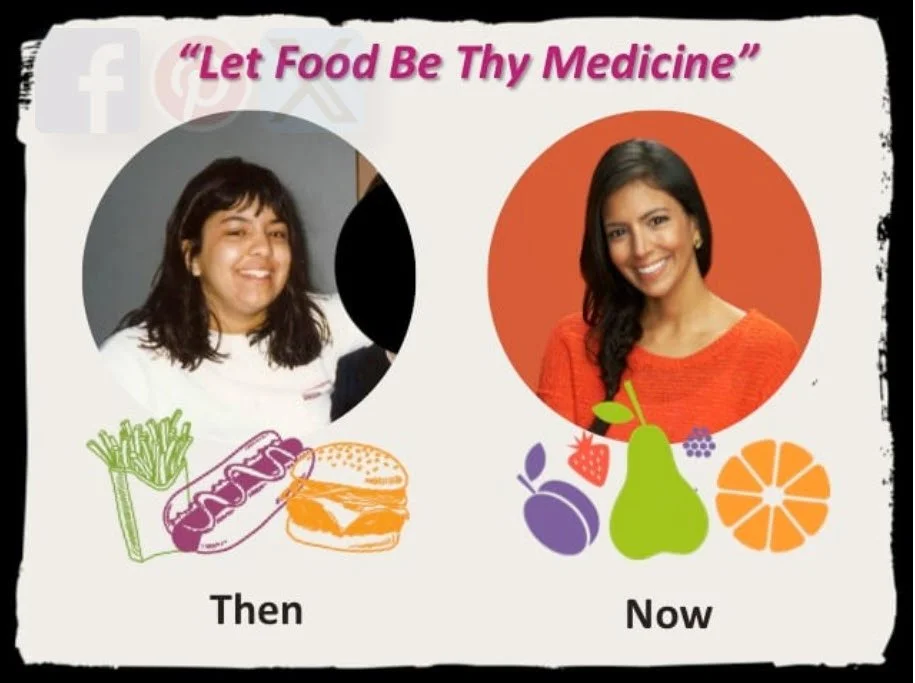
My name is Vani Hari, but I’m now better known as “The Food Babe.” For most of my life, I ate anything I wanted. I was a candy addict, drank soda, never ate green vegetables, frequented fast-food restaurants and ate an abundance of processed food. My typical American diet landed me where that diet typically does, in a hospital. It was then, in the hospital bed more than ten years ago, that I decided to make health my number one priority.
I used my new found inspiration for living a healthy life to drive my energy into investigating what is really in our food, how is it grown and what chemicals are used in its production. I didn’t go to nutrition school to learn this. I had to teach myself everything spending thousands of hours researching and talking to experts. As I began to learn more, I was no longer duped by big business marketing tactics, confused by lengthy food labels, and it became easier for me to live in this over-processed world. Most importantly, the more I learned and the more lessons I put into action, the better I felt and wanted to tell everyone about it! My hope for you is that by assimilating the information you learn on FoodBabe.com into your own life, you can experience a richer sense of health and well being than you ever imagined possible!
I started this blog in April of 2011 to share my healthy lifestyle with friends and family. Little did I know at the time, that this blog would change the world. My first name means voice in my native language, but I never thought I would be the person to carry the voice of millions. I am forever inspired by the number of people who not only want to change the quality of the food they are consuming but take control of their own food and health. Over the last four years, FoodBabe.com has become a powerful vehicle for change due to the dedication of those that come here to read and share the information they learn.
Through reading the investigations and information I post on FoodBabe.com, you can expect to learn the truth about harmful ingredients in processed foods and how to avoid the stuff the food industry is trying to hide! You will also learn how to make the right purchasing decisions in the grocery store so that you can create a life long habit of choosing healthy food. I would love you to join my personal email list to stay up to date on hidden truths the food industry doesn’t want you to know about and the big changes that are happening in our food supply.
Creating FoodBabe.com has shown me that it is possible to change the world. Over the past four years, I have seen friends, family members, and the Food Babe Army voting with their dollars like never before. When we all vote with our dollars by choosing to buy products that are sustainably produced, we actively shape the market place. Companies have no choice but to respond to us and improve the quality of their products. We have made some big changes thus far and there is still work to be done! I look forward to what the future holds. What are you waiting for? Join the Food Babe Army today!
I’d love to know you on a first name basis – come on over and introduce yourself on Facebook, Instagram or Twitter. Hearing from readers is the best part of my day!
Also be sure to check out the new company I founded called Truvani – we believe in real food without added chemicals, products without toxins and labels without lies.
Xo,
Vani
Watch the video below to learn more about my mission and what motivates me to keep fighting for a better food system:
Disclaimer: Before starting any new diet and exercise program please check with your doctor and clear any exercise and/or diet changes with them. I am not a doctor or registered dietitian. The information presented herein is not presented with the intention of diagnosing or treating any disease or condition. This information is for educational purposes only. No responsibility is assumed by the author nor anyone connected with this website for the use of this information and no guarantees of any kind are made for the performance or effectiveness of the recommendations provided.
Food Babe Army Accomplishments
In case you’re a new member of the Food Babe Army or just want a recap, here is a list of some of the big changes we have made in the food industry in just a short amount of time! This list is an amazing reminder to me of how powerful our collective voice has become. Keep it up Food Babe Army!
Chick-fil-A Victory– After writing the piece “Chick-fil-a or Chemical-fil A” in 2011, Chick-fil-a invited me to their headquarters to discuss my concerns. After speaking with representatives at their headquarters, Chick-fil-a took my concerns and those shared by the Food Babe Army through facebook posts, calls to the headquarters, and boycotts of Chick-fil-a products and decided to improve the quality of their food. In 2013, Chick-fil-A responded to the heat to change by announcing they were removing artificial dyes, artificial corn syrup, and TBHQ from their products. Chick-fil-a also announced a plan to use antibiotic free chickens within the next 5 years – our #1 request to them!
Chipotle Discloses Its Ingredients– After Chipotle refused to give me a full ingredient list for their menu items, I investigated the popular fast food chain. I found artificial ingredients, transfats and GMOs lurking in their “food with integrity.” The Food Babe Army responded by signing petitions, sharing the articles with their friends and putting pressure on Chipotle to be transparent. In March, 2013 as a result of our efforts, Chipotle published its full ingredient list on all menu items, including where Chipotle uses GMOs. Eventually, Chipotle also made the commitment to stop serving GMO food entirely.
Kraft Finally Budges– It took over 380,000 signatures, countless TV interviews, and the loud voice of the Food Babe Army but we were able to force one of the largest food companies in the country to change. After hand delivering our petition for Kraft on April 1, 2013 which asked them to remove harmful dyes from their Mac and Cheese, Kraft responded by removing these harmful chemicals, which have been linked to hyperactivity, from their children’s products.
General Mills Removes GMO’s in Cheerios– In November 2012, GMO Inside started calling on consumers to put pressure on General Mills to make Cheerios without the use of genetically modified ingredients. The Food Babe Army played a huge role in signing the petition and making their voice heard. Over 25,000 people took part in the email actions and calls to the company. In January 2014, General Mills announced that they removed all GMOs from regular Cheerios by changing the use of GMO beet sugar to non-GMO cane sugar. A huge Food Babe victory!
Subway Drops The Yoga Mat!– In June 2012, I released a ground breaking investigation into Subway ingredients. Subway refused to take our concerns seriously. As a result, in February of 2014, I started a petition asking Subway to remove a potentially harmful chemical, azodicarbonamide, from their bread. This chemical, which is also used in the production of yoga mats and the soles of shoes was definitely not something anyone looking to “eat fresh” should be consuming – especially since Subway was not using this ingredient for other countries. The Food Babe Army signed the petition, (we gathered more than 50,000 signatures in 24 hours), voiced our concerns on Subway’s Facebook page, and refused to consume their products until changes were made. In a mere 24 hours, Subway responded to us by agreeing to remove azodicarbonamide from their bread and completed this change by April of 2014.
Panera Bread Company Steps Up– In April of 2012, I wrote a personal story questioning the ingredients of Panera’s menu after my Mother sent me home with their paper bag she saved after eating there. She, like so many others, thought Panera was a “healthy alternative” to fast food. I decided to investigate, and found something completely different. The investigation was read and shared by over a million members of the Food Babe Army. In June, 2014 Panera responded by announcing their plan to remove all artificial colors, flavors, sweeteners and preservatives by 2016.
Anheuser-Busch and MillerCoors: Tell Us What’s In Your Beer! – Although most food and beverage manufacturers are legally required to label their ingredients, government regulations do not require that beer manufacturers disclose their ingredients to the public, and the alcohol industry has lobbied for years to keep this information secret. In July 2013, I conducted a controversial investigation into the ingredients in beer and uncovered a long list of additives that are approved such as high fructose corn syrup, artificial flavors, stabilizers, artificial colors, and GMO ingredients. Yet, none of the mainstream beer companies agreed to share their secret ingredient lists. In June 2014, I launched a petition to ask the two most popular beer companies in the U.S., Anheuser-Busch and MillerCoors, to publish the complete ingredient lists for all of their beers online. Within only 24 hours, the petition received over 40,000 signatures and gained exposure on several mainstream media outlets including ABC News, USA Today and the Chicago Tribune. This same day, Anheuser-Busch announced that they would agree to publish their complete ingredients online and invited me to meet their brewmasters in St. Louis. On the heels of this announcement, MillerCoors quickly followed suit and promised to list ingredients online, starting with their most popular brands. Anheuser-Busch has since published the ingredients for several of their beers online, and has vowed to publish them all within coming months.
Whitewave Dumps Carrageenan – After my cousin asked me to investigate the ingredient “carrageenan”, I wrote a blog post about this additive in May 2012. The post highlighted work done by The Cornucopia Institute, who reported that food-grade carrageenan may cause gastrointestinal inflammation, intestinal lesions, ulcerations, and malignant tumors. Carrageenan found in many dairy and non-dairy substitute products, including those that are certified organic. Members of the Food Babe Army began asking food companies to remove carrageenan and avoided purchasing products that contained it. In August 2014, Whitewave Foods confirmed they will remove carrageenan from all their products, which includes some varieties of Silk soy milk, Silk almond milk, and Horizon organic dairy products by 2015 due to this consumer pressure.
General Mill’s Reformulates Cereals – In January 2015, I launched a petition asking Kellogg’s and General Mills to remove the preservative BHT from their cereals in the United States. Due to stronger regulations in Europe, General Mills and Kellogg’s both don’t use BHT in their cereals overseas, but sell the same cereals with BHT in the United States. BHT is a synthetic preservative that is thought to be an endocrine disruptor and linked to cancer in some animal studies. The petition received over 30,000 signatures in just 24 hours, and within hours General Mills told the press that they are working on removing BHT from their cereals in the U.S. and Kellogg’s told reporters that they are “actively testing natural alternatives” to BHT. General Mills has made progress and has since removed BHT from some varieties of their cereal – Golden Grahams, Cocoa Puffs, Banana Nut Cheerios, and Corn Chex no longer contain BHT.
Starbucks Phases Out Caramel Color & Posts Ingredients Online – In August 2014, I published a blog post, “You’ll Never Guess What’s In A Starbucks Pumpkin Spice Latte (Hint: You Won’t Be Happy)”, which exposed their lack of transparency about ingredients and that the Pumpkin Spice Latte contained no pumpkin and Class IV caramel coloring that is linked to cancer. This blog post went viral and within days major news outlets – from Entrepreneur to Fox News – picked up the story. There was a swarm of media attention focused Starbucks, and they responded to reporters that they would phase caramel coloring out of their drinks and would also list their drink ingredients online. One year later on August 17, 2015, Starbucks published the new ingredients in their reformulated Pumpkin Spice Latte, which now includes real pumpkin and no caramel coloring. Starbucks is in the process of removing caramel coloring from all of their drinks, and has officially started listing ingredients online for all customers to see.
Subway – In October 2015, Subway committed to eliminating the use of antibiotics in all of their meat in the U.S. – This announcement came following our major petition in conjunction with other petitions launched by other consumer advocacy groups (U.S. PIRG, NRDC, Center for Food Safety, Friends of the Earth and others). All of these petitions received a total of over 250,000 signatures! I was literally about to board a plane to deliver petitions to their headquarters when this announcement was made.
In-N-Out Burger – My team and I spent months contacting In-N-Out’s Customer Service and spoke directly with some restaurant locations trying to nail down all of their ingredients. In December of 2015, I sent a letter to the owner and President of In-N-Out, Ms. Lynsi Snyder, asking her to discuss my concerns. She declined without further comment. I moved forward by replying to her assistant and asking directly for a list of ingredients and also for their policy on the use of antibiotics in the production of their meat. A few weeks later on January 15, 2016, I received an email from Keith Brazeau, Vice President of Quality, saying they will publish ingredients but did not give a timeline. In February of 2016, I launched a new investigation into the In-N-Out restaurant chain calling on them to stop the routine use of antibiotics. Within 2 days, In-N-Out announced they will be changing their antibiotics policy. They have not announced a timeline or many details. Together with U.S. Pirg, Friends of The Earth, The Center For Food Safety and others, we are making sure they follow through and publish a detailed antibiotics policy.
Vani Hari’s Professional Bio:
Vani Hari is a revolutionary food activist, a New York Times best selling author, and was named one of the “Most Influential People On The Internet” by Time Magazine in 2015. Hari started FoodBabe.com to spread information about what is really in the American food supply. She teaches people how to make the right purchasing decisions at the grocery store, how to live an organic lifestyle, and how to travel healthfully around the world. The success of her writing and investigative work can be seen in the way food companies react to her uncanny ability to find and expose the truth.
Hari has influenced how major food giants like Kraft, General Mills, Subway, Chipotle, Chick-fil-A, and Starbucks create their products, steering them towards more healthful policies. Hari’s activism has brought in worldwide attention as she has been profiled in The New York Times, The Atlantic, The Financial Times, Wall Street Journal, USA Today, and more. Hari has appeared on Good Morning America, CBS News, NBC News, Fox News, The Dr. Oz Show, The Doctors Show and CNN. She lives in North Carolina and is the founder of Truvani, a start-up offering real food without added chemicals, products without toxins and labels without lies.