
Segment #1037
What the Lindsey Clancy trial revealed about our cultural response is neither reassuring nor flattering. When some people appear more outraged by the slaughter of animals than by the deaths of three children, something is seriously wrong with our moral priorities. The reported harassment of the lone holdout juror—who was Black—is equally disturbing, particularly when race and political loyalty become tools for pressuring people to conform. Whatever one’s politics, selective outrage and intolerance toward dissent are not signs of compassion or principle. They are signs of profound hypocrisy.
Overall assessment
The video is persuasive commentary, not neutral analysis. Its strongest point is that online sympathy for Lindsay Clancy has sometimes crossed into misinformation—especially unsupported accusations against Patrick Clancy. Its weakest point is the attempt to explain this behavior through a sweeping theory of female bias that the evidence presented does not establish.
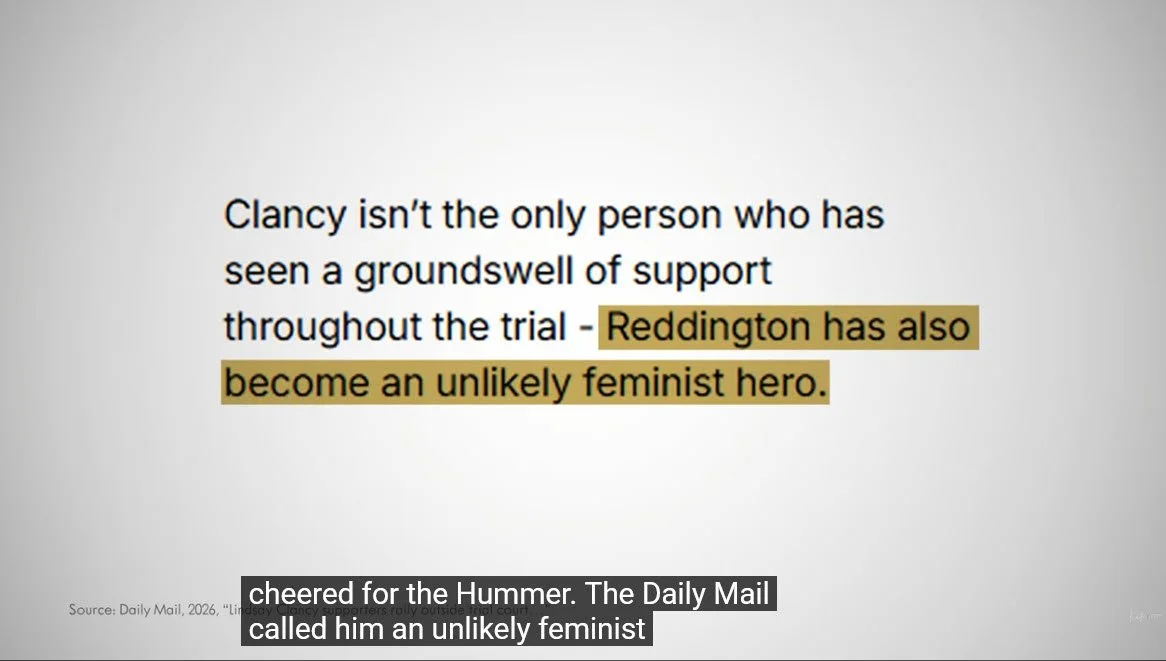
My judgment: the video is substantially grounded in real evidence, but it overstates what that evidence proves. It is most convincing when discussing the case record and least convincing when generalizing from this case to women as a group.
What the video argues
The narrator advances four connected claims:
The killings showed organization and possible premeditation.
Clancy’s supporters minimize that evidence because they identify with her as a mother.
Sympathy is redirected into blame of the medical system, pharmaceutical companies and especially Patrick Clancy.
This reflects a broader “women are wonderful” bias that influences public opinion and criminal sentencing.
The first three are legitimate subjects for examination. The fourth becomes much more speculative.
Where the video is strong
1. It distinguishes the act from the legal question
There is no dispute that Clancy killed Cora, Dawson and Callan. The disputed issue is criminal responsibility: whether mental illness prevented her from appreciating the wrongfulness of her conduct.
The video correctly observes that:
Psychosis does not necessarily make someone continuously incoherent.
Organized conduct can coexist with serious mental illness.
Evidence of planning is relevant.
Mental illness alone does not automatically satisfy the legal insanity standard.
Its reconstruction of the roughly 45-minute period—arranging the food order, sending Patrick away, adding the CVS stop, communicating normally during the errand and acting while he was gone—is plainly important prosecution evidence.
It is also reasonable to object when commentators treat postpartum psychosis as an automatic acquittal. The legal question is not simply, “Was she mentally ill?” It is closer to: What did that illness prevent her from understanding at the precise time of the killings?
2. It fairly acknowledges unfavorable evidence
Unlike crude advocacy, the narrator includes facts that weaken his own position:
Clancy had alarming symptoms.
She received numerous psychiatric prescriptions from multiple providers.
Her searches concerned psychosis, hallucinations, suicide and medication withdrawal.
The prosecution psychiatrist examined her years afterward and remotely.
The defense expert reportedly considered her account genuine.
Postpartum psychosis is real and potentially catastrophic.
That improves the video’s credibility. It does not simply pretend that mental illness was invented by the defense. ACOG recognizes postpartum psychosis as a serious condition involving hallucinations, delusions, paranoia and disorganization that can endanger an infant. ACOG’s clinical summary
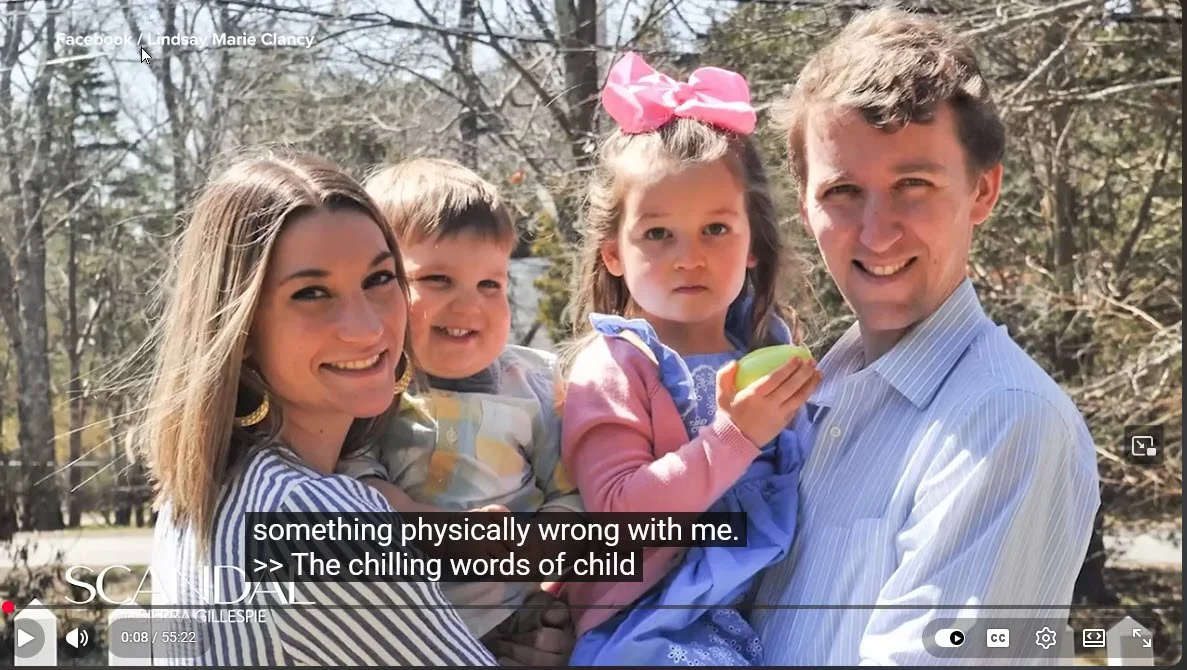
3. Its criticism of accusations against Patrick Clancy is justified
This is the video’s strongest moral argument.
According to the evidence described by both sides, Patrick was at CVS and the restaurant when the children were killed. Public claims that he drugged Clancy, killed the children or pushed her from the window appear unsupported and contrary to the established timeline.
One may reasonably investigate:
Whether he appreciated the severity of her illness.
Whether the medical system failed the family.
Whether warning signs were missed.
That is entirely different from accusing him of murder. The latter is irresponsible without evidence.
4. It correctly challenges “Same, Lindsay”
The social-media message that any mother suffering postpartum depression was “one step away” from killing her children is both inaccurate and potentially harmful.
Postpartum depression, anxiety, intrusive thoughts and postpartum psychosis are not interchangeable. Even among women experiencing postpartum psychosis, the overwhelming majority do not kill anyone. Mothers who experienced frightening intrusive thoughts should not be told that they nearly became child murderers.
Where the argument breaks down
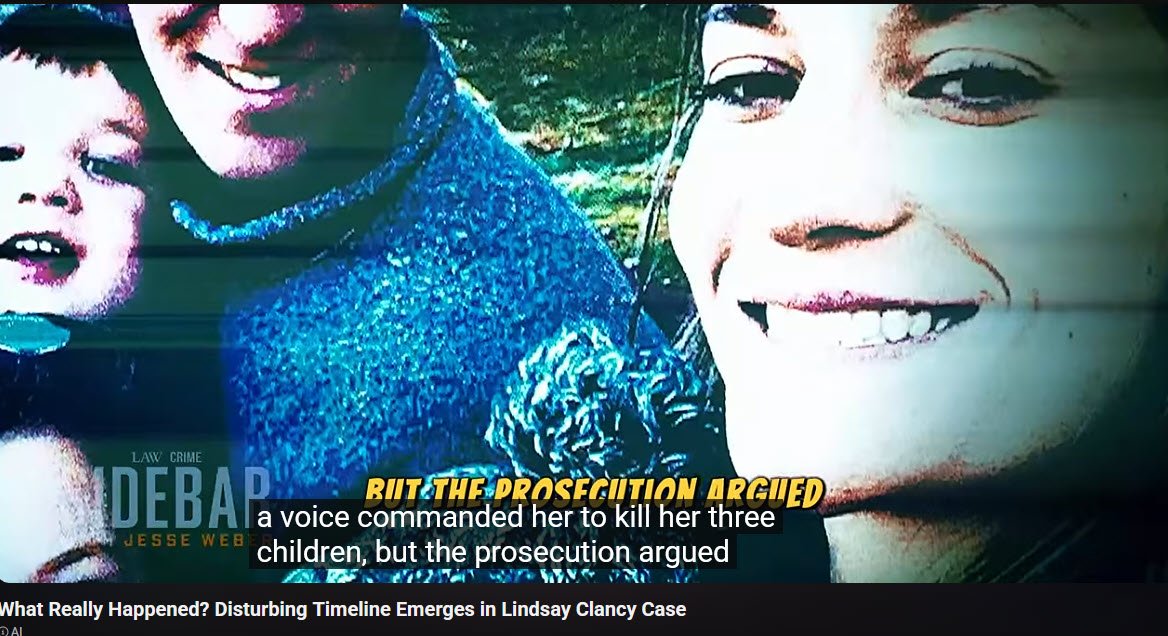
1. It treats the donors as “30,000 women” without establishing that fact
The video repeatedly converts approximately 30,000 donors into “30,000 women.” But the sex of all—or apparently even most—of the donors is not demonstrated.
A courthouse crowd described as predominantly female does not establish the demographics or motivations of an online donor population. Some donors may have been:
Friends or acquaintances of the parents.
People supporting a family facing enormous trial expenses.
Mental-health advocates.
People sympathetic to the insanity defense.
People who donated without believing Clancy was innocent.
The stated beneficiary was her parents’ travel and living expenses, not her legal defense. Donating to grieving parents is not necessarily a “verdict” about their daughter.
2. The two GoFundMe campaigns are not comparable experiments
The video makes much of:
Approximately 16,000 donors supporting Patrick after the deaths.
Approximately 30,000 supporting Clancy’s parents during the trial.
But these campaigns occurred three and a half years apart, under radically different circumstances. Their reach could have been affected by:
Trial publicity.
Social-media algorithms.
Campaign duration.
News coverage.
Suggested donation amounts.
Repeat donors.
The size of the organizers’ networks.
Public awareness of postpartum psychosis.
Therefore, “twice the donors” does not prove that society valued Clancy’s family twice as much as Patrick or the children.
3. The psychological studies do not prove why this crowd behaved as it did
The “women are wonderful” effect is a real line of social-psychological research: people often associate women with greater warmth and communal qualities, with women generally showing a stronger pro-woman preference.
But the video commits an ecological inference error:
People tend to evaluate women warmly → therefore these donors defended Clancy because she was a woman.
The cited studies did not examine:
Lindsay Clancy donors.
Mothers accused of filicide.
Insanity defenses.
Online true-crime communities.
Accusations against husbands.
GoFundMe behavior.
The research makes the narrator’s theory plausible enough to investigate. It does not prove the theory.
Moreover, favorable stereotypes about women can coexist with discrimination against women. Being stereotyped as nurturing may produce sympathy for a conventionally maternal defendant while simultaneously penalizing women considered cold, ambitious, promiscuous or “bad mothers.” That is more complicated than universal cultural permission for women.
4. “Female derangement syndrome” undermines the analysis
The narrator says this is not a medical diagnosis, but the phrase is deliberately provocative and pathologizing. It packages several different phenomena together:
Empathy with a mentally ill mother.
Belief in an insanity defense.
Distrust of psychiatric prescribing.
Genuine misinformation about Patrick.
Sex-based ingroup preference.
Social-media mob behavior.
Those are not the same thing. Giving all of them a catchy, gendered label makes the argument more viral but less precise.
5. The sentencing evidence is real but incompletely applied
The cited Sonja Starr research did find a large sex disparity in federal criminal outcomes, including substantially longer average sentences for men and a greater likelihood that women would avoid incarceration.
That is serious evidence worthy of attention. But it does not prove discrimination is responsible for the entire difference, nor does it directly establish bias in maternal-filicide insanity cases. Even carefully controlled observational studies may not capture all differences involving:
Charging and plea agreements.
Criminal roles.
Cooperation with prosecutors.
Violence level.
Dependents and caregiving.
Prior conduct not captured in formal criminal-history variables.
The video moves too quickly from “there is a federal sentencing gap” to “this case is part of the same mechanism.”
6. The father-role reversal is useful—but not evidence
The narrator repeatedly asks what would happen if a father killed the same children under identical circumstances.
That is a valuable question. There is good reason to suspect that a father would receive less immediate public identification. But the video admits—and then largely ignores—that this is a counterfactual thought experiment.
A proper comparison would require matched cases involving:
Similar documented psychosis.
Comparable medication histories.
Similar suicide attempts.
Equivalent planning evidence.
The same jurisdiction and insanity standard.
Comparable expert testimony.
Without that, “a father would be called a monster by lunchtime” remains plausible rhetoric, not a demonstrated fact.
The most important omitted fact
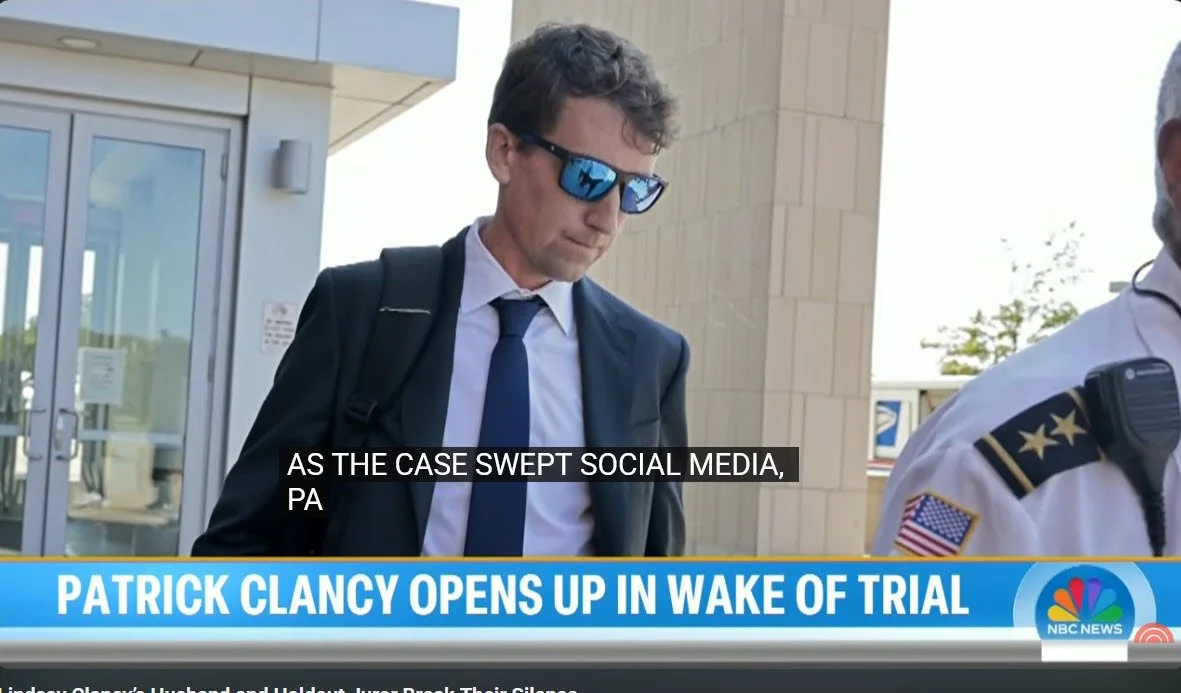
Subsequent reporting indicates the mistrial resulted from an 11–1 division favoring a verdict of not guilty by reason of insanity, not a jury evenly divided over a close call. Reporting on the jury division
That does not prove the eleven were right. But it matters enormously. Eleven people who heard the 84 witnesses and reviewed the evidence apparently concluded that the legal insanity standard had been met.
The video repeatedly contrasts uninformed internet spectators with jurors who heard all the evidence. Once the actual division became known, intellectual consistency required giving the eleven jurors’ conclusion substantial weight—not merely the fact that the jury failed to reach unanimity.
Presentation and rhetorical technique
The video is extremely effective as advocacy. It uses:
A minute-by-minute “clock” to create an impression of calculation.
Repetition of the children’s ages and method of death.
Carefully timed concessions to create an appearance of neutrality.
Loaded contrasts: children versus adults, evidence versus identification, judgment versus sympathy.
A memorable invented label.
A hypothetical gender reversal that encourages the viewer to feel the unfairness directly.
None of these techniques makes the argument false. But they intensify the viewer’s moral reaction before the contested psychiatric and legal issues have been resolved.
The narration also sometimes treats disputed prosecution interpretations as though they were objective facts. For example, arranging an errand may show planning, but planning alone does not establish legal sanity. A delusional person can plan and still be unable to appreciate moral or legal wrongfulness.
My conclusion
The video gets three essential things right:
The children must not disappear from the story.
Postpartum illness does not automatically erase agency or decide legal responsibility.
Accusing Patrick Clancy of murder without evidence is cruel and indefensible.
Harassing and slandering the lone holdout juror, a black conservative, should be litigated in civil court.
But it overreaches when it claims that this public response demonstrates a broad “female derangement” mechanism. The fundraising total, donor count and psychological studies do not establish that causal conclusion.
The fairest formulation would be:
Clancy may have been profoundly psychotic and legally not responsible while still having deliberately performed the physical acts. The medical system may have failed her, while she remains the person who killed the children. Patrick may forgive her, but that does not justify accusing him. Public sympathy is legitimate; fabrication and hero worship are not.
That is more accurate than either extreme—“calculating monster with no genuine illness” or “innocent mother whose husband and doctors really killed the children.” The video succeeds in exposing the second extreme, but occasionally approaches the first while insisting that it does not.