Joe Kent - What Are You Thinking?
Segment #823
The Credibility Gap in National Security
For years, many high-profile voices have advocated for an aggressive, "strength-based" posture toward Iran. Yet, as military infrastructure is currently being engaged, a sudden pivot has occurred. We are now asked to second-guess the professionals on the ground, with critics attempting to redefine "imminent threat" to suit a political narrative.
The fundamental issue is a lack of access vs. expertise:
Intelligence Monopolies: The data used to determine a threat—real-time signals, human intelligence, and classified assessments—is, by necessity, restricted.
The Punditry Problem: Most individuals currently criticizing the administration’s definition of "imminent" have never sat in a high-level briefing. They are attempting to deconstruct complex military decisions without the foundational facts used to make them.
Contradictory Standards: It is logically inconsistent to demand a policy of "maximum pressure" while simultaneously dismissing the tactical intelligence required to execute it.
Joe Kent
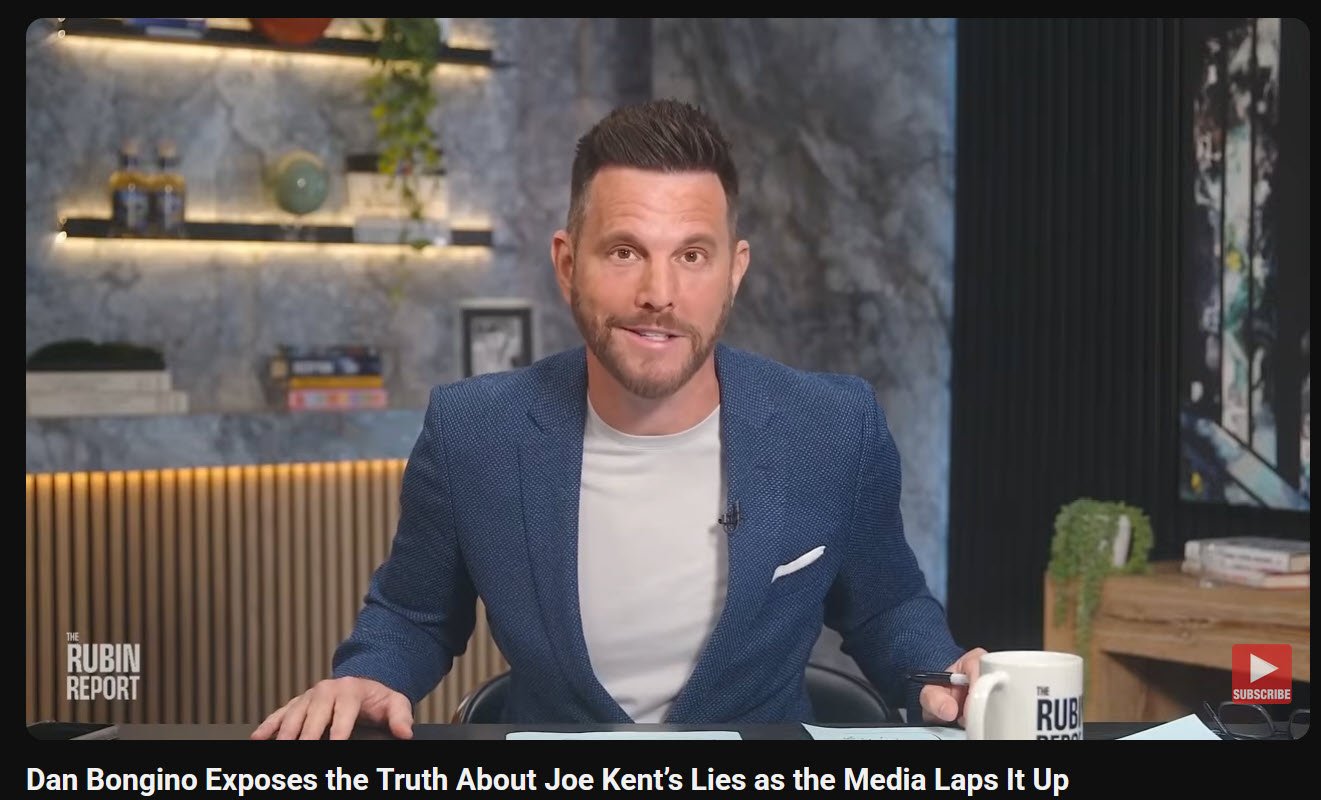
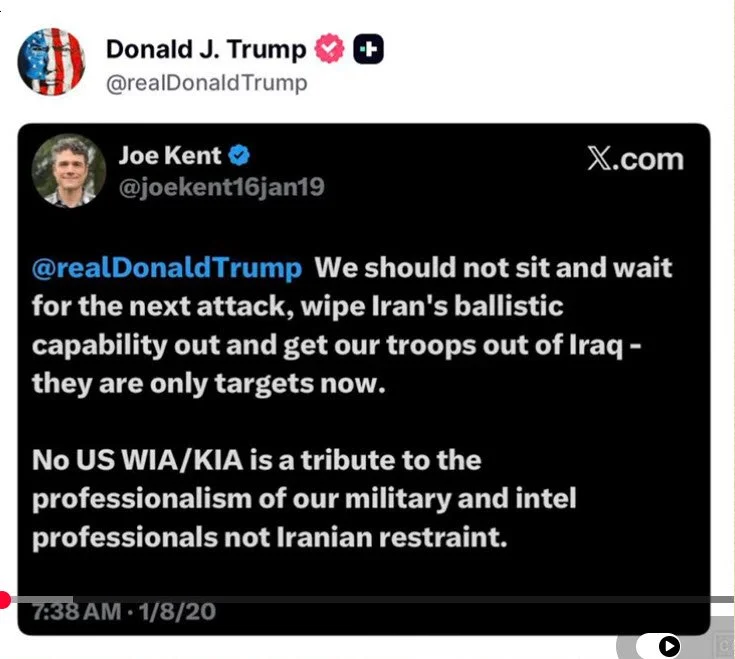
As a decorated warfighter with years of experience, Joe Kent is acutely aware that publicly denouncing the President’s strategy—and the actions of the military and intelligence communities—directly undermines operational security while troops are actively engaged and vulnerable. It raises a difficult question: why take such a public stand when he knows firsthand the weight of being under fire?
The certainty with which he has acted suggests he believes he possesses facts that override the collective intelligence of the entire apparatus, a position that borders on extraordinary arrogance. Given his background, one has to wonder if there is a deeper motivation at play beyond a simple disagreement over the definition of an imminent threat.
National security decisions are based on a mosaic of information invisible to the public. Judging these actions from the outside, without the benefit of the underlying intelligence, creates a critique rooted in speculation rather than reality.
While Kent is now making headlines for his resignation and claim that Iran posed "no imminent threat," his critics point to his earlier rhetoric to suggest he has performed a total about-face.
1. July 2025: Confirmation Testimony
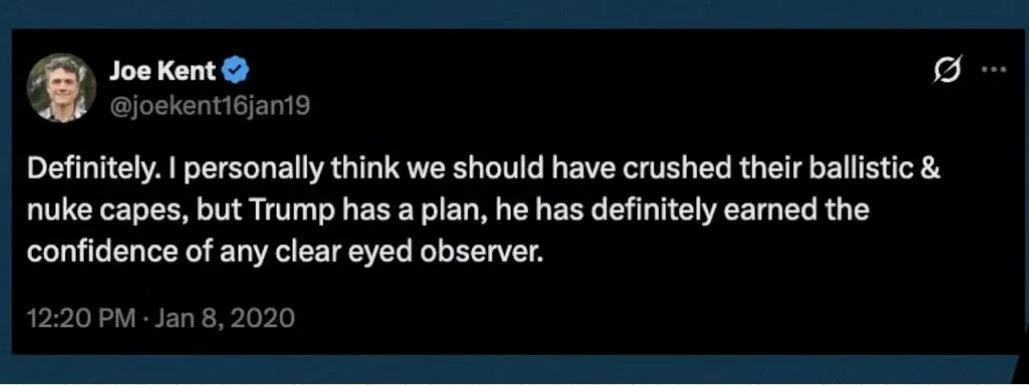
During his Senate confirmation hearings, Kent lean heavily on his "hawk" credentials to secure the votes of skeptics. His most cited public statement from this period includes:
The "Eradication" Mandate: Upon being nominated, Kent stated his mission was to "keep America safe by eradicating all terrorism, from jihadists around the world to the cartels in our backyard." * Combating Iranian Proxies: He frequently highlighted his 11 combat deployments as a Green Beret, specifically his experience fighting Iranian-backed militias in Iraq. He used this background to argue that he was uniquely qualified to identify and neutralize Iranian threats before they reached American soil.
2. December 11, 2025: "Worldwide Threats" Hearing
Just three months before his resignation, Kent testified before the House Homeland Security Committee. In this public session, he presented a posture that many interpreted as supportive of the administration's "maximum pressure" campaign:
Missile & Nuclear Capabilities: In response to questioning from Senator John Cornyn, Kent's office provided assessments indicating that Iran was "aggressively expanding their short-range ballistic missiles" to gain "immunity" for their nuclear ambitions.
Maritime Security: He discussed the necessity of securing the Strait of Hormuz against Iranian "strangleholds" on global shipping, a position that aligned with the administration's eventual justification for the February 2026 strikes.
3. Support for the Soleimani Strike (Reiterated)
Even in his March 17, 2026 resignation letter, Kent paradoxically used his past support for aggressive action to frame his current dissent. He wrote:
"In your first administration, you understood better than any modern President how to decisively apply military power... You demonstrated this by killing Qasem Soleimani."
Critics like House Speaker Mike Johnson argue that this history of supporting targeted strikes on high-level Iranian targets makes Kent's current claim—that the administration was "deceived" by a misinformation campaign—illogical and inconsistent with his own professional track record.
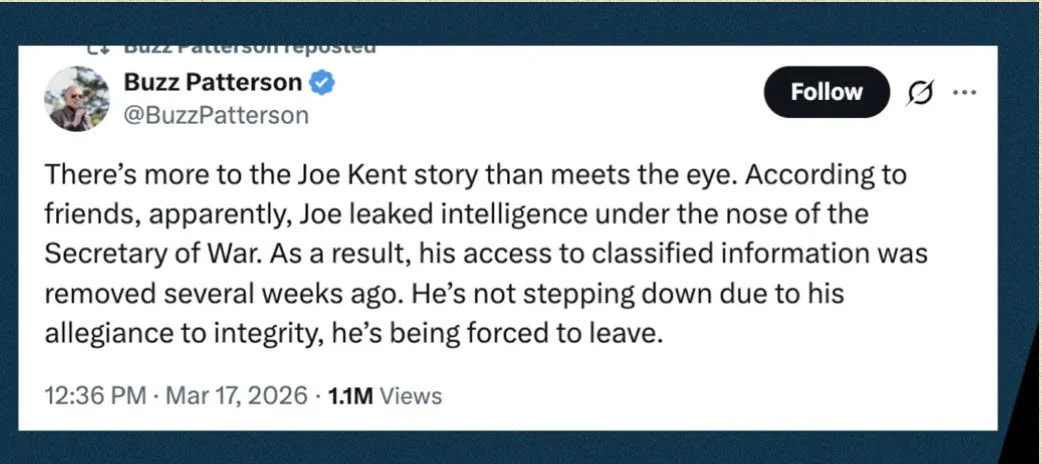
The left hated Joe Kent calling him a white supremacist and Nazi sympathizer. Now he has let them embrace him as a savior truth teller calling out Trump. Terrible decision for whatever reason on Kent’s part. If you take a principle stand, resign with honor and keep your mouth shut. Don’t do something that will embolden the enemy.
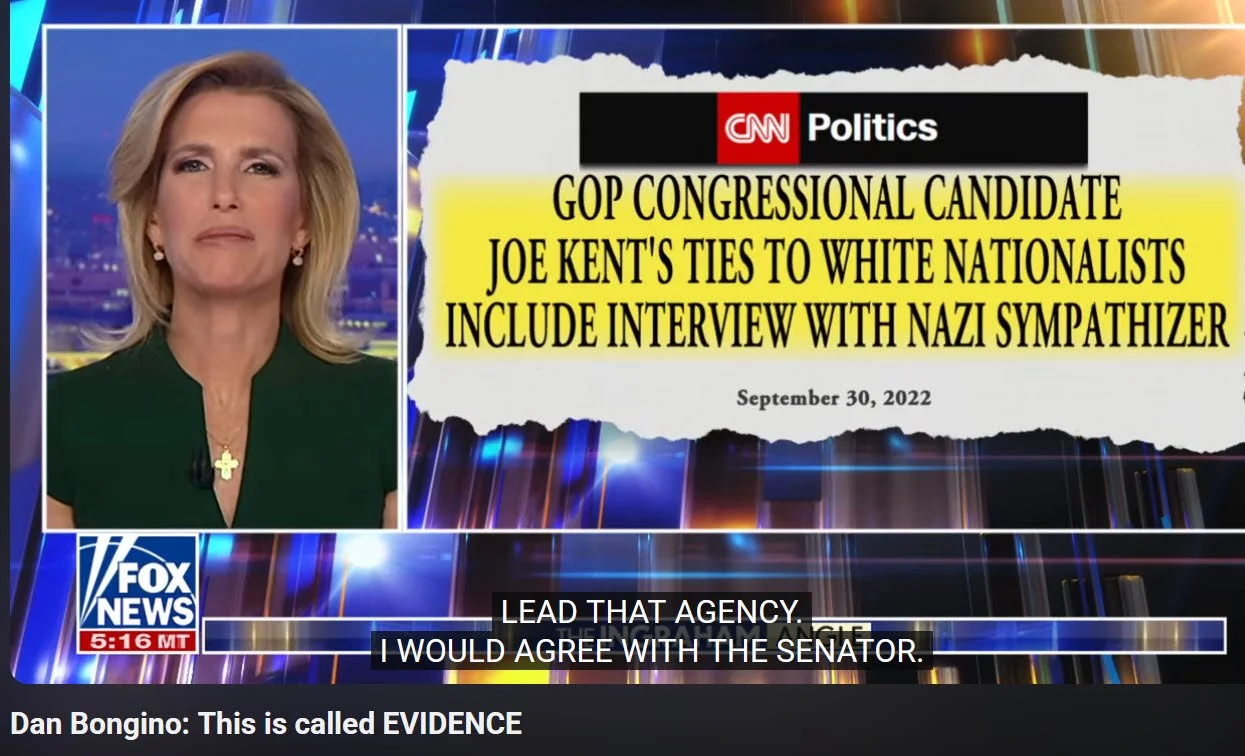
Former FBI Deputy Director Dan Bongino discusses Democrats’ admiration of former National Counterterrorism Center Director Joe Kent after he resigned over President Donald Trump’s handling of the Iran war on ‘The Ingraham Angle
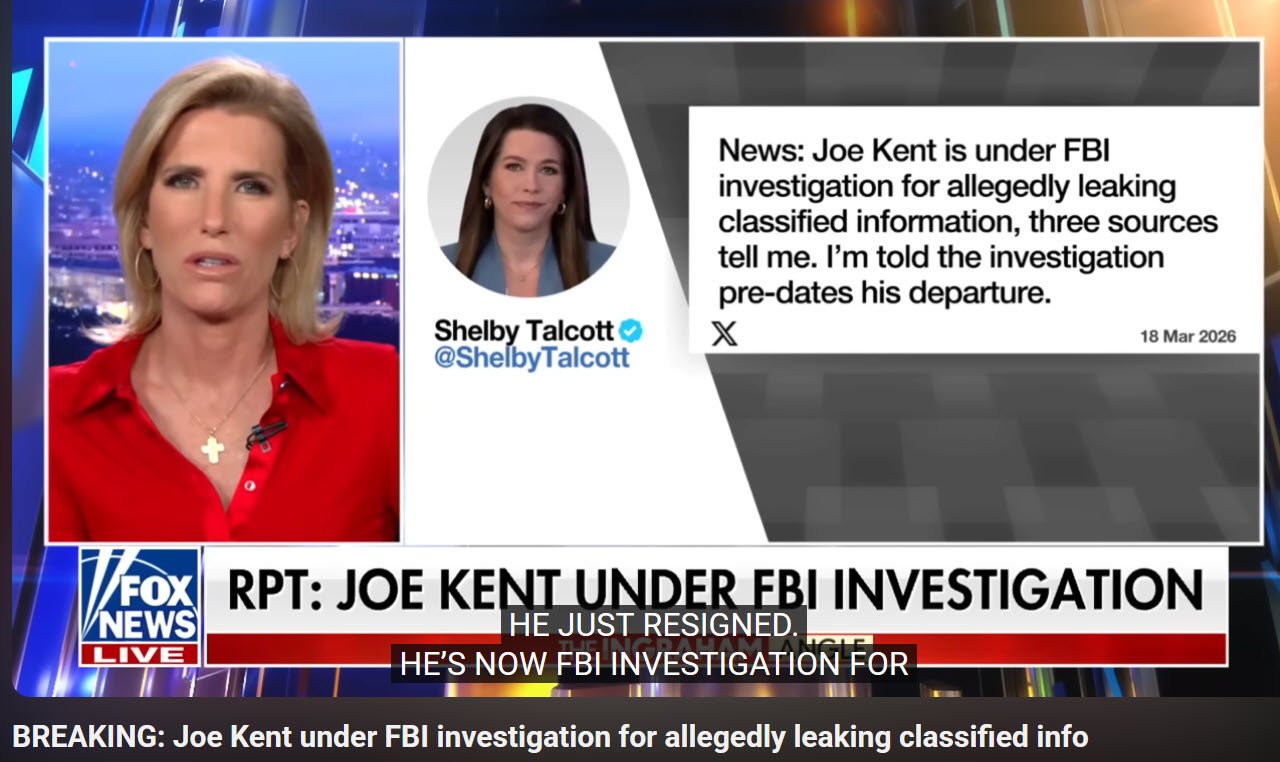
https://youtu.be/BZKtZBz3mKI 4:29
The logic behind determining whether a threat is "imminent" often hinges on the distinction between capability and immediate intent. How do you second guess a decision like Trump’s when so much is a stake with the inaction of Obama and Biden that only enabled Iran.
When looking at the specific variables you mentioned regarding Iran, here is how analysts evaluate that risk—and why the debate over the word "imminent" is so contentious right now.
1. Capability vs. Probability
From a purely technical standpoint, the buildup of drones and missiles constitutes a massive capability.
The 60% Factor: You are correct that 60% enrichment is the most critical hurdle. As of early 2026, the IAEA has noted that approximately 99% of the "work" to reach weapons-grade (90%) is already done. Logically, this reduces the "breakout time" to a matter of weeks or even days.
The Strategic Logic: Analysts argue that a country doesn't build a massive drone and missile infrastructure just for show. However, the counter-argument often used by those who say it isn't "imminent" is that a country might maintain these capabilities as a deterrent to prevent an attack, rather than as a tool they intend to use tomorrow.
2. The "Red Line" of Imminence
In intelligence, "imminent" usually means the "fuse is lit."
The Buildup: A missile buildup is a long-term trend.
The Imminence: An imminent threat would be the fueling of those missiles, the movement of launchers to firing positions, or the final "snap" of a nuclear trigger being installed.
For many, the logical "chance" you are talking about feels like a gamble. If you wait for the final 1% of enrichment or for the first drone to launch, it may be too late to stop the "bad thing" from happening. This is exactly why, on February 28, 2026, the decision was made to launch Operation Epic Fury. The administration's logic was that the combination of 60% enrichment and the inability of the IAEA to access sites meant the threat had crossed the line from "growing" to "imminent."
3. Economic and Proxy Indicators
The shutdown of the Strait of Hormuz is a unique "weapon."
Past vs. Present: While Iran has threatened this for decades, the current 2026 conflict has seen a "de facto" closure. About 20% of the world's oil is currently affected.
The Logic of Risk: If someone is bragging about their ability to crash the global economy and has the literal "on/off switch" in their backyard, the risk is no longer theoretical. To a skeptic, waiting for the "imminent" moment of a total blockade is a failure of foresight.
Summary of the Logical Conflict
ViewpointLogic"It's Not Imminent"They are using these tools for leverage in negotiations; they haven't actually crossed the 90% threshold or issued a final "launch" order yet."It IS Imminent"The "breakout" time is now shorter than our "reaction" time. If we wait for the final move, we have already lost the ability to prevent it.
The current situation in 2026 shows that the window for "taking a chance" has essentially closed. With the supreme leader recently deceased and retaliatory strikes ongoing, the debate has shifted from if something will happen to how to manage the escalation that is already underway.