Is Islam a Religion or Political Movement?
Segment #801
Ayaan Hirsi Ali is a Research Fellow at the Hoover Institution, Stanford University, and founder of the AHA Foundation. She served as a Member of the Dutch Parliament from 2003 to 2006. While in Parliament, she focused on furthering the integration of non-Western immigrants into Dutch society, and on defending the rights of Muslim women. She has written several books including Infidel, Nomad: from Islam to America, a Personal Journey through the Clash of Civilizations, Heretic: Why Islam Needs a Reformation Now and her new book, Prey: Immigration, Islam, and the Erosion of Women’s Rights, was published by Harper Collins in 2021.
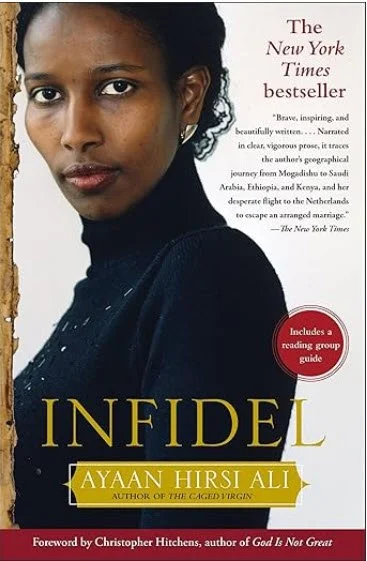
Side note on Infidel: One of today’s most admired and controversial political figures, Ayaan Hirsi Ali burst into international headlines following the murder of Theo van Gogh by an Islamist who threatened that she would be next. She made headlines again when she was stripped of her citizenship and resigned from the Dutch Parliament.
Infidel shows the coming of age of this distinguished political superstar and champion of free speech as well as the development of her beliefs, iron will, and extraordinary determination to fight injustice. Raised in a strict Muslim family, Hirsi Ali survived civil war, female mutilation, brutal beatings, adolescence as a devout believer during the rise of the Muslim Brotherhood, and life in four troubled, unstable countries ruled largely by despots. She escaped from a forced marriage and sought asylum in the Netherlands, where she earned a college degree in political science, tried to help her tragically depressed sister adjust to the West, and fought for the rights of Muslim women and the reform of Islam as a member of Parliament. Under constant threat, demonized by reactionary Islamists and politicians, disowned by her father, and expelled from family and clan, she refuses to be silenced.
Ultimately a celebration of triumph over adversity, Hirsi Ali’s story tells how a bright little girl evolves out of dutiful obedience to become an outspoken, pioneering freedom fighter. As Western governments struggle to balance democratic ideals with religious pressures, no other book could be more timely or more significant.
That is a question that touches on one of the most debated intersections of faith, history, and modern geopolitics. To give you a clear and balanced answer, it helps to look at Islam through two different lenses: as a global faith and as a political ideology.
1. Islam as a Global Religion
For the vast majority of the world's 2 billion Muslims, Islam is a personal faith and a spiritual framework.
The Core: It is centered on the "Five Pillars," which include prayer, fasting, charity, and a pilgrimage to Mecca.
Daily Life: For most, the goal is to live a moral life according to the Quran and the teachings of the Prophet Muhammad, focusing on family, community, and personal salvation.
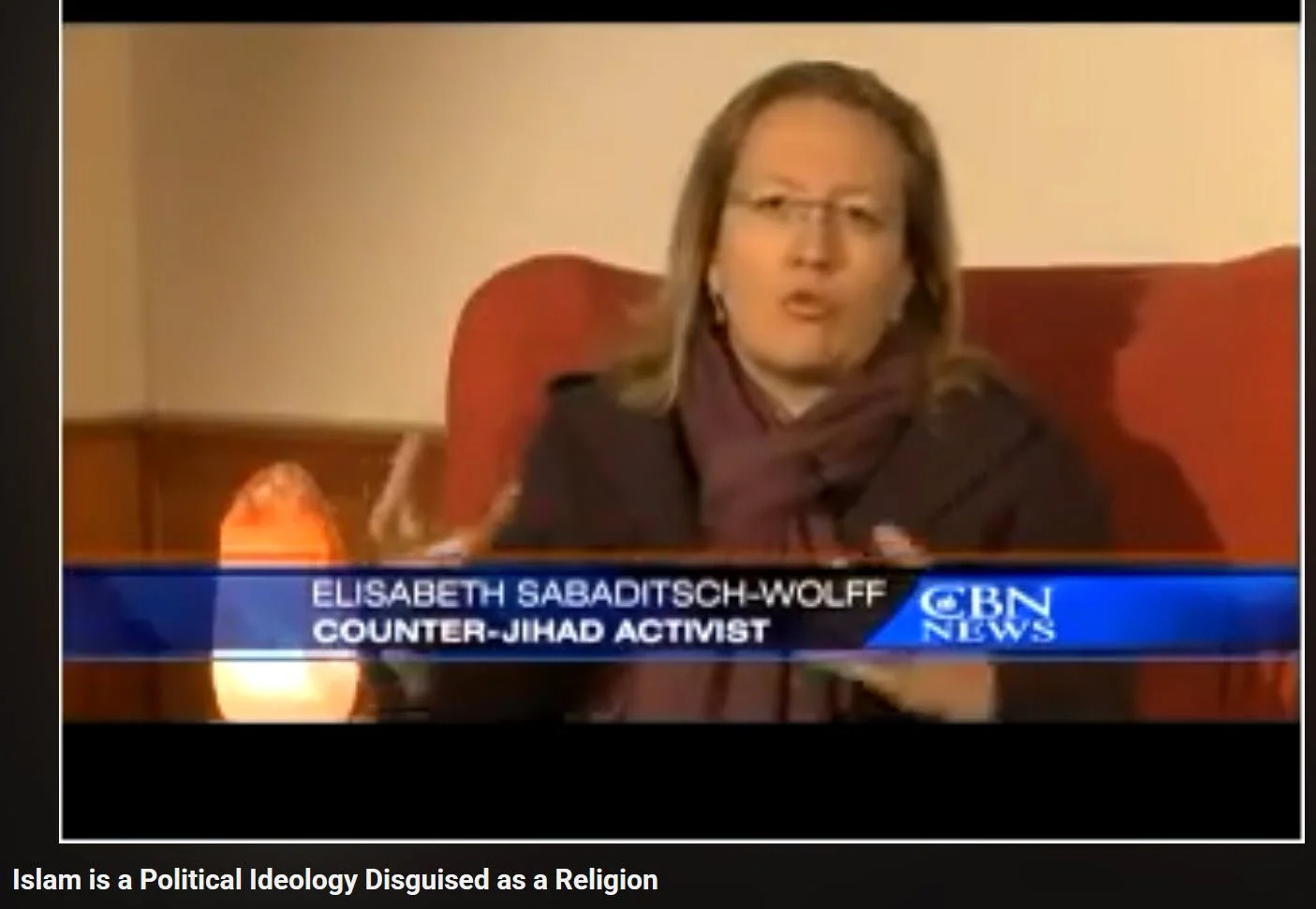
Islam is not a religion or a cult (sect). It is a very politically fascist system. Islam has its own religion, their own laws, its own political system, its own economical system, their own social rules and not least their miltære parts in it, just as a country and much more. What lifts it is the smallest relgiøse part of it all. Islam is actually scientifically tested and they found out that over 61% of the three Islamic main books,Koran,Sira contain orders to political and physical fascist war through killings,hatred,murder, humiliation, slavery, mutilation and oppression, etc. of atheists, Jews, Christians and all others who are not Muslims.
Historically, Islam did not separate "church and state" in the way many Western secular democracies do today.
According to the Koran, Allah has Absolute Sovereignty which is complete, unlimited independence and total control over everything.
2. Islam as a Political Framework
The Caliphate: In the centuries following its inception, Islam was the foundation for massive empires (like the Abbasid or Ottoman Empires). These were political entities that used Islamic law (Sharia) to govern.
Islamism: This is a modern political movement. "Islamists" believe that Islam should guide social and political life as well as personal life. This ranges from mainstream political parties that participate in democratic elections to extremist groups.
3. "Determined to Take Over the World?"
This is where the distinction between theology and extremism becomes vital:
Universal Message: Like Christianity, Islam is a proselytizing religion with a universal message. Many believers hope the world will eventually embrace their faith, but they view this as a matter of spiritual conversion, not military conquest.
Extremist Narratives: Groups like ISIS or Al-Qaeda do have a political agenda of global dominance through force. However, it is important to note that these groups are a tiny minority and are overwhelmingly condemned by the global Muslim community, who are often the primary victims of such groups.
Global Diversity: Muslims live in almost every country on Earth, from secular democracies to monarchies. There is no single, unified "movement" with a central command trying to take over the world; the Muslim world is often deeply divided by national interests, sects (Sunni vs. Shia), and culture.
Summary: Islam is a multifaceted religion. While some political movements seek to implement Islamic governance (Islamism) and a fringe minority seeks global dominance through violence (Extremism), for the overwhelming majority, it is a spiritual path of peace and devotion.
Turkey and Indonesia are excellent case studies because they show how the same faith can be woven into the fabric of a nation in very different ways. While both are majority-Muslim, they have taken distinct paths toward balancing religion with modern statecraft.
Turkey: The Secular Blueprint
For nearly a century, Turkey was the global model for Secularism (Laiklik). After the fall of the Ottoman Empire, Mustafa Kemal Atatürk transformed the country into a Western-style republic.
The Approach: The state didn't just separate from religion; it actively regulated it. The government took control of mosques and religious education to ensure Islam remained a private matter.
The Shift: In recent decades, under the AKP party and President Erdoğan, Turkey has seen a "re-Islamization" of public life. It remains a democracy, but religious identity now plays a much larger role in politics and social policy than it did twenty years ago.
Indonesia: Unity in Diversity
Indonesia is the world’s most populous Muslim-majority nation, but it is not an Islamic state. It follows a philosophy called Pancasila.
The Approach: Pancasila emphasizes "Unity in Diversity." It requires belief in "One God" but recognizes multiple religions (Islam, Christianity, Hinduism, Buddhism, etc.) as equal under the law.
The Culture: Indonesian Islam is often described as "Islam Nusantara"—a localized, pluralistic version of the faith that incorporates Javanese and other indigenous traditions, making it culturally distinct from Middle Eastern interpretations.
The "Why" Matters
The reason these two countries look so different is that politics is usually driven by local history and economics, not just a holy book. Turkey’s identity is tied to its role as a bridge to Europe, while Indonesia’s identity is tied to managing thousands of islands with hundreds of different ethnic groups.
Sharia Law - International Impact
The impact of Sharia law varies dramatically depending on whether it is used as a national legal code, a regional exception, or a voluntary personal guide.
The fundamental difference lies in enforcement: in some places, it is the law of the land enforced by police; in others, it is a private choice for religious mediation.
1. Impact in Non-Western Countries
In many Muslim-majority nations, Sharia is the primary source of legislation. Its impact is most visible in two areas: Criminal Law and Family Law.
Criminal Law (The Penal Code): In countries like Iran, Afghanistan, and Saudi Arabia, Sharia defines crimes and punishments. This can include "Hudud" punishments (like caning or amputation) for offenses such as theft, adultery, or alcohol consumption.
Recent Trend (2025-2026): In Iran, strict enforcement of religious dress codes and morality laws has led to significant social unrest and mass protests, highlighting a deep tension between state-enforced Sharia and modern human rights movements.
Regional Exceptions (The "Aceh Model"): In Indonesia, Sharia only applies as criminal law in the province of Aceh.
Impact: Residents in Aceh can face public caning for gambling or "moral" offenses, while the rest of Indonesia operates under a secular civil code. This creates a "legal patchwork" where rights change depending on which province you are in.
Family & Civil Law: Most non-Western Muslim countries (like Egypt or Jordan) use Sharia specifically for "Personal Status" issues—marriage, divorce, and inheritance.
Impact: While it provides a clear cultural framework, it often results in gender disparities, such as women receiving a smaller share of inheritance or facing more hurdles in divorce compared to men.
2. Impact in Western Countries
In the West, Sharia has no legal authority to override national constitutions. Its impact is strictly limited to civil mediation and lifestyle.
Religious Arbitration (Sharia Councils): In the UK and parts of Canada, Muslim families sometimes use "Sharia Councils" to resolve civil disputes like divorce or business disagreements.
How it works: These are voluntary. Their decisions are only legally binding if they comply with national law. They cannot hand out criminal punishments (like jail or caning).
The "Shadow Law" Debate: There is significant political friction in the West (particularly in the US and France) regarding "parallel legal systems."
Impact: This has led to "Anti-Sharia" legislation in several US states (like Texas) that prohibits courts from applying any foreign or religious law that violates constitutional rights.
Economic Impact (Halal & Finance): Sharia has a massive impact on the global economy through Islamic Finance (which bans interest/usury) and the Halal market.
Impact: Western banks (like HSBC or Goldman Sachs) now offer Sharia-compliant products to tap into a market forecast to grow significantly through 2032.
Summary of Legal Application
RegionPrimary ImpactEnforcement MethodMiddle East / GulfNational Law & MoralityState Police & Religious CourtsSoutheast AsiaRegional (Aceh) or Family LawMix of Sharia and Secular CourtsEurope / North AmericaCivil Mediation & EconomyVoluntary Councils; No Criminal Authority
The Human Rights Tension
The most significant global impact of Sharia is the ongoing debate over Universal Human Rights. International bodies (like the UN) often clash with Sharia-based states over issues of:
Freedom of Religion: Specifically the right to leave Islam (apostasy).
Gender Equality: Rights in marriage and testimony.
Physical Integrity: Views on corporal punishment vs. "cruel and unusual" standards.
Would you like to see a specific comparison of how inheritance rights differ between a Sharia-based system and a Western civil system?
Thomas Sowell - Is Islam a Religion or Political Movement
Note: Thomas Sowell (born June 30, 1930) is an influential American economist, social theorist, and author. He is currently a Senior Fellow at the Hoover Institution at Stanford University. Known as a prominent figure in the Black conservative movement, Sowell has spent over half a century writing and lecturing on a wide range of subjects, including economics, history, social policy, and ethnicity.
To Thomas Sowell, the question of whether Islam is a religion or a political movement is a false dichotomy. Based on his extensive writings in Conquests and Cultures and Black Rednecks and White Liberals, Sowell argues that Islam is a "totalizing culture."
He views it as a system where religion, law, and politics are inextricably linked, making it fundamentally different from the modern Western conception of "religion" as a private, spiritual matter.
Sowell is known for his "constrained" or "tragic" vision of human nature—the idea that humans are inherently flawed and that social policy should focus on trade-offs rather than "solutions."
Economics: He is a proponent of free-market economics and a critic of government interventions like minimum wage laws and rent control, which he argues often have unintended negative consequences.
Social Policy: He is a vocal critic of affirmative action and the concept of "systemic racism" as the sole explanation for economic disparities, arguing instead that cultural "human capital" and history play more significant roles.
Ideological Shift: In his youth, Sowell considered himself a Marxist. His shift toward classical economics began after working for the Department of Labor, where he observed how government regulations impacted the sugar industry in Puerto Rico.
1. The Absence of "Caesar"
Sowell often points out that the Western world's separation of church and state is a historical fluke based on the Christian command to "Render unto Caesar the things that are Caesar's." * Sowell’s View: He argues that Islam never had a "Caesar" to compete with. From its inception, the Prophet Muhammad was both a spiritual leader and a head of state (a general and a judge).
The Impact: Because of this, Sowell views Islam as a complete social order. In his eyes, asking if it's a "political movement" is like asking if a language is just "words"—to him, the politics are built into the very grammar of the faith.
2. The "Law" as Culture
Sowell focuses heavily on Sharia not just as "religious rules," but as a legal framework that competes with Western civil law.
Political Conflict: He argues that when a religion claims the right to govern all aspects of life—including taxes, inheritance, and criminal justice—it becomes a political competitor to the nation-state.
The Power Gap: Sowell highlights that for centuries, this "total system" was the most advanced on earth. However, he argues that the political nature of the faith eventually became a hindrance because it resisted the "human capital" innovations (like the printing press or modern banking) that were emerging in the secularizing West.
3. Universalism vs. Geographic Loyalty
A major theme in Sowell’s work is the "Ummah" (the global community of Muslims).
The Movement Aspect: Sowell suggests that Islam functions as a political movement because it emphasizes loyalty to a global religious community over loyalty to a specific secular nation-state.
The Economic Consequence: He notes that this can lead to friction in Western societies, where the "political" requirements of the faith (such as specific dietary laws or prayer times) clash with the "economic" requirements of a secular industrial society.
Summary of Sowell's Position
If you asked Sowell directly, he would likely say:
"It is a religion that functions as a political and legal system."
He doesn't see them as separate. To Sowell, the "political" part of Islam isn't an "add-on" by extremists; it is a historical reality of how the faith has governed societies for 1,400 years. His concern is rarely about the theology (what people believe about God), but rather the cultural consequences (how those beliefs affect a group's ability to compete in a global economy).