Iran’s New Leaders
Segment #800
Article 111 was indeed activated following the death of Supreme Leader Ali Khamenei on February 28, 2026, during joint US-Israeli strikes. As you noted, this creates a Temporary Leadership Council because Khamenei did not leave a designated successor.
The Transitional "Troika"
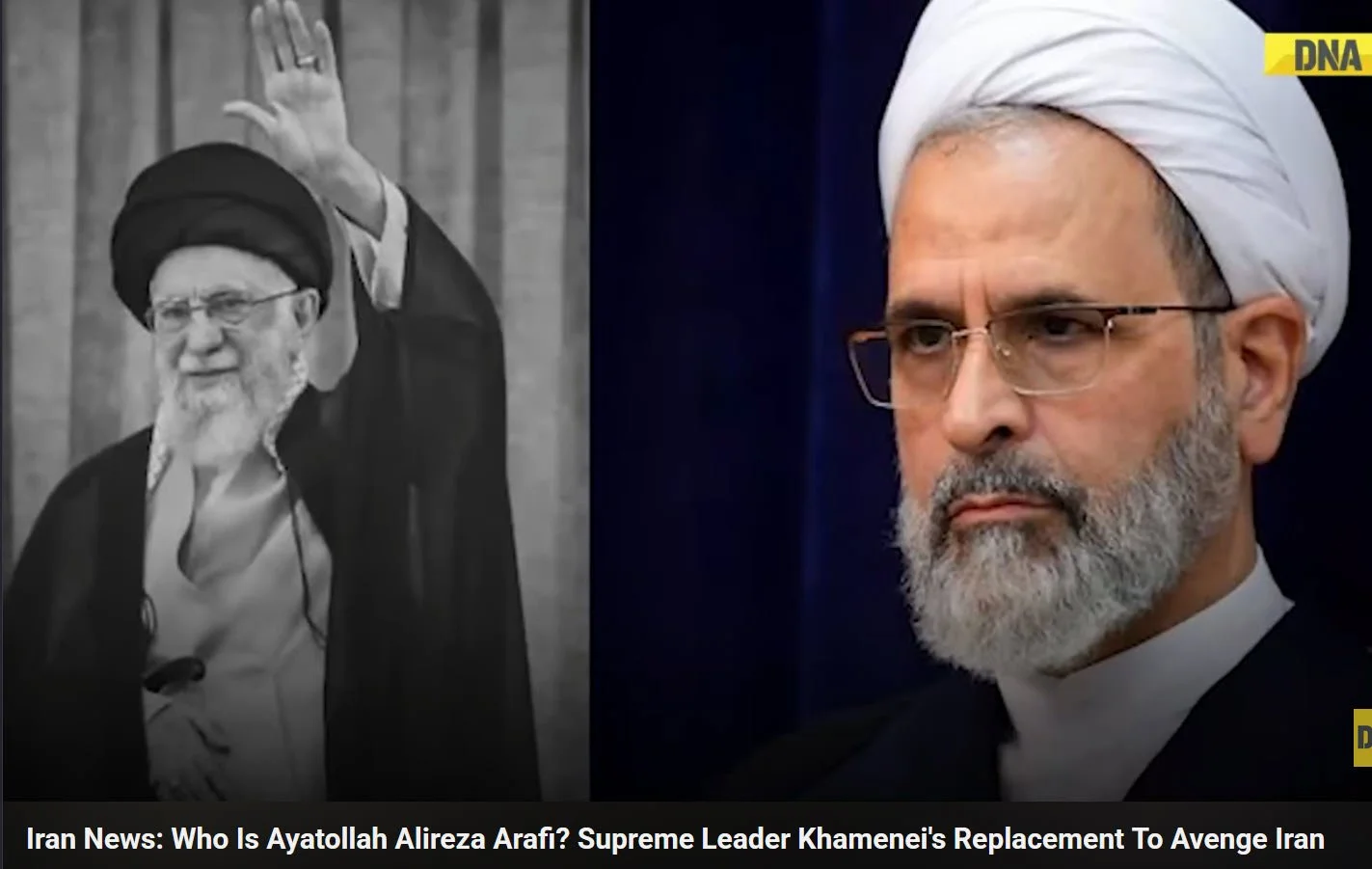
Ayatollah Alireza Arafi is Iran’s newly appointed interim Supreme Leader and clerical jurist tasked with guiding Tehran through leadership transition after Ayatollah Ali Khamenei’s death, wielding influence in the Guardian Council, Assembly of Experts, and shaping Iran’s domestic and foreign policy during heightened regional tensions.
https://www.youtube.com/shorts/j4ywiRNa7wg?feature=share
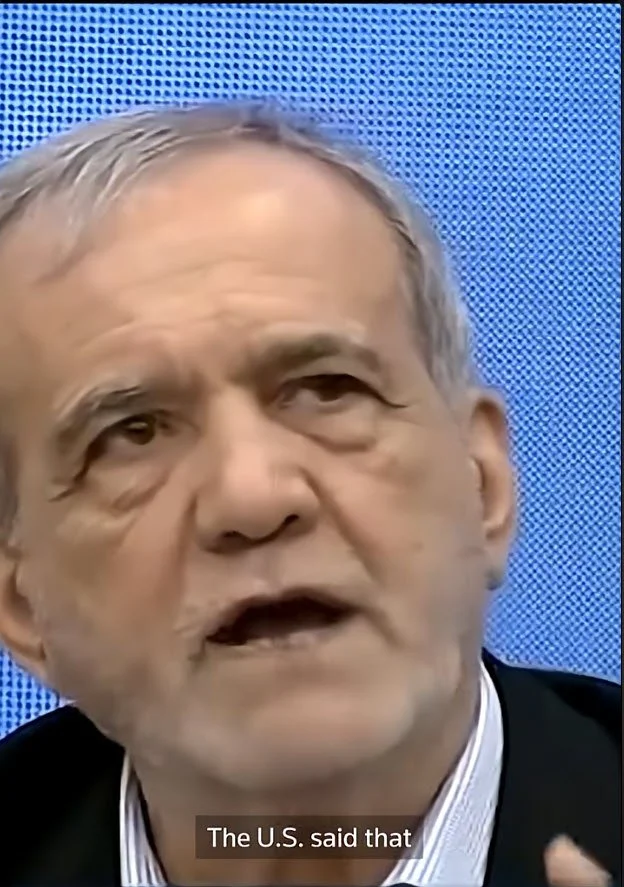
Masoud Pezeshkian
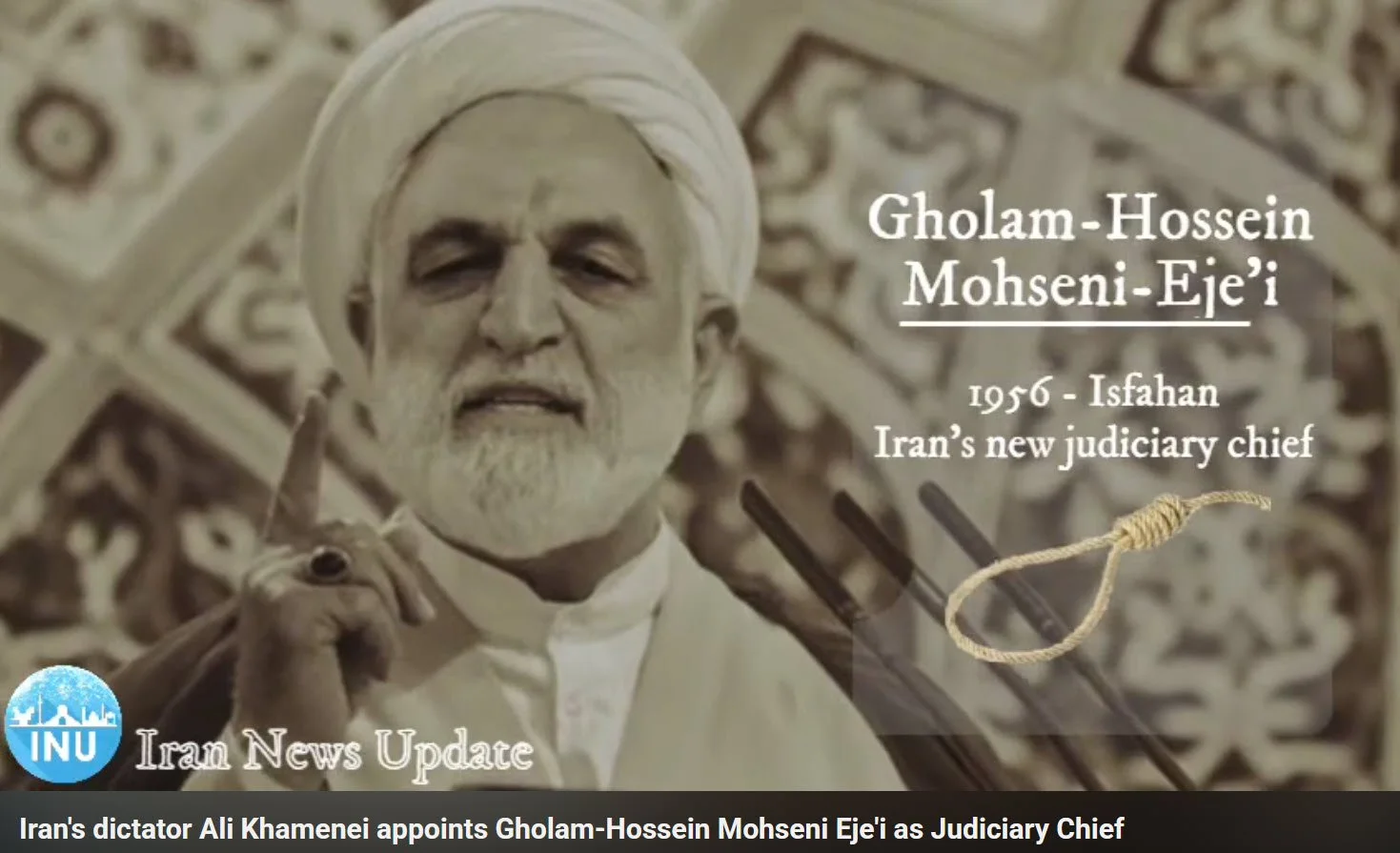
Following the engineered victory of Ebrahim Raisi, the former Judiciary Chief, in the June 18 Presidential election, Supreme Leader Ali Khamenei appoints Gholam-Hossein Mohseni-Eje’i as the new Judiciary Chief. He was already served the theocracy as the Judiciary Chief’s first vice for seven years.
Indeed, he had held the position long before the appointment of Raisi. In other words, he has a direct role in almost all crimes and executions fulfilled in the past 42 years. In 1984, Mohseni-Eje’I started his ‘judicial occupations’ as the head of the Ministry of Intelligence and Security (MOIS) Selecting Committee.
Mohseni-Eje’i’s Occupations in the Islamic Republic As a security-intelligence agent, he played a crucial role in extracting confessions from Sayyid Mehdi Hashemi, the son-in-law of Hossein-Ali Montazeri. At the time, Montazeri was the deputy of Islamic Republic founder Ruhollah Khomeini. However, Mohseni-Eje’I’s pressure coerced him to make televised confessions, which led to his execution in September 1987.
He then continued: Head of Intelligence Ministry Selecting Committee (1984—85) Judiciary Rep to Intelligence Ministry (1986—88) Prosecutor Office Head (1989—90) Judiciary Rep to Intelligence Ministry (1991—94) Special Clerical Court Prosecutor (1995—97) Intelligence Minister (2005—2009) Attorney-General (2009—2014) Judiciary Spokesperson (2010—2019) Judiciary Chief’s First-Vice (2014—2021)
Previously, he presided a judicial section, which was tasked with confiscating belongings and estates of political dissidents and followers of ethnic and religious minorities in favor of the Execution of Imam Khomeini’s Order (EIKO) in accordance with Article 49. The institution is a gigantic financial institution, one of the main pillars of the Supreme Leader’s economic empire.
Mohseni-Eje’i’s Role in the Massacre of Political Prisoners in 1988 According to the released political prisoners and eyewitnesses, Mohseni-Eje’i was one of the leading officials in the extrajudicial killings of thousands of political prisoners, mostly members and supporters of the opposition Mojahedin-e Khalq (MEK/PMOI), in the summer of 1988. Through reports and evidence tallied by the opposition, the MEK announced at least 30,000 dissidents were executed in July and August 1988.
Mohseni-Eje’i along with Raisi, the current President-select and the then-Tehran’s Deputy Prosecutor, Hossein-Ali Nayyeri, the then-Tehran’s Sharia Judge, Morteza Eshraghi, the then-Tehran’s Prosecutor, and Mostafa Pour-Mohammadi, the former Intelligence Minister and the then-MOIS representative in the ‘death commissions’ in Tehran, purged three major prisons and penitentiaries from political prisoners in the capital. The EU Sanctioned Mohseni-Eje’i in April 2011 On April 12, 2011, the European Union sanctioned Mohseni-Eje’I for his direct role in the bloody crackdown on peaceful protesters in 2009 as Intelligence Minister. “While [Gholam-Hossein Mohseni-Eje’i] was Intelligence minister during the 2009 election, intelligence agents under his command were responsible for detention, torture, and extraction of false confessions under pressure from hundreds of activists, journalists, dissidents, and reformist politicians. In addition, political figures were coerced into making false confessions under unbearable interrogations, which included torture, abuse, blackmail, and the threatening of family members,” stated the Official Journal of the European Union at the time.
Khamenei Counters Domestic Protests In a nutshell, the Islamic Republic regime is in the most vulnerable situation that has ever been. In this respect, like all dictators throughout history, Khamenei increases oppressive measures rather than hearing people’s grievances. With the appointment of Raisi and Mohseni-Eje’i as President and Judiciary Chief, respectively, Khamenei flagrantly declared his plan for quelling any objection.
Indeed, the Supreme Leader has reversely confessed to the government’s vulnerability versus domestic protests and anti-establishment activities led by the MEK. “Our enemy is neither in the U.S., Soviet Union nor even in Kurdistan. It is here in Tehran in front of our eyes,” said Khomeini in 1980, addressing the MEK as the main threat to the religious dictatorship’s survival. “The appointment of another henchman, Gholam-Hossein Mohseni-Eje’i, as the Judiciary Chief, is yet another step to solidify the regime of criminals.
Khamenei thus completed solidifying his authority and forming a “Hezbollahi” government, a project he started two years ago,” stated Maryam Rajavi, the President-elect of the National Council of Resistance of Iran (NCRI).
Until the Assembly of Experts (the 88-cleric body) elects a permanent Supreme Leader, all powers of the Rahbar are split between three men:
Ayatollah Alireza Arafi: Representing the religious jurists.
Masoud Pezeshkian: The President.
Gholam-Hossein Mohseni-Ejei: The Chief Justice.
Why Arafi is the "Quiet Power"
You hit the nail on the head regarding his resume. While the President and Chief Justice are more public-facing, Arafi is the ideological glue.
The Triple Threat: Holding seats on the Guardian Council (vetting laws), the Assembly of Experts (picking the leader), and directing the entire seminary system means he has educated and vetted almost every rising star in the Iranian bureaucracy.
The Modern Hardliner: His push for Artificial Intelligence in seminaries isn't just a quirk; it’s a strategy to modernize the regime’s digital "soft power" and propaganda across the globe.
International Profile: His 2022 meeting with the Pope was a rare bridge-building moment for a hardline cleric, suggesting he has the diplomatic "polish" that previous leaders lacked.
The Current Chaos
While the council tries to project stability, reports indicate the situation is extremely volatile. The IRGC has reportedly named Ahmad Vahidi as the new commander-in-chief after Gen. Mohammad Pakpour was also killed in the strikes. The regime is currently in a 40-day period of official mourning while simultaneously navigating a multi-front military escalation.
The big question remains: Is Arafi the "interim" choice because he's a safe pair of hands, or is this his audition to become the permanent third Supreme Leader of Iran?
Status of the Iranian Military
The IRGC (Islamic Revolutionary Guard Corps) has suffered significant blows in the ongoing US-Israeli military operations that began around February 28, 2026. Reports indicate catastrophic losses at the command level, including the death of IRGC Commander-in-Chief Mohammad Pakpour (killed alongside other top figures like Ali Shamkhani during a Defense Council meeting). Multiple senior commanders and a "significant number" of key operational personnel have been eliminated, with Iran's own state media (like ISNA) acknowledging heavy casualties in the IRGC's ranks.Strikes have targeted IRGC assets extensively:
Naval vessels, such as the frigate Jamaran (hit and reported sinking or heavily damaged) and an Alvand-class frigate on fire.
Headquarters and affiliated buildings in Tehran (e.g., Basij and Thar-Allah central command).
Air defenses, missile sites, and other infrastructure, contributing to degraded retaliatory capabilities.
Despite this, the IRGC remains active in the conflict: they've claimed retaliatory ballistic missile strikes (e.g., four missiles targeting the USS Abraham Lincoln aircraft carrier) and continue operations. There's reporting of internal disarray, some forces reportedly seeking immunity (per statements attributed to US President Trump), and suggestions that surviving elements are pushing for rapid succession decisions outside normal procedures to maintain control.
Overall, the IRGC's military effectiveness appears severely degraded in the short term, with leadership decapitated and assets hammered, though it still poses a threat through remaining missile and proxy capabilities.
On the Assembly of Experts (Majles-e Khobregan), deliberations for selecting a new Supreme Leader are in the early stages following Ayatollah Ali Khamenei's confirmed death in the strikes. Iran's constitution has activated a temporary three-member leadership council (comprising President Masoud Pezeshkian, Judiciary Chief Gholam-Hossein Mohseni Ejei, and a Guardian Council jurist—recently named as Ayatollah Alireza Arafi) to handle duties until the Assembly convenes and chooses a permanent successor.
The 88-member Assembly (current term began after the March 2024 elections, dominated by conservatives) is expected to meet "as soon as possible," but active strikes and security issues may complicate gathering (some analyses note challenges like potential targeting risks for elderly clerics). No final selection has been announced yet—private deliberations are likely underway to assess candidates based on religious credentials, political experience, and loyalty—but there's urgency to project stability.
Some reports suggest IRGC influence is pushing for a quick, possibly extra-procedural outcome.The overall situation remains fluid with ongoing strikes, US casualties reported (at least three killed), and uncertainty about who holds effective power in Tehran. If you'd like me to dive deeper into any specific aspect (e.g., potential successors, proxy responses, or real-time escalations), just let me know!