
History of Racism in the U.S.
Segment #972
The Core Argument: Flipping the Narrative on Race & Maps
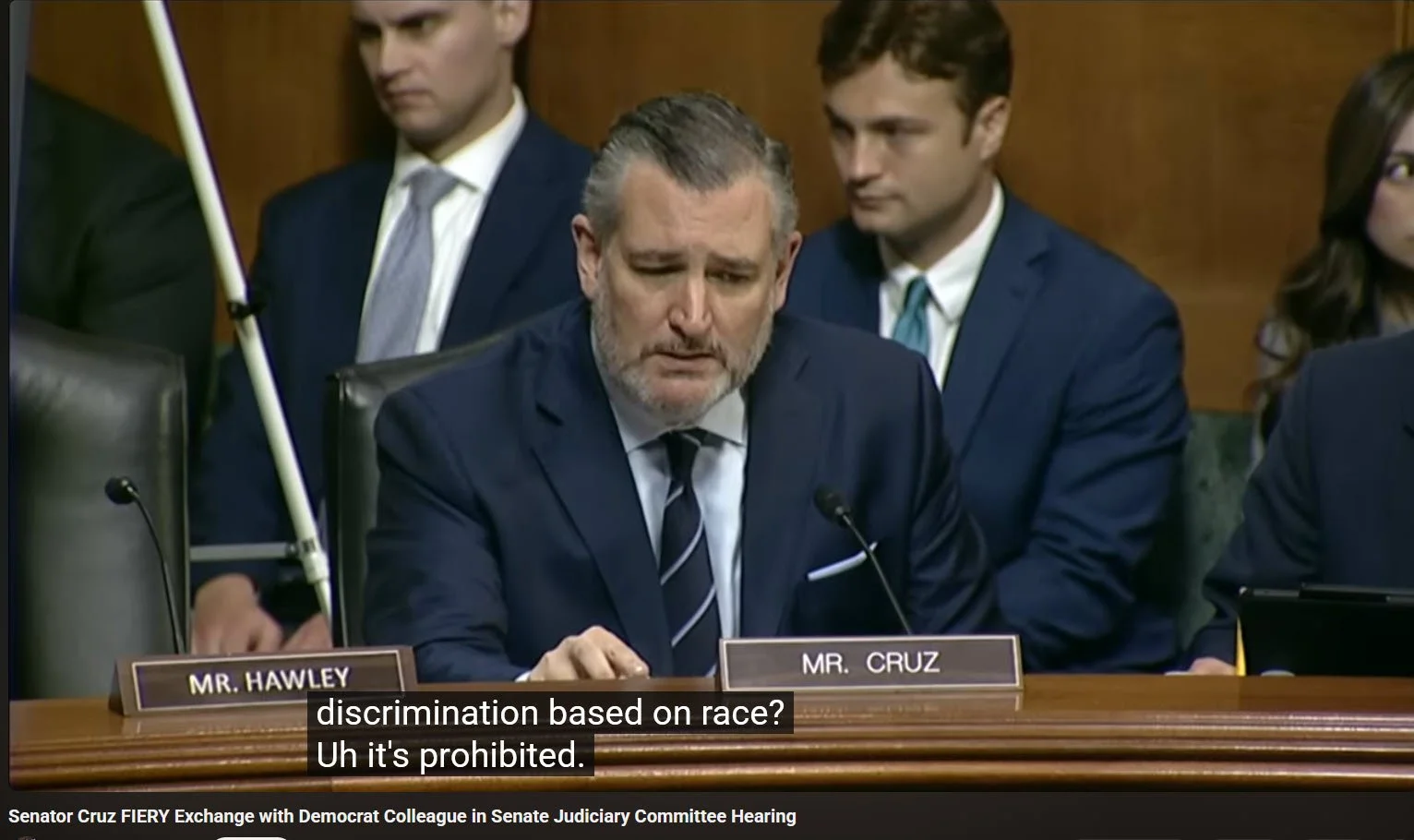
In this segment, Senator Ted Cruz fundamentally rejects the mainstream premise that Republican map-drawing is inherently rooted in racial discrimination while the Democratic Party operates with pure intentions. Instead, Cruz reframes the entire redistricting battle as a game of naked partisan survival by Democrats, arguing they have historically weaponized race and geography to lock down liberal power.
Rather than viewing minority-majority districts as purely altruistic endeavors, Cruz positions them as a strategic tool used by Democrats to guarantee safe, liberal seats, particularly in the South.
Cruz’s Specific Examples: Tearing Apart the Premise
Cruz dismantles the traditional arguments by pointing to clear geographic, historical, and electoral anomalies:
1. The New England "Naked Gerrymander"
Cruz aggressively pushes back against the idea that only Southern or Republican states engage in manipulative map-drawing. He highlights New England (Massachusetts, Connecticut, Rhode Island, Maine, Vermont, and New Hampshire), noting that despite millions of Republican voters living in these states, virtually zero Republicans are elected to the House. Cruz labels this a highly effective, "naked gerrymander" by Democrats designed to completely erase political opposition from an entire region.
2. The "Clutching Their Pearls" Reality Check
Cruz argues that Democrats' outrage over recent Supreme Court rulings on redistricting isn't about protecting civil rights—it's about panic over losing reliable, race-based liberal strongholds.
The Tennessee Example: To prove that the Democratic establishment prioritizes partisan control over actual minority representation, Cruz points to a dynamic in Tennessee. When shifting lines threatened a district, Democrats "freaked out" because a white male liberal Democrat was positioned to lose his seat to a Black female Republican candidate. For Cruz, this exposes the hypocrisy: the system is designed to protect white liberals, not empower minority conservatives.
3. The Hispanic District Counter-Point
As a statewide elected official from Texas, Cruz uses his own biography to counter the idea that minority candidates can only win via racially gerrymandered, segregated voting blocks. By winning statewide, Cruz asserts that voters look beyond race, and argues that grouping voters strictly by skin color to manufacture specific outcomes is fundamentally wrong, regressive, and patronizing.
The Broader Context: Partisan Self-Interest vs. Racial Rhetoric
To view this exchange through Cruz's lens requires separating the high-minded rhetoric of civil rights from the raw reality of political self-preservation:
The Weaponization of the VRA: From this perspective, the Voting Rights Act (VRA) has frequently been twisted by mapmakers. While intended to prevent discrimination, it has often been used to "pack" minority voters into ultra-concentrated districts. This guarantees a safe seat for a liberal politician while bleaching the surrounding districts, making them easier for Republicans to win—proving both parties navigate these rules for raw partisan advantage.
The Rucho Standard: Since the Supreme Court ruled in Rucho v. Common Cause (2019) that federal courts cannot police partisan gerrymandering, the gloves came off for both sides.
The Bottom Line
Cruz’s argument strips away the moral framing often applied to the redistricting debate. By pointing out that Democrats aggressively maximize their power in New England through partisan lines and panic when a white Democrat is threatened by a Black Republican in the South, Cruz argues that the entire debate isn't about race at all—it's about raw political power.
The Historical Context: Party Platforms and the Race Narrative
The debate over which political party truly represents the interests of minority Americans is rooted in a complex historical evolution. For decades, the political realignment of the United States has shaped how both major parties approach issues of race, civil rights, and governance.
The Historical Republican Position: Historically, the Republican Party was founded on an anti-slavery platform, passing the Reconstruction Amendments (13th, 14th, and 15th) and championing the Civil Rights Act of 1957. Modern conservative arguments often emphasize individual merit, colorblindness, and equal opportunity rather than equal outcomes, arguing that evaluating individuals based on character rather than race is the truest form of equality.
The Historical Democratic Position: The Democratic Party underwent a significant shift during the mid-20th century, transitioning from a party heavily associated with the Jim Crow South to the driving force behind the Civil Rights Act of 1964 and the Voting Rights Act of 1965 under President Lyndon B. Johnson. Modern progressivism emphasizes systemic equity, arguing that historical disadvantages require targeted government intervention and diverse representation to rectify. Since the mid 20th century the Democratic party in an effort to stay in power has reverted to their historical origins becoming the New Racists of the 21st century.
Modern Flashpoints: DEI, Immigration, and Weaponized Identity
The current political landscape is no longer just a debate over policy; it is a battle against a systemic double standard. While the institutional left aggressively labels everyday conservative policies as "racist," their own agenda relies on a new, institutionalized form of discrimination that divides the country by identity.
Diversity, Equity, and Inclusion (DEI) as Institutional Racism
Rather than fostering true equality, DEI initiatives have systematically replaced individual merit with state-sanctioned selection based entirely on skin color, gender, and ethnicity. Critics argue this is the literal definition of discrimination. By reducing individuals to tribal identity tokens rather than judging them on capability and character, the left has resurrected a regressive system of racial preferences under the guise of "equity."
The Immigration Crisis and Fiscal Exploitation
The ongoing border crisis represents a deliberate erosion of national sovereignty and the rule of law. Calling for secure borders is routinely smeared as xenophobic, yet the reality is financial and legal chaos. Law-abiding American taxpayers are forced to foot a multi-billion-dollar bill for social services, housing, and healthcare distributed to millions of illegal immigrants—effectively penalizing citizens while rewarding those who bypassed the legal system.
Weaponized Labels: The Left's Deflection Shield
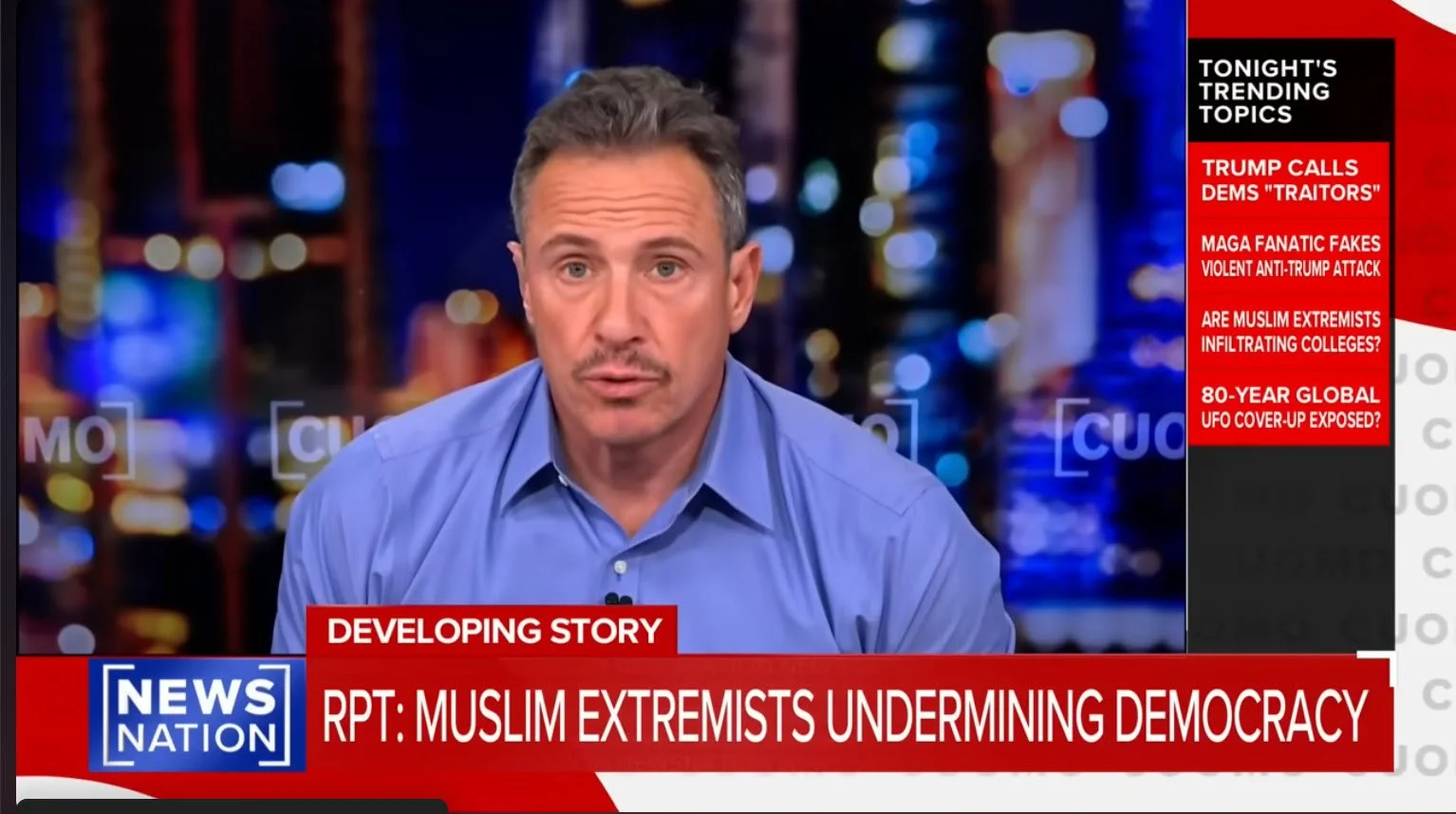
Accusations of "racism," "xenophobia," and "Islamophobia" are no longer used to combat genuine prejudice; they have been weaponized as a political shield. The left deploys these toxic labels strategically to shut down legitimate debate on national security, border integrity, and fiscal responsibility. By immediately painting political opponents as bigots, the left successfully projects its own deep obsession with racial division onto the rest of the country.
Islamic Propaganda and their Effort to Take Over the US
If you think this represents assimilation and support for freedom you are very wrong

Islamic Shahada
The Shahada (Arabic: شَهَادَة, šahāda) is the Islamic creed and the foundational declaration of faith in Islam. It is the first and most essential of the Five Pillars of Islam.
The word Shahada literally translates to "testimony" or "witness.". The Channel above is literally named Islamic Shahada
The Text and Translation
The Shahada is a brief, two-part statement. "There is no god but Allah, and Muhammad is the messenger of Allah."
The Two Core Concepts
The declaration is divided into two distinct theological pillars:
Tawhid (The Oneness of God)
The first part (Lā ’ilāha ’illā-Llāh) establishes absolute monotheism. It rejects polytheism (shirk) and asserts that there is only one supreme, unique creator who is worthy of worship.
Risalah (Prophethood)
The second part (Muḥammadur-rasūlu-Llāh) establishes that Muhammad is the final prophet and messenger chosen by God to deliver the Quran and guide humanity.
Significance and Usage in Islam - Your Required Conversion to Islam
Conversion to Islam: Reciting the Shahada with sincere belief, clarity of mind, and in front of witnesses is the sole requirement for a person to officially convert to Islam.
Daily Prayer (Salah): Muslims recite the Shahada multiple times a day during their mandatory prayers and during the Adhan (the daily call to prayer announced from mosques).
Life and Death: It is traditionally the first phrase whispered into the ear of a newborn Muslim baby, and it is ideally the last phrase a Muslim attempts to speak or hear before dying.
Evidence from radical Imams and leaders (often US-based citizens or residents)Several prominent examples exist over decades:
Siraj Wahhaj (well-known US Imam): In 1992, he stated that if Muslims were “clever politically,” they could “take over the United States and replace its constitutional government with a caliphate.” Similar sentiments appear in other speeches.
Abdul Alim Musa (DC Imam, 2007): Advocated establishing an “Islamic State of America by 2050.”
CAIR co-founder Omar Ahmad (reported statement): “Islam isn’t in America to be equal to any other faith, but to become dominant. The Koran should be the highest authority in America, and Islam the only accepted religion on earth.” CAIR spokesman Ibrahim Hooper said he would like to see the US government become Islamic in the future.
Uthman Ibn Farooq (Islamic scholar, at a 2025 Texas conference): “When we say that America will be a Muslim country some day, inshallah, people look at us with skepticism. But the reality is: That’s our goal... We believe that the best thing for America is Islam. Peacefully — with dawah [proselytizing], not forcing anybody.” Karim Abu Zaid at the same event said “Islam will rule the world again.”
Influential cleric Yusuf al-Qaradawi (spoke in the US): “We will conquer Europe. We will conquer America. Not through sword, but through da’wa.”
Acceptance of Other Faiths
See new posts
Does Islam accept the other faiths worship different gods
No, Islam does not accept other faiths that worship different gods as valid or true."Silam" refers to Islam (a common spelling variant in languages like Malagasy, where it is "silamo"). Islam is strictly monotheistic and centers on tawhid — the absolute oneness of God (Allah). It teaches that there is only one true God, with no partners, equals, or other deities.
Core Doctrine: Tawhid vs. Shirk
Worshipping "different gods" (polytheism, idolatry, or associating partners with God) is called shirk, the gravest sin in Islam. The Quran states that shirk is unforgivable if one dies without repenting: "Indeed, Allah does not forgive associating others with Him [in worship], but He forgives anything less than that for whom He wills. And he who associates others with Allah has certainly fabricated a tremendous sin." (Quran 4:48; similar in 4:116).
Paradise is forbidden for those who commit major shirk: "Whoever associates others with Allah — Allah has forbidden him [Paradise] and his refuge will be the Fire." (Quran 5:72).
The Quran repeatedly condemns idol worship, multiple gods, and any form of associating created beings (idols, saints, Jesus as divine, etc.) with Allah. It calls such practices false and illusory.
Views on Other Religions Islam classifies other faiths as either:
Fabricated/false (e.g., ancient Arabian paganism or other polytheistic traditions) — outright rejected.
Abrogated or corrupted (previous Abrahamic revelations like Judaism and Christianity). These originally came from the same God and the same core message (worship the One God), but Islam views them as superseded by the final revelation to Muhammad. Deviations (such as the Christian Trinity, seen as shirk in Quran 5:73) are criticized.
Key Quranic statements:
Quran 3:85: "And whoever desires other than Islam as religion — never will it be accepted from him, and he, in the Hereafter, will be among the losers."
Quran 3:19: "Indeed, the religion in the sight of Allah is Islam."
Quran 109:6: "To you your religion, and to me mine" — this promotes non-interference in belief but does not affirm the truth of other religions.
Verses like Quran 2:62 and 5:69 state that those who believe in God and the Last Day and do righteous deeds (including some Jews, Christians, and Sabians) will have their reward with their Lord. Traditional scholarly interpretations generally limit this to:
People who followed previous prophets correctly before Muhammad’s message, or Those who ultimately accept Islam.
These verses do not endorse current non-Islamic faiths (especially polytheistic ones) as sufficient paths to salvation. Mainstream Islamic scholarship holds an exclusivist view: Islam is the complete and final religion.