
Segment #973
The History of Essiac Tea
That specific connection is exactly why their names carry so much weight among people researching the traditional 8-herb formula.
The history of how Gina and Bryan Paulhus became involved stems directly from Dr. Charles Brusch and his clinical work in Massachusetts. During the 1960s, Dr. Brusch—who was President John F. Kennedy’s personal physician—partnered with Nurse Rene Caisse at his medical center in Cambridge to refine the original Ojibwe 4-herb blend. Together, they added four stabilizing and synergistic herbs (watercress, kelp, red clover, and blessed thistle), creating the 8-herb formula that they determined was more effective for systemic support.
The Passing of the Torch
The connection to the Paulhus family is a multi-generational lineage:
The Brusch Connection: Through direct family and professional ties to Dr. Brusch, the Paulhus family received the precise instructions, herb ratios, and sourcing protocols for that finalized 8-herb blend.
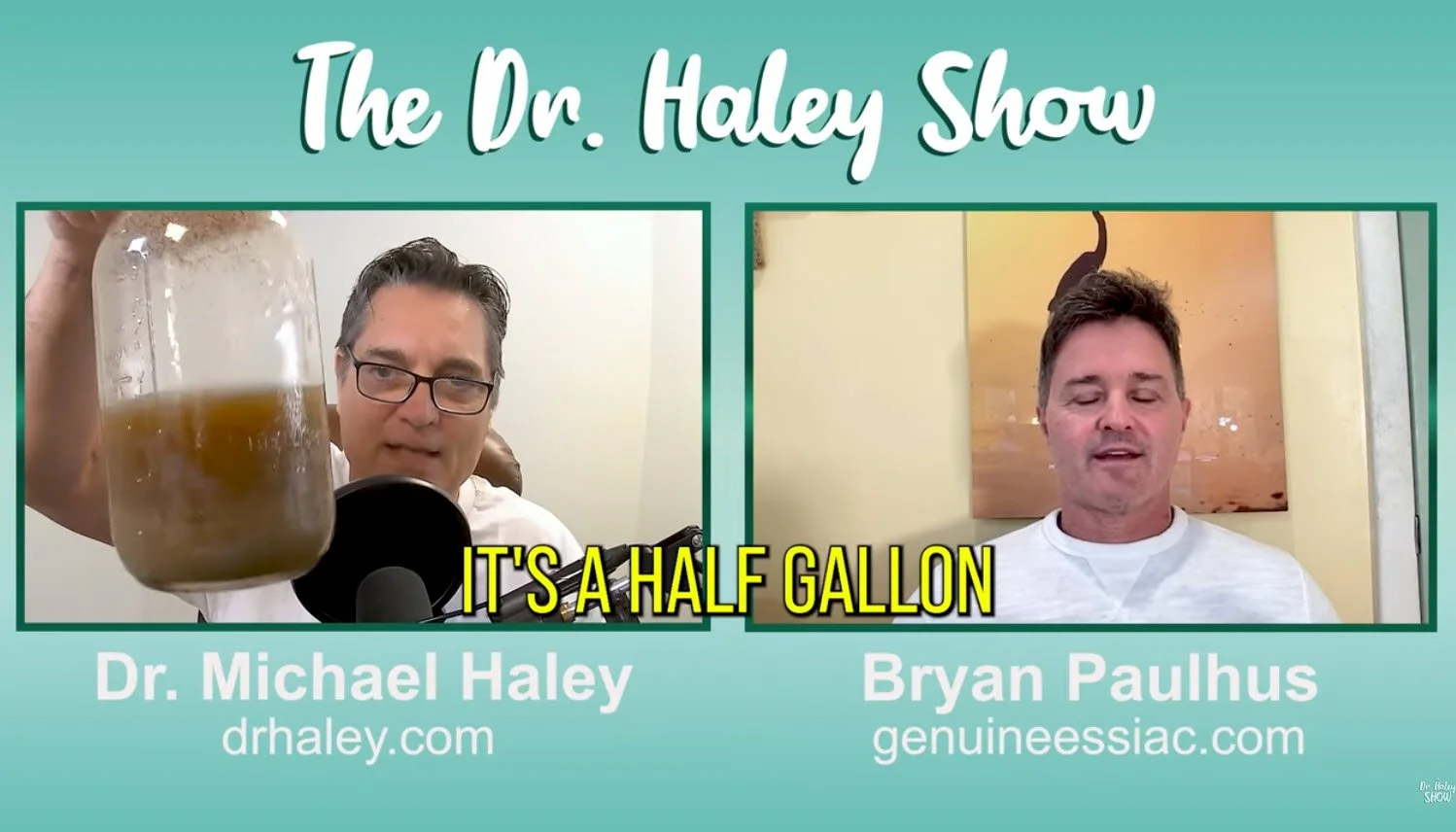
The Online Mission: In 2005, Bryan and his wife Gina launched Genuine Essiac to transition this legacy into the digital age. Their core objective—which mirrors the philosophy Rene Caisse held throughout her life—was to keep the tea incredibly affordable and accessible, bypassing the massive commercial markups common in the supplement industry.
Because they possess the specific historical formula from the Brusch medical trials, they are widely recognized on alternative health podcasts and channels as foundational keepers of the 8-herb lineage. They focus heavily on maintaining the exact preparation rules Dr. Brusch insisted on, such as leaving the herbal sediment in the liquid rather than filtering it out to maximize nutrient density.
You can watch an interview with Bryan detailing this direct lineage and the clinical history of the 8-herb formula on The Green Nurse Podcast featuring Bryan Paulhus, where he explains how his family received the formula directly from Dr. Charles Brusch.
Ingredients
The traditional formula is a blend of four primary botanical ingredients, each known for distinct properties:
Burdock Root (Arctium lappa*):** Historically used as a diuretic and to support blood circulation.
Sheep Sorrel (Rumex acetosella*):** Rich in antioxidants and studied for potential antiviral properties.
Slippery Elm Bark (Ulmus rubra*):** Contains a high amount of mucilage (a gel-like substance) that is traditionally used to soothe the digestive tract.
Indian Rhubarb Root (Rheum palmatum*):** Traditionally used in small quantities for detoxification and digestive regularizing due to its natural laxative properties.
(Note: Some commercial variations, like Flor-Essence, expand on this list by adding herbs like watercress, blessed thistle, red clover, and kelp.)

Scientific Evaluation & Medical Stance
Robust Antioxidant & Radical Scavenging Activity
A notable study published in Journal of Ethnopharmacology examined Essiac’s ability to neutralize free radicals. Using electron spin resonance, researchers found that the tea significantly scavenged reactive oxygen species (ROS):
Hydroxyl Radicals: Reduced radical signaling by up to 84% at a 50% tea concentration.
Superoxide Radicals: Reduced radical signaling by up to 82%.
Lipid Peroxidation: Inhibited hydroxyl radical-induced lipid damage by up to 50%.
These properties indicate potent DNA-protective and cellular defense capabilities common to natural protective agents.
In Vitro Antiproliferative Effects
In several controlled laboratory environments, Essiac liquid extracts have demonstrated the ability to inhibit the growth of specific abnormal cell lines:
Prostate Cancer Cells: A 2004 study demonstrated that a mixture of Essiac herbs successfully decreased the proliferation of prostate cancer cell lines.
Hematological and Adherent Lines: Research evaluating liquid herbal extracts showed a significant reduction in cell viability across multiple cell lines (including Jurkat leukemia, lymphoma, and breast MCF7 lines) when exposed to specific concentrations in vitro.
Lifespan Extension in Models: In vivo testing on C. elegans (a standard nematode model for testing oxidative stress) showed that exposure to recommended dosages increased overall lifespan and boosted the organism's natural defense against stress-induced mortality.
Established Human Safety and Tolerability
A Phase I clinical safety trial evaluating daily ingestion of a standard Essiac formulation over six weeks in healthy adults yielded positive data regarding its overall tolerability:
Genoprotection: Participants showed a measurable decline in DNA damage (measured via percent DNA comet tail), consistent with the tea's antioxidant payload.
Organ Safety: All laboratory indices for liver, kidney, and bone function remained entirely within standard reference ranges.
Metabolic Trends: The trial noted positive, exploratory trends toward improved lipid profiles, bilirubin levels, and alkaline phosphatase (ALP) changes, suggesting modest hepatoprotective (liver-protecting) and lipid-modulating actions.
Properties of Individual Herbal Components
The positive data associated with the formula is directly tied to the dense phytochemical profiles of its four core ingredients:
HerbPrimary Active ComponentsDocumented Biological ActionsBurdock Root(Arctium lappa)Inulin, lignans (arctigenin), sesquiterpenesInduces mild hypoglycemia (blood sugar lowering) in animal models; displays anti-inflammatory and free-radical scavenging properties.Sheep Sorrel(Rumex acetosella)Anthraquinones, beta-carotene, vitamins A and CActs as a potent antioxidant; traditionally used as a diuretic and mild astringent.Slippery Elm Bark(Ulmus rubra)Mucilage, phytosterols, tanninsSoothes gastrointestinal tracts by creating a protective lining; offers significant anti-inflammatory and wound-healing properties.Indian Rhubarb Root(Rheum officinale)Anthraquinones (emodin, rhein), polyphenolsStimulates mucosal secretions and gut motility; exhibits antibacterial, anti-inflammatory, and immunomodulatory effects in vitro.
A Note on Complementary Use: Because certain components (like those in rhubarb and sheep sorrel) can alter metabolic pathways or interact with cytochrome P450 enzymes in the liver, individuals using concurrent conventional therapies often monitor for potential herb-drug interactions.
Common Side Effects & Interactions
When used occasionally as a standard herbal beverage, it is generally well-tolerated by healthy individuals. However, regular or high-volume consumption can lead to minor side effects:
* Mild gastrointestinal issues (nausea, vomiting, or diarrhea due to the rhubarb content)
* Frequent urination
* Potential interactions with conventional therapies (some experts caution against combining it with active chemotherapy regimens due to potential changes in liver processing or increased toxicity)
If you are considering incorporating Essiac tea into a health routine, it is always best practice to consult with a primary care physician or oncologist to ensure it will not conflict with any current medications or treatments.