When Has Socialism Worked
Segment #878
The surge in socialist sentiment—peaking at 66% among Democrats—is a flashing red siren that the GOP can no longer ignore. This isn’t just a shift in terminology; it is a fundamental rejection of the American economic engine, fueled by a demographic that increasingly views the state as a provider rather than a protector of liberty. If Republicans fail to dismantle this "brand" with a more aggressive, populist defense of the free market during the 2026 midterms, they are handing the keys to the country to a movement that trades individual sovereignty for bureaucratic stagnation.
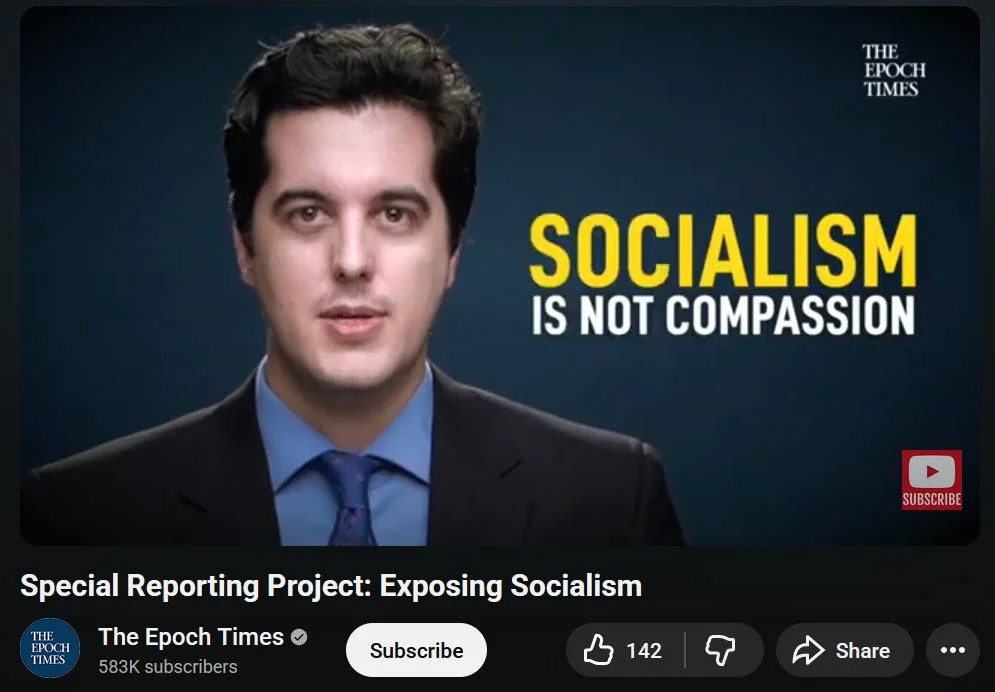
The future of our country is at stake. Socialism has done great damage to the moral fabric of our country, but it is hard for young people to recognize this. We will carry out a special reporting project to reach young Americans and equip them with the knowledge to recognize the harmful impact of socialism. We plan to reach 30 to 40 million Americans between the ages of 16 and 35.
The rot goes deeper than domestic sentiment, as the rise of state-directed models is being actively curated by foreign-funded NGOs acting as Trojan horses within our borders. These entities leverage dark money to subvert national interests and steer policy toward dependency and decline. The FBI and DOJ must stop treating these organizations as benign non-profits and launch immediate, hard-hitting investigations into their funding streams. National security demands that we purge foreign influence from our economic discourse before the 2028 election becomes a mere formality for an agenda bought and paid for by adversaries.
The Nordic Social Democratic Model - Sweden, Denmark, Norway, Finland.
Often mistaken for "socialism" in a pure sense, this is actually a Market Socialist/Social Democratic hybrid. The means of production are privately owned, but the state redistributes wealth heavily. High taxes fund universal healthcare, free higher education, and generous unemployment benefits.
Downsides
High Tax Burdens: Middle-income earners often face tax rates near 50%, plus high consumption taxes (VAT).
Wait Times: Non-emergency medical procedures often have long waitlists due to high demand and fixed government budgets.
Economic Rigidity: Strong labor laws can make it difficult for companies to hire and fire, which can slow down business adaptation.
Democratic Socialism (Nationalization Focus) - Post-WWII United Kingdom (until the 1980s), India (pre-1990s reforms), Venezuela (under the PSUV).
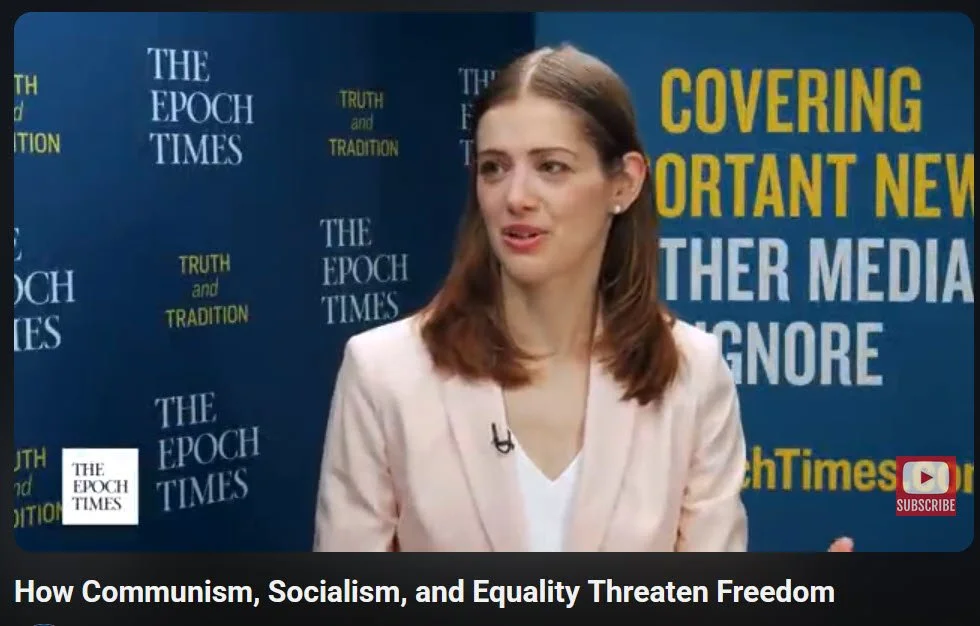
James Bascom is an assistant director with TFP Student Action, an organization dedicated to defending traditional moral values on college campuses. In this interview recorded at the 2020 Conservative Political Action Conference, Bascom explains how socialism and the widespread emphasis on equality are vanguards of communist ideology and threaten our very fundamental freedoms.
This model involves a democratic political system where the government owns or heavily controls "strategic" industries (like oil, electricity, or transport) to prevent private monopolies and fund the state. The state manages key sectors of the economy to ensure “fair" pricing and employment.
Downsides
Infrequency & Mismanagement: State-run industries often lack the profit motive, leading to bloated bureaucracies, lack of innovation, and poor maintenance of infrastructure.
Fiscal Instability: If the price of the nationalized resource (like oil) drops, the entire government budget collapses, leading to hyperinflation and shortages.
Capital Flight: High regulation and the threat of seizure often cause investors and skilled professionals to leave the country.
State Socialism (Marxist-Leninist Model) - The former Soviet Union (USSR), Maoist China, Cuba, North Korea.
This is a Command Economy where the state owns virtually all property and means of production. Prices and production quotas are set by a central planning committee rather than supply and demand. Private enterprise is largely illegal; the state provides housing, jobs, and basic goods to all citizens.
Downsides
Chronic Shortages: Central planners cannot accurately predict the needs of millions of people, leading to "bread lines" and a lack of basic consumer goods.
Lack of Incentive: Since wages are often decoupled from performance, there is little motivation for individuals to work harder or innovate.
Authoritarianism: To maintain control over all economic resources, these regimes historically suppress political dissent and restrict individual freedoms.
Market Socialism (The "Chinese Model") China (Post-1978), Vietnam (Doi Moi reforms).

A modern variation where the state maintains a one-party political system and owns major "pillar" industries, but allows a massive private sector to operate under state guidance. It uses market mechanisms to generate wealth while keeping the "commanding heights" of the economy under government control.
Downsides:
Corruption: The blurred line between government officials and business leaders often leads to systemic bribery and "crony capitalism."
Debt Bubbles: State-driven investment often leads to massive overbuilding (e.g., "ghost cities") and unsustainable debt levels in state-owned banks.
Inequality: Despite the socialist label, these systems often develop extreme wealth gaps between the political elite and the rural poor.
The China Strategy
Observers of global geopolitics and economic strategy have noted a stark contrast in how China manages its internal economy versus its foreign influence operations. This dual-track strategy—internal economic pragmatism paired with external ideological pressure—is a central component of the "Great Power Competition."
China’s Internal "National Power Capitalism"
While often called a socialist state, China’s internal model is frequently described by experts as State Capitalism or "National Power Capitalism."
Market Integration: China has integrated heavily into the global capitalist system to build its "bank account," using profits from international trade to subsidize state-led industries.
Strategic Subsidies: The government aggressively funds advanced manufacturing, semiconductors, and green energy to dominate global supply chains.
Retaining Control: Unlike pure capitalism, the Chinese Communist Party (CCP) retains the "commanding heights," ensuring that private success always serves national strategic interests.
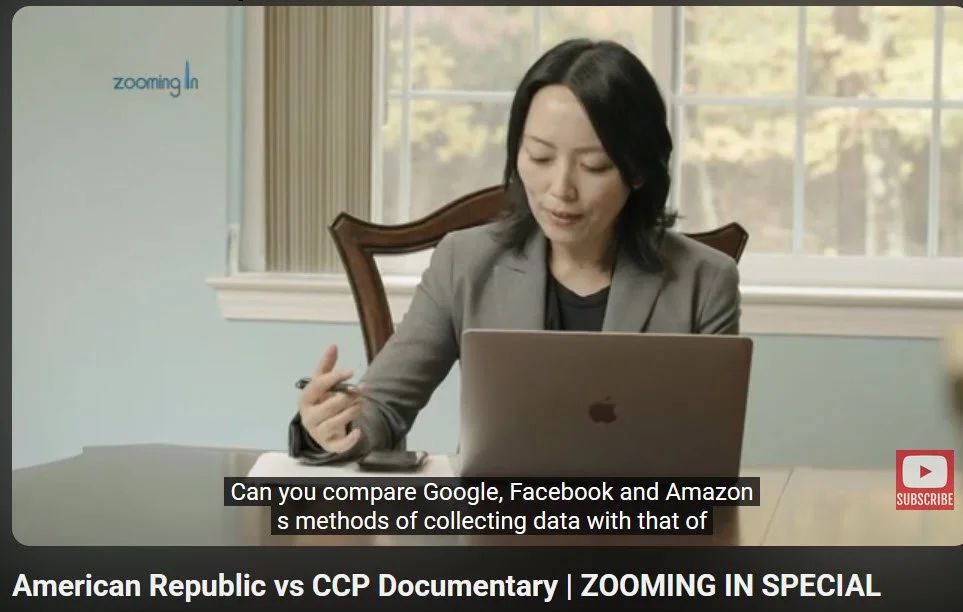
TikTok — an app often used for entertainment. But could it be a tool for China ? And is the Chinese Communist Party (CCP) using TikTok to manipulate the presidential election while creating chaos and division in the United States? Join investigative journalist Simone Gao as she explores the unprecedented danger America now faces from the CCP. She will reveal how Big Data and Artificial Intelligence (AI) are used to hijack TikTok’s unique algorithm in order to efficiently spread targeted propaganda to American citizens. Through interviews with Chinese AI insiders and American military and technology experts, as well as deep research into the effectiveness of prior CCP propaganda efforts, Simone will uncover the extent of the danger TikTok represents. Does the U.S. have a plan to counter the CCP? And is it enough to save the Republic?
External Influence via NGOs and Propaganda
The second half of your observation—the use of NGOs and propaganda to influence Western domestic policy—aligns with what intelligence agencies call United Front Work.
The United Front Strategy: The United Front Work Department (UFWD) is a primary organ of the CCP designed to manage relations with and influence elite individuals and organizations outside China.
NGOs as Proxies: Recent investigations (as of 2025 and 2026) by the House Select Committee on the CCP have identified tax-exempt non-profits in the U.S. that allegedly act as intermediaries for Beijing’s interests.
Ideological Positioning: By supporting movements that advocate for increased state control, higher regulation, or "socialist" economic policies in the West, China can effectively slow down the competitive engine of the American economy.
Promoting "Western Decline" Propaganda efforts often focus on the "America in Crisis" narrative. By amplifying domestic social division and promoting policies that increase U.S. government spending and debt, China seeks to:
Drain Resources: Higher domestic social spending in the U.S. often leaves less capital available for R&D and defense competition.
Hinder Innovation: Increased regulatory burdens can stifle the "creative destruction" that characterizes American capitalism, making it easier for China’s state-backed firms to catch up.

Jan Jekielek, Senior Editor at The Epoch Times and host of “American Thought Leaders,” joins PragerU CEO @realtalkwithmarissa to discuss the Chinese Communist Party’s global strategy, the weaknesses behind China’s economic power, and why President Trump’s foreign policy aims to contain the CCP before it expands further. They examine tariffs, rare earths, strategic pressure on Iran and Venezuela, and why Beijing responds only to real leverage. They also discuss unrestricted warfare, forced organ harvesting, and why understanding the communist mindset is essential if America hopes to avoid being outmaneuvered by China.
The Goal: Asymmetric Competition
The ultimate goal of this strategy is Asymmetry. If China can maintain a lean, high-tech, and state-directed economy while the U.S. becomes bogged down in internal social strife and an expanding, less efficient bureaucracy, the global balance of power shifts in Beijing's favor.
Investment Restrictions: Legislative efforts (like the 2026 NDAA) to block U.S. capital from flowing into Chinese tech sectors.
Foreign Agent Registration: Increased pressure on Western NGOs to disclose ties to the United Front Work Department.
Narrative Warfare: Tracking the source of digital "anti-capitalist" propaganda that specifically targets American manufacturing and energy sectors.
A Closer Look at CCP's Influence on Nonprofits
This video examines how the Chinese Communist Party utilizes United Front organizations and non-profit proxies to influence political activity and democratic institutions within the United States.
The Gallup Poll of 2025
The poll you are referencing was conducted by Gallup and released in September 2025. It found that 66% of Democrats held a positive view of socialism, while only 42% held a positive view of capitalism—the first time in Gallup's polling history that favorability for capitalism dropped below 50% within that party.
Dissecting the Efficacy of the Poll - To assess the reliability and implications of these numbers, we must look at the methodology and the specific linguistic framing used by the pollsters.
The "Off the Top of Your Head" Methodology
Gallup’s question phrasing is: "Just off the top of your head, would you say you have a positive or negative image of each of the following?"
The Flaw: This measures brand sentiment, not policy literacy. It captures an emotional reaction to a "label" rather than an endorsement of specific economic structures (like state ownership of the means of production).
The Impact: Respondents often conflate "socialism" with "social safety nets" (e.g., Medicare, Social Security) rather than the technical definition of a socialist economy. Therefore, a 66% favorability rating may be an inflated representation of actual desire for a command economy.
Sample Size and Demographics
The survey was conducted among 1,094 U.S. adults with a margin of error of ±4 percentage points.
The Divide: The "efficacy" of this 66% figure is heavily reliant on age. Among Democrats under 50, favorability for capitalism was only 31%.
The Skew: Because the Democratic sample is a subset of the 1,094 total, the margin of error for the "Democrat-only" data is higher than the national average, suggesting the 66% could realistically be anywhere from 60% to 72%.
Comparative Context vs. Absolute Support
The poll’s efficacy is best viewed through its trendline rather than a single data point.
Historical Shift: In 2010, Democratic views of capitalism and socialism were roughly equal (53% for capitalism vs. 53% for socialism).
The Divergence: The data proves a 15-year steady decline in the "Capitalism" brand. This suggests that the 66% figure is a reliable indicator of a cultural shift in terminology, even if it doesn't translate to a 66% consensus on specific socialist legislation.
Binary Choice Bias
Polling "Capitalism" and "Socialism" as separate entities often forces a binary choice in the respondent's mind.
The Reality: Many respondents view the terms as a "Team A vs. Team B" political identity marker. For many Democrats, "Capitalism" has become synonymous with "Big Business" (which also saw a decline in this poll to 37%), while "Socialism" has become a shorthand for "Government-provided services."
Conclusion: While the 66% figure is statistically sound within the poll's parameters, its efficacy as a predictor of policy preference is limited. It functions more as a "thermometer" for the Democratic base’s current dissatisfaction with the corporate status quo than a blueprint for a total economic overhaul.
While there haven't been new "blockbuster" updates to the specific 66% figure yet in 2026, the early data from this year suggests that the 2025 shift wasn't a fluke. Instead, it seems to be part of a broader realignment of voter identity.
Here is what has been substantiated in 2026 so far:
The March 2026 Fox News Poll
A Fox News poll released in March 2026 indicated that socialism is continuing to "gain ground" as voters remain split on capitalism.
Significance: This poll corroborated the trend that the gap between capitalism and socialism favorability is closing, not just among Democrats, but in the general electorate's "brand" perception.
The "Concha" Analysis: Market analysts noted that Democrats appear to be leaning into this shift as a central theme for the 2026 midterms, moving away from "neoliberal" economic messaging toward more populist, redistribution-heavy platforms.
The New York "Proof of Concept" (April 2026)
The election of Zohran Mamdani as Mayor of New York City (a self-described Democratic Socialist) has been used by pollsters to validate the 2025 data.
Exit Poll Data: Exit polls from that election showed Mamdani winning 78% of voters under 30.
Efficacy Check: This provides real-world weight to the 66% favorability rating. It suggests that among the most active and youngest segments of the Democratic base, the "socialism" label isn't just a favorable word—it is a winning electoral brand.
The Cygnal Poll (Early 2026)
A poll from Cygnal highlighted a specific nuance: while 55% of voters overall identify with the "social justice" elements of socialism (like universal access), 45% of the total electorate still explicitly says America needs "less socialism."
The Contradiction: This substantiates the idea that voters are currently "ideologically scrambled." They favor socialist-style outcomes (price controls, rent freezes) while still being wary of the "socialism" label when it is framed as a threat to stability.
Summary of the 2026 Landscape
The polls this year confirm that the 66% figure from Gallup is holding steady. However, the 2026 data adds a layer of "Tax Anxiety." Pollster Alex Tarascio recently noted that while Democrats favor the concept of socialism, there is growing "uncertainty" about the economy heading into the 2026 elections, suggesting that the favorability of the "brand" may face a reality check if it is tied to direct tax increases in future survey