
Segment #815
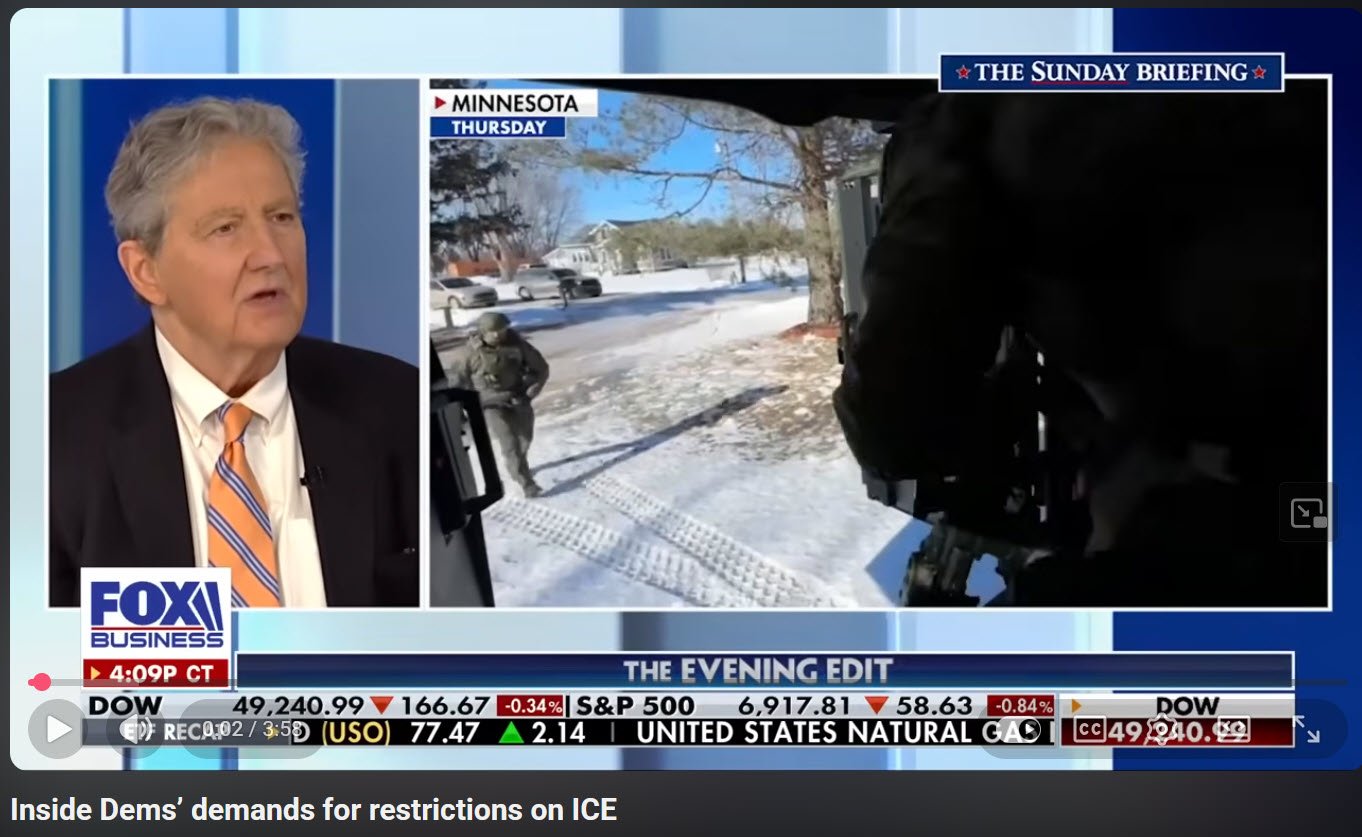
In early 2026, Democratic leadership (led by Chuck Schumer and Hakeem Jeffries) issued a formal list of 10 demands to reform U.S. Immigration and Customs Enforcement (ICE). These reforms are currently being used as leverage in high-stakes negotiations over the Department of Homeland Security (DHS) funding bill.
The current standoff in Washington is exceptionally high-stakes, especially as the debate over funding the Department of Health and Human Services (HHS) and the Department of Homeland Security (DHS) has become entangled with the ongoing military conflict in Iran.
As of March 2026, the legislative process is largely frozen, with both sides using the current threat environment to justify their opposing positions.
The Impact of Recent Events
The four terrorist attacks you mentioned—including the high-profile shooting in Austin, Texas, on March 1, 2026—have fundamentally shifted the rhetoric on Capitol Hill.
The Iran Connection: Intelligence officials and Republican leaders have linked these domestic attacks to the U.S.-led "Operation Epic Fury" against Iran, warning that the country is facing the most complex threat landscape since 9/11.
The Funding Lapse: Since February 14, 2026, DHS has been in a partial shutdown. While 90% of agents are "excepted" and remain on duty, many are working without full paychecks. Critics of the shutdown argue that this degrades morale and weakens the very frontline agencies (ICE and CBP) tasked with identifying sleeper cells.
The HHS and DHS Funding Link
The reason HHS is involved in this debate is due to a "minibus" spending strategy.
The Democratic Strategy: The Senate recently passed a package that funded HHS, Education, and Labor, but deliberately stripped out the DHS funding. Their goal is to pass popular social and health programs while keeping the ICE budget as a separate "hostage" to force the 10 reform demands mentioned earlier.
The "Open Border" Argument: Opponents of this move argue that the 10 million to 12 million individuals who entered during the previous administration were not properly vetted. They contend that failing to fund ICE and the Border Patrol now—especially during an active conflict with a state sponsor of terror—is a direct threat to national security.
Arguments Against the Democratic Hold
Those who share your view that failing to fund these agencies is a "dumb idea" point to several immediate consequences of the current stalemate:
CISA & FEMA Delays: The Cybersecurity and Infrastructure Security Agency (CISA) has reportedly canceled vulnerability assessments for critical infrastructure, and FEMA has paused certain first-responder training due to the funding lapse.
Vetting Backlogs: Without full funding, the administrative capacity to re-vet individuals who entered under "Operation Allies Welcome" or other parole programs is significantly hampered.
Resource Diversion: There are concerns that ICE agents who should be focusing on "High-Threat" targets (terrorist proxies) are being restricted by the proposed "sensitive location" rules, which could allow suspects to evade capture by staying near schools or religious centers.
The Standoff: Republicans have stated they will not support the Senate’s HHS/Labor package until the House's original DHS bill (which includes massive increases for detention and enforcement) is restored.
Opponents of the proposed ICE reforms—including Republican leadership, Border Patrol unions, and various law enforcement advocacy groups—argue that these mandates would create significant operational hurdles and safety risks.
Ten Ice Demands with Negative Impacts
These “reforms” would literally end mass deportation and would make it virtually impossible to reverse the consequences of Biden’s open border. For Dems this translates to votes and power regardless of the cost to the country and its citizens. The Save Act to secure elections with a voter ID is the same issue with a different name.
Judicial Warrants Only: Slowing Enforcement: Critics argue that requiring a judge’s signature for every entry would create a massive backlog, allowing targets of investigations to flee while paperwork is processed. It effectively treats administrative immigration violations with the same high bar as high-level criminal felonies.
No Masks & Clear ID: Agent Safety: Law enforcement groups argue that banning face coverings exposes agents to retaliation from cartels and gangs. Revealing full names and ID numbers in high-tension environments could lead to "doxxing" and threats against agents' families.
Body Cameras: Privacy & Intelligence: While supported in theory by some, critics worry that constant filming could deter confidential informants from speaking to agents. There are also concerns about the high cost of data storage and the potential for footage to be leaked and used as "propaganda" by anti-ICE activists.
Protected Zones: Safe Havens for Criminals: Opponents argue that labeling schools or courthouses as "off-limits" creates "sanctuary zones" where individuals with violent criminal records can hide to avoid apprehension, effectively granting them immunity as long as they stay within those boundaries.
Anti-Profiling Rules: Harming Investigations: Critics contend that these rules are often too broad and could lead to "hesitation" among agents. They argue that if agents are afraid of being accused of profiling, they may ignore legitimate leads or suspicious behavior in specific geographic areas known for smuggling.
Use-of-Force Standards: Second-Guessing in the Field: Opponents argue that codifying strict standards into law (rather than agency policy) makes agents hesitant to defend themselves in split-second, life-threatening situations for fear of immediate federal prosecution or losing their jobs.
State Oversight: Jurisdictional Chaos: Critics argue this violates the "Supremacy Clause" of the Constitution. Allowing local DAs to prosecute federal agents for doing their jobs would lead to "political prosecutions" in "Sanctuary Cities," effectively shuting down federal enforcement in those regions.
Citizenship Checks: Resource Drain: Requiring a definitive "proof of non-citizenship" before detention is seen as a "guilty until proven innocent" burden on the agency. It could force the release of individuals who refuse to identify themselves or who have destroyed their travel documents.
Congressional Access: Operational Security: While transparency is the goal, ICE officials argue that "unannounced, 24/7 access" for 535 members of Congress and their staff would disrupt facility operations, compromise security protocols, and turn detention centers into "political stages" for media stunts.
Civilian Equipment: Tactical Disadvantage: Opponents argue that "paramilitary" gear (heavy vests, high-caliber tools) is a necessity for protection. Forcing agents to look like "parking enforcement" or standard "civilian clerks" increases their vulnerability during high-risk raids on armed organizations.
The "Bivens Act" & Qualified Immunity
The most significant concern for many in law enforcement is the push to end Qualified Immunity. Critics argue that if agents can be sued personally for every interaction, it will lead to "de-policing." They suggest that no one will want to work for ICE if their personal assets—like their homes or savings—are at risk every time they make an arrest.