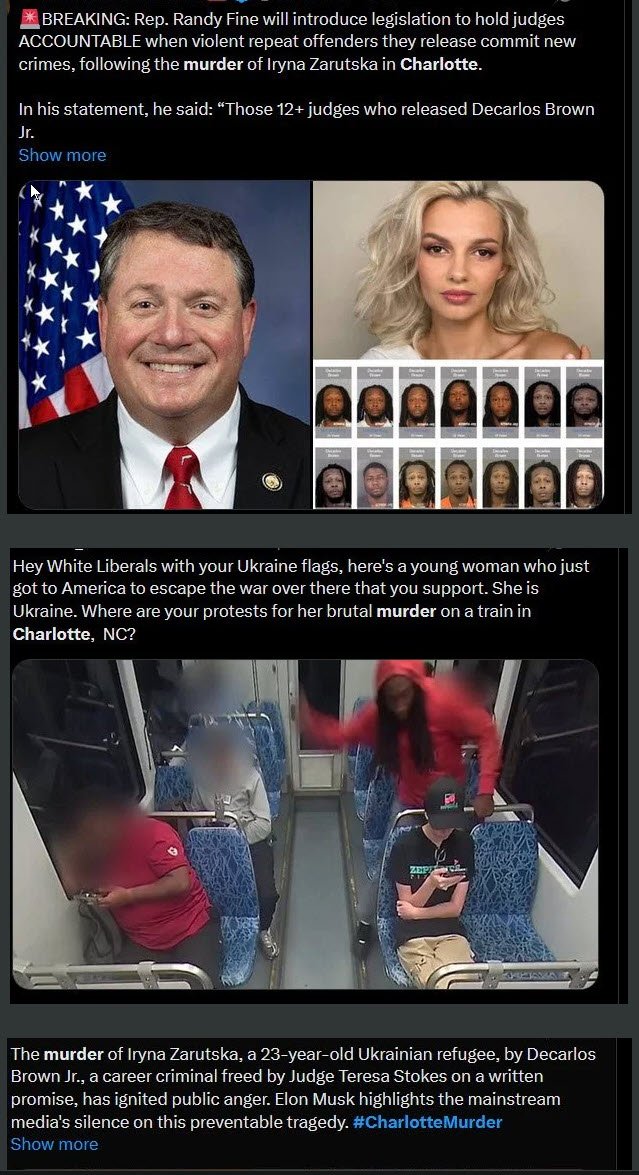
Do We Need to Federalize Violent Crime
Segment #817
Thug who brutally raped 94-year-old in broad daylight had just been released after other rape charge was dropped, police say
March 14, 2026
The suspect had a history of violent crimes, police say.

Thug who brutally raped 94-year-old in broad daylight had just been released after other rape charge was dropped, police say | Blaze Media
A22-year-old man allegedly attacked a 94-year-old woman who was sitting in a rocking chair on her front porch and brutally raped her in broad daylight, police say.
The suspect, identified as Jeremiah Taylor, had numerous allegations of sexual assault in his background, including one against his own foster mother.
'I don't know what word you really use. I'm really dumbfounded to try to explain it.'
The Baton Rouge Police Dept. said officers responded to a report of a sexual assault on March 5 and identified a suspect within minutes of releasing images to the public the next day.
Taylor was initially booked on charges of first-degree rape, second-degree battery, and cruelty to the infirm. He is being held at the East Baton Rouge Parish Prison. He is being held without bond.
Baton Rouge Police Chief T.J. Morse said the evidence against Taylor is overwhelming.
"When you're looking at one of the most vulnerable parts of our population, the elderly, to take advantage of them in this way, horrendous, unacceptable," Morse said. "I don't know what word you really use. I'm really dumbfounded to try to explain it."
WLBT-TV reported that sources indicated the victim suffered broken bones during the assault.
Morse also expressed frustration that Taylor had a violent criminal history but had been released from jail in January after the most recent arrest was dismissed by a district attorney.
"It is a source of contention. It is a source of frustration on our department and with our officers," he added. "Why this has happened is some questions that I would love you all to ask the rest of the judicial system."
Taylor had prior arrests for simple burglary, first-degree rape, theft, and second-degree battery.
After an investigation, he was charged with raping another victim three times, one of which was the day after he was released from jail in January.
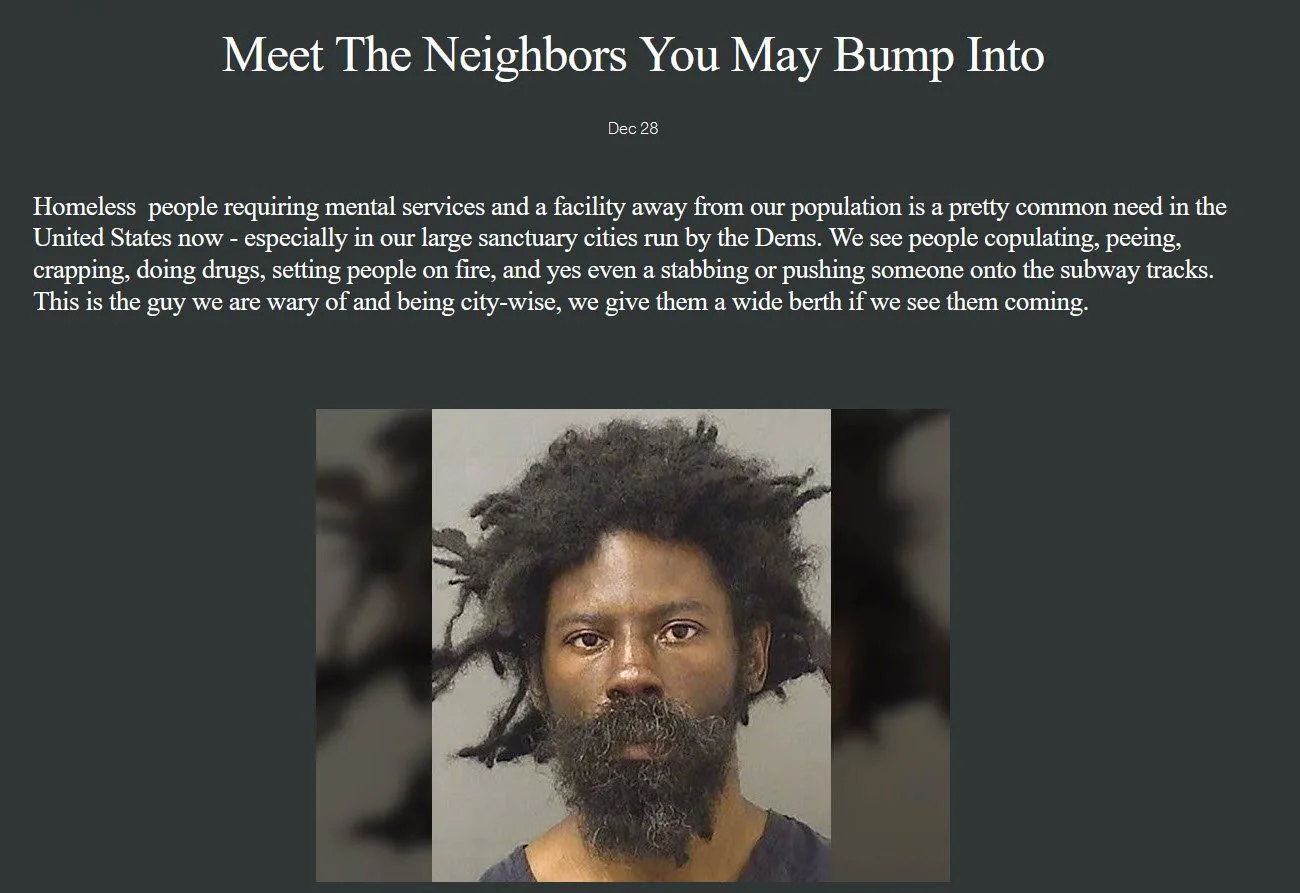
A WBRZ-TV report showed that a man matching Taylor's description was caught on video appearing to stalk another woman before she walked into her house, and he turned around immediately.
Another woman who said she had been his foster mother during the COVID pandemic claimed that he had sexually assaulted her as she slept.
"Jeremiah was with me maybe six to eight months before he thought it was OK to inappropriately touch me," the woman said to WBRZ.
She says she pressed charges but believes nothing happened because he was underage at the time.
He was accused of raping a family member as well, but those charges were dropped when the victim could not be located by the district attorney.
Taylor had two words to say when reporters asked him if he raped the 94-year-old woman as accused.
"F**k no," he said.
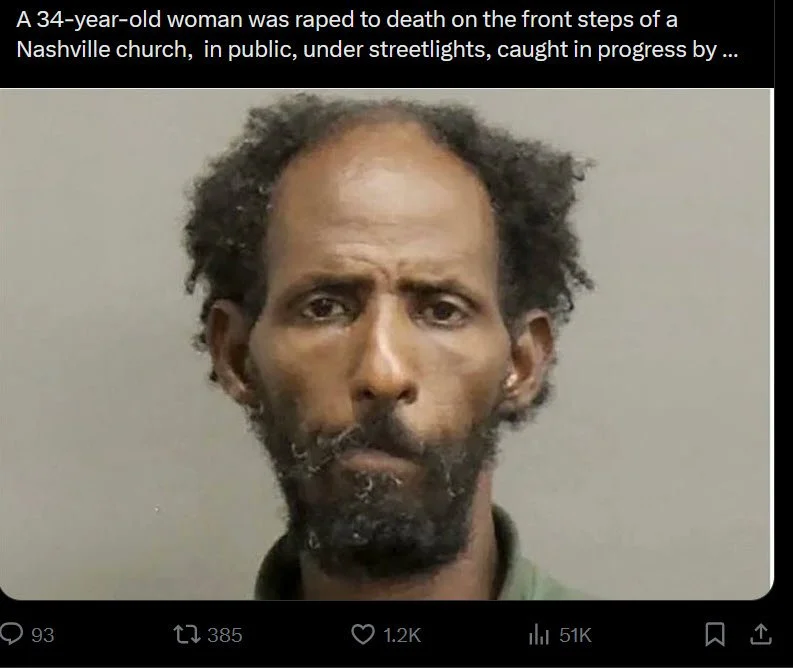
RAPED TO DEATH ON CHURCH STEPS - AFTER NASHVILLE FREED HER SOMALI PREDATOR 16 TIMES
Do We Need To Federalize Violent Crime
The question of federalizing violent crimes to bypass local prosecutorial decisions is a significant topic in American legal and political discourse, involving complex trade-offs between local autonomy, public safety, and constitutional limits.
Arguments for and against this approach generally center on three main areas:
1. The Principle of Federalism
Local Control: Traditionally, the "police power" (the authority to regulate health, safety, and morals) belongs to the states. Most violent crimes—like murder, robbery, and assault—are handled at the state level because local officials are seen as more accountable to their specific communities.
Federal Oversight: Proponents of federalization argue that when local systems fail to provide equal protection or consistent enforcement, the federal government has a duty to step in. This was the logic behind the expansion of federal civil rights laws in the mid-20th century.
2. Potential Impact on Public Safety
Stricter Penalties: Federal prosecution often brings "tougher" outcomes, such as mandatory minimum sentences and the absence of parole in the federal system. Supporters argue this acts as a more effective deterrent when local DAs are perceived as "revolving door" prosecutors.
Resource Strain: Critics point out that the federal justice system is not built to handle the sheer volume of violent crime nationwide. Transferring a large percentage of these cases could overwhelm federal courts, leading to significant backlogs and potentially weakening the quality of justice.
3. Political and Legal Challenges
The "Double Jeopardy" Factor: Under the "dual sovereignty" doctrine, a person can be prosecuted for the same act in both state and federal court if it violates both sets of laws. However, doing this on a mass scale would require a massive expansion of the federal criminal code.
Constitutional Limits: The Supreme Court has occasionally pushed back on the federalization of crime. In cases like United States v. Lopez, the Court ruled that the federal government cannot regulate local activities (like carrying a gun near a school) unless there is a clear connection to interstate commerce.
Summary of the Debate
Pro-Federalization: Focuses on consistency and deterrence, arguing that federal intervention ensures that violent offenders face significant consequences regardless of local political shifts.
Anti-Federalization: Focuses on constitutional overreach and practicality, arguing that "one-size-fits-all" federal solutions undermine the ability of cities and states to manage their own unique safety challenges.