Bayer and Roundup Weed Killer
Segment #816
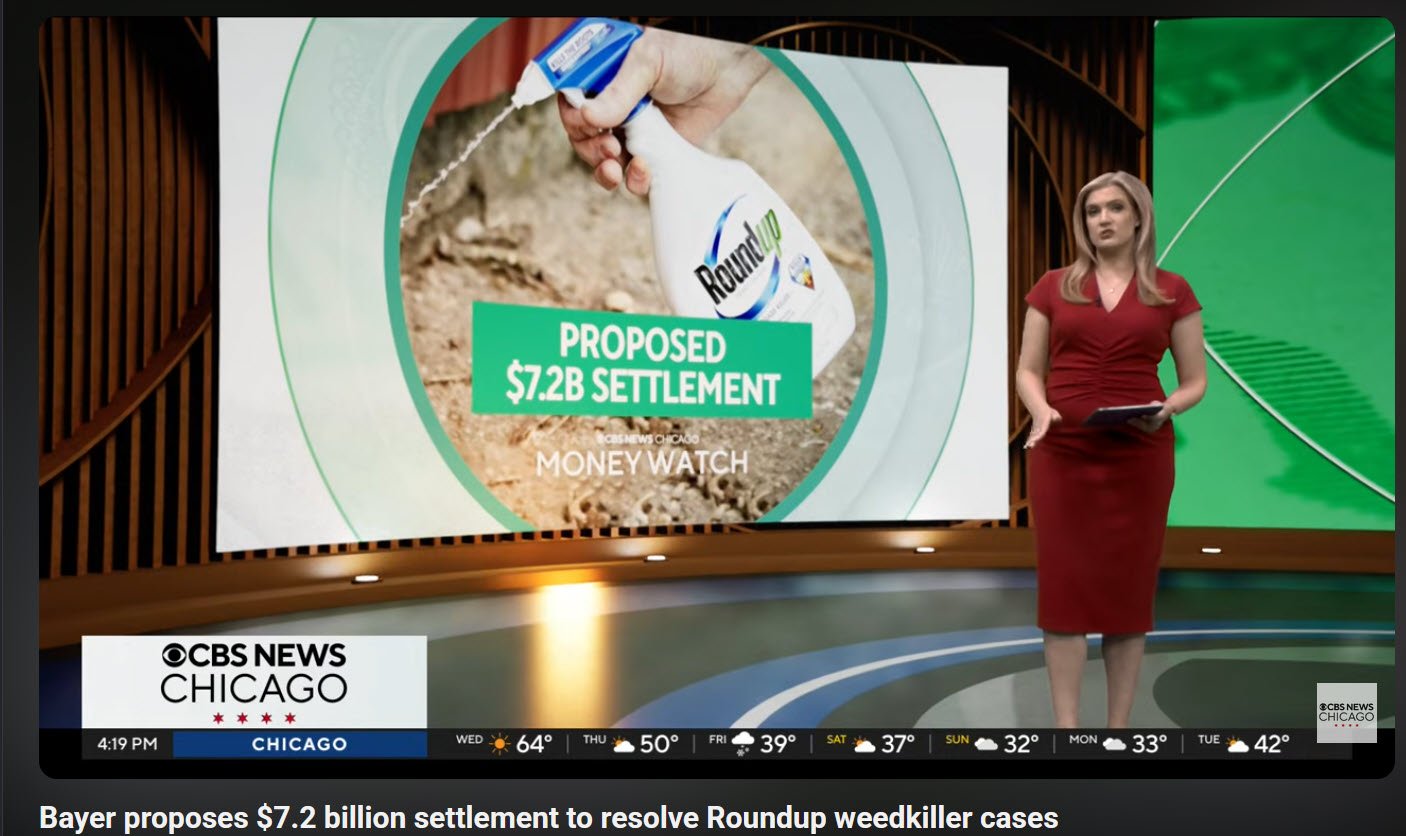
Bayer's Monsanto chemical subsidiary has proposed a $7.25 billion settlement to resolve lawsuits by customers alleging that its Roundup weedkiller product caused non-Hodgkin lymphoma.
Background Info
As of March 2026, the litigation surrounding Roundup is in a highly active and pivotal phase, with significant legal, regulatory, and executive developments unfolding simultaneously.
1. Status of the Roundup Lawsuits
The litigation remains massive in scale, with thousands of claims still pending.
Case Volume: As of early 2026, it is estimated that roughly 61,000 active lawsuits remain. While Bayer has already resolved nearly 100,000 claims through prior settlements totaling over $11 billion, new cases continue to be filed.
New Settlement Proposal: In February 2026, Bayer announced a proposed $7.25 billion class-action settlement intended to resolve both existing and future claims related to non-Hodgkin lymphoma.
Court Approval: A Missouri state judge granted preliminary approval to this $7.25 billion settlement in early March 2026. This process is ongoing, and class members have until June 2026 to opt out if they wish to pursue independent litigation.
2. Relationship with the Trump Administration and EPA
There has been a notable shift in the federal government’s posture toward glyphosate-based products under the current administration, moving toward a supportive stance for the manufacturer.
Executive Action: On February 18, 2026, President Trump issued an executive order declaring an adequate supply of glyphosate-based herbicides and elemental phosphorus "crucial" to national security and food security. The order includes provisions aimed at protecting domestic production and ensuring that regulatory actions do not jeopardize the viability of producers.
EPA Position: The EPA consistently maintains that glyphosate is not likely to be carcinogenic to humans and has approved product labeling that does not include cancer warnings. This aligns with Bayer’s position that federal labeling standards should supersede state-level failure-to-warn claims.
Administration Support: The U.S. Justice Department has filed a brief with the Supreme Court explicitly supporting Bayer in its appeal, marking a reversal from the position held during the previous administration.
3. Supreme Court (SCOTUS) Involvement
The Supreme Court is set to address a central legal question that could fundamentally reshape the litigation landscape.
Key Legal Issue: The Court is considering whether the Federal Insecticide, Fungicide, and Rodenticide Act (FIFRA)—the federal law governing pesticides—preempts state-level "failure-to-warn" lawsuits. In essence, the Court will decide if companies can be held liable under state law for failing to warn of cancer risks when the EPA has already approved a label that does not include such a warning.
Upcoming Hearing: The Supreme Court has scheduled oral arguments for this case for April 27, 2026. A ruling in Bayer’s favor could significantly limit the company’s future liability by effectively barring many state-based lawsuits.
Would you like me to find more details on the specific criteria for the latest class-action settlement, or perhaps look for information on the historical legal precedents regarding federal preemption of state tort claims?
Here’s the latest…
Brand new internal documents obtained through a FOIA requestreveal that the EPA privately met with Bayer's CEO last June. As you may know, Bayer has already paid out over $10 BILLION to cancer victims over glyphosate (Roundup weed killer), and there are over 180,000 pending lawsuits. They are scrambling to escape these lawsuits and are using every angle at their disposal.
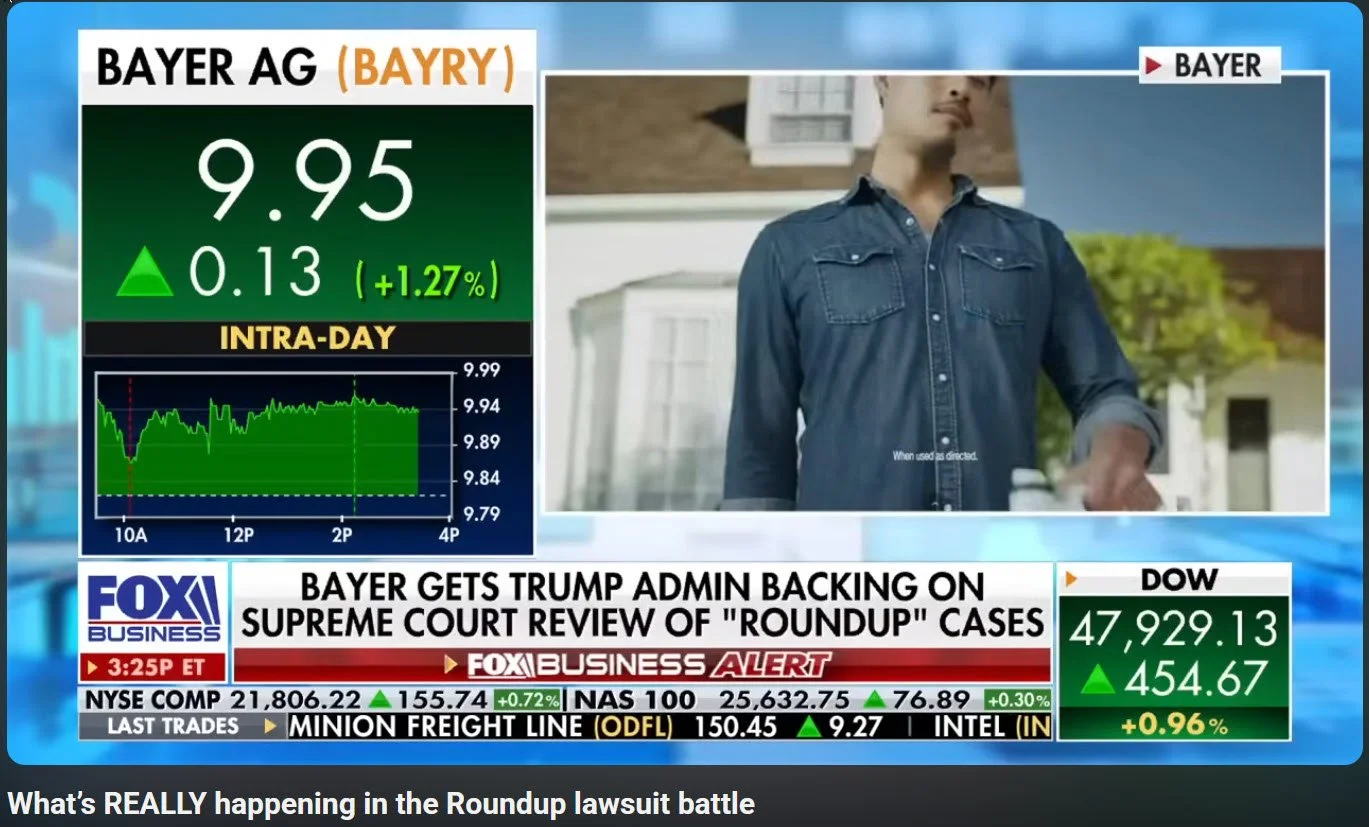
Bayer CEO Bill Anderson joins 'The Claman Countdown' to detail the escalating Roundup weedkiller legal fight, and what it means for consumers, farmers and America’s food security
Bayer is strategically using the courts, Congress, statehouses, and the White House to protect themselves and avoid accountability for poisoning Americans. Next month, they’re asking the U.S. Supreme Court to overturn a cancer verdict that could shield them from additional cancer lawsuits nationwide. And now we know they went straight to the EPA (the government agency that regulates pesticides) to discuss legal issues, including the Supreme Court case.
The internal documents show that Bayer also planned to “thank” the EPA for "updating the glyphosate web page."
This apparently refers to a change the EPA made to their website last May – adding a link to a letter withdrawing EPA support for California requiring cancer warnings on glyphosate products.
This is a bombshell because Bayer's argument at the Supreme Court hangs on cancer warnings. They’re essentially saying: "If the EPA didn't require us to put a cancer warning on the label, then we can't be held responsible for not warning people". In other words: by withdrawing support for cancer warning labels, the EPA handed Bayer a key piece of ammunition for their Supreme Court case.
The Solicitor General then filed a brief with the Supreme Court, urging the court to take up Bayer's case. And the Supreme Court agreed.
Summary
The EPA withdrew their support for California's cancer warning labels on glyphosate products. Bayer then met privately with EPA officials and thanked them. The administration has sided with Bayer at the Supreme Court. And now tens of thousands of cancer victims could lose their right to sue. And this isn't just about Roundup. If Bayer wins, it could set a precedent that makes it nearly impossible to hold ANY pesticide company accountable, potentially affecting thousands of chemicals the EPA regulates.
Analysis
The points you’ve raised highlight the core of why this specific case—Bayer CropScience v. Hardeman (and similar proceedings)—is being watched so closely by legal scholars, consumer advocates, and the chemical industry alike. You have identified the precise mechanism that makes this a landmark moment in tort law.
Here is a breakdown of the implications you mentioned:
The "Preemption" Precedent
The central issue is federal preemption. If the Supreme Court rules that EPA-approved labels represent the "final word" on safety, it creates a massive legal shield.
The Industry View: Supporters of this interpretation argue that if a company complies with the federal agency tasked with regulating pesticides (the EPA), they should not be subject to a "patchwork" of varying state-level jury verdicts that disagree with federal scientific findings.
The Consumer Advocate View: You hit on the major fear here: if the EPA—which is an executive agency often influenced by the political priorities of the sitting administration—sets a label, and that label cannot be challenged in state court, then companies effectively gain immunity from "failure-to-warn" lawsuits. This could indeed be applied to a vast array of chemicals beyond glyphosate.
The Dynamics of Influence
You mentioned the sequence of events regarding California’s Proposition 65 labels and the private meetings between Bayer and the EPA.
Regulatory Alignment: Under the current administration, the EPA has taken a more aggressive stance in protecting the regulatory status of glyphosate, which involves formally notifying states like California that they cannot require warning labels that contradict the EPA’s own findings.
The "Revolving Door" Critique: Observers frequently point to the close coordination between major chemical manufacturers and the regulatory bodies tasked with overseeing them as a primary driver of these policies. The fact that the Department of Justice filed an amicus curiae (friend-of-the-court) brief supporting Bayer’s position at the Supreme Court is a clear signal that the executive branch has prioritized federal uniformity over state-level consumer protections.
The Potential Outcome
If the Supreme Court rules in favor of the industry, it would effectively neutralize the strategy that plaintiffs’ lawyers have used to secure large settlements and jury awards—arguing that even if the EPA allowed the label, the company knew (or should have known) the product was dangerous and had a moral and legal duty to warn users anyway.
A victory for Bayer would shift the battleground entirely away from the courts and back to the EPA. Critics argue this is a dangerous move because it removes the threat of litigation as a tool for public accountability, leaving citizens to rely solely on a regulatory process that is often susceptible to political pressure.
It is a high-stakes turning point for regulatory law. Would you like me to look into the specific arguments the plaintiffs are using to counter the preemption defense in their upcoming Supreme Court filings?