
Segment #960
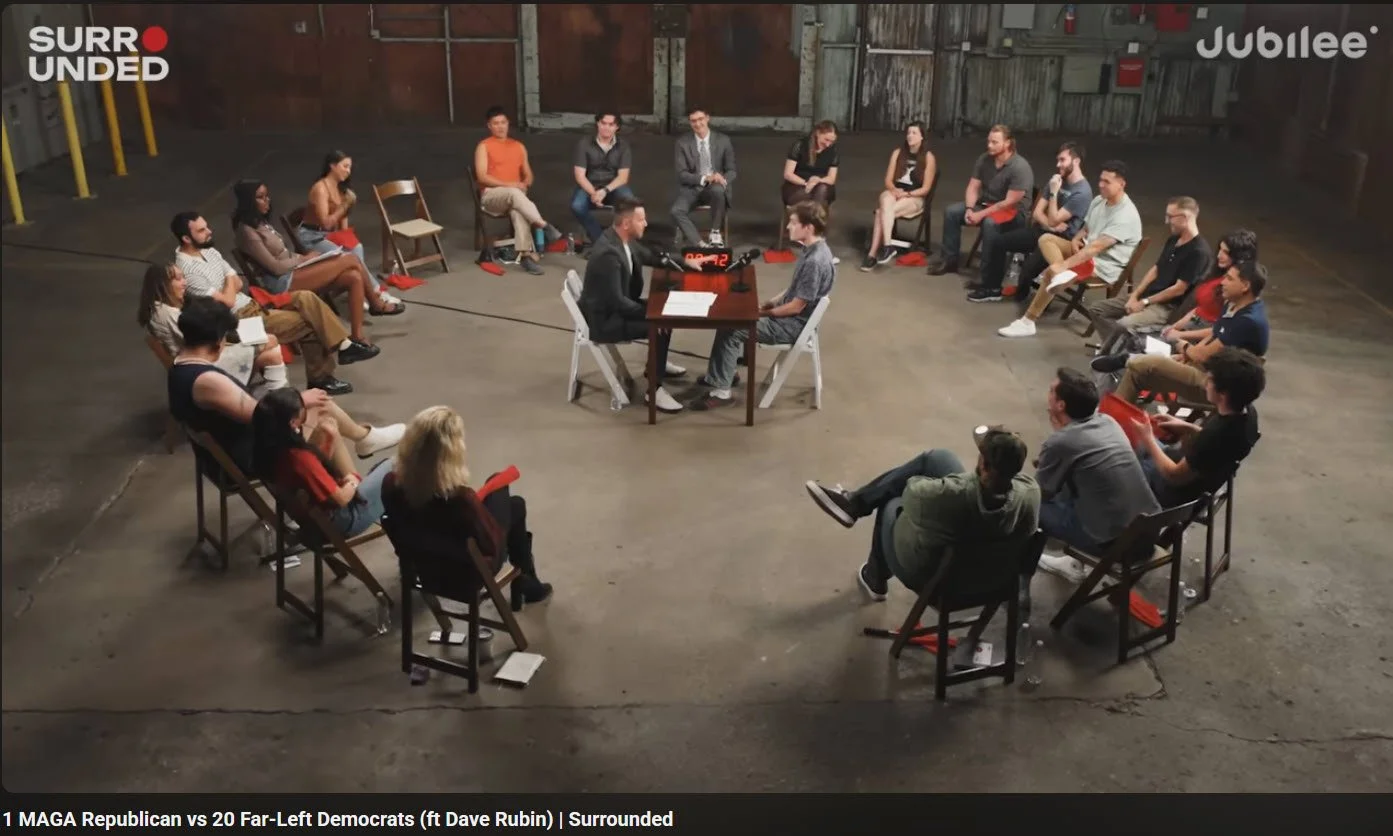
Debate Format: The video uses Jubilee's signature Surrounded format [00:52]. Rather than a standard panel or a moderated one-on-one setup, a single individual sits in the center while opponents take turns stepping up to debate them [00:52]. The group holds the power to vote an opponent out with red flags if they feel the argument has stalled or run its course [08:07], which creates a rapid-fire, high-pressure environment.
Individualism vs. Collectivism (The Core Split)
Rubin's Argument: Grounded in classical liberalism and individualism. His position is that a person's rights, merit, and value are strictly individual. He views the progressive movement ("wokeism") as an aggressive form of collectivism that forces people into identity groups based on immutable traits like race, gender, and sexuality, creating an artificial hierarchy of grievance rather than treating people as single entities under the law.
The Progressive Argument: Grounded in systemic analysis and intersectionality. Their position is that individuals do not exist in a vacuum; they live within historical and economic systems. They argue that focusing purely on the individual ignores the material reality that certain groups face systemic discrimination (in housing, healthcare, and employment) that requires targeted, collective solutions to fix.
Positive Rights vs. Negative Rights
Rubin's Argument: Defines freedom as negative rights—the freedom from government interference. In his view, the ideal system provides equal opportunity and equality under the law, then steps back. He argues that true economic and personal freedom comes from reducing the size of the state, cutting taxes, and removing regulations so that free markets and competition can thrive.
The Progressive Argument: Defines freedom through positive rights—the right to basic baseline necessities required for human dignity. They argue that a person isn't truly free if they are crushed by rent, medical debt, or lack of housing. Therefore, they view the government as a necessary mechanism to guarantee healthcare, education, and economic equity, financed by taxing concentrated wealth.
Organic Social Solutions vs. Legislative Protections
Rubin's Argument: Believes that cultural and social changes should happen organically through personal interaction, mutual respect, and basic decency, not through state mandates. In the final debate on trans issues, he argues that while adults should have full autonomy, the state has a legitimate role in protecting minors until their brains are developed enough to make permanent medical decisions.
The Progressive Argument: Believes that social justice requires explicit, enforceable legislative protections because relying on corporate or individual goodwill historically leaves marginalized groups unprotected. On trans issues, they argue that healthcare decisions should strictly belong to the individual, their family, and their medical doctors, and that state-level bans are an direct attack on bodily autonomy and existence.