
Chaos in Iran
Segment #798
Ayatollah Khomeni Has Been Killed
The recent reports from earlier today, February 28, 2026, indicate a massive, coordinated joint military operation by the U.S. and Israel—dubbed "Operation Epic Fury" (U.S.) and "Operation Lion's Roar" (Israel).
While the exact operational details remain classified, military analysts and early reports outline how the strike on the high-level meeting in Tehran was executed:
The Iranian power structure is an intricate web where clerical authority and the military (IRGC) are often indistinguishable, yet currently find themselves in a state of high-stakes friction. With the reported deaths of five top leaders—including Ali Shamkhani, Aziz Nasirzadeh, and Mohammad Pakpour—the traditional chain of command has been shattered, leaving a volatile vacuum.
See below to understand the key players and the looming internal crisis:
. Intelligence and "Target of Opportunity"
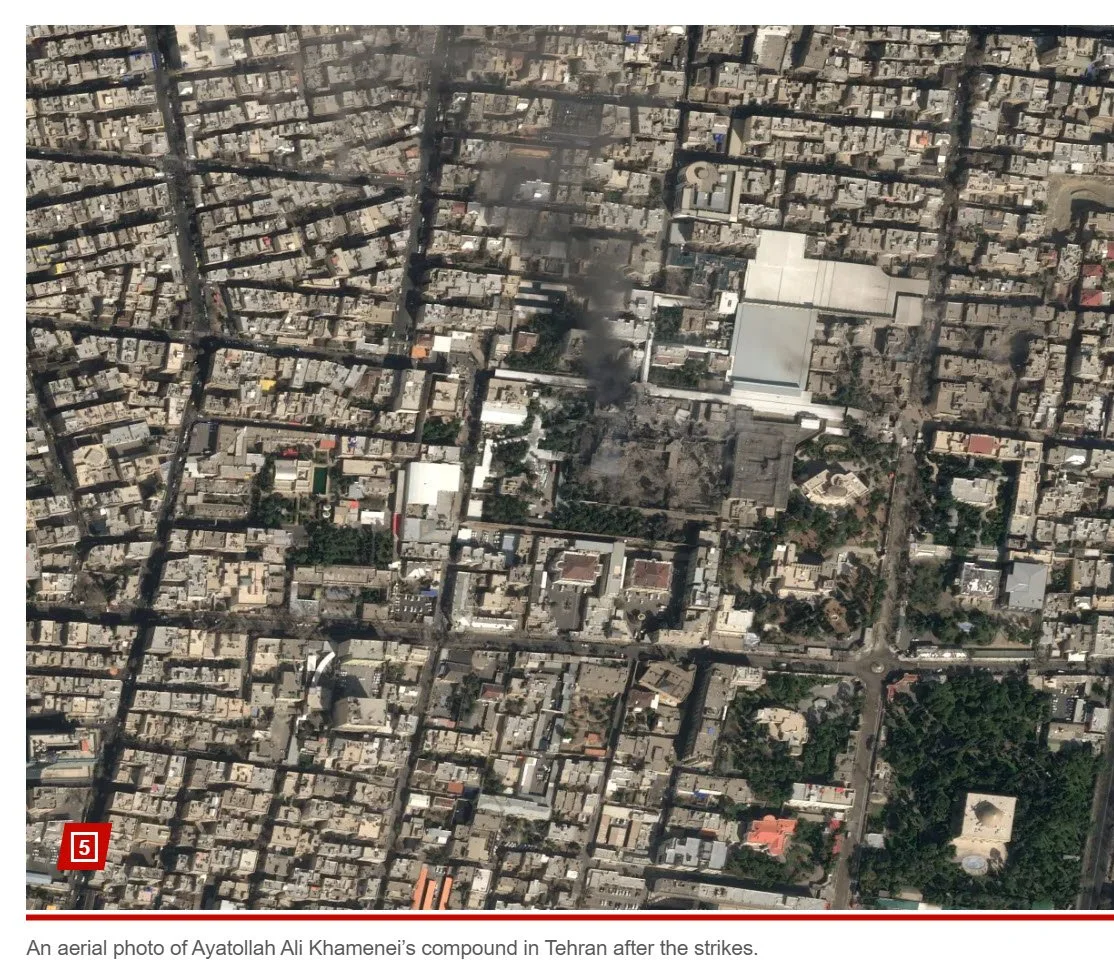
According to U.S. defense officials, the strike was originally scheduled for a later time but was accelerated after the Israeli Military Intelligence Directorate identified a "target of opportunity." They tracked a gathering of senior Iranian leadership at a secure compound in downtown Tehran. The decision to strike during the daytime was a deliberate move to achieve maximum surprise while the leaders were physically together.
Precision Munitions
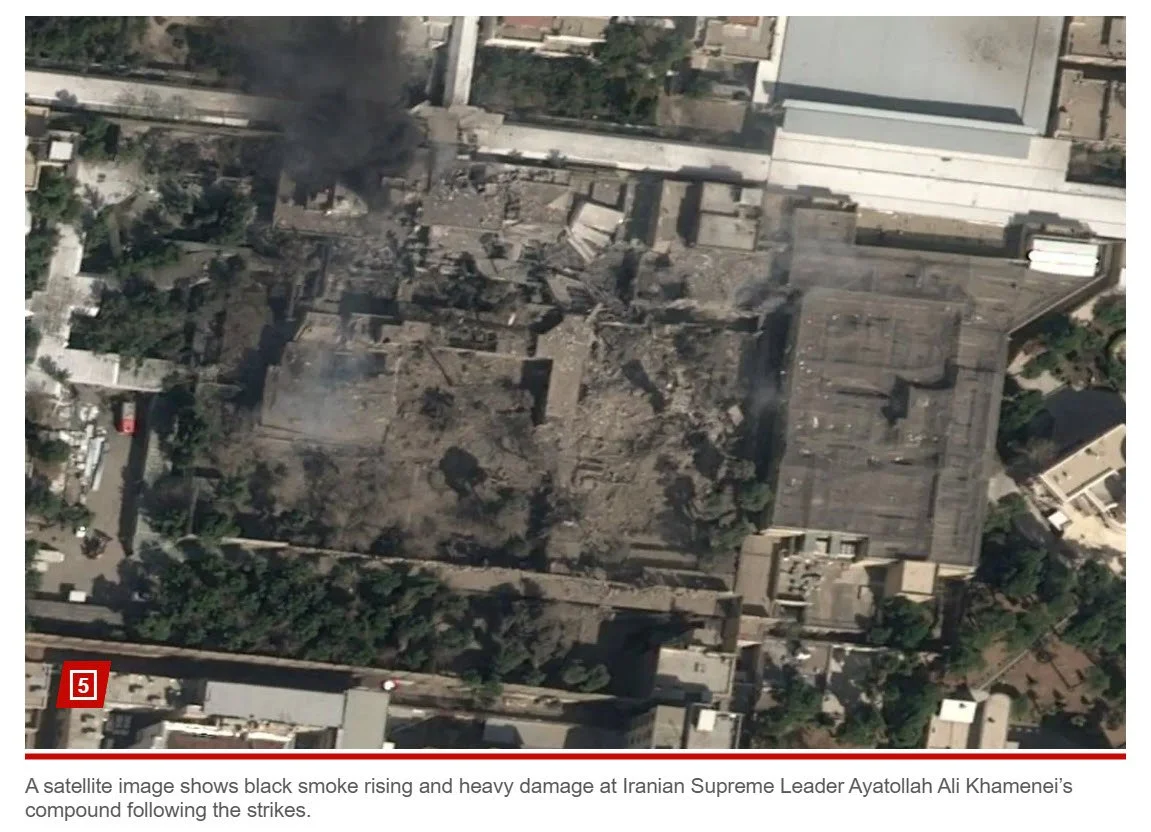
Israeli sources report that approximately 30 precision-guided bombs were dropped on the Supreme Leader's compound. The strike specifically targeted reinforced structures. While some of the leaders were in underground bunkers, reports suggest they were not in the deepest "hardened" levels that only specialized U.S. bunker-busters could reach, leaving them vulnerable to the Israeli barrage.
3. Simultaneous Decapitation Strikes
The operation didn't just target one location. Israel reportedly struck three sites simultaneously where regime figures had convened. This "decapitation" strategy was designed to paralyze the Iranian command-and-control structure before they could coordinate a response.
4. High-Level Casualties
While the Iranian government has downplayed some claims, several sources (including the IDF and U.S. intelligence) have identified high-ranking officials believed to have been killed in these early meetings:
Ali Shamkhani: Senior advisor to the Supreme Leader and former Secretary of the Supreme National Security Council.
Mohammad Pakpour: Commander of the IRGC Ground Forces.
Aziz Nasirzadeh: Iran’s Minister of Defense.
Salah Asadi: A senior military intelligence officer.
Mohammad Shirazi: Head of the Supreme Leader’s Military Bureau.
Iranian command and Control Structure
The elimination of five top Iranian leaders in the early morning strikes of February 28, 2026, was a surgical attempt to shatter the regime’s command-and-control (C2). However, the Islamic Republic has long prepared for a "decapitation strike" by building a highly redundant and decentralized leadership structure.
Here is the current command-and-control architecture and who is likely stepping into the vacuum:
1. The "Designated Survivor" & Strategic Leadership
Before the strikes, Ayatollah Khamenei reportedly activated a multi-layered contingency plan. The primary figure now holding the political reins is:
Ali Larijani: As the newly empowered head of the Supreme National Security Council (SNSC), Larijani was recently designated as the "acting" authority in the event of a leadership vacuum. He is a veteran "fixer" with deep ties to both the clerical establishment and the IRGC.
Provisional Leadership Council: Constitutionally, if the Supreme Leader is dead or incapacitated, a council consisting of the President (Masoud Pezeshkian), the Chief Justice (Gholam-Hossein Mohseni-Eje'i), and a senior cleric must take over. With the President's status currently unconfirmed, Eje'i likely holds the gavel on this council.
2. Military Command: The IRGC "Junta"
The IRGC (Islamic Revolutionary Guard Corps) is designed to function even if its top brass is wiped out. Their C2 is decentralized into 31 separate provincial commands, meaning a strike on Tehran does not stop units in Mashhad or Isfahan from operating.
Acting Commander: Following the reported death of Mohammad Pakpour, the IRGC likely transitioned to a pre-arranged "War Council."
Decentralized Firepower: Command over Iran’s ballistic missile and drone arrays is typically delegated to mid-level "Operational Hubs." This explains why retaliatory strikes were launched against U.S. bases in Qatar and Bahrain almost immediately after the Tehran explosions—the units didn't need a direct phone call from the Supreme Leader to fire.
3. Successor Pool (The Assembly of Experts)
While the Assembly of Experts (88 clerics) is the only body that can legally elect a permanent new Supreme Leader, they are likely paralyzed by the ongoing "Operation Epic Fury." In the interim, "Shadow Candidates" are emerging:
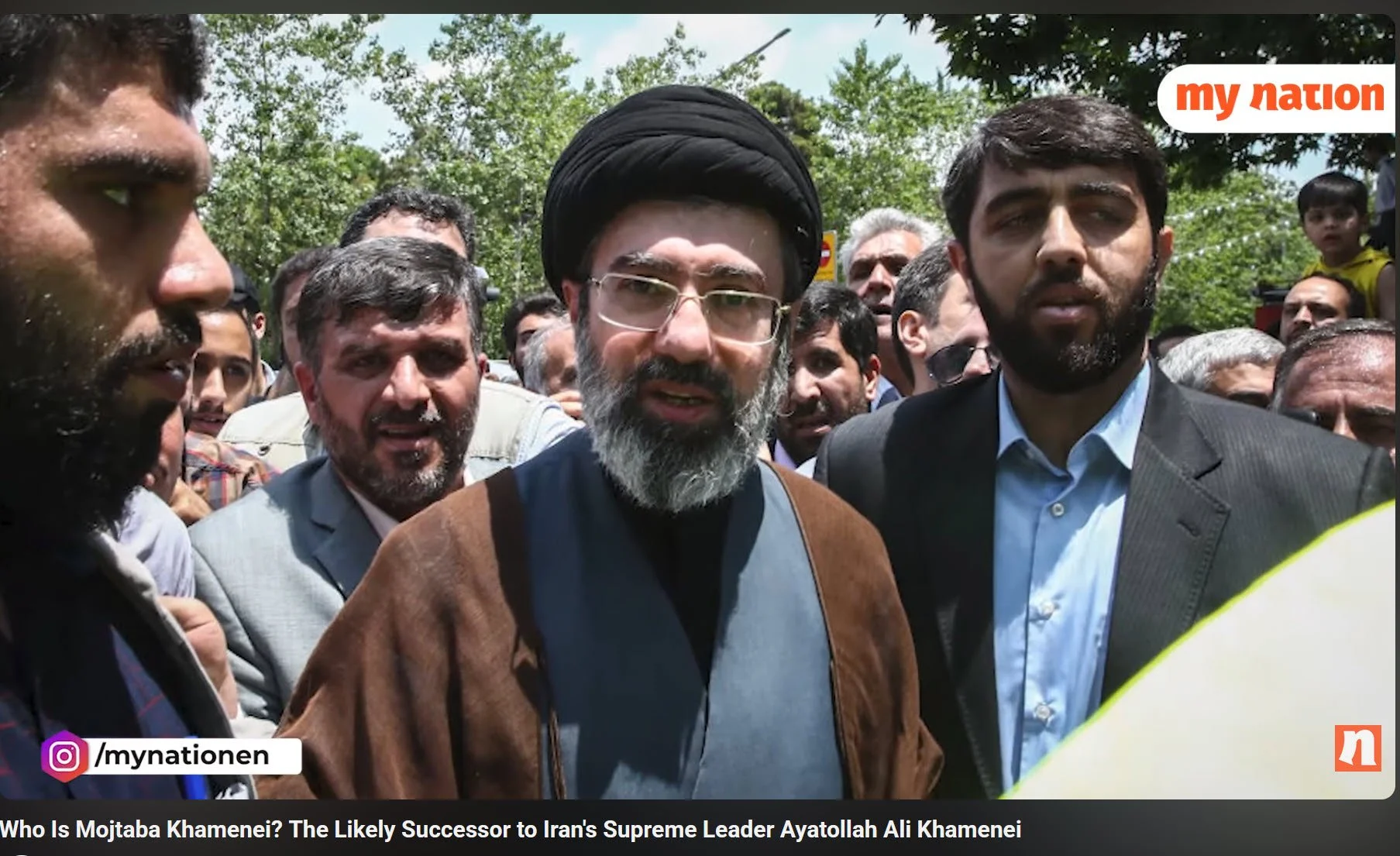
As speculation mounts about the health of Iran's Supreme Leader Ayatollah Ali Khamenei, reports indicate that his son, Mojtaba Khamenei, has been chosen as his successor. This video looks at the background and political rise of Mojtaba Khamenei, who has been involved in Iran's political landscape for years
Mojtaba Khamenei: The Supreme Leader’s son remains the most powerful "unofficial" figure. He reportedly maintains control over the Bayt-e Rahbari (the Leader’s Office) and the intelligence apparatus.
Mohammad Bagher Ghalibaf: The current Speaker of Parliament and a former IRGC commander. He is a "secular-military" heavyweight who could lead a transition toward a more military-dominated government.
4. Continuity of Operations
The "Khatam al-Anbiya" Base: This is the nerve center for all Iranian military branches. Even if senior leaders like Aziz Nasirzadeh (Defense Minister) are gone, the permanent staff at this base are trained to execute "Plan B" retaliatory protocols without top-down approval.
Martial Law: Internal security is being managed by the Basij (paramilitary) and surviving Interior Ministry officials who have formed a "National Crisis Management Headquarters" to prevent civil unrest while the strikes continue.
As of late afternoon on February 28, 2026, the status of Iranian President Masoud Pezeshkian is a subject of intense conflicting reports, though the weight of evidence currently suggests he is alive.
Current Status of President Pezeshkian
Iranian Official Stance: Multiple Iranian state-affiliated agencies, including Tasnim and IRNA, have issued official denials of his death. Iran’s Vice President, Mohammad Jafar Ghaempanah, posted on X (formerly Twitter) that Pezeshkian is in "full health" despite the "cowardly attacks."
Intelligence Reports: While Israeli security sources initially suggested he might have been at one of the targeted sites (including the presidential compound), the Associated Press and Reuters report that Iranian officials have "shunned" these claims, maintaining that he is "safe and sound."
The "Proof of Life" Gap: Despite these assurances, there has been no live video broadcast or public appearance by Pezeshkian since Operation Epic Fury began. This silence is contributing to the "intelligence fog" in the region.
The Emergency Command Structure
With the Supreme Leader Ayatollah Khamenei presumed dead by Israeli and U.S. intelligence, the following command-and-control (C2) structure is technically in place to manage the state:
RoleStatusFunction in the VacuumThe Provisional CouncilActiveUnder Article 111, if the Leader is gone, a council of the President, Chief Justice, and a Guardian Council member must rule.Chief Justice Eje'iAliveLikely the most powerful legal figure currently "visible," overseeing the transition.Ali LarijaniActiveActing as a strategic "fixer" and liaison between the surviving clerics and the military.IRGC War CouncilOperationalCommand has shifted to decentralized provincial hubs to ensure the "Axis of Resistance" can continue retaliatory strikes without a central head.
Export to Sheets
The "Decapitation" Strategy
The U.S. and Israel targeted three primary locations where leadership was gathered. By taking out figures like the Defense Minister and IRGC Ground Forces Commander, the goal was to trigger a "cascading failure" in communication. Even if Pezeshkian is alive, he likely lacks the religious and military authority to command the IRGC in the same way the Supreme Leader did.
The Succession Struggle
The Succession Struggle: Rivals and "Shadow" Leaders - Who we think is still alive.. although there have been reports that up to 40 leaders were killed in the early morning meeting/
1. The Supreme Leadership (Decapitated?)
Reports from today indicate that Supreme Leader Ali Khamenei was targeted in strikes in Tehran. While some state-aligned sources claim he was moved to a secure location beforehand, several international outlets (including Iran International) are reporting his death.
Acting Authority: In the immediate vacuum, Ali Larijani (current head of the Supreme National Security Council) has reportedly taken the lead on contingency planning and is effectively acting as the regime's primary decision-maker.
2. General Staff of the Armed Forces
The Chief: Major General Abdolrahim Mousavi is currently the highest-ranking military officer. He took over as Chief of Staff in June 2025 after his predecessor, Mohammad Bagheri, was killed in an earlier round of strikes.
Status: As of today, Mousavi is reported by Fars News to be "alive and well," making him the primary coordinator between the regular Army (Artesh) and the Revolutionary Guard.
3. The Islamic Revolutionary Guard Corps (IRGC)
The IRGC has seen its top leadership wiped out twice in less than a year:
New Commander: Brigadier General Mohammad Pakpour (who took over in 2025 after Hossein Salami’s death) was reportedly killed in the strikes this morning (Feb 28).
The "Next Man Up": With Pakpour likely gone, command typically falls to the Deputy Commander. However, with many senior officers targeted at a meeting in Tehran today, the IRGC is likely operating under a decentralized, regional "cell" command structure for the moment.
4. Ministry of Defense
Status: The Minister of Defense, Brigadier General Aziz Nasirzadeh, is also reported to have been killed in today's strikes.
Succession: Brigadier General Mohammad-Reza Gharaei Ashtiani, who currently serves as the Deputy Chief of Staff, is the most senior defense official confirmed to be alive and would likely assume administrative control of the military logistics.
Summary of Current High Command (Alive/Confirmed)
PositionCurrent HolderStatus (as of Feb 28, 2026)Acting Supreme LeaderAli LarijaniActive / Managing contingencyChief of Armed ForcesMaj. Gen. Abdolrahim MousaviConfirmed AliveDeputy Chief of StaffBrig. Gen. Mohammad-Reza AshtianiConfirmed AliveSpeaker of ParliamentMohammad Bagher GhalibafConfirmed Alive (former IRGC commander)
While the Assembly of Experts is constitutionally mandated to pick the next Supreme Leader, the reality is a street fight between these factions:
Mojtaba Khamenei: Often described as a "mini-Supreme Leader" within his father’s office, he controls the "invisible state"—the intelligence and financial networks. However, as a non-elected figure with no formal military rank, his path to the throne is far from guaranteed.
Mohammad Bagher Ghalibaf: The current Speaker of Parliament is a former IRGC commander who has already shown he can step into military gaps. He is the ultimate "military-bureaucrat" and could lead a shift toward an "IRGC-run state" (an "IRGCistan") that keeps a cleric only as a figurehead.
Masoud Pezeshkian: As President, he is the constitutional face of the government. However, his influence has been sidelined by hardliners like Larijani, and his survival of the strikes is still being verified by independent sources.
Ali Larijani & Mohseni-Eje'i: Larijani has emerged as the "designated survivor" and strategic fixer, while Chief Justice Eje'i holds the legal keys to the Provisional Leadership Council. Both represent the "old guard" trying to prevent the IRGC from taking total control.
The "Step-Up" Dilemma
The ease with which Israeli and U.S. forces executed these decapitation strikes has created a psychological "chilling effect." For many in the second tier of leadership, stepping into a high-profile role now feels like volunteering for an assassination list. This fear may paralyze the regime’s ability to appoint a permanent successor quickly, leading to a period of rule-by-committee.
The Geopolitical Trap
The external pressure is pulling in two opposite directions:
The Negotiators: President Trump has indicated a willingness to "negotiate a deal" once the dust settles, likely hoping the threat of total regime collapse forces Iran back to the table on U.S. terms.
The Hardliners & The People: The Israelis are pushing for a permanent end to the "Axis of Resistance," while the Iranian people—emboldened by the regime’s weakness—may see this as a "once-in-a-generation" moment to finish what the air strikes started.
The fog of war over Tehran has revealed a critical fissure: the "Center" is blind, and the "Periphery" is now acting on its own. The reports from today, February 28, 2026, confirm that with the decapitation of the central IRGC command (including the death of Commander Mohammad Pakpour), Iran’s 31 provincial IRGC units have transitioned to "Autonomous Defense" mode.
Here is how the regional "warlords" are beginning to challenge the central authority and the risks involved:
1. The Breakdown of the "Vertical" Chain of Command
Under normal circumstances, every missile launch and major troop movement requires a direct "blessing" from the Supreme Leader’s office. With that office physically destroyed:
Tactical Autonomy: Regional commanders in provinces like Khuzestan (oil-rich) and Sistan and Baluchestan (bordering Pakistan) are now making life-and-death decisions without waiting for Tehran.
The "First Strike" Problem: We are seeing "wildcat" retaliatory strikes. Artillery and drone units near the Iraqi border have reportedly opened fire on U.S. positions based on local initiative, which could inadvertently escalate the conflict beyond what a surviving central government in Tehran might want.
2. Emerging Regional "Warlords"
In the absence of a clear successor, mid-level commanders are becoming the de facto rulers of their provinces.
Economic Hijacking: In the south, IRGC naval commanders who control smuggling routes and port infrastructure may stop sending revenue to Tehran, choosing instead to fund their own local "defense councils."
The Sistan-Baluchestan Faction: There are early reports of local commanders in the southeast negotiating local ceasefires with ethnic Baluch insurgents to avoid a two-front war, a move that would be considered treason by the hardliners in Tehran.
3. The Central Power Struggle: Mojtaba vs. Ghalibaf
While the provinces fragment, a "palace coup" is brewing in the bunkers of Tehran:
Mojtaba Khamenei's Loyalists: He still controls the Basij (paramilitary) and the internal intelligence apparatus. He is reportedly pushing for an immediate "emergency appointment" to the Supreme Leadership, bypassing the legal Assembly of Experts.
Ghalibaf’s "Military Junta": Speaker of Parliament Mohammad Bagher Ghalibaf—who notably appeared in Parliament today wearing his full IRGC general's uniform—is positioning himself as the only "stable" hand. Analysts suggest he may try to sideline the clerics entirely and establish a secular-military government to "save the nation."
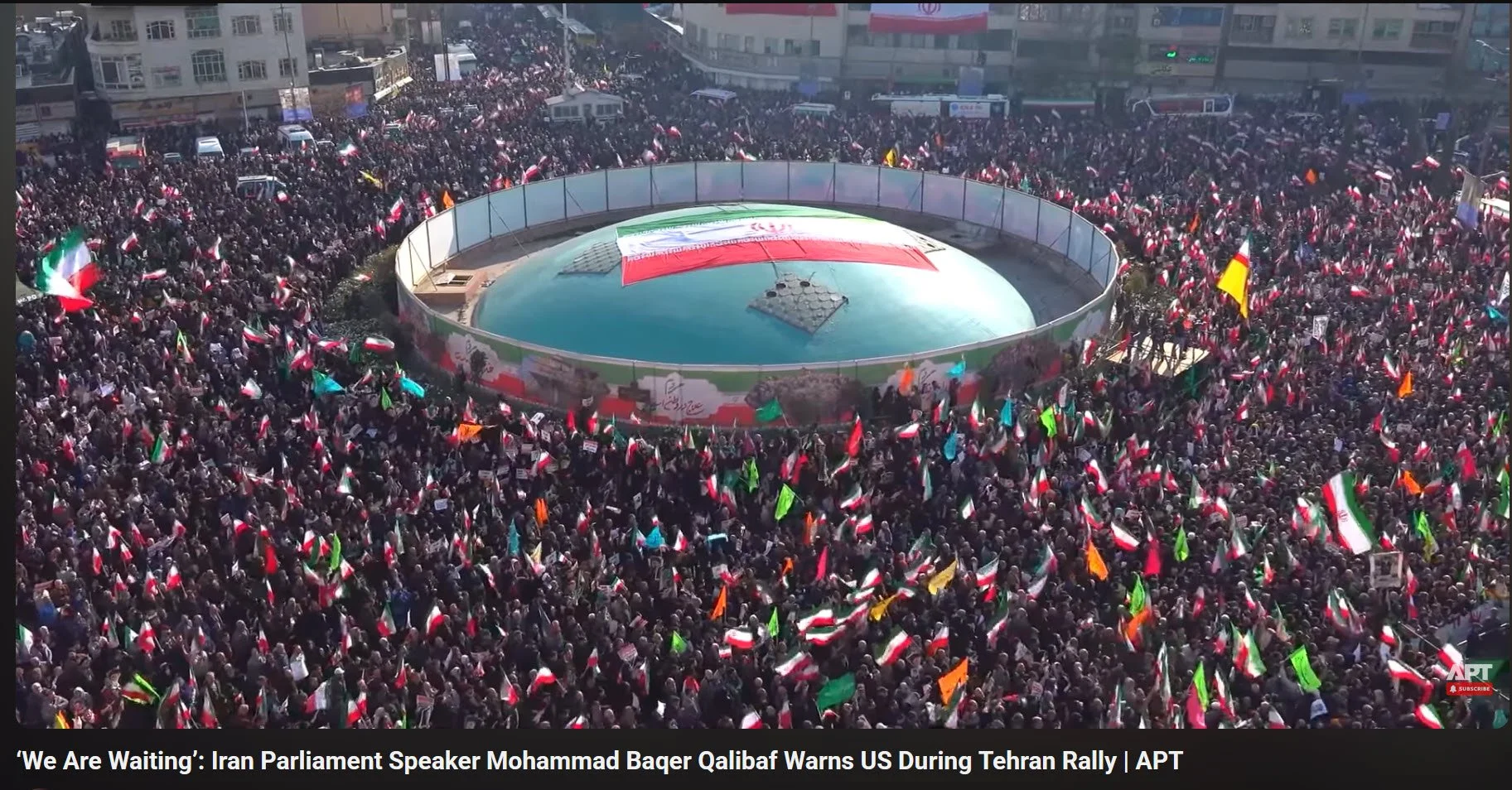
Iran’s Parliament Speaker Mohammad Baqer Qalibaf issued strong warnings to the United States and Israel during a government-backed rally in Tehran, as unrest continues in several Iranian cities. Speaking at Enqelab Square, Qalibaf challenged Washington to intervene, threatening that US military bases, ships and forces in the region would face retaliation. He accused US President Donald Trump of being misled by false information and vowed that Iran would respond to any foreign interference. Footage shows demonstrators waving Iranian flags and chanting in support of the government. Some protesters warned the US and Israel to stay out of Iran’s internal affairs, saying the country would resolve its own problems. The rally followed calls by Iranian authorities for mass demonstrations to condemn riots and reject what officials describe as American and Israeli interference. Police say security forces have made numerous arrests after separating violent rioters from peaceful protesters.
4. The "Step-Up" Fear Factor
You are exactly right—the precision of the Israeli strikes has created a "kill zone" around the top office.
The Empty Chair: Both Ali Larijani and Chief Justice Eje'i are reportedly hesitant to be named the official "Head of State," fearing they will be the next targets for an Israeli Hellfire missile. This reluctance is the primary reason no "Proof of Life" video has been released; no one wants to be the face of a regime that is currently being dismantled from the air.
The Next 24 Hours
If a central authority isn't established by dawn, we may see the first open defections of regional IRGC units or the declaration of independent "security zones" in the provinces.