
Certainly Enough to Ask Questions
Segment #775
A number of medical experts lost their careers after suggesting that the mRNA Covid vaccine was causing injuries. Now transparency in releasing and examining data has raised questions that need to be answered. We should never forget Big Pharma and our government insisting that there was nothing to see here.. just take the vaccine. If any good can come from the public’s distrust, is that we are and will ask more questions in the future.
Aseem Malhotra (British cardiologist): He has repeatedly linked mRNA vaccines to cardiovascular risks, including myocarditis and excess heart disease deaths. In 2023, experts criticized the BBC for airing his views, calling them "misguided," "dangerous," and "extreme fringe." He faced complaints to the UK's General Medical Council (GMC) over vaccine claims (including cardiac links in 2022–2023 and later cancer allegations), though no major action was taken initially. His appearances and statements sparked furor in medical circles for potentially misleading the public.
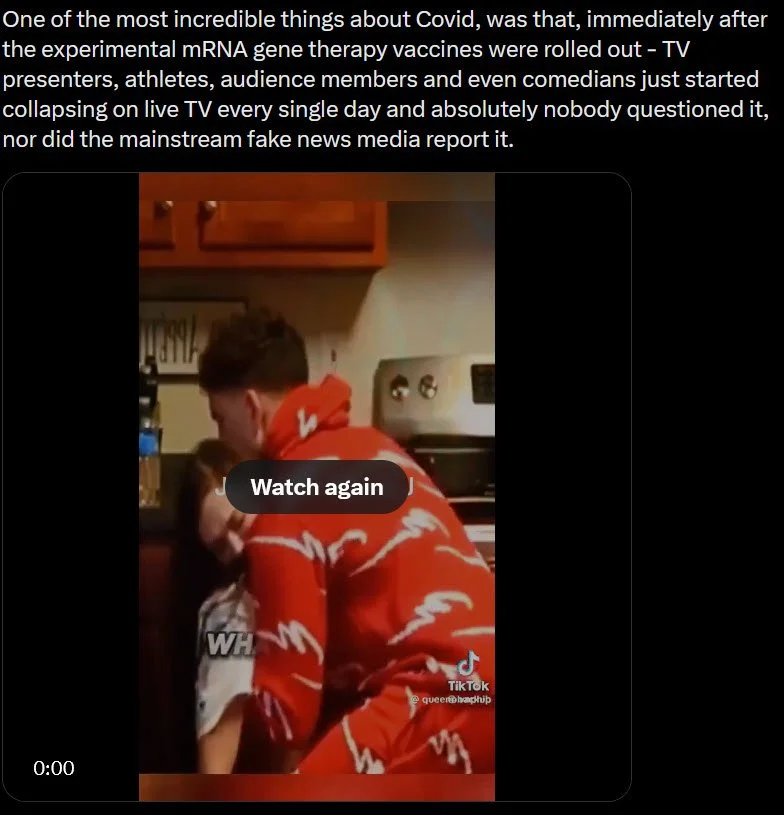
The 2025 ESC Guidelines for the management of myocarditis and pericarditis (officially titled "Inflammatory Myocardial and Pericardial Syndromes" or IMPS) represent a significant advancement in addressing inflammatory heart disease. Released in August 2025 by the European Society of Cardiology (ESC), these guidelines are groundbreaking as the first to provide unified guidance on both myocarditis and pericarditis together, rather than treating them separately.Key innovations include:
Introducing the umbrella term "inflammatory myopericardial syndrome" (IMPS) to encompass myocarditis, pericarditis, and overlap conditions like myopericarditis or perimyocarditis. This accounts for the frequent clinical overlap and allows for initial management before pinpointing a more specific diagnosis.
Presentation-driven diagnostic pathways, emphasizing non-invasive tools like cardiovascular magnetic resonance (CMR) imaging, which plays a transformative role in diagnosis, risk stratification, and reducing the need for immediate endomyocardial biopsy in many stable cases.
Refined recommendations for multimodality imaging (e.g., echocardiography, CMR), endomyocardial biopsy in select high-risk scenarios, personalized therapies, and lifestyle advice.
Multidisciplinary approaches, patient-centered care, and practical flowcharts/algorithms to improve recognition, treatment, and outcomes—such as safer return to exercise, work, and daily activities.
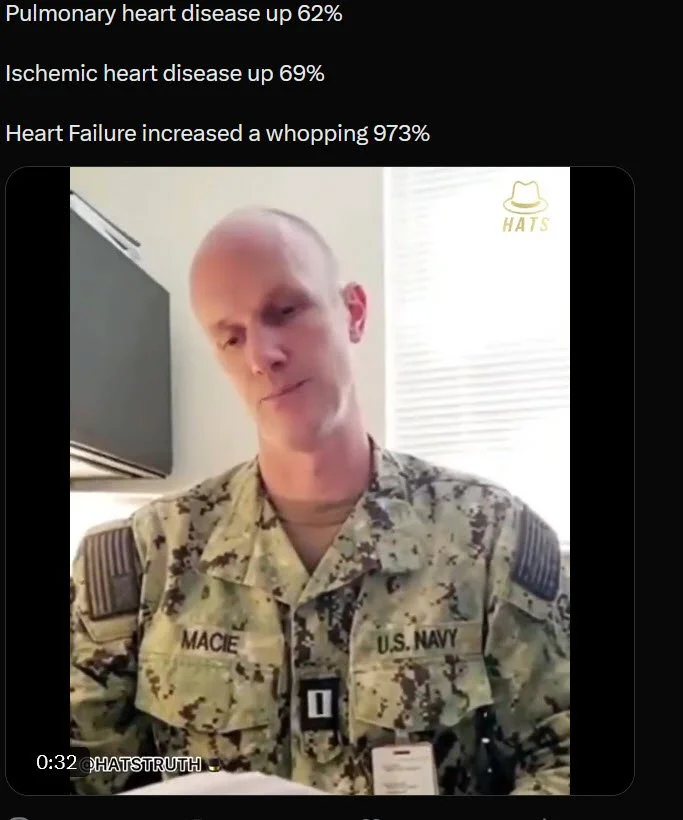
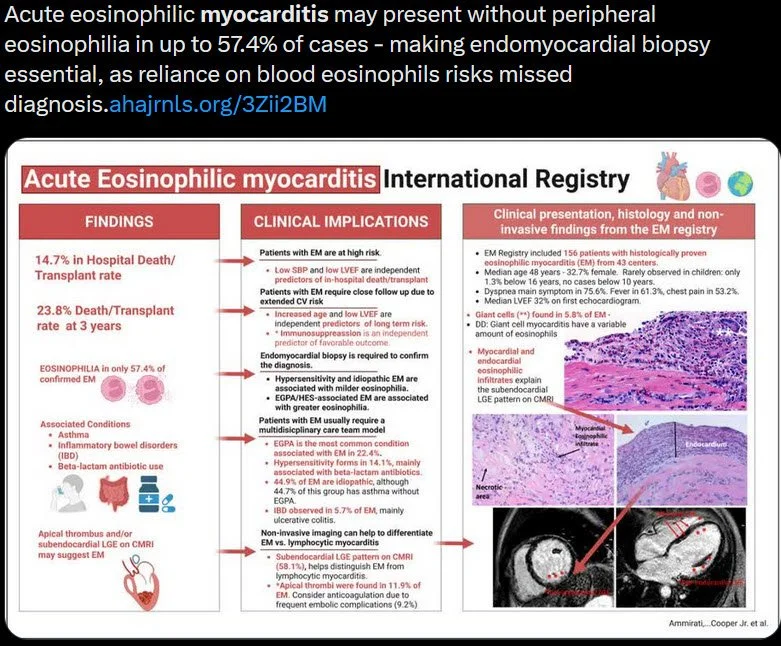
Experts describe these as a landmark achievement and a turning point in inflammatory heart disease management, shifting toward more integrated, evidence-based, and less invasive strategies.Regarding the American College of Cardiology (ACC), there isn't a single combined position paper mirroring the ESC's unified approach. Instead, recent ACC documents address these topics separately but complementarily:
A 2024 ACC Expert Consensus Decision Pathway on the diagnosis and management of myocarditis, introducing a novel four-stage clinical classification and emphasizing CMR's role while reserving biopsy for specific scenarios.
A 2025 concise clinical guidance (expert consensus statement) on pericarditis diagnosis, risk stratification, and treatment.
Broader 2025 ACC scientific statements on inflammation's role in cardiovascular disease (including pericarditis, myocarditis links to heart failure, atherosclerosis, etc.), highlighting anti-inflammatory therapies like IL-1 blockers for recurrent pericarditis.
Comparisons (e.g., from reviews by the Italian Society of Cardiology and others) note strong convergence between the 2025 ESC guidelines and recent ACC positions—both prioritize early accurate diagnosis via CMR, tailored management, and therapies like IL-1 blockade (Class I in ESC for recurrent pericarditis). Differences include terminology (unified IMPS in ESC vs. separate pathways in ACC) and classification approaches, but they collectively advance the field.Overall, these 2025 ESC guidelines, alongside contemporary ACC documents, indeed mark a pivotal shift toward better-integrated, imaging-led, and personalized care for inflammatory heart conditions, improving outcomes for patients with these often challenging diagnoses. If you're looking for specifics on recommendations (e.g., treatment algorithms or risk stratification), let me know!
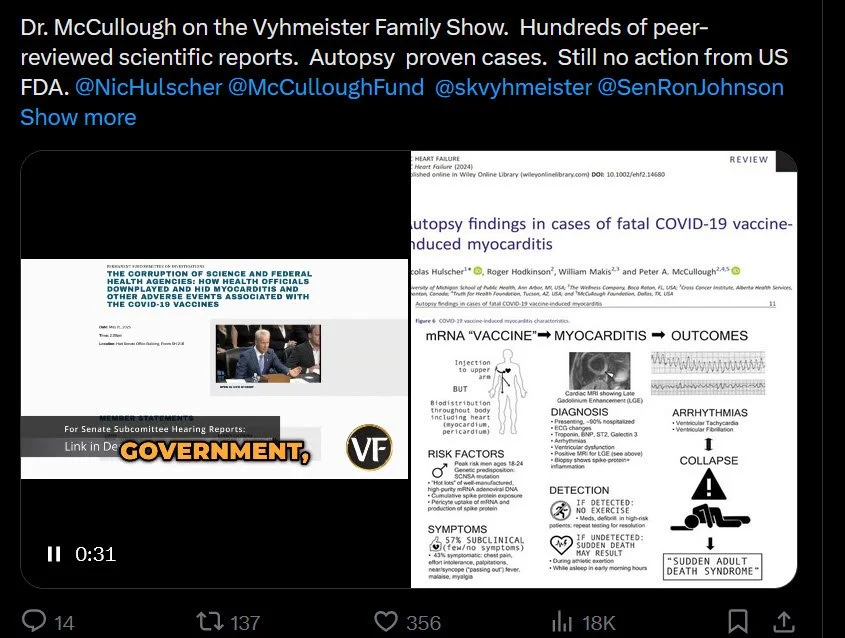
https://x.com/i/status/2018151220033081368
Peter McCullough (American cardiologist): He co-authored papers on vaccine-associated myocarditis using VAERS data (self-reported, unverified adverse events). One such paper was withdrawn/retracted. He has claimed widespread vaccine-induced heart damage, testified on these risks, and faced professional consequences, including separation from Baylor Scott & White (with a restraining order over affiliations), removal from faculty positions at Texas A&M and other institutions, and broader criticism for promoting unproven COVID treatments and questioning vaccine efficacy/safety.