Documentating Rioters With ICE Bodycams
Segment #774
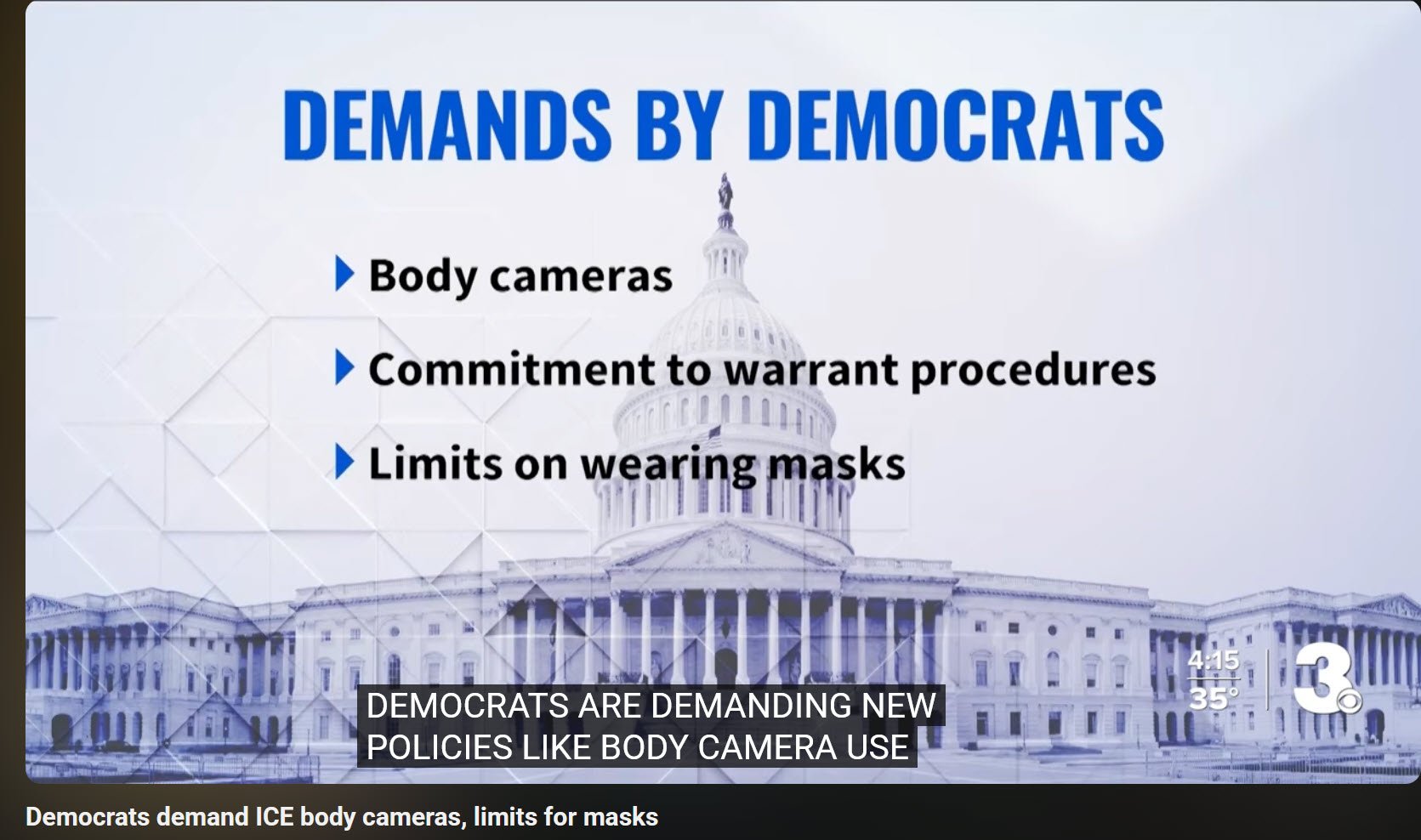
The fight over Immigration and Customs Enforcement agents continues to rage in Washington following a series of high profile incidents in Minneapolis. Democrats are making demands of the Department of Homeland Security, including body cameras, limits on mask wearing, and adherence to warrant procedures
Antifa, BLM, and ICE rioters have pretty much had their way during the Biiden adminstration and into the first year of Trump’s presidency. Claims of excessive force and harrassment have in my cases against ICE and other law enforcement have gone unchallenged. Budgets will be adjusted and body cams will become standard protocol. This move is long overdue. Now the bad actors in all their glory will be immortalized on video tape. The doxxers will now be doxxed. Databases will be created and technology will tell us who our enemies are - foreign and domestic. I welcome the Democrats’ push for body cams. Let’s see how they react when on camera we see the “peaceful protestors” spitting on agents, throwing rocks, and obviously not acting peaceful. Bring it on. Its long overdue.
Overview of ICE Body-Worn Camera TechnologyU.S. Immigration and Customs Enforcement (ICE) body-worn cameras (BWCs) are deployed under DHS-wide policies to enhance transparency, accountability, and evidence collection during enforcement activities.
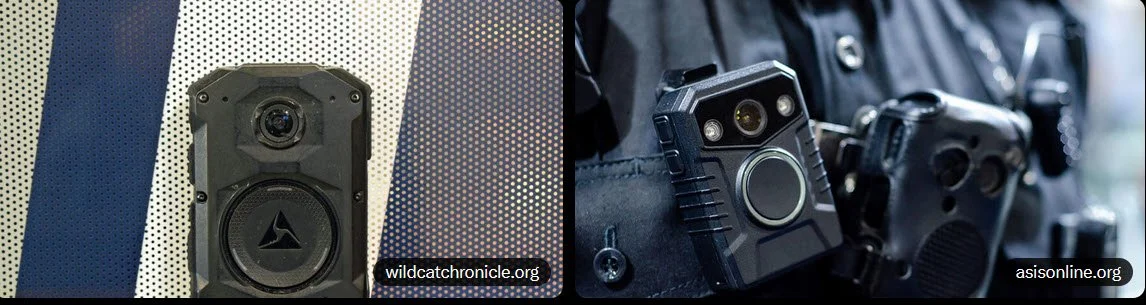
Hardware Models and SpecificationsICE primarily uses models from Axon (formerly TASER International), selected after pilot testing for their durability, ease of use, and integration capabilities.
rand.org
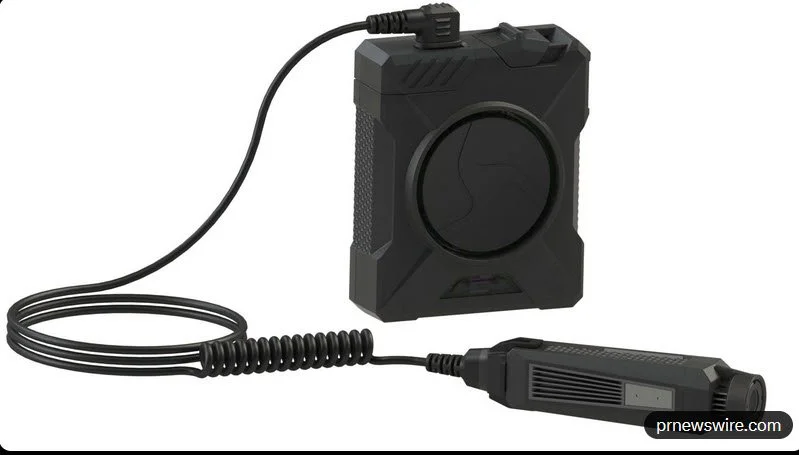
The two main models are the Axon Body 3 (chest-mounted for general use) and Axon Flex 2 (flexible, often helmet-mounted for tactical scenarios).
ice.gov
The technology stems from a 2021-2023 pilot program evaluated by RAND, which tested feasibility in Homeland Security Investigations (HSI) and Enforcement and Removal Operations (ERO) units.
rand.org
By 2025, ICE had rolled out BWCs nationwide, with full implementation by September 30, 2025, focusing on planned operations like arrests and warrant executions.
dhs.gov
Only ICE-approved, agency-issued devices are used—no personal equipment is permitted—to ensure standardization and security.The core technology integrates audio/video recording hardware with cloud-based digital evidence management, emphasizing rugged design for field use, data integrity, and privacy safeguards. While effective for documentation, evaluations highlight operational challenges like mounting issues and upload logistics. Advanced features like live streaming are available but disabled by ICE policy.
ICE body-worn cameras (bodycams) can potentially contribute to building or populating databases of individuals involved in riots, protests, or related activities (often referred to as "rioters" in enforcement contexts), though not always directly or exclusively through the cameras themselves.ICE has a body-worn camera program under DHS policy, with directives (e.g., ICE Directive 19010.3) requiring officers to activate cameras during enforcement activities, including interactions with the public, arrests, and responses to disturbances. Footage is stored in approved systems, retained for periods like 3 years if evidentiary (or longer if relevant to litigation/prosecutions), and can be used for investigations, accountability, training, or as evidence in criminal/administrative proceedings.Key points on how this ties into databases or identification:
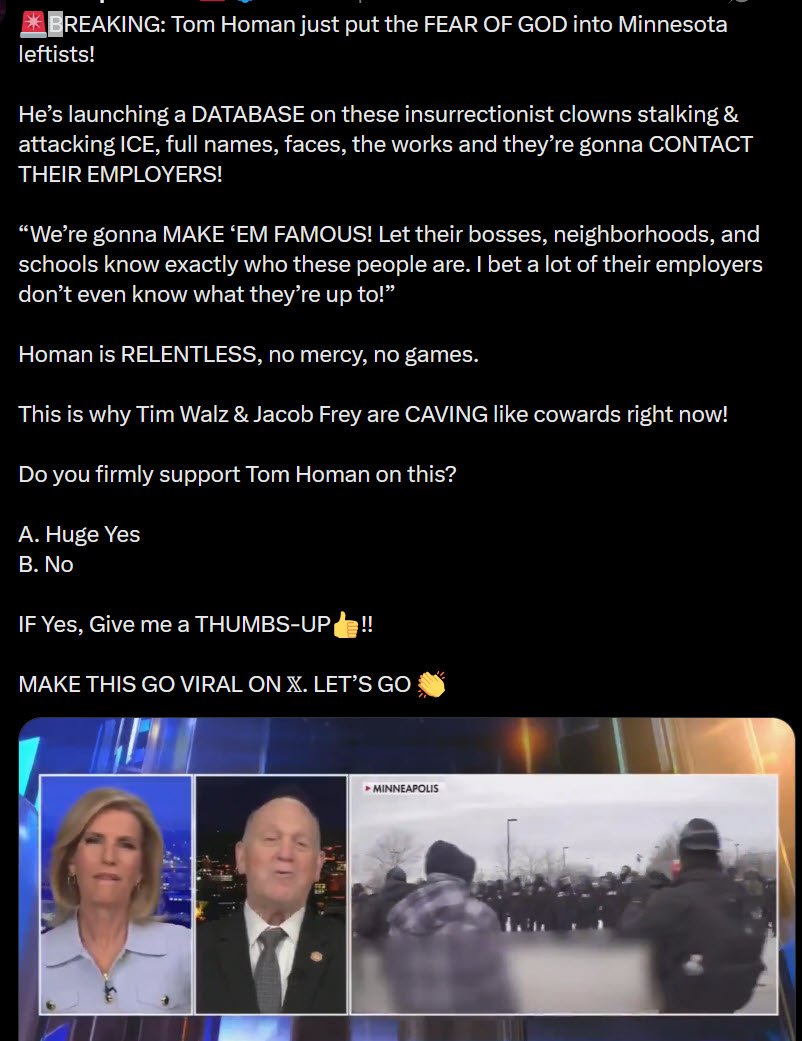
Direct use for identification: Bodycam footage captures video/audio of encounters. This can include faces of individuals at riots or protests if ICE agents are present (e.g., during disturbances at ICE facilities or anti-ICE actions). Still images from this footage can be used with facial recognition tools. ICE policy allows searches using facial recognition on still pictures derived from downloaded BWC video data.
Integration with broader surveillance: ICE heavily relies on facial recognition apps like Mobile Fortify (which scans faces via phones/cameras against government databases of 200+ million images) and tools like Clearview AI. Reports show ICE uses these to identify and track not just immigrants but also U.S. citizens protesting ICE operations. Photos/videos (including from bodycams or agents' devices) can feed into DHS systems like the Automated Targeting System (ATS), where non-matching photos of citizens are retained for watchlists and future use.
Context of riots/protests: In recent events (e.g., anti-ICE protests in places like Minneapolis or Chicago), agents have used cameras (body-worn or phone-based) during interactions with protesters. Officials have discussed creating databases of those arrested for interfering with operations (e.g., publicizing faces/names). While bodycams are primarily for accountability (e.g., documenting use of force), footage can support prosecutions, investigations, or additions to databases if individuals are deemed involved in unlawful activity.
Limitations and safeguards: DHS/ICE policy prohibits using BWCs solely to record First Amendment-protected activities (e.g., peaceful protests). However, if a riot or criminal disturbance occurs, activation is required, and footage can be used for enforcement. Retention follows records schedules, and evidentiary material is preserved longer.
In practice, bodycam footage serves more as corroborating evidence or a source for extracting images/biometrics, which then integrate into larger DHS/FBI databases (e.g., biometrics, criminal records) or tools like Palantir for tracking. Direct examples of bodycam footage building a "rioter database" are not widespread in public reports (unlike phone-based facial scans or social media monitoring), but the capability exists, especially amid expanded surveillance during immigration enforcement surges involving protests.This raises privacy and civil liberties concerns from groups like the ACLU and EFF, who argue it chills free speech and enables broad retention of citizen data.
Where is the Technology
Feature
Axon Body 3
Axon Flex 2
Design and Mounting
Compact, rectangular unit (approx. 3.5" x 2.5" x 1"); mounts on outer carrier, vest, or clothing via clips or magnets. Rugged, IP67-rated for dust/water resistance.
Modular with separate camera head connected by cord; helmet, hat, or shoulder mounts. Cord allows flexible positioning but prone to disconnection in dynamic environments.
rand.org
Battery Life
Up to 12 hours of continuous use.
Similar 12-hour capacity, but corded design may affect mobility.
Storage Capacity
Onboard storage for extended recording (e.g., full shift); encrypted.
Comparable onboard storage; focuses on tactical flexibility.
Video Resolution
480p minimum, configurable to 720p HD; 30 fps; H.264 compression.
720p HD; 30 fps; similar compression for efficiency.
Audio
High-quality microphone with noise reduction.
Integrated mic in controller unit.
Weight and Durability
Lightweight (~5 oz); drop-tested for field abuse.
Lighter camera head for helmet use; overall rugged but cord vulnerability noted in pilots.
rand.org
Additional Hardware
Docking stations for charging/upload; no shared units—individually assigned.
Similar docking; optional accessories like extended cords.
These specs ensure reliable first-person perspective capture, with pre-event buffering (30 seconds of video, no audio) to record prior to manual activation.
dhs.gov
Cameras include activation indicators (e.g., lights/sounds) for transparency.Software, Integration, and Data ManagementICE BWCs integrate with Axon's Evidence.com, a FedRAMP-certified cloud platform for storage and management.
rand.org
Key software features include:
Upload and Sync: Automatic via docking stations or USB to ICE laptops; hashing verifies integrity. Must occur within 24 hours post-operation (12 hours for critical incidents).
ice.gov
Mobile Apps: Real-time viewing (no storage on devices), device management (NFC/QR for inventory), and GPS locator (for officer safety only, not surveillance).
Redaction and Analysis: AI-assisted blurring of faces/plates; auto-transcription; keyword search. Redactions apply to copies, preserving originals.
Integrations: Links to ICE systems like Enforcement Integrated Database (EAGLE) and Investigative Case Management; compatible with task force partners' videos. Supports FOIA processing with exemptions.
Security: End-to-end encryption; audit trails log all access (date, time, purpose); role-based permissions. Vendor (Axon) has no routine data access.
Retention follows NARA schedules: 60 days for non-evidentiary, 3 years for potentially evidentiary, indefinite for litigation holds.
dhs.gov
Capabilities and ActivationBWCs capture audio/video during enforcement (e.g., arrests, disturbances) to document events objectively.
ice.gov
Activation is manual but required at activity start; deactivation when secure. Prohibitions include recording First Amendment activities solely, undercover ops, or in sensitive areas (e.g., courts, hospitals).Advanced capabilities:
Pre-buffer for context.
No live facial recognition (prohibited); still images from footage can feed into post-processing tools like Clearview AI.
mprnews.org
Training mode for simulations (PII redacted).
Limitations and EvaluationsRAND's pilot assessment found no major barriers to adoption but noted issues:
rand.org
Operational Challenges: Flex 2 cords disconnect easily; Body 3 bounces on loose clothing or interferes with vests. Slow uploads (~1 MB/s) burden logistics.
User Feedback: Concerns over FOIA releases exposing sensitive info; cognitive load in high-stress scenarios. Benefits include disproving false complaints (one pilot instance) and improved reporting/training.
Effectiveness: No significant changes in use-of-force or complaints due to low baselines; larger-scale deployment needed for stats.
Implementation: Training (1.5-2 days) essential; spares and home uploads recommended.
Analysis: Strengths, Weaknesses, and ImplicationsICE BWCs represent mature law enforcement tech, balancing documentation with privacy via encryption, audits, and prohibitions. Strengths include enhanced accountability (e.g., objective evidence in disputes) and integration with DHS ecosystems, potentially reducing misconduct allegations. However, weaknesses like hardware vulnerabilities and data management overhead could hinder field efficiency, especially in fast-paced ops. Privacy concerns persist, as footage can indirectly support surveillance (e.g., via stills for facial recognition), raising civil liberties issues from groups like the ACLU.
mprnews.org
Overall, the technology promotes trust but requires ongoing refinements in mounting, upload speed, and policy enforcement for optimal impact.