California and Newsome - Under Federal Investigations, Corruption, Fraud. and Civil Lawsuits
Segment #773
Gavin Newsom is the original flim-flam used car salesman who cares more about his hair and political future than he does California.

Why People are Moving Out of California
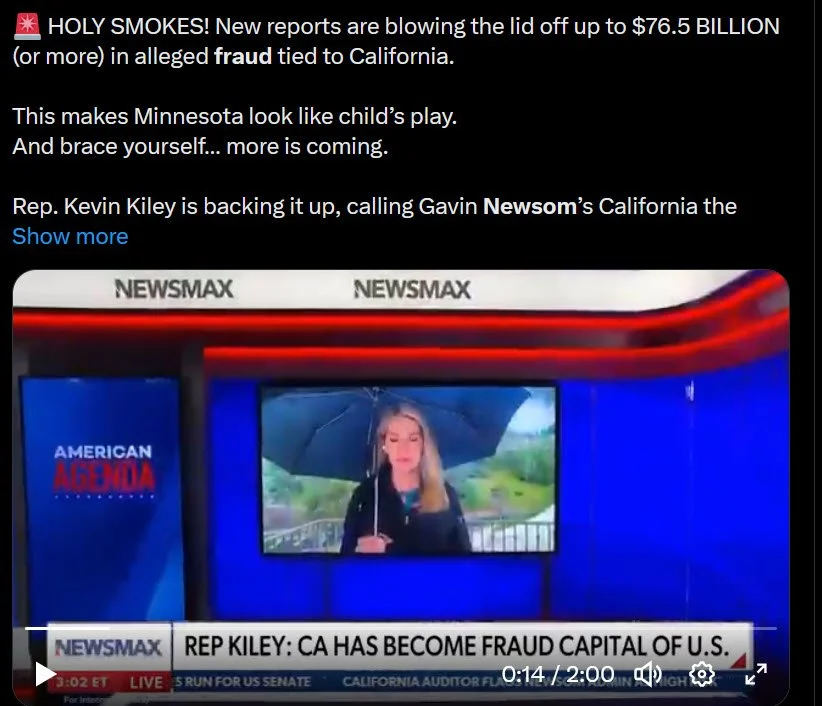
Here’s a current, factual, and high-level analysis of major ongoing and projected federal fraud investigations affecting California — including what is officially confirmed by DOJ/Federal prosecutors, where cases are headed, and areas where legal analysts expect future enforcement activity.
📌 1. Homelessness Fraud & Corruption Task Force (Central District of California)
Status: Active and expanding federal investigation (2025–2026)
Agencies involved: DOJ (Central District of California), FBI, HUD-OIG, IRS-CI, others (Department of Justice)
What’s Happening
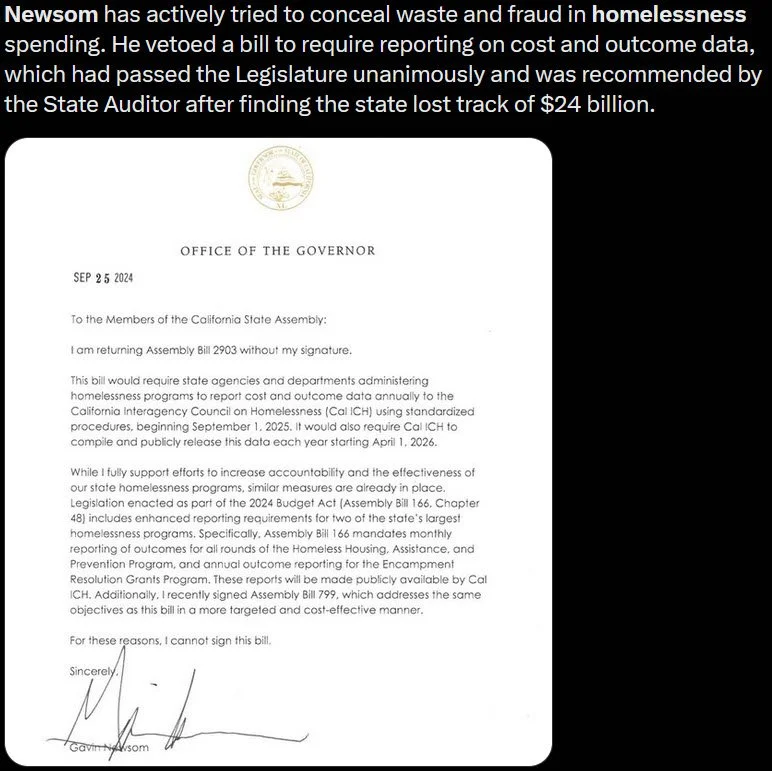
A federal task force was established in 2025 to investigate alleged fraud, waste, abuse, and corruption involving billions in homelessness funding allocated for housing and services. (Department of Justice)
Multiple criminal cases have already been announced, including:
Arrests and charges for misuse of homelessness funds tied to affordable housing developers and related schemes. (Department of Justice)
A separate federal criminal complaint charging an individual with alleged theft of over $23M intended for homeless services, with funds allegedly diverted to luxury personal use — a high-profile example of scope and severity. (IRS)
Why It Matters & Projection
DOJ leadership has framed this as a long-term priority, signaling more indictments and civil enforcement will follow as federal prosecutors trace flow of funds and uncover complex fraud structures.
Given the scale of homelessness spending (tens of billions in combined federal/state/local aid), investigators are expected to pursue expanded financial audits, subpoenas, and major fraud conspiracies in 2026–2027.
📌 2. Healthcare and Medicare/Medicaid Fraud
Status: Actively enforced nationwide, with strong focus on California
Lead agencies: DOJ Health Care Fraud Unit, HHS-OIG, FBI (Arnold & Porter)
What’s Happening
DOJ’s 2025 Fraud Section recorded a dramatic spike in healthcare fraud prosecutions — with approx. 194 defendants charged in 2025 alone, alleging more than $15B in intended losses, and an emphasis on schemes affecting Medicare and Medicaid. (Arnold & Porter)
In California, federal prosecutors continue to bring multiple indictments against medical professionals, billing fraud rings, and others who allegedly cheated federal health programs. (Department of Justice)
Focus Areas
False claims and improper Medicare/Medicaid billings
Telemedicine and diagnostic testing frauds
Durable Medical Equipment and supply scams
Fraudulent hospice and home-care billing practices
Projections
Healthcare fraud is expected to remain a top DOJ priority through 2026, with expanded data analytics, cross-agency cooperation, and increasingly sophisticated cases — especially as telehealth and digital billing systems continue to expand. (Arnold & Porter)
📌 3. Corporate & Securities Fraud Investigations
Status: Institutionalized as a strike force (since late 2023)
Agencies involved: DOJ Corporate & Securities Fraud Strike Force, FBI, SEC (Department of Justice)
What’s Happening
The DOJ has formalized a strike force focused on complex corporate wrongdoing, including accounting fraud, insider trading, and securities abuse. (Department of Justice)
Relevance to California
California’s economy includes many corporations, financial institutions, and tech companies that could fall under this enforcement lens in future cases involving:
Public company financial misstatements
Market manipulation
Corporate governance fraud
📌 4. Arson and Related Federal Probe’s Spillover Cases
While not strictly fraud, federal involvement in some fire-related cases (e.g., Palisades Fire arson charges) has intersected with fraud cases tied to FEMA relief and insurance claims — showing how disaster investigations can expand into financial fraud. (This has been publicly reported; federal arson indictments are separate from fraud allegations.) (As noted previously, but not formally a “fraud investigation into state government.”)
📊 Broader Context & Emerging Trends
🔹 Federal Anti-Fraud Push (2026)
The U.S. government is reportedly creating a new anti-fraud task force chaired by federal leadership, increasing scrutiny on Californian and national fraud cases — part of a broader enforcement trend under current DOJ leadership. (Reuters)
📍 Summary of Current Fraud Enforcement Areas
Enforcement Area Active Federal Focus Likelihood of Continued Action
Homelessness Fund Fraud✅ HighVery Likely
Healthcare/Medicare Fraud✅ Very HighVery Likely
Corporate/Securities Fraud❗ Moderate
IncreasingDisaster & Relief Fraud⚠ Moderate
OngoingPolitical/State Govt. Fraud Allegations⚠ Mostly AllegedLow (based on public evidence)
Pallisades Fire
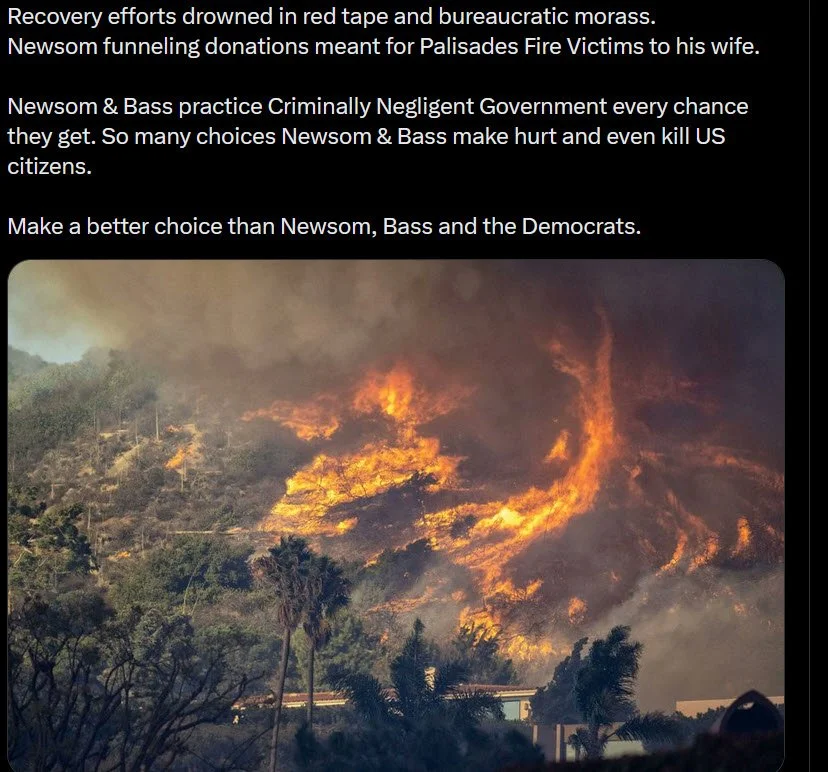
Here’s a detailed, evidence-based *overview of the federal and related investigations, controversies, and legal disputes surrounding the Palisades Fire — including what is confirmed, what’s under inquiry, and what remains alleged or still unfolding:
….. as Mayor of LA concerning the fires in LA and throughout California, and also during the LA riots, were dereliction of duty and Criminally Negligent Governing. 29 people died because of it. Over a year later fire victims STILL can't get permits to rebuild their homes! Brush not cleared in violation of State Law. Fire Department under staffed, unprepared and ill equipped. Reservoirs unbuilt in violation of State Law. Existing Reservoirs empty, no water in the fire hydrants. A long record of the homeless starting wildfires ignored. LA mayor partying overseas. CA governor partying and wrestling young boys in China as California burned.
🔎 1. Federal Criminal Investigation of the Fire’s Origin
Confirmed: A federal criminal investigation has focused on the origin and cause of the fire — not on broad government corruption.
A federal grand jury indicted a man, Jonathan Rinderknecht, on federal arson charges, alleging he intentionally started a small blaze in Pacific Palisades that later smoldered and reignited into the massive Palisades Fire. This prosecution is being handled by the U.S. Attorney’s Office for the Central District of California and involves ATF (Alcohol, Tobacco, Firearms and Explosives), LAPD and federal forestry investigators. (Department of Justice)
That criminal case is ongoing, including defense motions challenging search warrants and evidence gathering. (NBC Los Angeles)
Key point: This part of the investigation is a criminal arson case — and while connected with federal investigations into the fire, it does not mean there is a federal corruption or fraud probe of California state government itself.
🧾 2. Federal Subpoenas to LAFD — Communications and Records
Separate from the arson case, a federal grand jury subpoenaed communications (e.g., firefighter text messages) from the Los Angeles Fire Department (LAFD) related to the period when the fires broke out. That suggests federal prosecutors are examining internal communications and decisions about fire reporting and response — often a tool used in serious investigations. (ABC7 Los Angeles)
This does not necessarily equal a corruption indictment, but it does reflect oversight by federal authorities into:
What was reported about the fire’s development
How decisions were made by fire officials
Whether any rules or laws were violated in how officials handled documentation
So far no federal charges against LAFD officials or city leaders for corruption have been publicly filed, but the subpoena activity indicates at least some aspects of the fire response and reporting are under federal scrutiny.
🧠 3. Controversy Over the After-Action Report
One of the most widely discussed issues connected to Palisades has been the alteration of the after-action report that reviewed how the fire was handled:
Multiple news outlets have reported that city leadership — including concerns about legal liability — influenced editing of the LAFD’s official report to soften criticism of leadership decisions and firefighting shortcomings. (Los Angeles Times)
The author of the original LAFD report is reported to have refused to endorse or publicly back the final version, calling the edits “highly unprofessional” because they removed or toned down key findings about what went wrong. (Los Angeles Times)
LAFD leadership acknowledged publicly that earlier drafts had been “watered down” in ways that reduced explicit criticism of department decisions during the fire. (Reddit)
Why this matters: While this isn’t in itself a federal corruption indictment, it raises serious accountability questions about whether fire department and city leadership acted transparently, and whether the official narrative was shaped to protect reputations rather than reflect facts. Federal prosecutors, through grand jury subpoenas, may be interested in these changes as part of a broader inquiry into how the incident was documented and presented in potential litigation or federal relief contexts.
⚖️ 4. Lawsuits and Civil Allegations About Mismanagement
On the civil side, fire victims and property owners have filed lawsuits alleging:
Municipal negligence and failure to enforce safety rules or adequately address fire hazards
Power line failures, empty reservoirs, and lapses in emergency response readiness
Attempts by certain agencies to deflect or downplay responsibility in official reports
One major amended complaint in state court (civil litigation) alleges things like:
An empty Santa Ynez Reservoir at a critical moment
LA Department of Water and Power (LADWP) equipment possibly starting multiple fires
The city ignoring its own brush clearance ordinances
Efforts to cover up aspects of the city’s role in the fire’s spread and damage. (PR Newswire)
These allegations are civil, not federal, and are being pursued as part of private litigation seeking damages. They go beyond what the federal prosecutors have publicly charged.
🏛️ 5. Congressional Oversight Probe
In addition to federal DOJ activity, U.S. Senators launched a congressional review into the Palisades response — focusing on:
Emergency preparedness
Allocation and best use of wildfire funds
Whether fire resources and water sources were adequate
Why warnings about conditions were not acted on fully
This is an oversight inquiry rather than a criminal prosecution, but it underscores the level of scrutiny applied at the federal level. (Palisades News)
📌 Put Together: What’s Federal & What’s Not
Federal / Confirmed Investigations
Criminal arson prosecution of a suspect accused of starting the fire. (Department of Justice)
Grand jury subpoenas involving LAFD communications about the fire. (ABC7 Los Angeles)
FEMA fraud prosecution of individuals filing false relief claims related to wildfire damage. (Department of Justice)
Civil / Legal Scrutiny
Lawsuits alleging government negligence, altered records, and mismanagement. (PR Newswire)
Congressional oversight hearings and inquiries. (Palisades News)
Political and public accountability debates
Questions about whether city leadership influenced the official fire report. (Los Angeles Times)
Civil Lawsuits Against the State of California
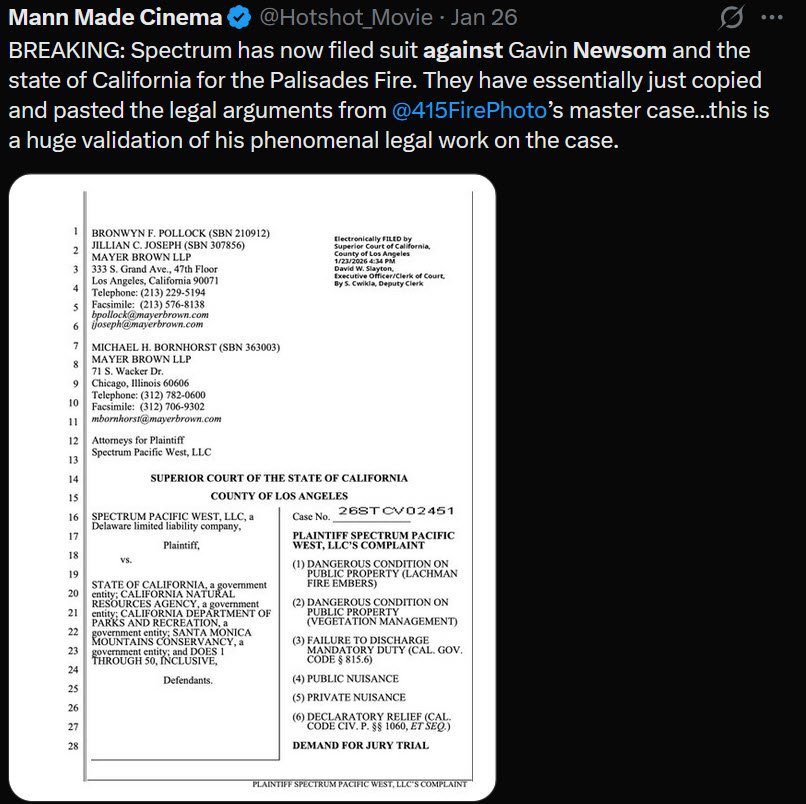
Here’s an in-depth, factual list of major civil lawsuits involving the State of California, its agencies, or state-level entities that allege fraud, corruption, or government misconduct — including those tied to the Palisades Fire litigation and other significant claims. (Note: “State of California” here includes agencies/ministries, not only the governor’s office.)
⚖️ 1. Grigsby, et al. v. City of Los Angeles & State Agencies (Palisades Fire Litigation)
What it is:
A large consolidated civil lawsuit on behalf of thousands of Palisades Fire victims (designated lead case 25STCV00832 in Los Angeles Superior Court). It has been amended to include new evidence and broader claims.
Allegations include:
Negligence and failures by state and local agencies (e.g., California State Parks) in monitoring prior fires and maintaining fire-prone lands.
Mismanagement of water infrastructure and power utilities that allegedly worsened the disaster.
Claims that certain agencies engaged in misrepresentations and misinformation after the fire to conceal responsibility. (PR Newswire)
Where it stands:
Active multi-plaintiff litigation seeking billions in damages. Plaintiffs are pushing claims of systemic failures, though specific fraud/corruption allegations in legal terms depend on proof of intent or deliberate concealment.
⚖️ 2. People v. False & Misleading Charities (California Attorney General Enforcement)
What it is:
In 2009, the California Department of Justice under then-AG Edmund Brown Jr. filed multiple civil enforcement actions against dozens of charities and telemarketers that falsely claimed to benefit police, firefighters or veterans.
Allegations included:
Conspiracy to defraud donors,
Deceptive business practices under California law,
False public documents and reporting violations. (California DOJ)
These cases weren’t “State of California vs. itself,” but state-government civil actions against private entities for fraud affecting Californians.
⚖️ 3. Paterno v. State of California (1986 Flood Disaster Suit)
What it was:
A 1980s civil lawsuit by residents of Linda, California, against the State for dangerous flood control failures that led to levee collapse and extensive property damage.
Allegation:
The State failed to maintain flood protection infrastructure — effectively a form of government misconduct and negligence. (Wikipedia)
Not a fraud claim per se, but it named the State as a defendant for failing to protect residents — precedent for government accountability litigation.
⚖️ 4. Franchise Tax Board of California v. Hyatt Litigation
What it’s about:
Not a fraud case against the State, but a taxpayer litigating against the State in Nevada courts over alleged harassment and improper audit conduct by the California Franchise Tax Board. (Wikipedia)
This case reached the U.S. Supreme Court and touched on constitutional limits on suing a state, but plaintiffs did not allege corruption or fraud as wrongdoing by California itself.
⚖️ 5. Claims Related to Wildfire Infrastructure and Government Liability
Victims of California wildfires — including the Palisades Fire and other 2025 fires — have filed large negligence and liability lawsuits against government and private entities:
Lawsuits against Southern California Edison and related utilities alleging failure to maintain facilities and comply with safety laws tied to wildfires, with plaintiffs also seeking mandated changes and damages (though these are often against utilities, not the State per se). (Reuters)
These suits sometimes name government agencies or challenge government oversight as part of broader tort claims.
📌 Additional Civil Litigation Themes (Not Necessarily State Lawsuits, but Relevant to Claims of Corruption/Fraud)
➤ Insurance and Fire-Related Class Actions
Property owners have sued insurers over alleged anti-competitive behavior after wildfires, claiming collusion and unfair practices — grounded in unfair competition, not direct government fraud. (Larson LLP)
➤ Civil Rights & Public Agency Misconduct Cases
While not fraud lawsuits against the State, there are major historic lawsuits alleging civil rights violations by California public bodies (e.g., Allen v. City of Oakland involving police misconduct). (Wikipedia)
🧠 Key Points on Fraud / Corruption Allegations Against California as Government Entity
No widely reported judgment or confirmed civil jury verdict directly holding the State of California liable for fraud or corruption itself in a manner that would legally establish state-wide misconduct — at least based on publicly available court filings and major news reporting. (Often allegations remain in litigation without final findings of fraud.)
Many civil suits (like the Palisades Fire victims’ suit) allege negligence, mismanagement, or concealment, which could form the basis of fraud claims if plaintiffs can show intentional concealment or intentional misrepresentation, but that requires discovery and trial proof.
California’s Attorney General enforces anti-fraud laws (e.g., via the California False Claims Act) and brings civil suits against private fraudsters, not its own state apparatus. (California DOJ)
🧠 Why These Civil Suits Matter
Civil litigation involving government entities can:
Seek restitution and damages for victims of alleged misconduct.
Uncover internal documents through discovery that may reveal intent, concealment, or misrepresentation.
Lead to policy reforms or injunctive court orders.
Potentially prompt parallel criminal investigations if evidence of corruption emerges.
For example, the Palisades Fire litigation — even before a court decides — can pressure agencies to disclose internal communications, which has already intersected with federal subpoenas and inquiries into fire response reporting.
California Mismanagement and Corruption
Here’s a detailed list of major, documented criticisms of California government budget mismanagement, fiscal waste, and corruption issues — based on audits, reporting, legislative analysis, and public fiscal reviews. These criticisms are about how taxpayer money is spent, how budgets are managed, and where oversight has failed:
📉 1. Chronic Budget Forecast Errors and Planning Mistakes
Phantom Surpluses & Revenue Forecast Failures
In recent years, California overstated projected revenues by hundreds of billions of dollars, creating a perceived “surplus” that drove expanded spending commitments. Later revisions showed revenue shortfalls of roughly $165 billion over four years, contributing to ongoing structural deficits. (CalMatters)
Critics argue this reflects poor budget forecasting and overly optimistic revenue estimates, leading to policies and commitments that are fiscally unsustainable. (CalMatters)
💸 2. Massive Waste, Misuse, and High-Risk Programs
High-Risk Audit Findings
The California State Auditor regularly flags state agencies for weaknesses that expose billions in taxpayer funds to waste, fraud, and mismanagement. A recent audit labeled eight state departments as high risk, particularly in areas like social services (CalFresh), unemployment benefits, and infrastructure spending. (The Next Gen Business)
Examples of waste cited:
High error rates in major public benefits programs like CalFresh/SNAP, above national averages. (The Next Gen Business)
Persistent vulnerabilities to fraud due to inadequate controls. (The Next Gen Business)
📊 3. Employment Development Department (EDD) Fraud & Mismanagement
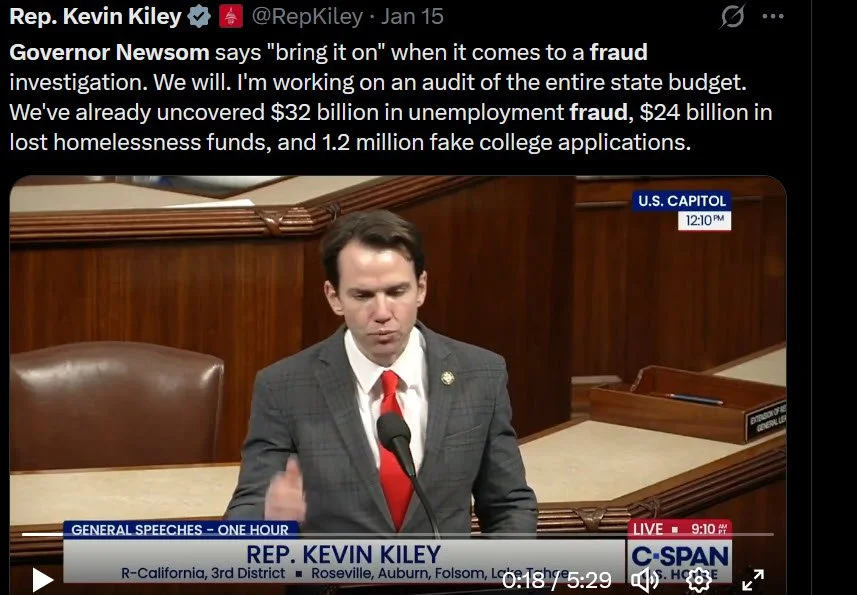
The EDD — the state agency administering unemployment benefits — became infamous for paying out tens of billions in fraudulent claims during COVID-19 due to outdated technology and inadequate anti-fraud controls. Even conservative analyses estimate over $30 billion in improper or fraudulent payments, far exceeding those recovered. (Hoover Institution)
Critics say this reflects years of weak oversight, reliance on ancient systems, and failure to implement basic safeguards, not just pandemic-related emergency strain. (Hoover Institution)
🚨 4. Failed or Wasteful Infrastructure Projects
California High-Speed Rail
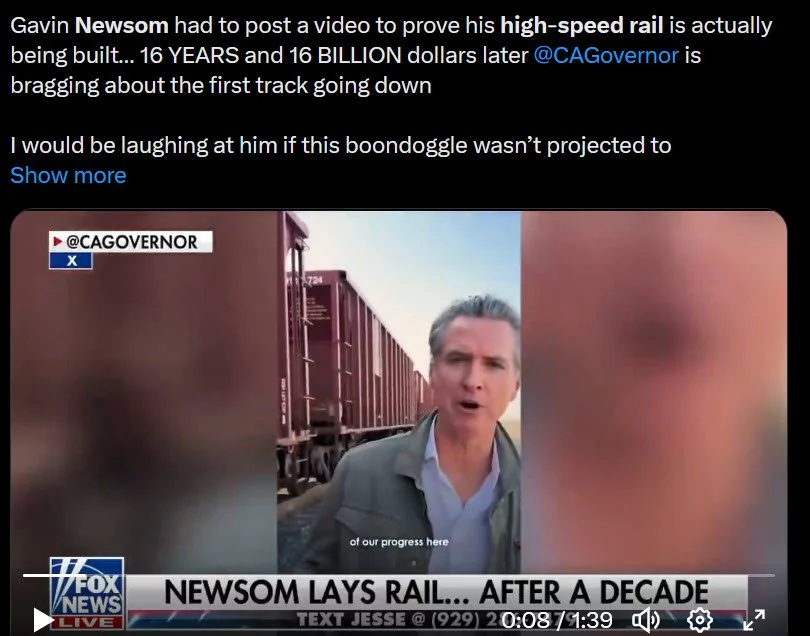
Once projected to cost ~$33 billion and complete by early 2020s, the high-speed rail project now carries estimated costs of $89 billion–$128 billion with no completed passenger segment yet. This has become a symbol of long-term cost overruns, unclear oversight, and poor planning. (Sandstone Asset Management)
Critics argue billions have been spent with little to show for it, illustrating ineffective management of major capital projects. (Sandstone Asset Management)
📱 5. Wasteful State Spending on Equipment and Technology
Audits uncovered millions wasted on unused devices, such as thousands of cellphones and hotspots purchased for remote work that remained idle for years — highlighting poor technology planning and inventory controls. (New York Post)
These kinds of avoidable expenditures undermine public trust in fiscal stewardship. (New York Post)
☎️ 6. Abandoned 911 System With Massive Cost Overruns
California spent nearly $450 million on a Next Generation 911 system that has now been scrapped due to implementation failures and operational issues. Lawmakers and emergency service leaders publicly condemned the project’s lack of budget discipline and transparency. (New York Post)
This has been cited as a case study in mismanagement and taxpayer waste on critical public safety infrastructure. (New York Post)
🏛️ 7. Mismanagement in County Fair System Oversight
A broad investigation found an array of misconduct, fraud, bribery, and misuse of funds among officials at multiple local county fairs — despite oversight by the state’s Department of Food and Agriculture. The probe revealed:
Misuse of public funds at numerous fairs
Inadequate state enforcement when issues arose
Prosecuted embezzlement and corruption cases among fair employees across several counties
Critics argue that state oversight failed to prevent or correct these abuses for years. (California County News)
📊 8. Institutional Weaknesses in Financial Controls
The state’s financial management system, Fi$Cal, has been in development for years and remains incomplete despite over a billion dollars in spending, delaying the state’s ability to produce reliable financial reports and a full “state checkbook.” (Forbes)
Poor financial integration and delayed audits reduce transparency and allow inefficiencies to persist. (Forbes)
🪪 9. Systemic Drivers of Budget Imbalance
Structural constraints — such as high dependency on volatile personal income tax revenue, rigid spending mandates (like education funding requirements), and frequent voter initiatives dictating budget allocations — limit flexibility and exacerbate instability. Academic analyses find that these institutional features contribute to recurring fiscal shortfalls. (SIEPR)
🧠 10. Broader Political and Public Trust Concerns
Fiscal problems sometimes intersect with political controversy and ethics issues:
Reports of state political staff facing federal fraud charges raise questions about ethics and fiduciary behavior in political offices (reported but not directly tied to state budgeting). (Reddit)
Public criticism surrounds spending priorities and budget decisions that appear disconnected from frontline service needs.