Blurring The Lines
Segment #1024
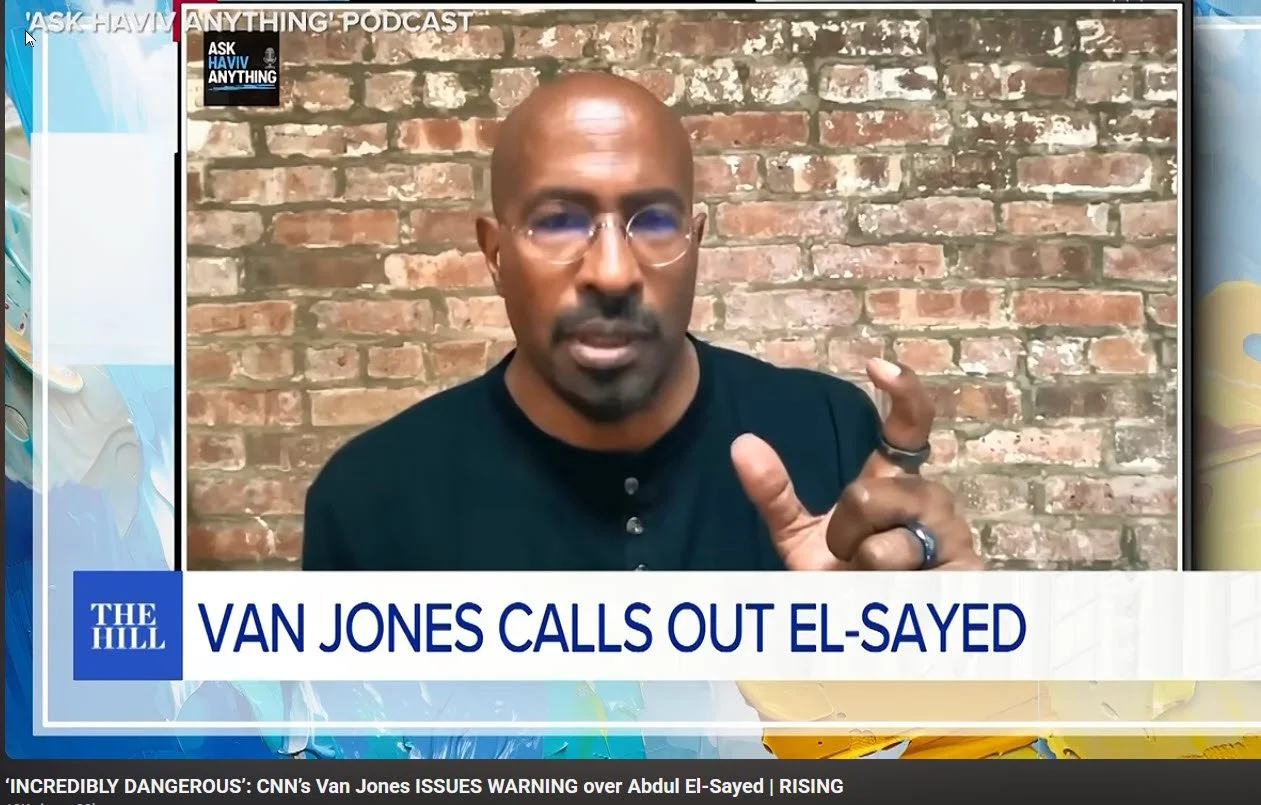
“DSA as a poison pill” thesis is politically plausible, but the most interesting part is not simply whether socialism is popular or unpopular. It is that DSA's growing influence may force Democrats to expose divisions they have previously been able to blur.

The September 1 House vote is a useful case study. The resolution specifically condemned socialism and DSA policy positions and passed 220–192; eight Democrats voted with Republicans and two voted present. (CBS News) The measure was deliberately constructed as a political wedge—it also incorporated support for Republican voter-ID legislation—so a Democratic "no" vote cannot fairly be interpreted simply as "I support socialism." Democrats themselves complained that Republicans had designed precisely that trap. (Axios)
But that's exactly why the eight Democratic yes votes matter politically.
The real danger to Democrats isn't eight votes. It's permission.
Those eight Democrats demonstrated that a Democrat can say, in effect:
There is a point at which the left goes too far, and I am willing to vote against my own party to say so.
That creates a potentially important precedent for Democrats representing competitive districts. And we're already seeing a related phenomenon: Jared Golden and Marie Gluesenkamp Perez broke with Democrats on a procedural vote this week, producing an extraordinary internal fight over whether Democratic leadership should punish members who cross the aisle. Centrists are warning that disciplining them could make the problem worse. (The Guardian)
That gets to the larger issue you're identifying.

Democrats increasingly have two electorates
There is an urban/progressive electorate in which democratic-socialist candidates can win primaries and where policies such as government health insurance, stronger labor power, aggressive housing intervention and redistribution can be attractive.
Then there are suburban, exurban, working-class and swing-district electorates where the word socialism can be much more problematic—particularly when Republicans attach it to policing, immigration, Israel/Gaza, government spending, nationalization or other culturally polarizing issues.
The DSA has demonstrated genuine electoral strength. Its candidates scored notable primary victories this year, and the organization has grown substantially. This isn't an imaginary Republican talking point. (Brookings)
But success in a Democratic primary and success in a competitive November electorate are very different things.
Reuters has already identified one particularly interesting fault line: Black Democratic voters. Younger Black voters appear more receptive to DSA candidates, while older Black voters tend to be more moderate, and bread-and-butter concerns such as housing, health care and living costs often outrank ideological issues. (Reuters)
And there is another problem for DSA: DSA itself is divided. Axios reports substantial internal conflict over AOC, the organization's direction and 2028, even as its electoral influence grows. (Axios)
So there are really divisions nested inside divisions:
DSA activists → progressive Democrats → mainstream liberals → establishment Democrats → Blue Dogs/centrists → vulnerable swing-district Democrats.
Republicans don't need voters to reject every policy advocated by the first two groups. They merely need to persuade enough voters that the first group is pulling the entire Democratic coalition farther left than those voters want to go.
That distinction is crucial.
Why this could become a Republican midterm weapon
Republicans have a significant problem of their own: voters are heavily focused on economic conditions, and current reporting indicates that some Republican campaign strategists actually doubt whether "socialism" by itself is an effective message. Reuters interviewed advisers in 11 competitive House races and found them divided over using the socialism attack; several would rather concentrate on economic issues. (Reuters)
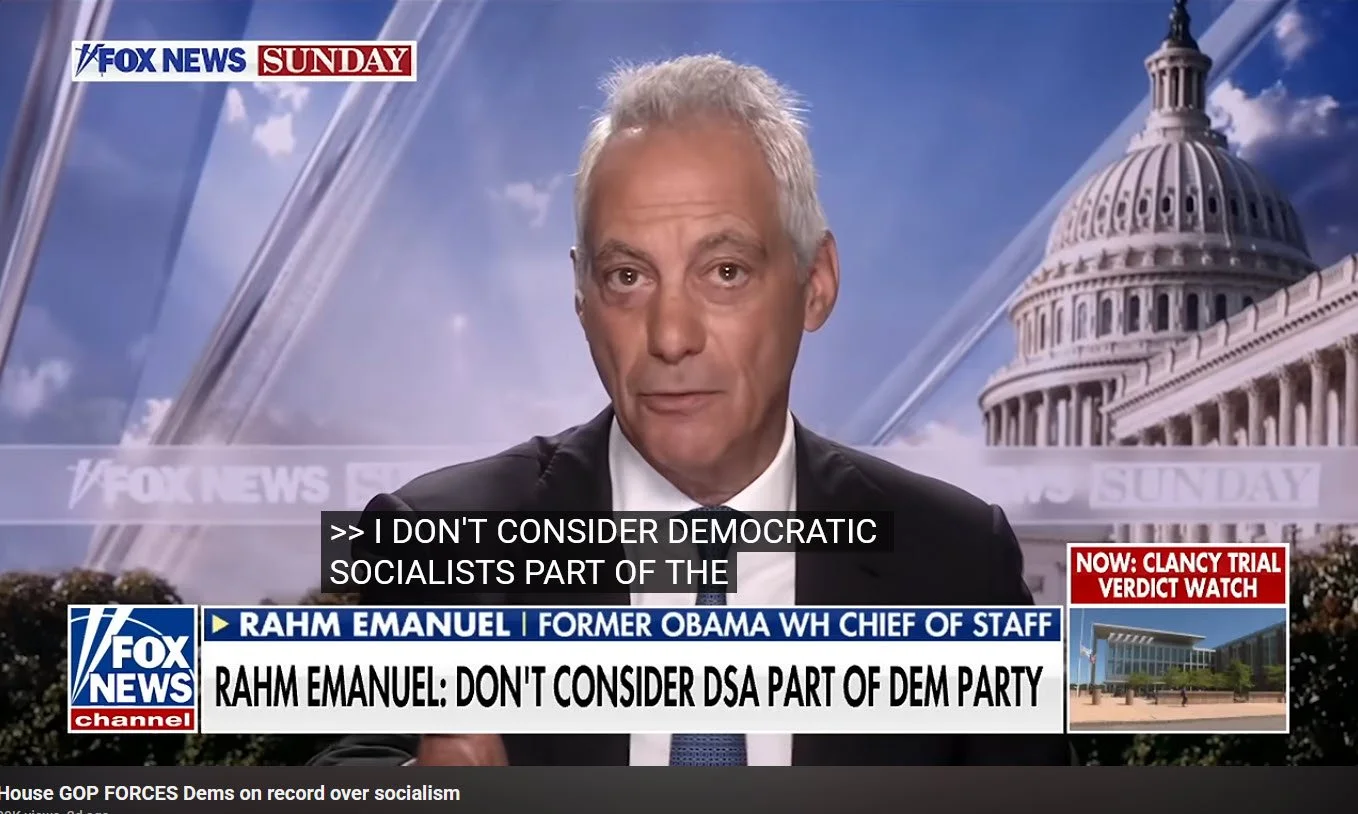
That skepticism makes sense.
Running an advertisement saying simply:
"DEMOCRATS ARE SOCIALISTS"
probably doesn't move many persuadable voters anymore.
A much more sophisticated attack would be:
"Your Democratic candidate isn't a socialist. But can he control the socialists in his own party?"
That is considerably harder to answer.
Republicans can then force votes on issues that expose differences between the factions.
And that creates a dilemma.
If a moderate Democrat votes with Republicans, progressive activists may accuse him of betrayal.
If he votes with Democratic leadership, Republicans can associate him with positions that may be unpopular in his district.
Either vote potentially costs him something.
That is the definition of an effective wedge issue.
The eight Democrats may therefore be more important than the 192
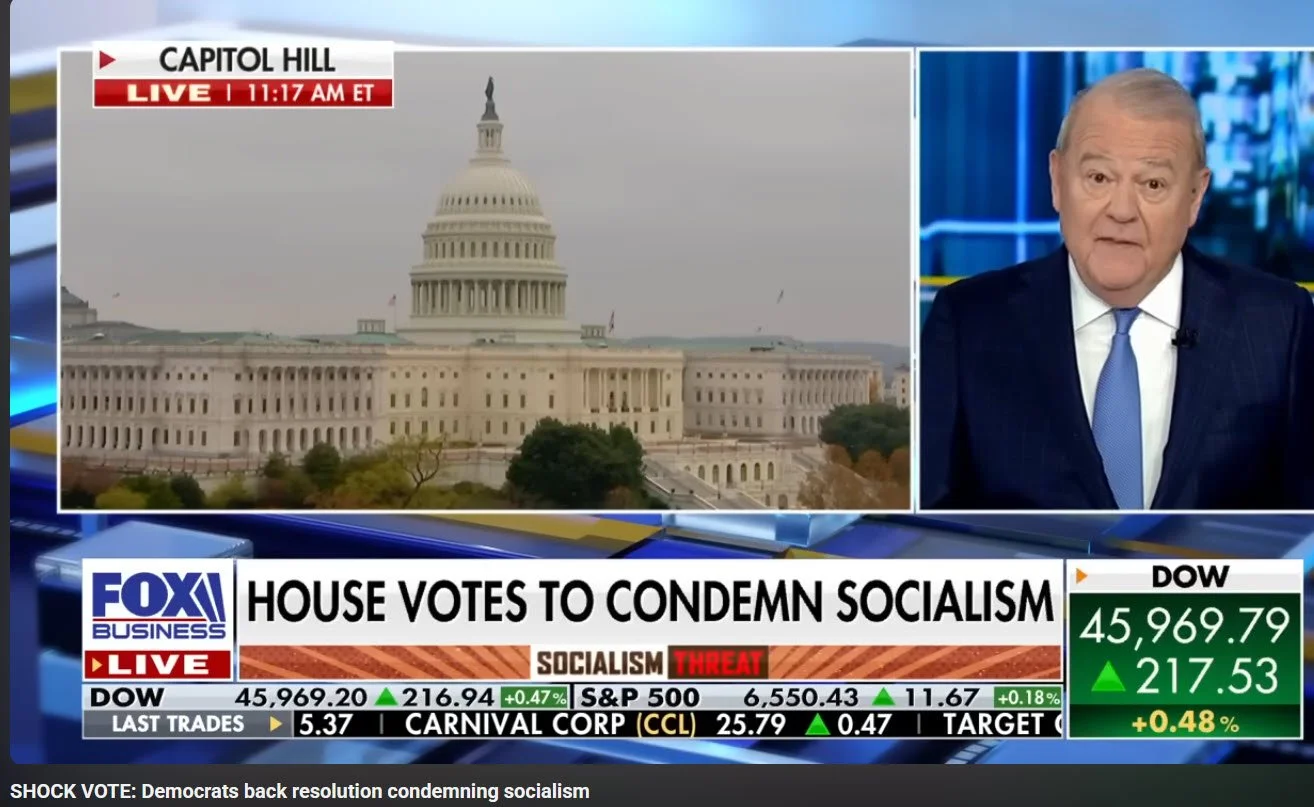
I would not make the argument that "192 Democrats voted for socialism." That's rhetorically tempting but analytically weak because the resolution bundled socialism with the SAVE Act. (Axios)
The more interesting argument is almost the opposite:
Why did eight Democrats decide that voting against their party was politically preferable to being recorded against this resolution?
That tells us something about where they believe their voters are.
And if Republicans continue introducing carefully selected resolutions and legislation that separate progressive priorities from median swing-district opinion, eight could become 15, 25 or 40.
At that point something much more consequential happens.
You begin creating an informal center-left/center-right governing bloc capable of occasionally overriding the ideological wings of both parties.
That possibility was actually anticipated before this vote. Former Democratic congressional staffer Julian Epstein argued that Republicans should force exactly this sort of vote in order to make moderate Democrats choose between DSA and a more centrist governing coalition. (New York Post)
But there is a major danger for Republicans
Republicans could badly overplay this.
Many individual policies commonly associated with democratic socialism are considerably more popular than the word socialism. Voters can simultaneously dislike "socialism" and support Medicare, Social Security, government negotiation of drug prices, stronger labor protections or expanded health benefits.
And current reporting suggests that cost of living remains much more important to voters than ideological terminology. (AP News)
So Republicans probably cannot win the midterms by yelling socialist.
They could benefit substantially, however, by making DSA the answer to a different question:
"Who will actually control the Democratic Party if Democrats win Congress?"
That is where I think your poison-pill hypothesis becomes considerably stronger.
The DSA doesn't have to take over the Democratic Party to hurt Democrats electorally. It only has to become powerful enough that Democratic candidates in competitive districts are repeatedly required to answer for positions they don't personally hold.
And there's an irony here. The stronger DSA becomes in safe Democratic districts, the greater the potential problem becomes for Democrats in unsafe Democratic districts.
A DSA candidate can win overwhelmingly in New York, Chicago or another deep-blue constituency without threatening Democratic control of that seat. But Republicans can then take that candidate's statements and positions and put them into advertisements hundreds of miles away against a completely different Democrat running in a 50–50 district.
That is the poison-pill mechanism.
The September vote may therefore be less significant as a referendum on socialism than as an early indication that some Democrats have recognized this vulnerability and are beginning to establish political distance from their own left flank.