
Bari Weiss Pulls 60 Minutes CECOT Story
Segment #717
Background on the Controversy Involving Bari Weiss and the "60 Minutes" Segment on El Salvador's PrisonsIn December 2025, a major controversy erupted at CBS News when a planned "60 Minutes" investigative segment titled "Inside CECOT" was abruptly pulled just hours before its scheduled broadcast on December 21. The segment, reported by veteran correspondent Sharyn Alfonsi, focused on El Salvador's Centro de Confinamiento del Terrorismo (CECOT)—a notorious maximum-security "mega-prison" known for harsh conditions and allegations of abuse and torture.Key Context: CECOT and U.S. Involvement
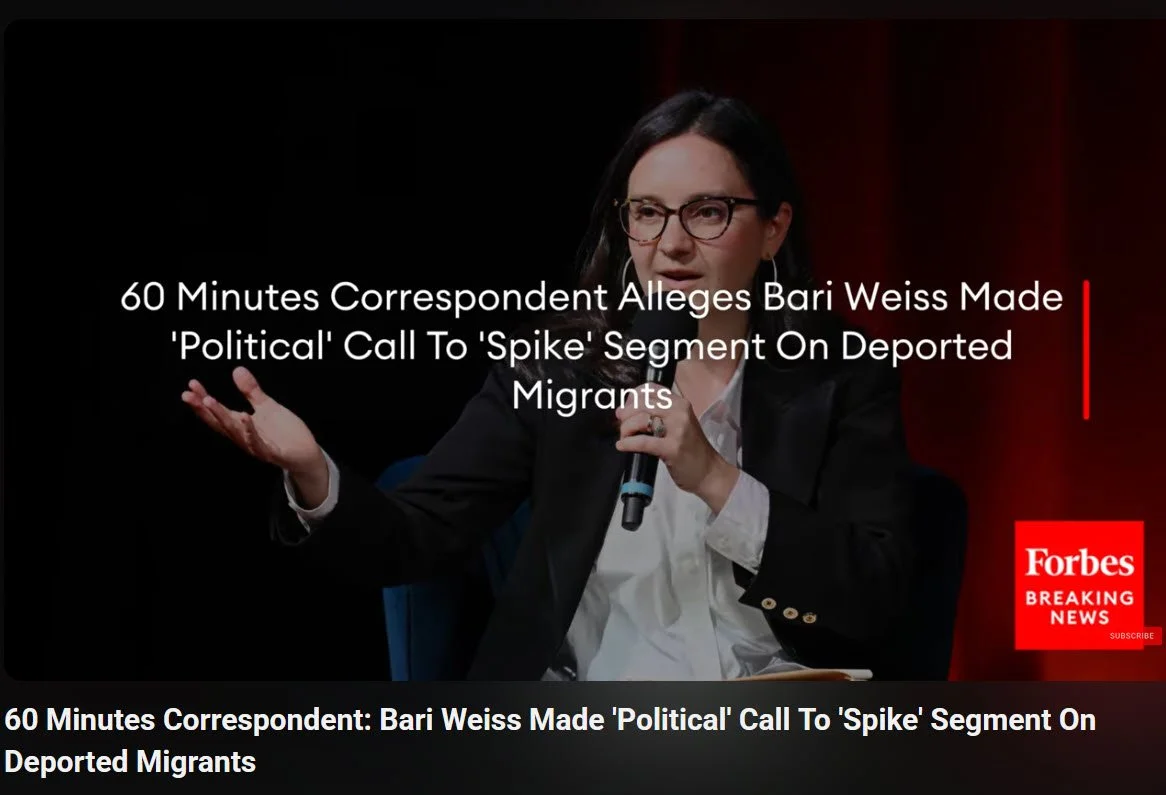
CBS News on Sunday pulled a segment from “60 Minutes” on the condition of a maximum-security prison in El Salvador, which houses hundreds of Venezuelan migrants deported from the U.S., in a move that comes just weeks after President Donald Trump complained about another segment of the show, and said CBS had “gotten WORSE” after being acquired by Skydance Media.
CECOT is part of El Salvador President Nayib Bukele's aggressive anti-gang crackdown, housing tens of thousands in overcrowded, isolated cells with minimal rights.
In 2025, the Trump administration deported hundreds of Venezuelan individuals (accused of gang ties, often without full due process) to CECOT under a deal with El Salvador, paying millions to house them.
Human rights groups (e.g., Human Rights Watch) have documented widespread abuses, including torture, incommunicado detention, and deaths in custody. Many deportees were later released and described "brutal and torturous" conditions.
The story was a follow-up to earlier "60 Minutes" reporting and included interviews with released deportees.
Bari Weiss's Role and the Decision to Pull the Segment
Bari Weiss, founder of The Free Press (acquired by Skydance Media, which took over Paramount/CBS), was appointed CBS News Editor-in-Chief in October 2025—a move criticized for her lack of broadcast experience and perceived center-right leanings.
Weiss personally intervened, requesting significant changes and ultimately spiking the segment on December 20 (Saturday before air).
Her stated reasons (per internal remarks and statements):
The story "wasn't ready" and needed more reporting.
It didn't "advance the ball" beyond prior coverage (e.g., by The New York Times).
Lacked "critical voices" (e.g., Trump administration response; she suggested interviewing officials like Stephen Miller).
Objections to terminology (preferring "illegal immigrants" over "migrants," though many deportees had pending asylum claims).
CBS promoted the segment heavily (press releases, trailers) before pulling it, announcing a delay "for additional reporting." Promos were later removed.
Backlash and Accusations
Internal outcry: Alfonsi emailed colleagues calling it a "political" decision, not editorial, warning of "corporate censorship" and damage to "60 Minutes'" reputation. She noted the story passed rigorous legal and standards checks.
Some staff threatened to quit; the executive producer stood by the reporting but complied.
External criticism (from left-leaning outlets like NPR, The Guardian, NYT, CNN):
Accusations of capitulating to Trump administration pressure (especially after Trump's recent complaints about CBS coverage).
Fears Weiss is shifting CBS toward conservative bias or self-censorship on Trump-critical stories.
Defenses (from right-leaning sources like Daily Wire, Fox News):
Highlighted potential bias in the original segment and praised Weiss for ensuring balance/context.
No evidence emerged of direct external pressure on Weiss, but the timing (amid Trump's second term and CBS ownership changes) fueled speculation. Weiss maintained it was standard editorial practice. The segment was postponed indefinitely, with CBS saying it would air "when ready."This incident highlighted tensions over editorial independence at CBS under new leadership, with polarized views: critics see it as suppression of accountability journalism, while supporters view it as correcting one-sided reporting. No prior reports linked Weiss personally to advocating for or against Bukele's prisons before this.
Maybe Signs That Weiss is Bringing CBS Back to the Center and Away from Left Leaning Bias
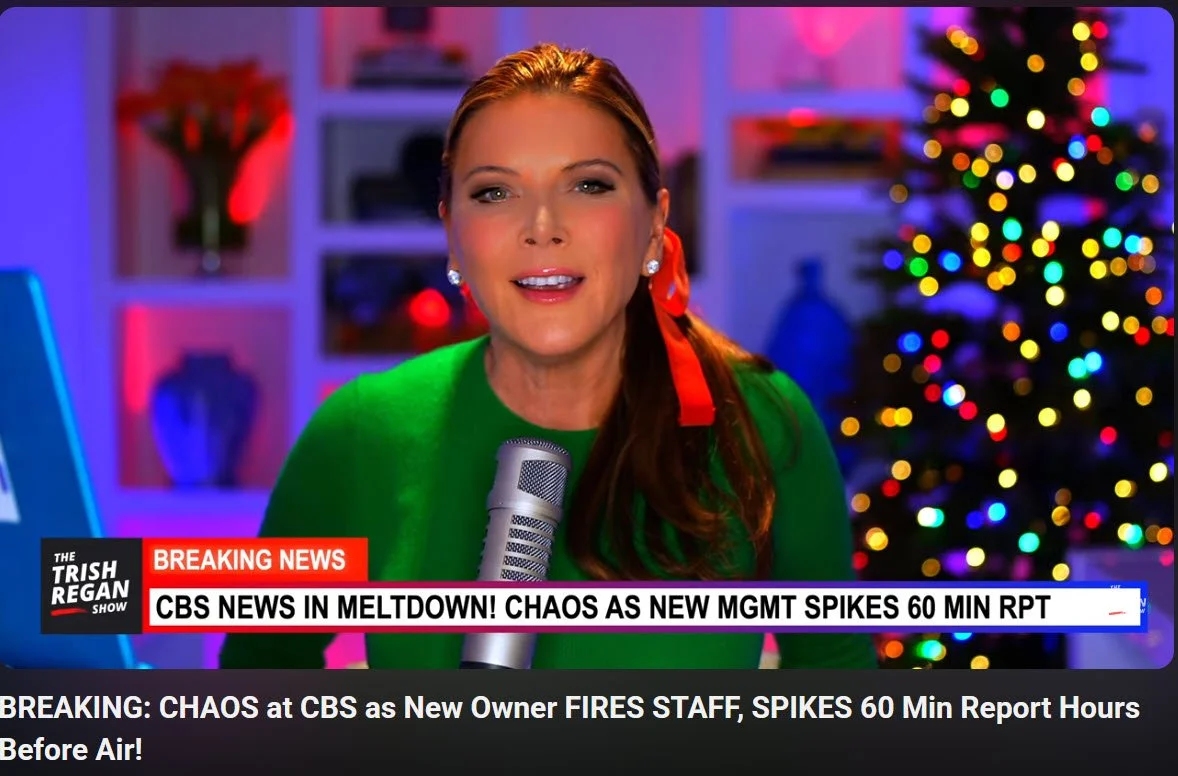
The anchors of the CBS Evening News have signed off, 60 Minutes is in open revolt, and internal chaos is spilling into public view as the network struggles to survive relevance in the Trump era. At the heart of the latest meltdown: a 60 Minutes story pulled after failing to include comment from the Trump administration — igniting fury among CBS reporters and producers already furious with new leadership and Paramount’s direction. Today, Trish Regan breaks down the harsh reality facing legacy media: the power has shifted — and they know it.
Bari Weiss's Editorial Approach at CBS News (as of December 22, 2025)The high-profile controversy over the pulled "60 Minutes" segment on El Salvador's CECOT prison is the primary example of Bari Weiss's editorial decision-making since becoming CBS News Editor-in-Chief in October 2025. There are no reports of other stories being pulled or significantly edited under her leadership in this short timeframe.Weiss's Stated Reasons for the DecisionWeiss has consistently framed her intervention as a push for higher journalistic standards and more substantive reporting, not political bias:
She told staff the segment "wasn't ready" and needed "additional reporting" to include more context, critical voices (e.g., on-camera responses from Trump administration officials like Stephen Miller), and to "advance the ball" beyond existing coverage.
In internal communications and public statements, she emphasized that stories must be "the best they can be," with balanced perspectives and sufficient data/context.
She argued that government silence (refusal to comment on camera) isn't a veto but that "60 Minutes" should strive for principals on record, especially for powerful testimony of abuse.
This aligns with her broader mandate upon joining CBS: to restore trust by delivering "balanced and fact-based" news, addressing perceptions of mainstream media bias.Criticisms and Perceptions of Bias CorrectionMany internal staff (including correspondent Sharyn Alfonsi) and external observers view the move differently:
Alfonsi called it a "political" decision, noting the story had passed rigorous legal/standards reviews and that administration refusals to comment shouldn't kill it.
Critics (from outlets like NPR, NYT, CNN, The Atlantic) accuse Weiss of self-censorship or capitulating to Trump administration pressure, especially given the timing (amid Trump's complaints about CBS coverage) and her specific objections (e.g., preferring "illegal immigrants" over "migrants").
Some see it as an effort to pull away from perceived left-leaning bias at legacy outlets like CBS, by enforcing more "balance" on stories critical of Trump policies—potentially tilting toward center-right viewpoints.
Is It Demanding More Data/Substantiation or Correcting Bias?It's both, depending on perspective:
Demanding more substantiation: Weiss explicitly requested more reporting, context, data consistency, and opposing voices to strengthen the piece. Supporters (including some conservative commentators) praise this as correcting one-sided reporting.
Pulling away from left-leaning bias: The segment was critical of a Trump policy; her changes focused on amplifying the administration's side. Given her background (critiquing "woke" culture and mainstream media liberalism via The Free Press), many interpret this as shifting CBS toward neutrality—or conservatism.
No evidence has emerged of direct White House pressure on Weiss, but the optics (new ownership aligned with Trump allies, recent CBS-Trump settlement) fuel speculation. Weiss has defended it purely as editorial rigor, insisting viewers come first.This incident has heightened tensions at CBS, with reports of staff distress and threats to quit, highlighting ongoing culture clashes under her leadership. The segment remains postponed indefinitely.
Did the Trump Adminsitration Go On Record as Refusing Comment.
No direct statements from the Trump administration confirming or denying the refusal to comment have been reported as of December 22, 2025, but the consistency across these sources (CNN, Axios, NPR, BBC, and NBC0—based on leaks, internal emails, and statements from Alfonsi—provides strong substantiation. If new details emerge, this could evolve, but current left leaning reporting supports the account.