
Segment #1072
October 29, 2026
An October 28 New York Times investigation exposed an alleged coordinated effort by political operatives associated with Democratic Senate candidate Mary Peltola to manipulate Alaska's election by recruiting another candidate named Dan Sullivan to run against incumbent Republican Senator Dan Sullivan.
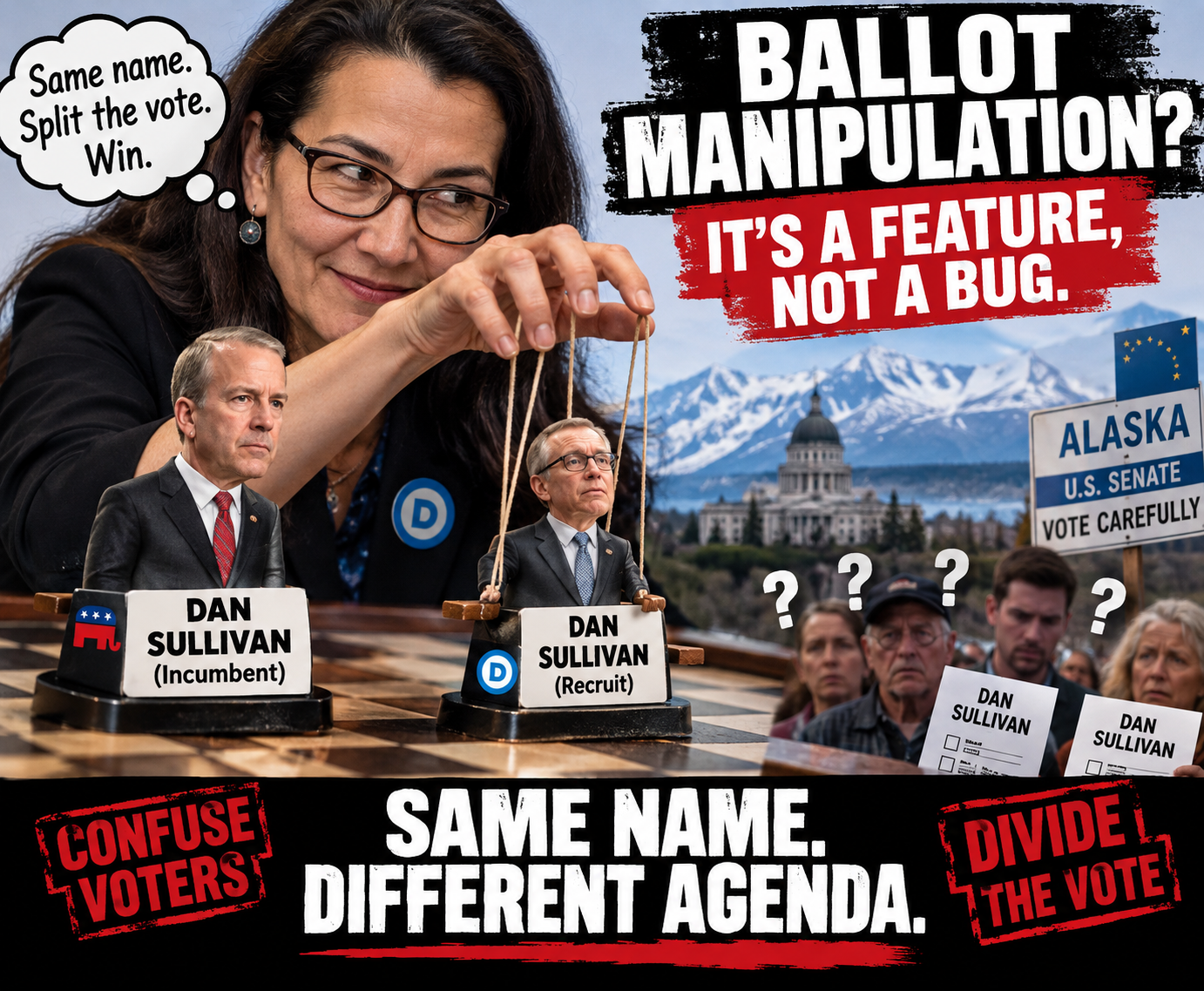
The reported objective was to confuse voters, divide the Republican vote, and improve Peltola's chances of winning.
The investigation cited text messages, documents, and interviews implicating campaign-connected operatives and individuals associated with the Democratic Senatorial Campaign Committee (DSCC).
Individuals Facing Potential Scrutiny
Mary Peltola: Former campaign manager Elisa Rios reportedly stated that Peltola knew about the operation. Peltola's precise involvement remains disputed.
Anton McParland: Former Peltola chief of staff reportedly involved in recruitment communications.
Andrew Piatt: DSCC campaigns director reportedly connected to discussions about the operation.
Jerid Kurtz: Political operative reportedly involved in recruiting candidates, including allegedly using another name.
DSCC leadership: Questions remain about authorization, financing, and knowledge of the operation.
Potential Federal and State Legal Actions
The Justice Department, FBI, Federal Election Commission, and Alaska authorities could examine several possible violations:
Campaign-finance violations: Illegal contributions, prohibited coordination with independent expenditure groups, or concealed payments.
Election misconduct: Violations of Alaska election statutes involving false filings or other specifically prohibited conduct.
Conspiracy (18 U.S.C. § 371): An agreement to commit a federal offense or defraud the United States.
False statements (18 U.S.C. § 1001): Knowingly false, material statements within federal jurisdiction.
Perjury: Knowingly false, material sworn testimony in qualifying proceedings.
Civil election litigation: Challenges involving election administration, certification, or the legality of specific conduct.
Recruiting a namesake candidate is not automatically criminal. Prosecution requires evidence establishing the elements of a specific offense.
Additional Peltola Controversies
Separate reporting has raised questions about Peltola's conduct and management:
Allegations from former staff members of verbal abuse, intimidation, and physical mistreatment.
Reported offensive communications, including derogatory language.
A disturbing reported text message concerning a Planned Parenthood board member.
A Republican-filed FEC complaint questioning more than $100,000 in campaign expenditures, including alleged personal use.
Internal campaign turmoil and conflicting statements concerning the ballot-recruitment operation.
These allegations have been disputed in whole or in part, and the campaign-finance complaint does not establish wrongdoing.
What Could Happen Next?
The Justice Department has already pursued federal civil litigation concerning the election. Further investigation could focus on communications, payments, financial disclosures, and official statements.
If investigators establish deliberate violations of federal or Alaska law, individuals could face civil penalties or criminal charges. Serious, willful campaign-finance violations can carry criminal consequences, including imprisonment.
However, no criminal liability has been established against Peltola or the named operatives.
Conclusion
The central issue is whether Democratic political operatives merely exploited election rules or crossed the line into unlawful conduct.
The reported recruitment of a second Dan Sullivan raises substantial questions about deliberate voter confusion and the integrity of Alaska's election.
The decisive evidence will be who authorized the operation, who financed it, what was disclosed, and whether any official filings or statements were unlawful.
Political manipulation may be evident from the reported strategy. Criminal accountability will depend on proving specific violations of law.
Separate confirmed facts from allegationsClarify the election-law analysis