
Germany is Shutting Down the Borders
Segment #1031
Yes. Germany has moved sharply to the right on immigration, asylum, deportation and welfare—but there are two different developments that are easy to conflate.
The biggest political shock came this past weekend in Saxony-Anhalt, where the anti-immigration Alternative for Germany (AfD) won 43.8% of the vote, more than doubling its previous result and coming close to an outright majority. It was the AfD's strongest state-election performance ever. The party is also polling strongly elsewhere, and an August national ZDF poll put it at 27%, versus 22% for the CDU/CSU. (AP News)
If the AfD succeeds in actually taking control of Saxony-Anhalt, its program is substantially along the lines you're describing. It proposes a state-level deportation offensive, a special task force to accelerate removals, tighter asylum policy, elimination of some integration programs, and a much more restrictive approach to immigration generally. Nationally, the AfD has also proposed restricting access to social benefits and preventing what it calls immigration into Germany's welfare system. (Reuters)
But an important distinction is that the AfD has not taken control of Germany's federal government. Chancellor Friedrich Merz's center-right CDU/CSU leads the federal government and continues to refuse cooperation with the AfD. In fact, Merz attacked the AfD in parliament today over its much broader concept of "remigration." (Reuters)
At the same time, Merz's government itself has already moved considerably to the right on immigration. According to the CDU's accounting in parliament, asylum applications have fallen about 60%; the government has suspended family reunification for people with subsidiary protection, ended voluntary admission programs, abolished accelerated "turbo-naturalization," expanded the use of safe-country designations, and resumed/expanded deportations including to Afghanistan. Merz said today that there are people without a permanent right to remain who should be deported, while drawing a sharp distinction between them and legal, working, integrated immigrants. (Deutscher Bundestag)
So I think the larger story is even more significant than simply "the German right may take over." Germany's political center of gravity on immigration is shifting. AfD is pulling voters toward a much harder position, while the governing CDU has itself tightened immigration and asylum policy in an effort to regain those voters. The unanswered question is whether this satisfies the electorate or simply legitimizes the issue and drives still more voters toward AfD. September's additional state elections should give us considerably more evidence.
I can also compare Germany, Britain, France, Italy and the Netherlands and show just how far Europe's immigration politics have moved to the right since 2015.
Europe

Across all five countries, the direction since 2015 is unmistakable: immigration policy has moved substantially to the right, even where right-populist parties are not governing. The clearest evidence is that mainstream parties have adopted policies—faster removals, tighter asylum rules, stronger borders and narrower welfare eligibility—that would have been politically much harder to enact a decade ago. The EU itself has now moved in the same direction, with its new migration pact emphasizing stricter border controls, faster asylum processing and increased deportations. (Reuters)
GermanyVery strong rightward shift. AfD just won nearly 44% in Saxony-Anhalt and is trying to form the first AfD-led state government.AfD proposes a dedicated deportation task force and faster removals. Merz's CDU-led federal government has also tightened asylum and removal policy, although it rejects AfD's broader “remigration” concept.AfD favors eliminating some integration support; the broader German welfare state remains largely intact.Potentially the biggest political breakthrough of 2026. AfD has not taken federal power, but immigration politics have changed dramatically. (Reuters)
Britain Reform UK has transformed immigration politics and remains competitive with the governing Labour Party.Reform proposes much tougher deportation and border enforcement; Farage and France's RN have even announced a prospective agreement to return Channel migrants. Current British governments have also tried to accelerate removals.Reform has gone further economically, proposing £50 billion in welfare reductions, although these are not presently government policy.Rightward pressure is enormous, but Reform does not yet control Westminster. (Reuters)
France National Rally has moved from political fringe to a genuine contender for national power; Marine Le Pen has been leading in presidential polling reported by Reuters.RN says it would tighten borders and accelerate repatriations. Immigration, citizenship, security and assimilation are now central issues across French politics.RN historically favors protecting many benefits for French citizens while restricting access for some foreigners rather than simply abolishing welfare.France may be Europe's next major political turning point, with the presidential election due in 2027. (Reuters)
Italy The transformation has already occurred: Giorgia Meloni's right-wing coalition has governed since October 2022.Government tightened asylum and anti-smuggling laws, expanded repatriations, reached migration agreements with North African governments and pursued offshore detention/repatriation facilities in Albania.Meloni abolished the broad Citizens' Income program and replaced it with more restrictive benefits and tougher work requirements.Italy is the best example of rightward immigration politics becoming actual government policy. Irregular arrivals fell from 157,651 in 2023 to 66,316 in 2025. (Reuters)
Netherlands Dutch politics also shifted sharply right after Geert Wilders' PVV became the largest party in the 2023 election, although coalition instability has complicated implementation.The debate has centered on tougher asylum limits, border control and removals.Dutch proposals have generally focused on restricting migrant eligibility and integration obligations rather than dismantling the welfare state.Politically rightward, but less stable and less successful in implementation than Italy.
Sweden One further country deserves to be added: Sweden. It was once among Europe's most welcoming states. Its current right-supported government has tightened residency and citizenship requirements and is now offering some non-EU immigrants as much as 350,000 Swedish kronor—roughly $37,000—to voluntarily return to their countries of origin. That may be the clearest demonstration of how dramatically the European immigration debate has changed since 2015. (Reuters)
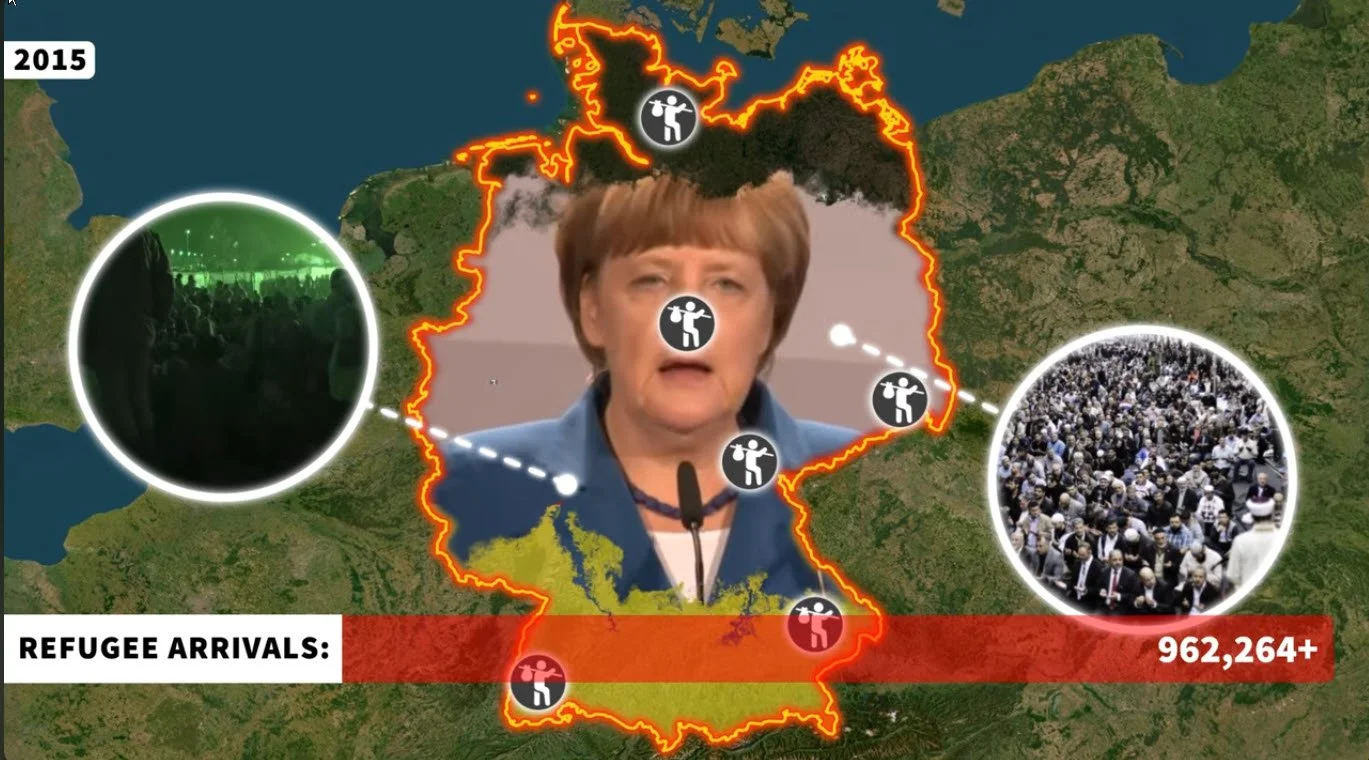
What I find most significant is the sequence. In 2015, Angela Merkel's Wir schaffen das—“we can manage this”—symbolized the dominant European approach to mass asylum migration. Eleven years later, European politics increasingly revolve around how to limit arrivals, determine who may remain, remove rejected applicants and prevent immigration from creating open-ended welfare obligations. Even Europe's political center has shifted: Reuters recently described the continent's political center of gravity on migration as having moved “significantly rightward.” (Reuters)
There is also an important distinction between illegal immigration and legal immigration. Most European governments, including conservative ones, are not proposing the wholesale deportation of legal immigrants. Europe has aging populations and labor shortages, so Italy, Germany and Britain still need certain categories of skilled immigration. The emerging model is closer to: reduce asylum migration, stop unauthorized entry, deport people with final removal orders, tighten eligibility for welfare, demand greater integration, while selectively admitting workers the economy needs.
The ranking I would give today is
Italy first in actually implementing the rightward shift;
Germany first in the potential magnitude of the political transformation;
France the country most likely to produce the next historic breakthrough;
Britain experiencing perhaps the strongest electoral pressure from outside the traditional party system; and the
Netherlands already politically transformed but struggling to turn that mandate into durable government.