Segment #771
For any intelligent reasonably informed individual it is not difficult to understand that someone in 1800 making the statement “Science is Settled” is every bit as absurd as some making the same statement in 2026. Those that believe that “Science is Settled” and that are experts in science related fields are either dishonest, unbelievably arrogant, or have an agenda that benefits from their dishonesty’
1. Politicians

Conservative critics often point to high-ranking politicians as the primary drivers of this terminology, framing it as an attempt to justify massive regulatory shifts (like the Green New Deal) without further legislative or scientific scrutiny.
Barack Obama: Cited by virtually every conservative outlet for his 2014 State of the Union address where he declared, "The debate is settled. Climate change is a fact." Charles Krauthammer famously responded in the National Review with his essay "The Myth of Settled Science," arguing that nothing is more "anti-scientific" than the idea that science is static.
Al Gore: The former Vice President is seen as the "godfather" of the phrase in the climate context. Sources like the Wall Street Journal opinion page have frequently criticized him for using the phrase to dismiss skeptics of his 2006 documentary An Inconvenient Truth.
John Kerry: As Secretary of State and later Climate Envoy, Kerry has been criticized by conservative commentators for stating that the science of climate change is "beyond dispute" and "settled," often comparing it to the settled science that smoking causes cancer.
Alexandria Ocasio-Cortez (AOC): Mentioned by E&E Legal and Fox News for her assertions that scientific consensus on climate "tipping points" is settled, requiring immediate and radical economic restructuring.
Kevin Rudd: Former Australian Prime Minister, often cited in international conservative critiques for using the phrase during the 2007 UN climate talks in Bali.
Gavin Newsom (Governor of California): Often cited for justifying some of the nation’s strictest mandates by claiming they were based on "settled science," even when neighboring states with different policies saw similar outcomes.
Justin Trudeau (Prime Minister of Canada): Frequently featured in North American conservative media for his rhetoric during the "Freedom Convoy," where he dismissed protesters' concerns as being "anti-science" and contrary to the "settled" path forward.
Joe Biden: Vaccine Efficacy: During a 2021 CNN Town Hall, Biden stated, "You’re not going to get COVID if you have these vaccinations." Conservative outlets cited this as a "fact-free" claim that ignored the data on waning immunity."Transitory" Inflation: In 2021, Biden and Treasury Secretary Janet Yellen repeatedly claimed inflation was "transitory" based on "expert data." The Daily Wire and others cataloged this as a fund
2. Medical Experts
During the COVID-19 pandemic, the phrase moved from climate change to public health. Conservative sources like City Journal and The Federalist argue that experts used the term to enforce mandates while the data was still evolving.
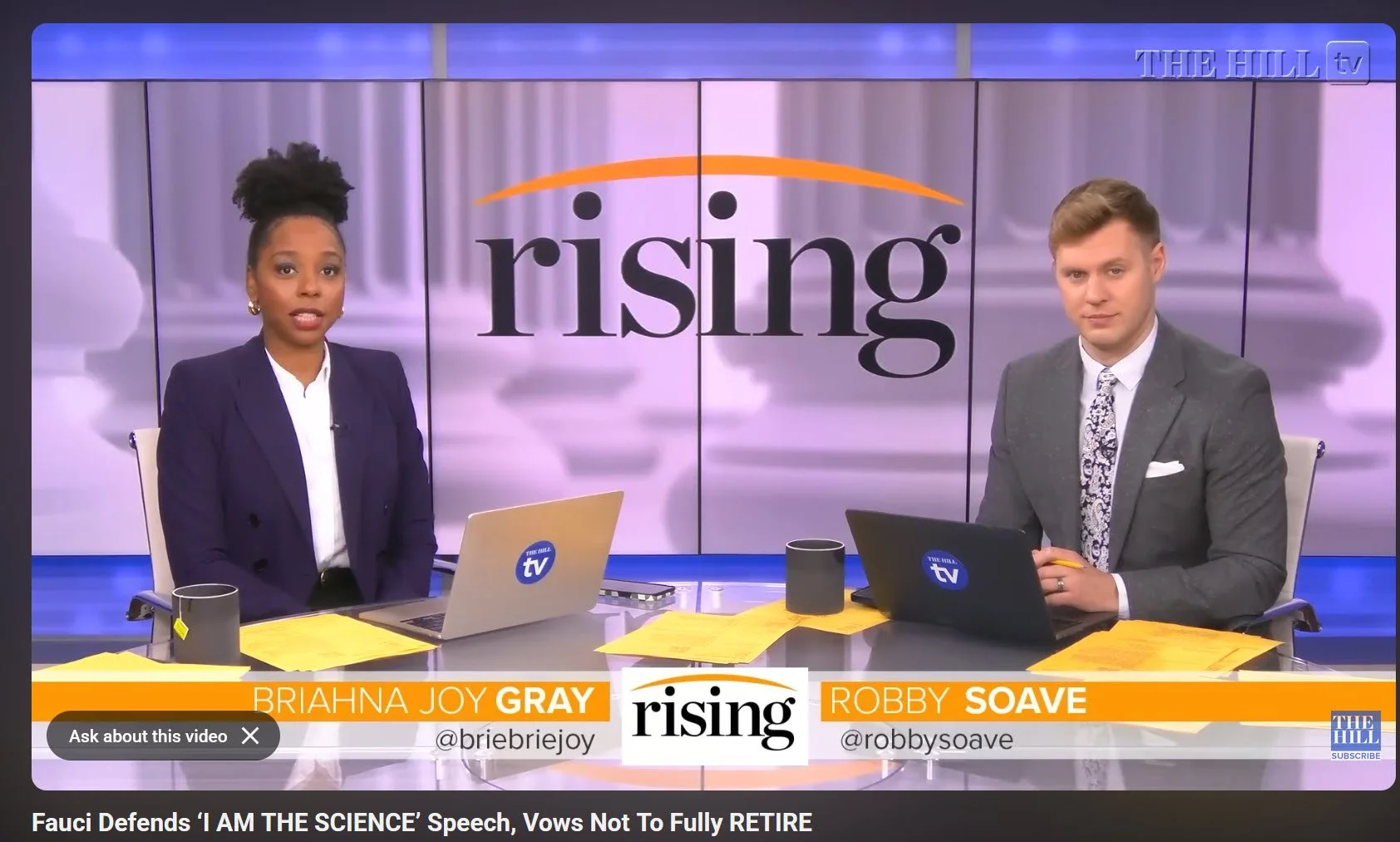
Dr. Anthony Fauci: While he often used phrases like "the science is clear," conservative outlets like Breitbart and Fox News frame his claim that "Attacks on me, quite frankly, are attacks on science" as the ultimate expression of "settled science" dogmatism. The "L'état, c'est moi" Moment: Fauci’s most cited quote in conservative media is his 2021 statement: "A lot of what you're seeing as attacks on me, quite frankly, are attacks on science." Critics argue this equates his personal policy recommendations with "settled" objective reality. Shifting "Settled" Claims: Sources like Breitbart track instances where Fauci presented a position as definitive, only to change it later—such as the efficacy of cloth masks, the threshold for herd immunity, and the "settled" nature of the COVID-19 lab-leak theory (which he initially dismissed as a conspiracy).
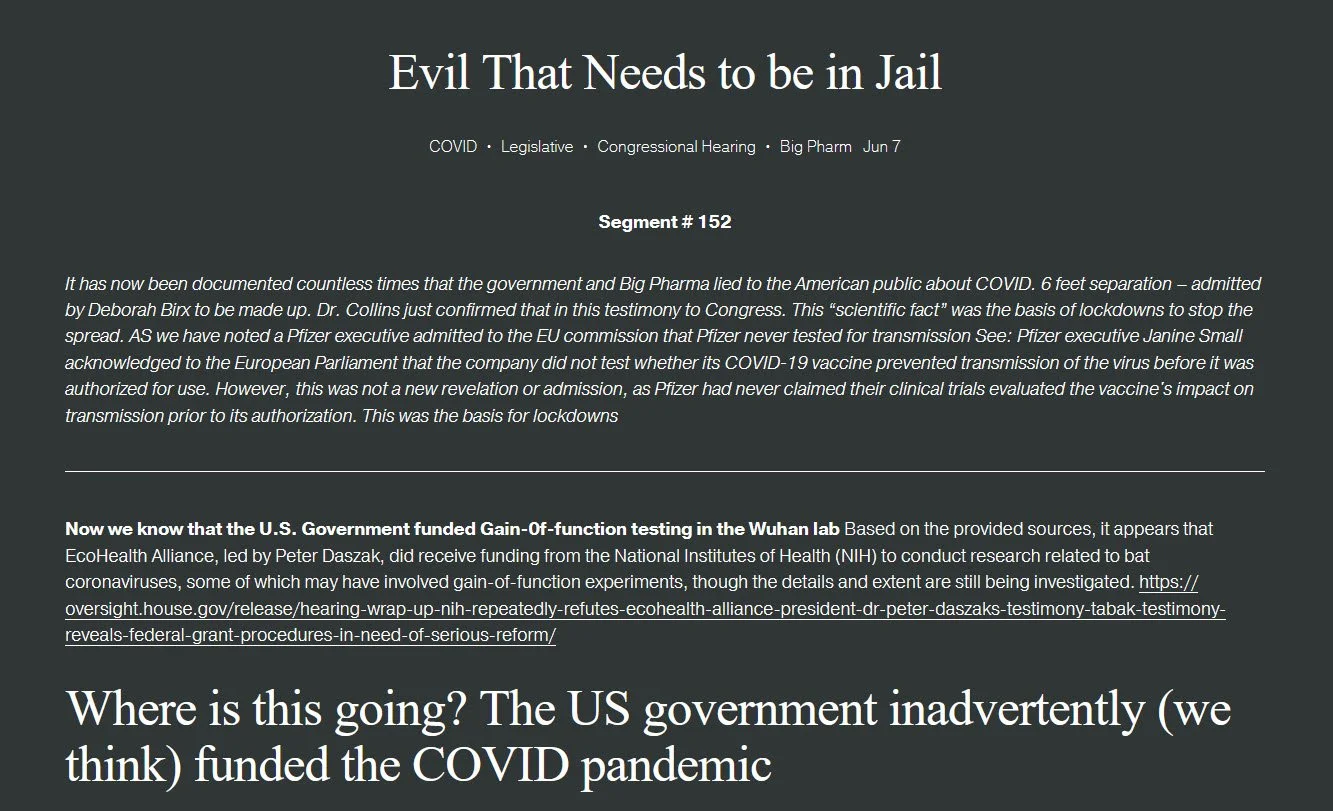
Deborah Birx: Famously wrote a book in which she admitted that the data did not substantiate that vaccines stopped the spread and that the arbitrary six feet of separation was made up. Again presented as settled science when it was not.
Dr. Rochelle Walensky: The former CDC Director was criticized by conservative pundits for her early 2021 statements regarding the efficacy of vaccines in preventing transmission, which were framed as "settled science" before being walked back.
Dr. Marty Makary: Interestingly, Makary (a Johns Hopkins physician often featured on Fox News) used the phrase in a reversal. He claimed that by 2023, it was now "settled science" that natural immunity was as effective as vaccination—a point he argued the "establishment" refused to admit for years.
3. Scientists and Advocates
Conservative sources often target scientists who bridge the gap between research and activism, accusing them of using "settled science" to protect their funding and prestige.
Stephen H. Schneider: The late Stanford professor was a frequent target of climate skeptics. He was quoted at a media summit stating, "The science is very settled," regarding the human attribution of global warming.
Bill Nye ("The Science Guy"): Frequently criticized by National Review and The Blaze for his public debates where he asserts that the "science is settled" on climate and evolution, often suggesting that those who disagree should be legally or socially marginalized.
John Cook: The author of the "97% consensus" study is often cited as the architect of the "settled science" narrative. Conservative outlets like Forbes (specifically contributor James Taylor) have spent years attempting to "debunk" this study as a manufactured statistic designed to create the illusion of settled science.
4. Big Pharm
*Albert Bourla (CEO of Pfizer): Frequently targeted for his 2021 comments where he labeled those spreading "misinformation" about vaccines as "criminals." Conservative outlets frame this as an attempt to declare vaccine efficacy and safety "settled" to the point where questioning it should be a punishable offense. The "Safe and Effective" Slogan: Outlets like The Gateway Pundit argue that the pharmaceutical industry, in coordination with the CDC, treated the "safe and effective" mantra as a settled scientific dogma that intentionally ignored emerging data on side effects like myocarditis. Albert Bourla (CEO of Pfizer): * The Error: Conservative commentators point to early Pfizer press releases claiming 100% efficacy in certain demographics and long-term protection. The Context: When data later showed rapid waning and no significant impact on transmission, sources like The HighWire argued that "Big Pharma" had intentionally manipulated the "fact-based data" to secure government contracts. Purdue Pharma Employees: Often used by conservatives (and liberals) as the "patient zero" for why experts shouldn't be blindly trusted. For years, Purdue employees cited "scientific studies" claiming OxyContin was non-addictive for 99% of patients—a "fact" that led to the opioid crisis.
AstroPhysics
Among astrophysicists, Neil deGrasse Tyson is the primary target of conservative intellectuals (such as Ben Shapiro) for what they call "Scientism."
Neil deGrasse Tyson: "The Good Thing About Science...": Tyson’s famous quote—"The good thing about science is that it’s true whether or not you believe in it"—is frequently mocked in conservative circles. They argue this misrepresents science as a list of "truths" rather than a rigorous, ever-changing process of discovery. The Error: Tyson has been criticized by The Federalist and National Review for his tweet: "The good thing about Science is that it’s true whether or not you believe in it."
The Critique: Conservative intellectuals argue this is a "scientific error" in itself because science is a process, not a collection of immutable "truths." They point to his occasional errors in history and biology as evidence that he uses his "authority" as an astrophysicist to speak as an expert on topics where he lacks data.
Scientific Truth vs. Policy: Critics point to his Twitter (X) threads where he suggests that because certain facts are "settled," specific political policies (like carbon taxes or lockdowns) should be mandatory, which conservatives see as a category error.
Media Talking Heads
Rachel Maddow (MSNBC): Rachel Maddow discussing science is a bit like a proctologist practicing dentistry. They would be looking in the right place but unable to see a thing.
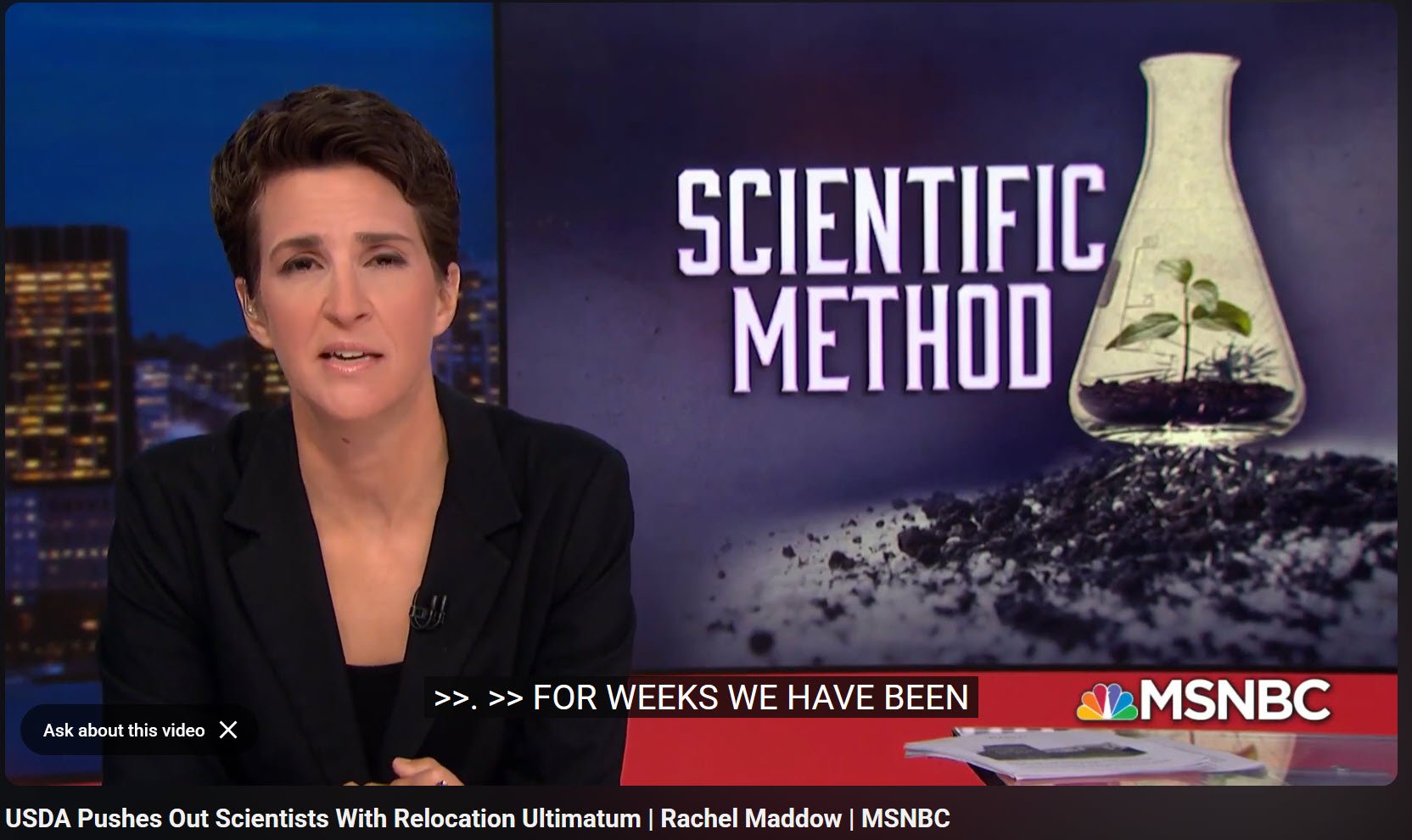
The Error: In 2021, Maddow told her audience, "Now we know that the vaccines work well enough that the virus stops with every vaccinated person." * The Context: Conservative sources frequently replay this clip to argue that media "experts" were spreading "dangerous disinformation" while simultaneously calling for the censorship of skeptics. Maddow continues in the clip above to talk about science that she clearly fails to understand not only historically and but also what we should expect for the future.
Tobacco Industry 1950’s
1. The Tobacco Industry's "Experts of Doubt"
In the 1950s, the tobacco industry formed the Tobacco Industry Research Committee (TIRC). Their strategy was to use highly credentialed scientists to argue that the link between smoking and cancer was "not settled."
Dr. Clarence Cook Little: A renowned geneticist and former president of the University of Michigan, Little was the scientific face of the TIRC for decades. He frequently testified that the science was "inconclusive" and that lung cancer was likely caused by "genetic susceptibility" or "environmental factors" (like air pollution) rather than smoking.
The Error: Little presented "fact-based data" from industry-funded studies to argue that statistical correlations were not proof of causation—a technical truth used to obscure a physical reality.
Dr. Peter English: A physician and historian who testified in various tobacco lawsuits (e.g., United States v. Philip Morris). He argued that smoking was a "habit" similar to drinking coffee, rather than a physical "addiction." * The Error: He cited medical literature from the 1950s to claim that the scientific definition of addiction at the time did not include tobacco, trying to make a "fact-based" historical argument to shield companies from modern liability.
Dr. Kenneth Ludmerer: A highly respected medical historian and physician. In his testimonies, he argued that "everyone knew" smoking was risky, but "no one had proof," essentially claiming that the "settled science" of the time was actually a state of "informed doubt."