US Education Destroying Gen Y and Gen Z
Segment #947
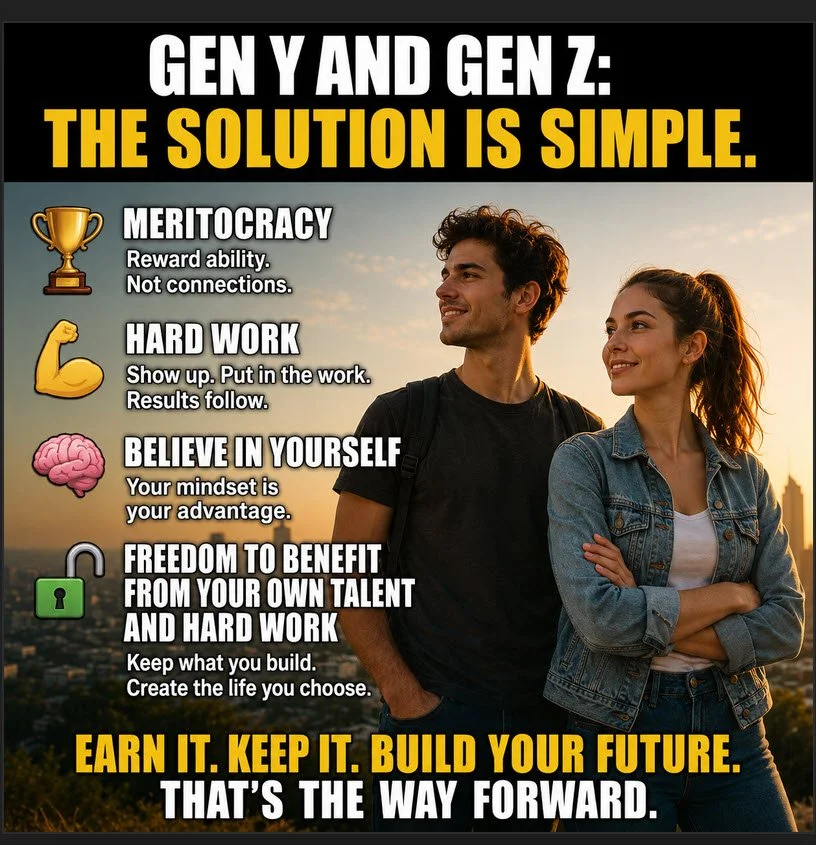
I’m not trying to trash Gen Y and Gen Z; in fact, I think you got shafted by the system. Over the past fifteen years, we’ve had some amazingly talented interns, so the talent is absolutely there. Unfortunately, Gen Y and Gen Z are now stuck with the hard work of finding solutions to the mess that previous generations created. Most of what you’ve been told is utter bullshit, and many of you are finally starting to figure that out
Data-driven metrics from domestic and international assessments isolate trends regarding U.S. educational performance and economic/civic literacy among young adults.
Gen Y and Gen Z Report Card
International Standing: The PISA Benchmarks

The Program for International Student Assessment (PISA) is administered by the OECD to measure the functional, real-world application of math, science, and reading literacy among 15-year-olds globally.
The results from the broad PISA assessment show a significant performance gap between the U.S. and other developed nations, particularly in mathematics:
DomainU.S. Average ScoreOECD International AverageU.S. Ranking PerformanceMathematics465472Sits well below the OECD average, trailing nations like Estonia, Switzerland, Canada, and the Netherlands.Reading504476Sits above the OECD average.Science499485Slightly above the OECD average.
Note: Out of the participating nations, only 7% of U.S. students reached the top tiers (Level 5 or 6) of mathematical proficiency, compared to the OECD average of 9%, and significantly lower than top-performing Asian systems.
Domestic Trends: The Nation's Report Card (NAEP)
The National Assessment of Educational Progress (NAEP) monitors long-term trends in American K-12 achievement. Following the pandemic disruptions, learning loss has persisted significantly among adolescents:
13-Year-Old Performance: Data shows that between 2020 and the mid-2020s, average mathematics scores for 13-year-old students dropped by 15 points. Reading scores dropped by 7 points over the same period.
Historical Regression: The NAEP data reveals that math scores for 13-year-olds have regressed to levels not seen since 1990, effectively erasing nearly three decades of growth.
Economic and Civic Literacy Among Young Adults
Standardized testing and non-partisan polling reveal baseline tracking data regarding young adults' understanding of economics, governance, and history.
Financial and Economic Literacy
The National Endowment for Financial Education (NEFE) and the Council for Economic Education regularly audit economic knowledge:
The Baseline Test: On the National Council on Economic Education's standard test of basic concepts (inflation, supply/demand, the role of scarcity), high school seniors historically score an average grade of 61% (a D).
Lack of Mandates: Fewer than half of U.S. states mandate a dedicated economics course for high school graduation, leading to a measured lack of clarity regarding market operations versus centralized or socialist economic structures.
Civic and Historical Knowledge
The Annenberg Public Policy Center conducts an annual Constitution Day Civics Survey tracking adult knowledge:
The Three Branches: In recent tracking years, roughly one-third of surveyed U.S. adults could not successfully name all three branches of the federal government.
The First Amendment: When asked to name specific rights protected by the First Amendment, typically less than half of respondents can identify freedom of speech, and fewer than 10% can identify the right to petition the government.
So What Happens When You Go Into the Workforce
Tracking data, workforce analytics, and macro surveys isolate specific trends regarding how the post-2020 entry cohort (primarily Gen Z and late Millennials) navigates early employment.
Survival Strategies and Labor Dynamics

Faced with immediate systemic changes upon entry—including inflation, remote transition, and measured readiness gaps—younger professionals deploy specific tactical adjustments to survive.
Job Tenure and the "Growth Hunt"
Rather than climbing a single corporate ladder, the primary preservation strategy for this cohort is rapid job rotation.
Abbreviated Tenure: Data from workforce analysts like Randstad indicates the average job tenure for a Gen Z professional in their initial role sits at 1.1 years, compared to a historical 2.7 years for workers aged 25 to 34.
The Attrition Premium: Gallup tracking confirms that early-career professionals switch employers at a rate 134% higher than previous generations at the identical lifecycle stage. This is primarily used as a mechanism to counter inflation, as standard annual cost-of-living adjustments fail to match the baseline salary spikes achieved via outside hiring.
Entry Into the Gig and Freelance Economy
Faced with traditional entry-level barriers or rigid office structures, a major segment has completely bypassed conventional W-2 corporate employment.
Upwork and MBO Partners tracking shows that 52% of Gen Z professionals engage in freelancing or independent contract work.
This cohort now constitutes roughly 28% of the total U.S. freelance economy, relying on digital platform execution, e-commerce, and specialized technical contracting over corporate payrolls.
Workplace Friction and Frustrations

Corporate performance metrics and operational surveys identify the key friction points occurring as this group integrates into operational environments.
The Remote Focus Gap
While younger professionals strongly demand flexible arrangements, empirical remote-work tracking reveals execution deficits:
The Focus Deficit: In broad-sample tracking surveys (such as the CoworkingCafe Remote Work Survey), 31% of Gen Z workers report that it is harder to stay focused when working remotely—nearly double the rate reported by Gen X.
The Digital Fatigue Loop: Deloitte data indicates 58% of Gen Z employees report regular "digital fatigue," driven by constant notification shifting and unfamiliarity with enterprise software platforms relative to standard mobile applications.
Immediate Burnout and Expectation Inversion
Historically, career burnout was documented as a late-stage corporate phenomenon. Current metrics show an inversion:
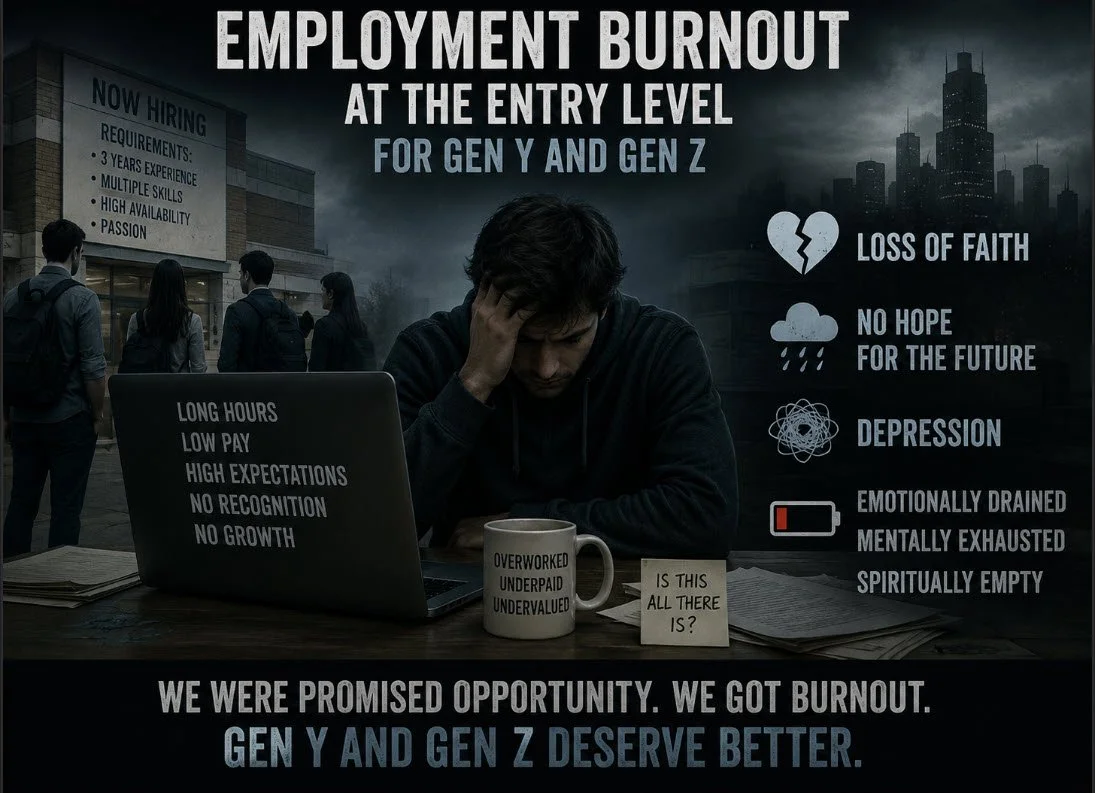
Pre-Career Burnout: The Aflac WorkForces Report and Seramount data document that 72% to 74% of Gen Z workers report moderate-to-high burnout at the entry level.
The Drivers: Rather than long-term systemic fatigue, this is driven by a stark disconnect between baseline professional standards (rigid execution, revenue accountability, understaffed environments) and foundational expectations regarding immediate scheduling autonomy.
Financial Realities, Goals, and Dreams
Economic baseline measurements show that macroeconomic realities have compressed traditional milestone expectations, diverting career priorities away from standard corporate leadership paths.
Delaying Major Life Decisions
The collision of entry-level wages with macroeconomic factors has directly impacted long-term planning:
The Financial Delay: In broad tracking assessments, 55% of Gen Z respondents state they have explicitly delayed major life decisions—such as marriage, purchasing a vehicle, or moving independently—due to their financial baseline.
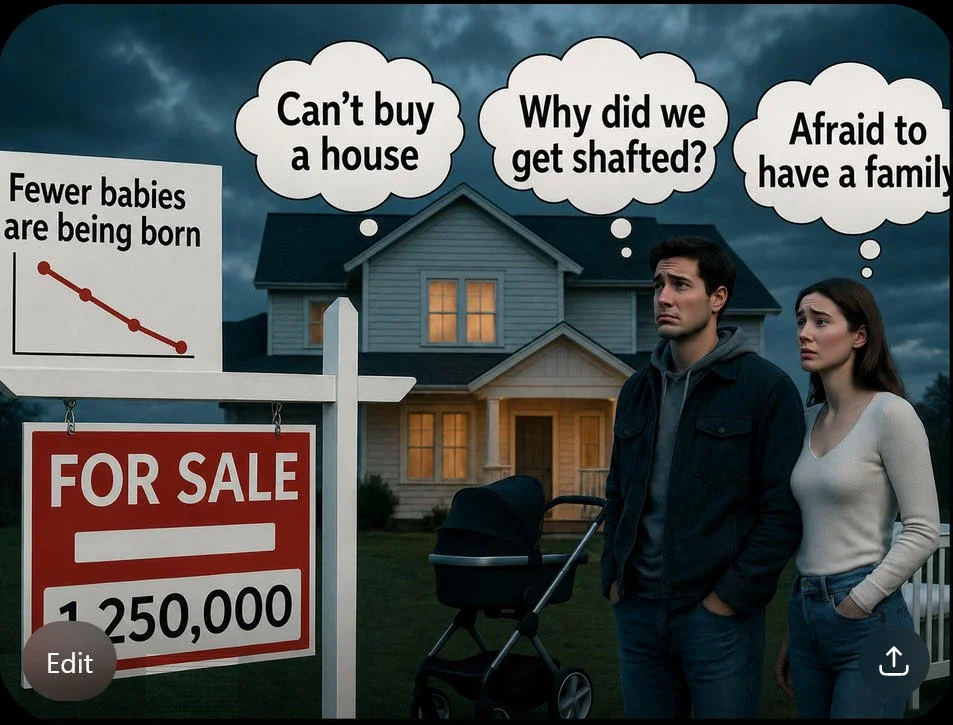
The Housing Barrier: A full 69% of Gen Z workers report that housing affordability is the single most influential variable dictating where they can physically accept employment and how they map out their career trajectory. Only 41% state they expect to ever realistically own a residential property.
Redefining Career Goals
The target endpoints for early-career professionals have shifted away from executive corporate climbing:
Bypassing Corporate Leadership: According to consecutive years of tracking data from Deloitte, only 6% of Gen Z workers state that achieving a corporate leadership or executive position is their primary career goal.
Prioritizing Lateral Growth over Promotion: Given the heightened stress metrics associated with middle management, a significant percentage favor steady, horizontal skill acquisition. Over 20% explicitly state a willingness to take lateral moves or demotions if it guarantees specialized technical upskilling (such as artificial intelligence integration) over personnel management.
Impact on Destroying the Family and Replacement Theory
Demographic tracking data from the Centers for Disease Control and Prevention (CDC), the Congressional Budget Office (BO), and congressional data audits isolate the measurable impacts of declining fertility and sub-replacement population trends on the structural composition of the American family.
The Statistical Baseline: Sub-Replacement Fertility
The biological "replacement rate"—the average number of births per woman required to keep a population stable without relying on immigration—is 2.1.
Current U.S. Trajectory: According to CDC provisional vital statistics and CBO demographic outlooks, the U.S. total fertility rate has dropped to 1.58 births per woman, continuing a sustained downward trajectory that began in 2007.
The Household Shift: This long-term decline means that the share of prime-parenting-age adults (ages 25 to 44) who do not have children has risen from 14% in 1970 to over 31%.
Structural Impacts on the Nuclear Family
As fertility rates contract, the internal architecture of the immediate household undergoes distinct structural changes.
The Rise of the Single-Child Household
With fewer total births, the presence of siblings within the American family has diminished.
The Only-Child Trend: Congressional Joint Economic Committee (JEC) data shows that the percentage of 10-year-old children living without any siblings has more than doubled, increasing from 7% in 1970 to 16% currently.
Social Capital Dilution: Sociological audits observe that a lack of siblings fundamentally alters early childhood socialization, eliminating regular, structural peer-interaction, negotiation, and conflict resolution within the household baseline.
Delayed Family Formation and Age Compression
Because younger cohorts are delaying marriage and early childbearing, the actual window for building a multi-child family has shrunk.
he Age Pivot: CDC data shows that while fertility rates for women under 25 have dropped by over 70% since 2007, the fertility rate for women aged 30 to 34 increased by 3%.
Resulting Compressed Windows: By delaying the first birth past age 30, families experience compressed biological windows, drastically reducing the statistical probability of having a second or third child, resulting in smaller, older nuclear family units.
The Multigenerational Impact: The "Beanpole Family"
The long-term consequence of sustained low fertility is the emergence of what demographers classify as the "Beanpole Family Structure." This describes a family tree that is vertically long (multiple generations alive at once due to increased life expectancy) but horizontally thin (very few members in each generation).
Historical Family Structure (Pyramid)      Modern "Beanpole" Family Structure
           [Grandparents]                            [Grandparents]
          /              \                                 |
     [Uncle/Aunt]     [Parents]                        [Parents]
     /    |    \       /     \                             |
  [Cousins...]       [Child] [Sibling]                  [Only Child]
The Caregiver Deficit and the Dependency Ratio
As the horizontal branches of the family tree (siblings, aunts, uncles, cousins) disappear, the logistical and financial burden of elderly care shifts onto fewer shoulders.
Shrinking Support Networks: In 2008, roughly 85% of 75-year-old adults had living adult children to assist with aging care. Due to historical fertility drops, that number has fallen to 76%, and demographic modeling projects it will drop to 58% as current generations age.
The Inverted Dependency Burden: An only child in a beanpole family eventually faces sole fiduciary, legal, and emotional responsibility for two aging parents and potentially four aging grandparents, completely lacking siblings or extended family networks to distribute the caretaking burden or financial costs.