Segment #767
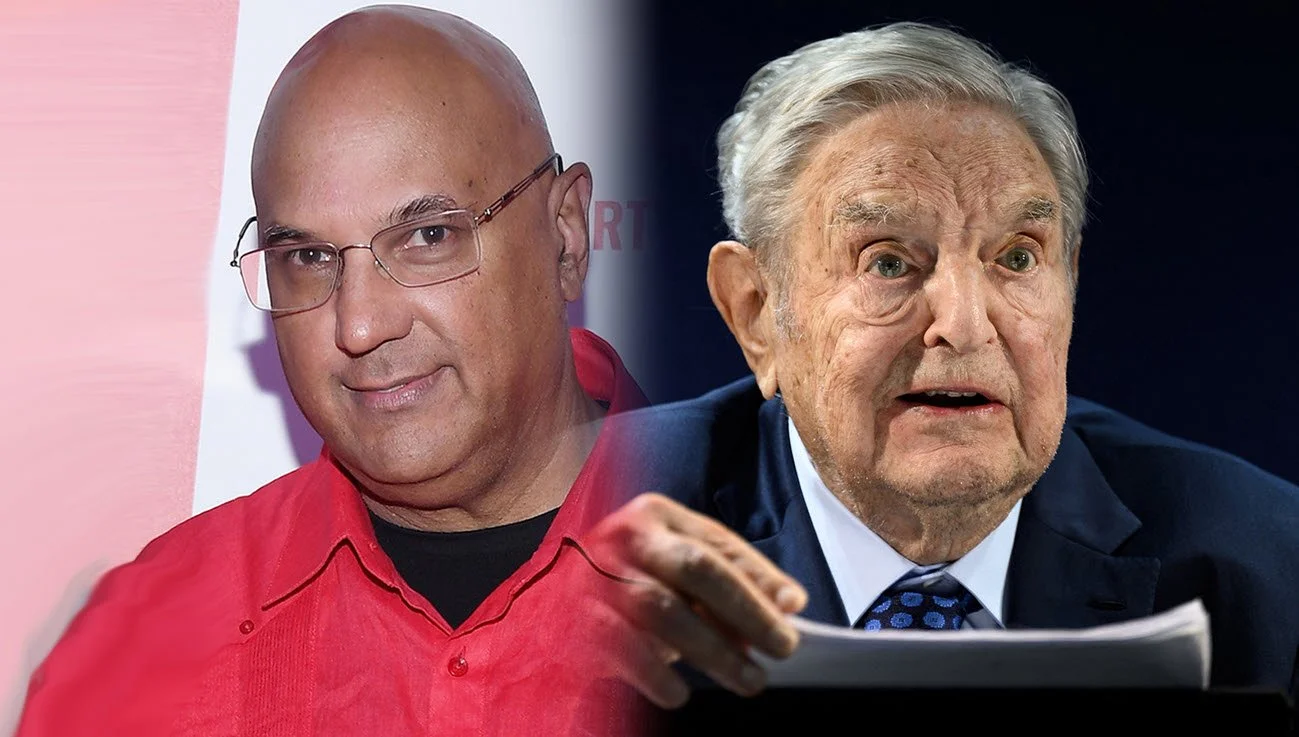
Two men stand out as key architects of well-funded efforts to destabilize the United States through ideological influence and activism.
George Soros, allegedly in coordination with Democrat-aligned intelligence elements, has been accused of using USAID during the Biden administration to facilitate mass illegal immigration at U.S. borders. USAID controversies include over $450 million in funding for migration programs in Central America, with critics pointing to Soros-linked NGOs receiving grants potentially used for lobbying and open-border advocacy, raising questions about misuse of taxpayer dollars. Soros has also poured over $50 million into electing progressive prosecutors who prioritize decarceration and de-prosecution, leading to leniency for violent offenders. Examples include Fairfax County, VA, where a Soros-backed DA reduced charges for a repeat offender who later committed murders, and Baltimore, where similar policies correlated with homicide spikes and early releases of rapists and killers
Neville Roy Singham, is a Shanghai-based U.S. citizen with documented CCP ties, has funneled over $20 million through dark-money networks to groups linked to BLM, Antifa, and agitators in sanctuary cities, funding riots and anti-ICE protests while denying CCP affiliation—claims undermined by his role in pro-Beijing propaganda outlets. For balance, the Koch brothers (Charles and the late David) have exerted parallel influence on the right, spending nearly $900 million in 2016 alone through their libertarian-conservative network, including Americans for Prosperity, to push anti-regulation, anti-tax policies and shift the GOP further right on economic issues. These figures pose risks to national stability through polarized activism. Under the Trump administration, increased scrutiny of such foreign-linked and ideologically driven funding could mitigate these threats, as congressional probes into CCP influence and Soros-backed policies continue.
Neville Roy Singham
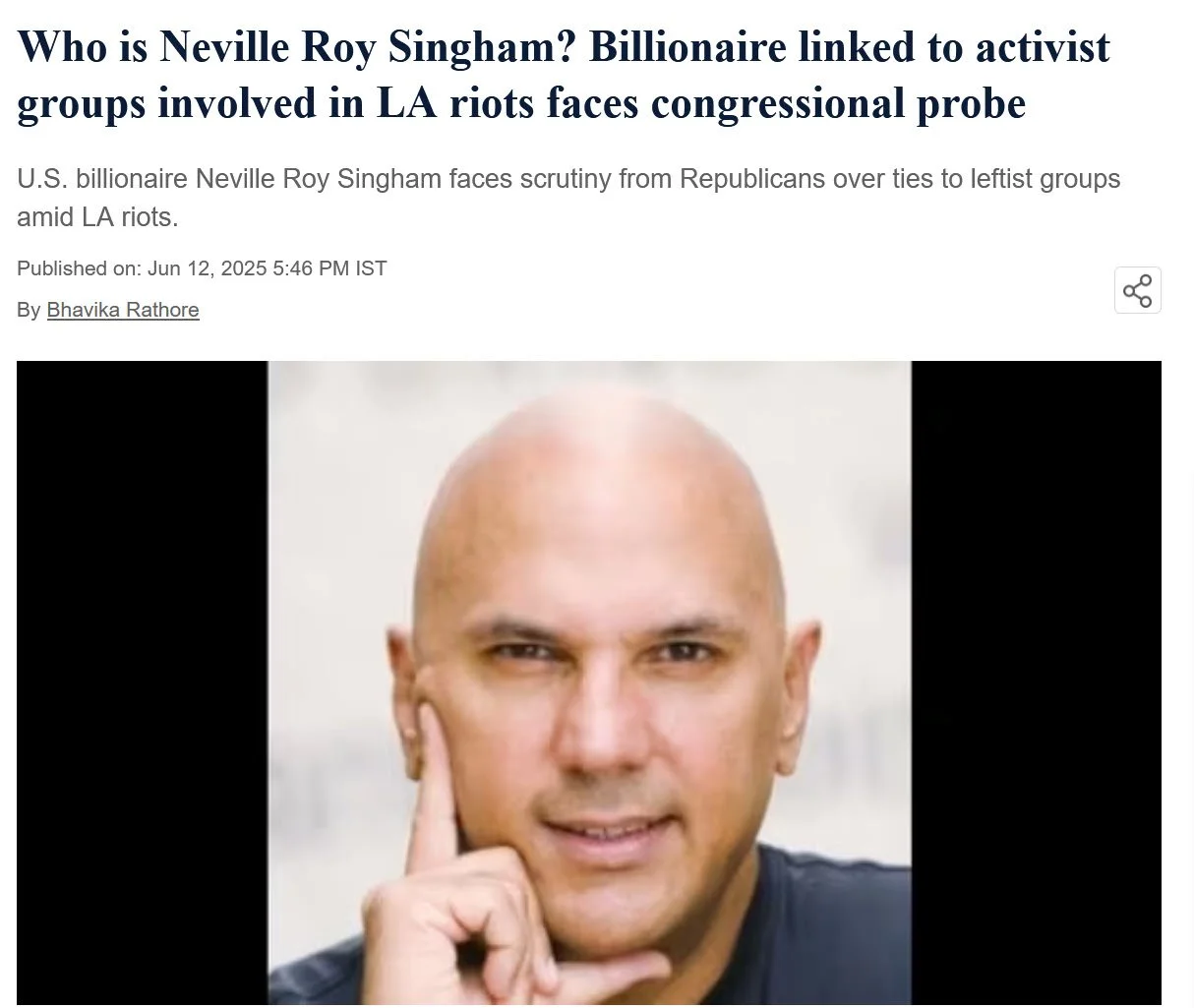
Neville Roy Singham was born in Middletown, Connecticut, USA. His father, Archibald Singham (also known as Archibald Wickeramaraja Singham), was a Sri Lankan-born political scientist and historian (with roots tracing to Sri Lankan parents, and some sources note birth in Burma/Myanmar). Archibald was a professor of political science at Brooklyn College, City University of New York, and focused on Caribbean politics, anti-imperialism, and leftist scholarship. His mother is reported as Cuban in some accounts, contributing to a multicultural, politically engaged household influenced by socialist and revolutionary ideas.
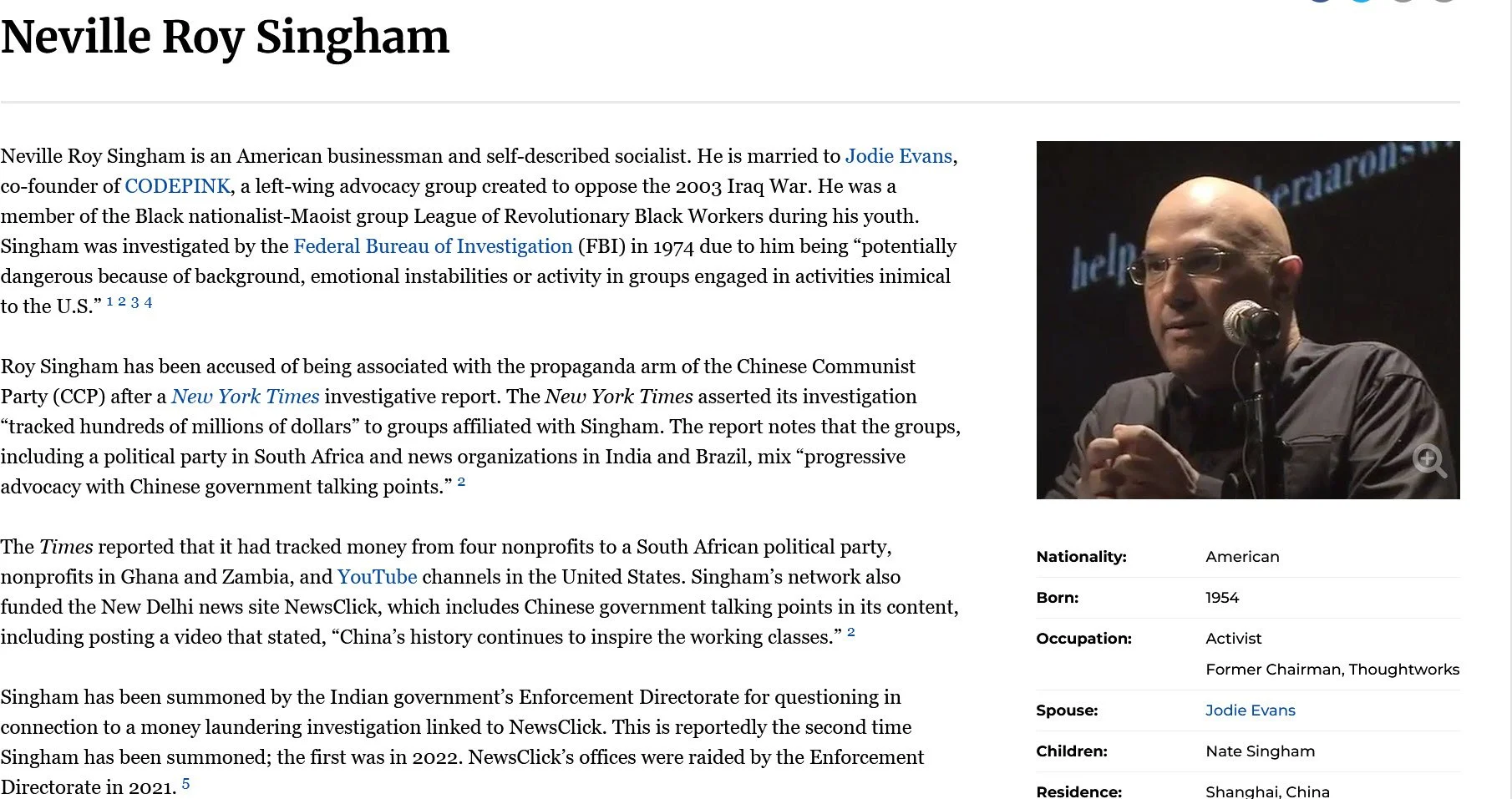
In his youth, Singham became politically active. In 1972, at around age 18, he joined the League of Revolutionary Black Workers, a Black nationalist-Maoist group in Detroit. He took a job at a Chrysler plant there as an activist for the group. He was even investigated by the FBI in 1974 as potentially dangerous due to his background and affiliations.He attended Howard University, earning a bachelor's degree in political science (some sources specify attendance from 1976–1978). He also studied at the University of Michigan earlier.
A Comprehensive Profile of Business Success, Activist Philanthropy, and Geopolitical ControversiesExecutive SummaryNeville Roy Singham is an American businessman, socialist activist, and philanthropist whose career spans software innovation, far-left advocacy, and alleged involvement in global influence operations. Born in 1954, Singham founded ThoughtWorks, a global IT consulting firm, which he sold in 2017 for $785 million. Following the sale, he relocated to Shanghai, China, where he has been accused of funding a network of nonprofits, media outlets, and activist groups that promote pro-Chinese Communist Party (CCP) narratives while advancing anti-U.S. and anti-Israel agendas. Investigations by The New York Times, U.S. Congress, and academic institutions like George Washington University have highlighted his role in channeling hundreds of millions of dollars through opaque entities to organizations involved in protests, media propaganda, and political activism. Singham denies direct ties to the Chinese government, framing his actions as personal commitments to socialism and global justice. This white paper examines his biography, career, funding activities, controversies, and broader implications, drawing on public records, journalistic investigations, and official reports as of early 2026.
Introduction
Neville Roy Singham represents a unique intersection of American entrepreneurship and international leftist activism. As the founder of a successful tech company, he amassed significant wealth, which he has since directed toward philanthropic and political causes. However, his relocation to China and funding of organizations echoing CCP talking points have drawn scrutiny from U.S. lawmakers, intelligence agencies, and media outlets. This profile synthesizes available information to provide a balanced, fact-based overview of his life and influence.
Early Life and Education
Neville Roy Singham was born on May 13, 1954, in Middletown, Connecticut, to Archibald Singham, a Sri Lankan-American political scientist and leftist academic known for his work on anti-colonialism and Third World politics. His father's influence likely shaped Singham's early ideological leanings toward socialism and Maoism. Singham graduated from Howard University, a historically Black university in Washington, D.C., where he studied economics.In his youth, Singham engaged in radical activism. In 1972, at age 18, he joined the League of Revolutionary Black Workers, a Black nationalist and Maoist organization in Detroit. He worked at a Chrysler plant, immersing himself in labor organizing and revolutionary politics. A 1974 FBI report described him as "potentially dangerous" due to his affiliations with groups deemed "inimical to U.S. interests," though no criminal actions were
This early radicalization set the stage for his lifelong commitment to socialist causes.
Career and Business
Ventures
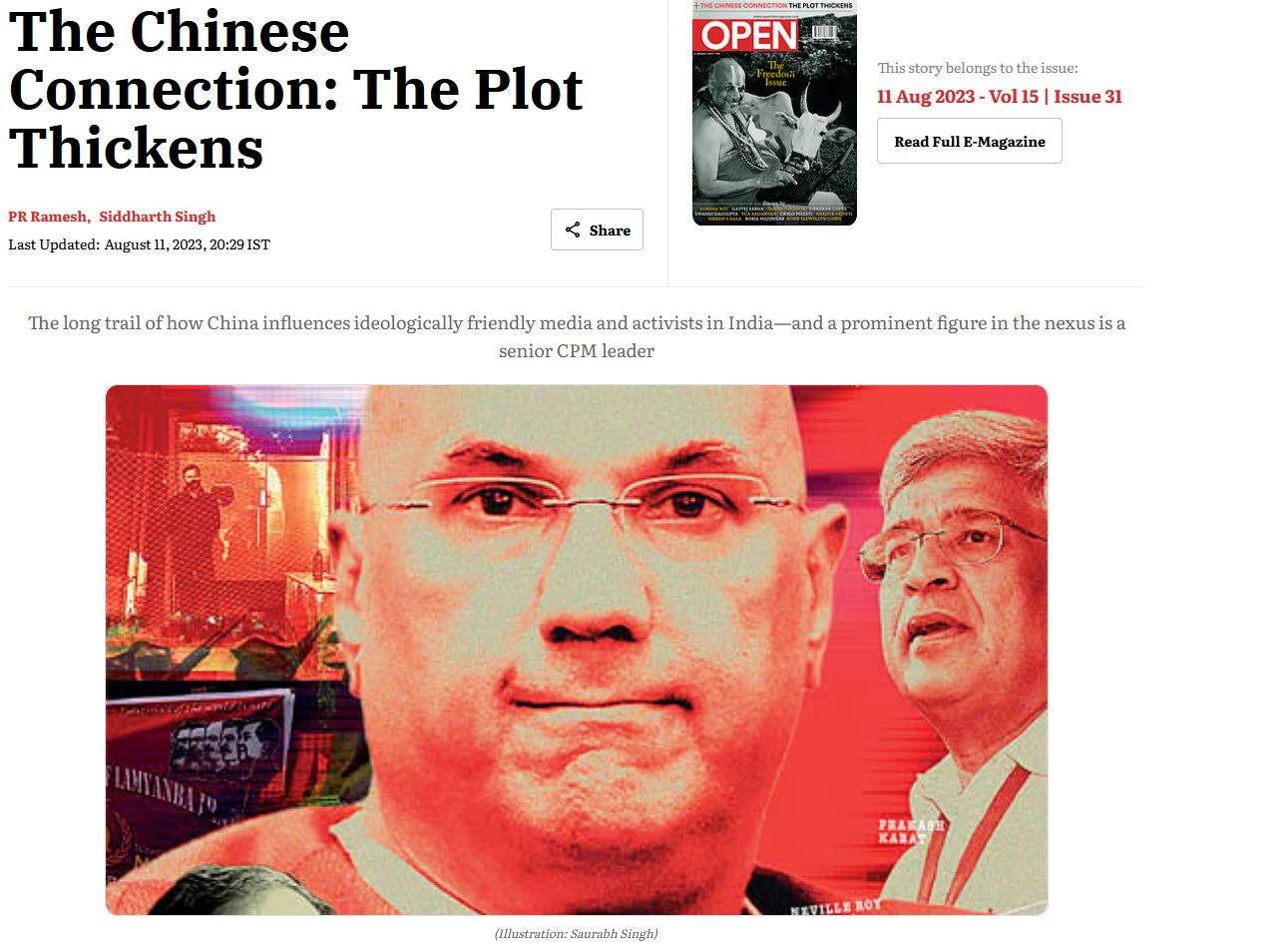
Singham's professional career began in software engineering. In the late 1980s, he founded ThoughtWorks in Chicago, incorporating it in 1993. The company specialized in agile software development, custom tools, and IT consulting, serving major clients like Microsoft, Oracle, Daimler AG, Siemens, Barclays, and The Guardian. By 2005, ThoughtWorks had expanded to China, establishing offices and growing to 1,000 employees there by 2008. Singham served as a strategic technical consultant for Huawei, a Chinese telecom giant with alleged CCP ties, from 2001 to 2008.
Under Singham's leadership, ThoughtWorks became a global enterprise with 4,500 employees across 15 countries, including India, South Africa, and Uganda. The firm hosted international conferences, such as the 2010 Agile Software Development Conference in Beijing, where Singham discussed his influence on Huawei's practices. He owned 97% of the company's common stock and, by the mid-2010s, had stepped back from day-to-day operations. In 2017, he sold ThoughtWorks to British private equity firm Apax Partners for $785 million.
Post-sale, Singham invested in Chinese ventures, including food and consultancy sectors. In 2019, he established a consulting firm with partners connected to the CCP's propaganda apparatus. He co-owns a media company with Tongren City in Guizhou province, focused on promoting anti-
Philanthropy and Funding
Activities
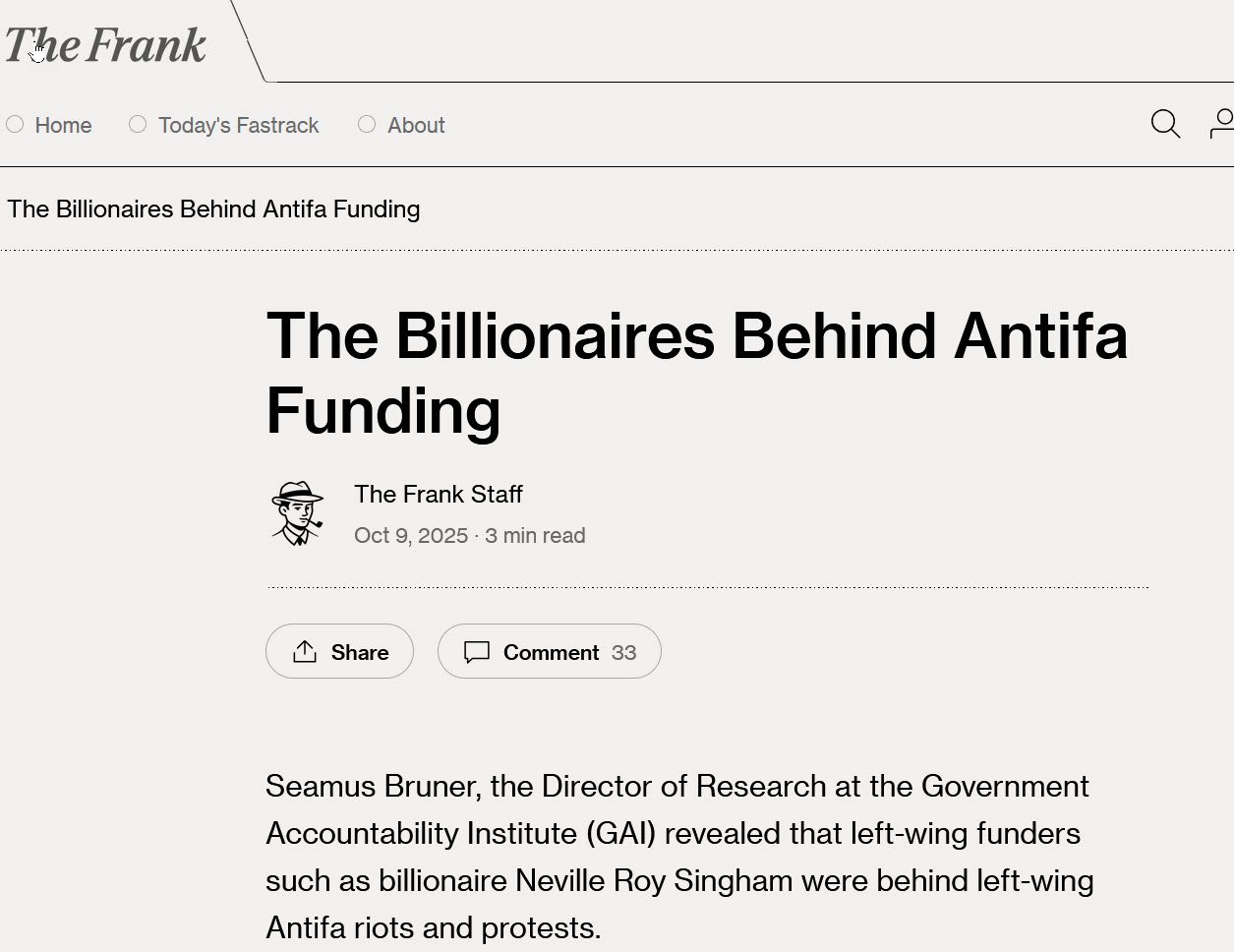
Singham has positioned himself as a benefactor of progressive and socialist causes, channeling funds through a network of U.S.-based nonprofits. These include the United Community Fund (UCF), Justice and Education Fund (JEF), People's Support Foundation, and Progress Unity Fund (PUF), often registered at UPS mailboxes with minimal public footprints. Since 2017, these entities have distributed at least $275 million to global organizations, leveraging U.S. tax-deductible structures.
nytimes.com +1
Key recipients include:
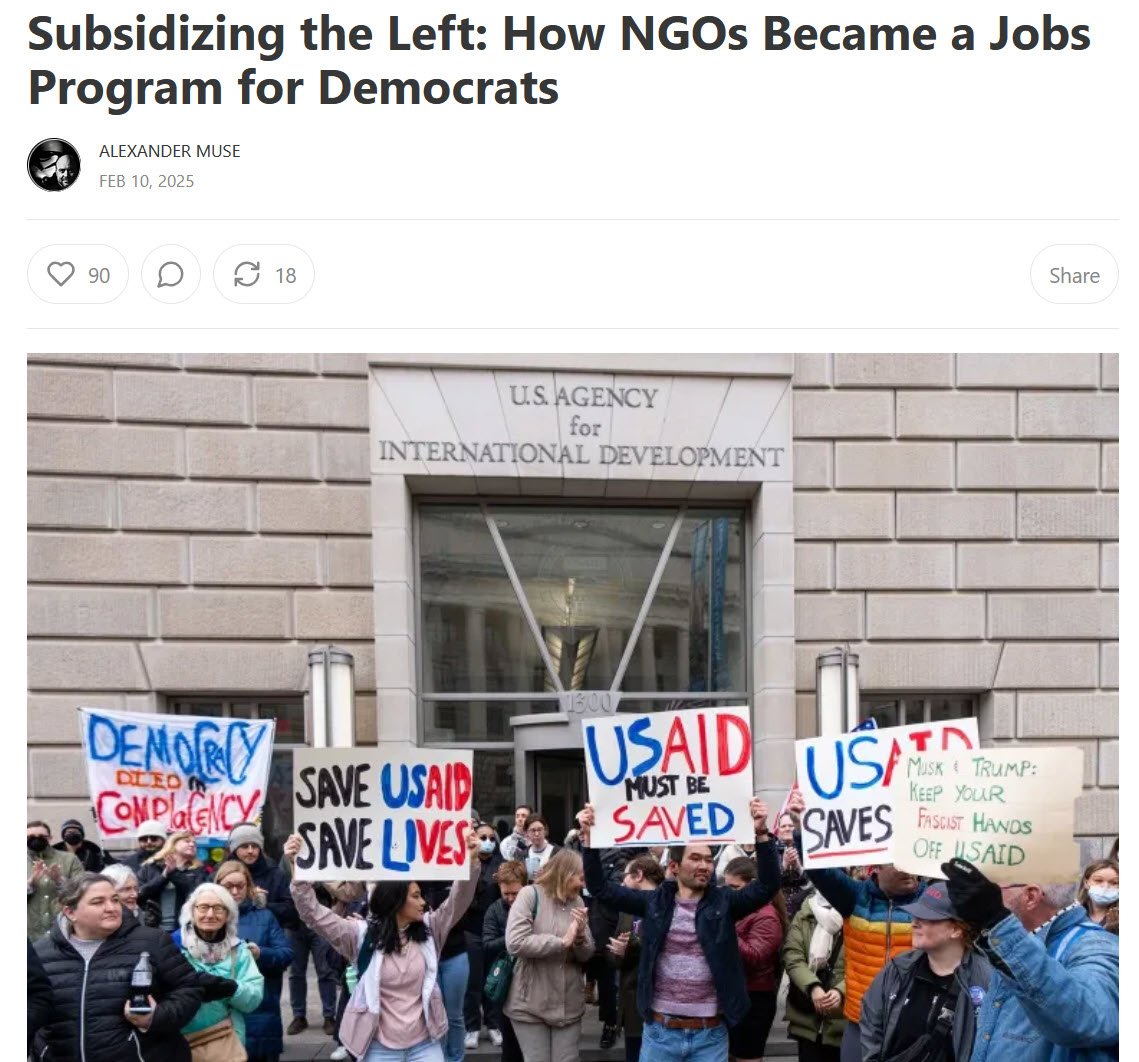
The People's Forum (New York): Received over $20 million from 2017–2022 via Singham-linked funds, including $12 million in 2019. It serves as a "movement incubator" hosting events praising CCP ideology and coordinating protests.
waysandmeans.house.gov +1
Code Pink: Co-founded by Singham's wife Jodie Evans; received over $1.4 million. Once critical of China, it now defends CCP policies on issues like Xinjiang.
nytimes.com +1
Tricontinental Institute for Social Research: Shares staff and space with Singham's network; produces socialist content.
nytimes.com
ANSWER Coalition and International People's Assembly (IPA): Funded through PUF ($244,000 over five years); organize anti-U.S. protests.
extremism.gwu.edu
BreakThrough News (BTN): Received over $710,000; produces media aligning with CCP narratives.
extremism.gwu.edu
International outlets like NewsClick (India, $2.9 million), Brasil de Fato (Brazil), New Frame (South Africa), and Nkrumah School (South Africa).
nytimes.com
These groups collaborate on media production, protests, and training, often promoting anti-imperialist themes.
Ties to China and Alleged Propaganda Network
Singham's move to Shanghai in 2017 coincided with deepened ties to Chinese entities. He has praised China's model as "phenomenally democratic" and attended a 2023 CCP workshop on global party promotion. His network echoes CCP talking points, defending policies on Xinjiang, Hong Kong, Taiwan, and COVID-19 origins, while criticizing U.S. foreign policy.
en.wikipedia.org +1
The New York Times investigation revealed Singham's collaboration with Chinese state media, including 122 retweets of his network's content since 2020. Outlets like Dongsheng News and Maku Group, funded by Singham, partner with CCP propaganda offices to "spread China's voice." Academic reports link this to CCP "united front work," aiming to sow U.S. division and enhance Beijing's global image.
nytimes.com +1
In pro-Palestinian activism, Singham's groups formed the "Shut It Down for Palestine" (SID4P) coalition post-October 7, 2023, organizing protests against U.S. support for Israel. This aligns with CCP strategies framing the Israel-Hamas conflict as anti-imperialist, using state media to criticize America and employ antisemitic tropes.
extremism.gwu.edu
Controversies and Investigations
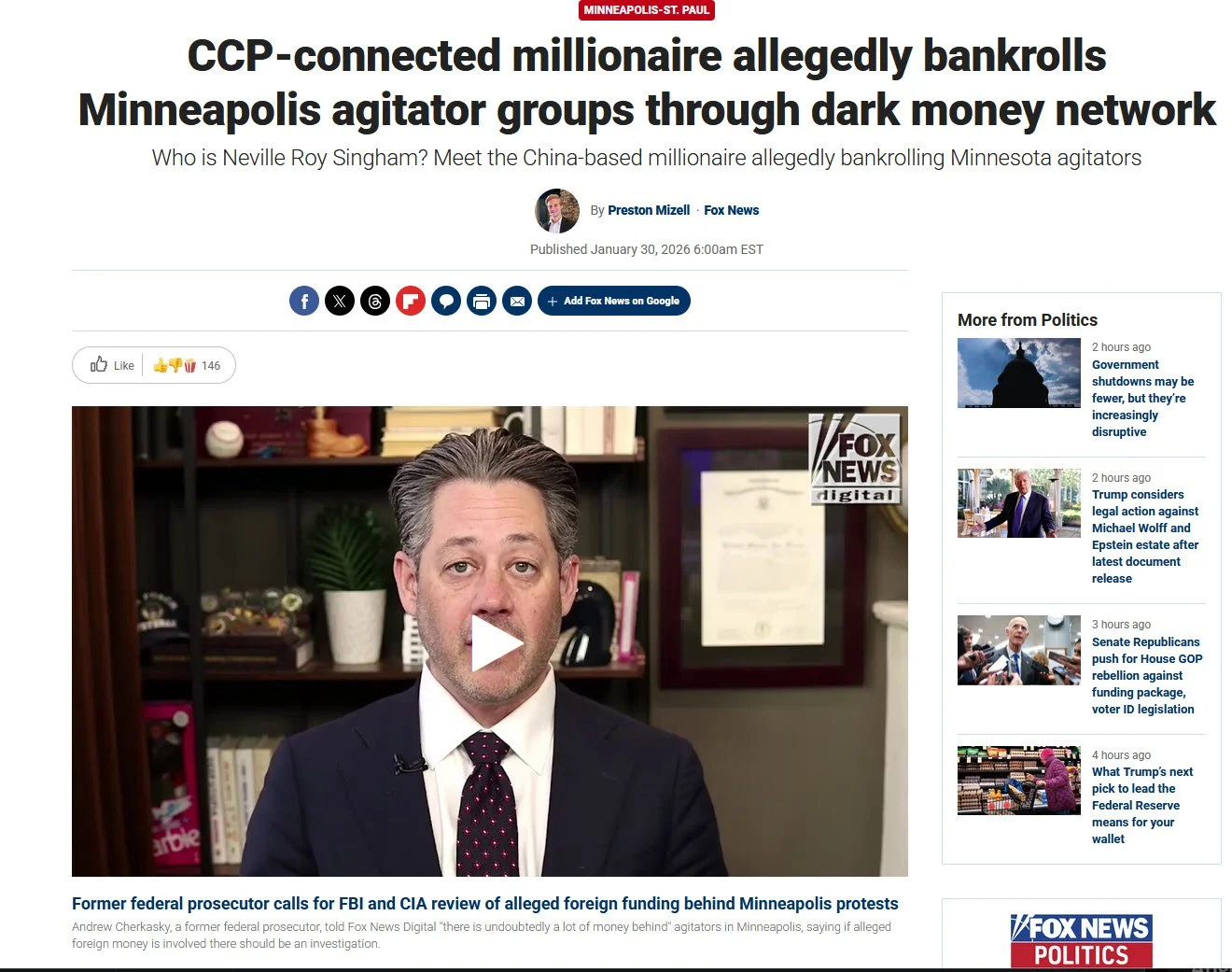
Singham faces multiple probes:
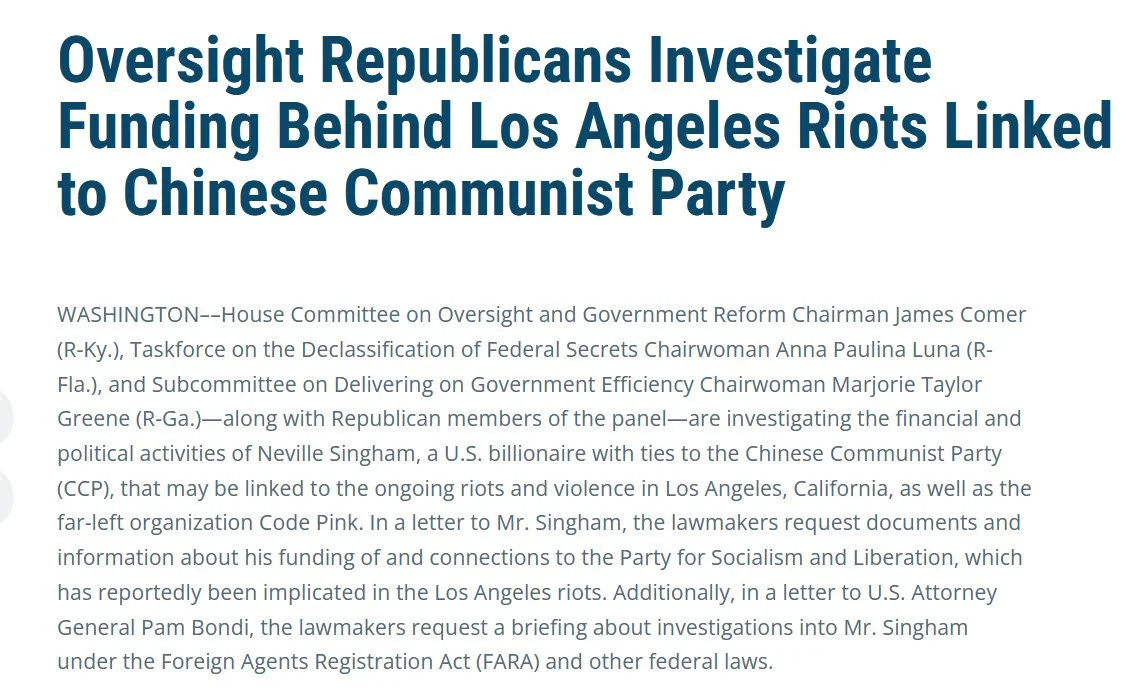
U.S. Congress: The House Ways and Means Committee (2025) exposed The People's Forum's $20 million from Singham, questioning tax-exempt status. Oversight Republicans subpoenaed him in 2025 over funding for anti-ICE riots in Los Angeles and links to the Party for Socialism and Liberation (PSL). Lawmakers requested Treasury asset freezes and DOJ FARA investigations.
waysandmeans.house.gov +3
India: Enforcement Directorate raided News Click in 2021–2023, alleging ₹380 million ($5 million) from Singham for pro-China propaganda.
en.wikipedia.org +1
South Africa: New Frame shut down in 2022 amid staff protests over ideological bias tied to Singham's funding.
nytimes.com
Recent Protests: As of early 2026, X discussions link Singham to funding U.S. anti-ICE and pro-Palestinian agitation, with users calling him a "Maoist millionaire" and "traitor" behind astroturf movements.
Singham denies CCP affiliation, insisting his actions stem from personal Maoist beliefs. Experts note potential FARA violations due to unregistered foreign influence.
nytimes.com
Personal Life
Singham married Jodie Evans, Code Pink co-founder, in 2017. They reside in Shanghai. His son, Nathan Singham, works for the Tricontinental Institute. Singham has supported figures like Julian Assange, Jeremy Hammond, and Aaron Swartz, and opposed NATO during the Ukraine conflict.
en.wikipedia.org +1
Conclusion
Neville Roy Singham's trajectory from Detroit activist to Shanghai-based philanthropist illustrates the complexities of globalized ideology and finance. While his contributions to software and leftist causes are notable, allegations of advancing CCP influence raise questions about foreign interference in democratic societies. Ongoing investigations may clarify these ties, but Singham's network continues to shape activism worldwide. This white paper underscores the need for transparency in philanthropic funding amid geopolitical tensions.
George Soros
George Soros is a Hungarian-born American billionaire investor, philanthropist, author, and activist, widely regarded as one of the most successful and influential financiers of the modern era. He is best known for his hedge fund successes, massive charitable giving through the Open Society Foundations, and advocacy for liberal democratic causes—often making him a polarizing figure.
Early Life and Survival of Persecution
Born György Schwartz on August 12, 1930, in Budapest, Hungary, to a prosperous non-observant Jewish family, Soros survived the Nazi occupation of Hungary in 1944. His father, Tivadar Soros (a lawyer), obtained false identity papers to disguise the family's Jewish heritage, allowing them to split up and hide rather than be deported to concentration camps. This experience profoundly shaped Soros's worldview, instilling a deep commitment to preventing oppression and promoting "open societies" (a concept he adopted from philosopher Karl Popper).After the war, with Soviet communism consolidating power in Hungary, Soros left for London in 1947 at age 17. He worked odd jobs (railway porter, waiter) while studying philosophy at the London School of Economics (LSE), earning a BSc in 1951 and an MSc in 1954. Influenced by Popper's ideas on open societies, he initially considered academia but shifted to finance.
Career in Finance
Soros emigrated to the United States in 1956 and began working in banking and arbitrage trading. In 1969, he founded his first hedge fund (initially Double Eagle, later the Quantum Fund under Soros Fund Management). His most famous trade came in 1992 during "Black Wednesday," when he bet against the British pound, earning over $1 billion in a single day—earning him the nickname "the man who broke the Bank of England." His funds achieved remarkable returns (averaging ~30% annually from 1970–2000) through speculative bets on currencies and markets.As of recent estimates, his personal net worth has fluctuated around $7–8 billion, though he has donated the vast majority of his fortune to philanthropy.Philanthropy and Political ActivismIn 1979, Soros began his philanthropic work (starting in Africa and expanding globally). He founded the Open Society Foundations (OSF), which have received over $32 billion from him to support democracy, human rights, education, public health, and justice reform worldwide. This includes aiding transitions from communism in Eastern Europe (e.g., funding opposition groups and education during the late 1980s–1990s), establishing the Central European University in Budapest, and backing initiatives in the U.S. (e.g., contributions to groups like MoveOn.org, the Center for American Progress, and Democratic causes).Soros has authored books like The Alchemy of Finance (1987), The Crisis of Global Capitalism (1998), and others critiquing markets, globalization, and authoritarianism.
Controversies
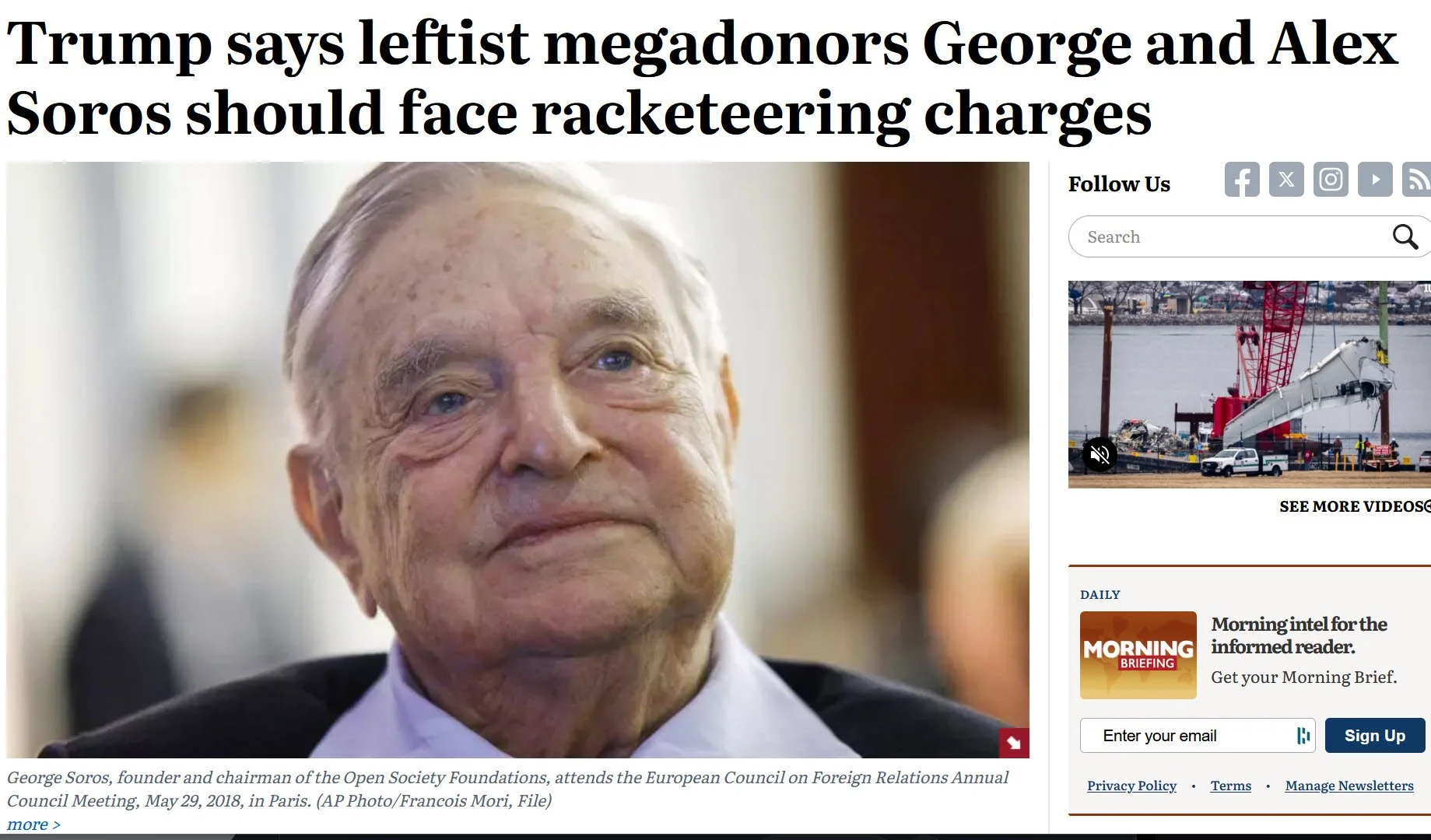
Soros is a frequent target of criticism, particularly from conservative and nationalist groups, who accuse him of undue political influence, funding "globalist" agendas, or interfering in elections (claims often tied to conspiracy theories). He has faced attacks, including a 2018 pipe bomb sent to his home. In his native Hungary, the government under Viktor Orbán has targeted his organizations and university.For a concise official overview, see his profile on the Open Society Foundations site or georgesoros.com, which emphasizes his life story from survival under Nazis to building open societies. Detailed biographies include Michael T. Kaufman's Soros: The Life and Times of a Messianic Billionaire (2002) and others drawing from his own accounts.
Soros has funded numerous district attorney campaigns (e.g., via PACs supporting figures like Alvin Bragg in Manhattan, George Gascon in Los Angeles, and others in cities like Philadelphia and San Francisco). These prosecutors are accused of pursuing soft-on-crime policies, refusing to prosecute certain offenses, reducing charges, opposing bail, and contributing to rises in violent crime.
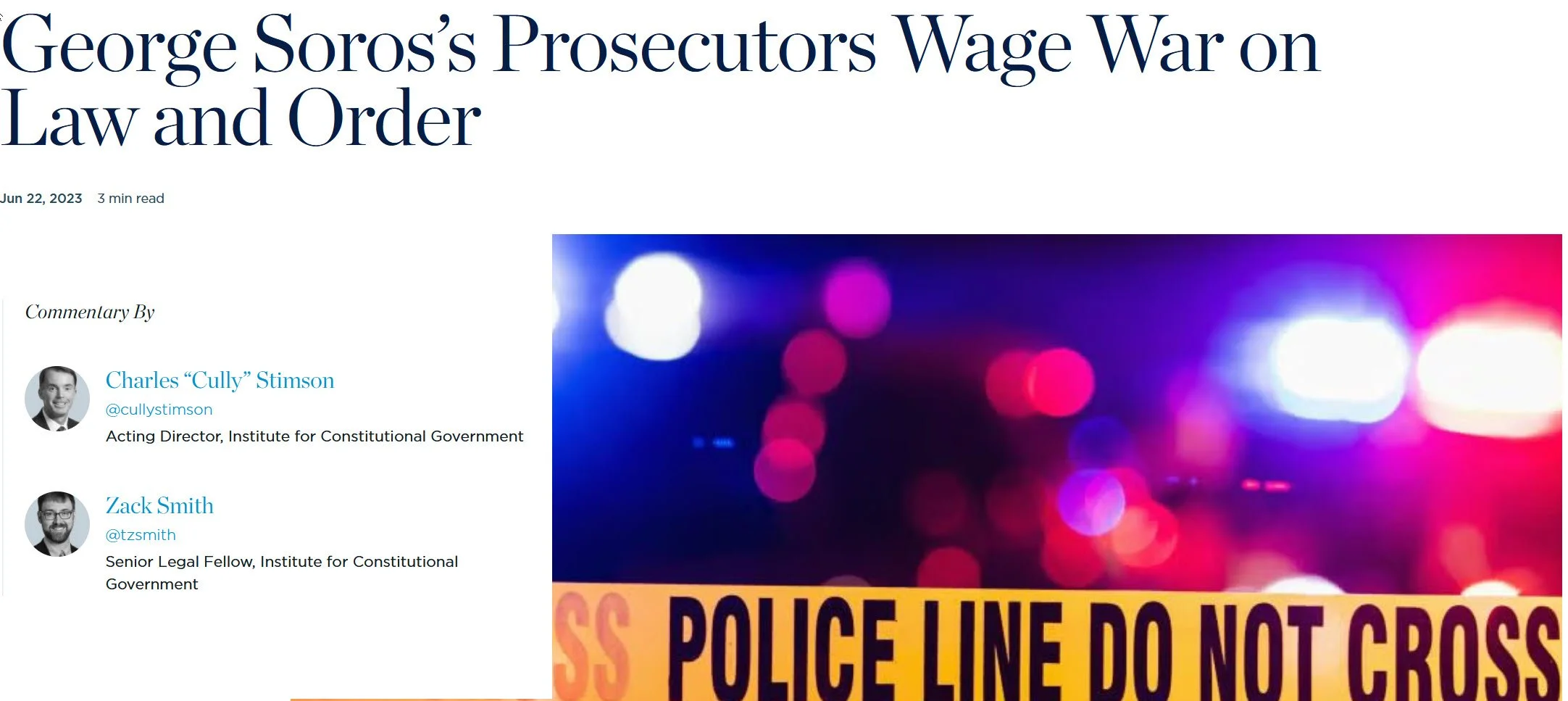
Heritage Foundation analyses describe this as Soros-backed "prosecutors waging war on law and order," with claims that his money has backed over 75 such prosecutors with tens of millions in funding, leading to "pro-criminal, anti-victim" approaches and "prosecutorial nullification."
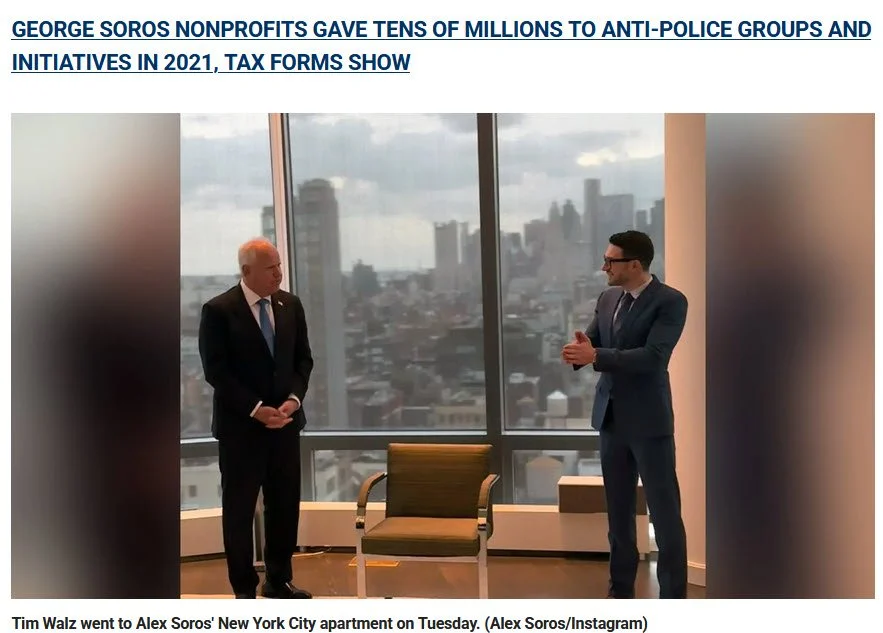
He and his foundations are criticized for supporting anti-police groups, defund-the-police efforts (e.g., donations during the George Floyd era), open borders policies, and left-wing political groups that allegedly destabilize communities.
Outlets like The Washington Times have run pieces calling him an "oligarch" seeking to "destroy America" through internal means, funding media acquisitions (e.g., radio stations), and influencing elections heavily toward Democrats (e.g., millions to PACs and nonprofits aligned with progressive agendas).
His Open Society Foundations (now led by his son Alex Soros) are depicted as a vehicle for global left-wing activism, including massive grants to organizations promoting social justice, human rights in ways conservatives view as undermining traditional law enforcement and national sovereignty.
Recent coverage highlights his family's continued political involvement, such as Alex Soros meeting with Democrats and funding left-leaning candidates and causes.
USAID and George Soros
Key Allegations and ExamplesCritics, including congressional testimony, conservative outlets like Fox News and the Washington Examiner, and figures such as Elon Musk (who called USAID a "criminal organization" on X), USAID has funneled billions in taxpayer dollars to organizations aligned with Soros's OSF, effectively subsidizing progressive activism, regime change efforts, and anti-conservative initiatives. Here's a breakdown of the main points:
Historical Partnerships and Funding Overlaps:
In 2001, the Soros Foundations Network (predecessor to OSF) listed USAID as a "donor partner" alongside other international aid agencies.
oversight.house.gov
Critics interpret this as evidence of coordinated funding.
USAID has awarded significant grants to groups partnered with OSF. For instance, the East-West Management Institute (EWMI), which collaborates with OSF on rule-of-law and civil society projects, received over $270 million from USAID over 15 years, including $31.2 million in fiscal year 2024.
aa.com.tr
Another example is the Anti-Corruption Action Centre in Ukraine, where USAID provides 20.7% of funding and OSF is a backer.
aa.com.tr
USAID has also granted more than $27 million to the Tides Center, part of a network that funds left-leaning causes, including groups like Palestine Legal, which supports pro-Palestine activists.
oversight.house.gov
Specific Country-Level Criticisms:
Albania: Critics claim USAID-funded EWMI initiatives (starting with a $9 million Obama-era grant) supported judicial reforms that led to a "kangaroo court" prosecuting opposition leader Sali Berisha, an opponent of Albania's socialist prime minister. This is portrayed as silencing dissent and undermining democracy.
oversight.house.gov
Macedonia: USAID and OSF are accused of backing efforts that critics say interfered in local politics, prompting questions from U.S. lawmakers like Rep. Chris Smith (R-N.J.) and Sen. Mike Lee (R-Utah) about why taxpayer funds support attacks on conservative actors.
oversight.house.gov
Ukraine: Allegations include USAID and OSF funding media outlets linked to the 2019 Trump impeachment inquiry and anti-corruption groups seen as biased.
oversight.house.gov
Broader claims suggest these funds propped up "socialist leaders" or fueled protests.
en.wikipedia.org
Other regions like Guatemala, Syria, and Eastern Europe are cited for similar "anti-U.S." or selective anti-corruption campaigns.
oversight.house.gov
Personnel Ties:
OSF has hired at least five former USAID staffers, including Beth Dunlap, a former senior transition adviser at USAID who worked on programs in Syria, Libya, and Ukraine.
oversight.house.gov
Former USAID Administrator Samantha Power met with OSF leaders during her tenure.
oversight.house.gov
These connections are framed as evidence of a "revolving door" enabling Soros's influence over U.S. foreign aid.
Broader Narrative:
Allegations tie into claims of USAID's "dark money" network aligning with Soros to influence the Biden administration, fund globalist agendas, and even spark chaos in countries like Bangladesh, India, and the U.S. itself (e.g., via NGOs).
congress.gov
Some extreme versions on social media and YouTube suggest Soros used USAID as a "personal piggy bank" for interference.
aa.com.tr