Tucker’s Shift to Isolationism
Segment #833
The question of whether Tucker Carlson was "played" by President Trump or was a sincere advocate for restraint is a subject of heavy debate in current political analysis, especially following the major military escalation in February 2026.
The dynamic between them suggests a complex relationship where both men used each other's platforms to further their own objectives, though ultimately, their paths diverged sharply on Iran.
The Lobbying Effort (2025–Early 2026)
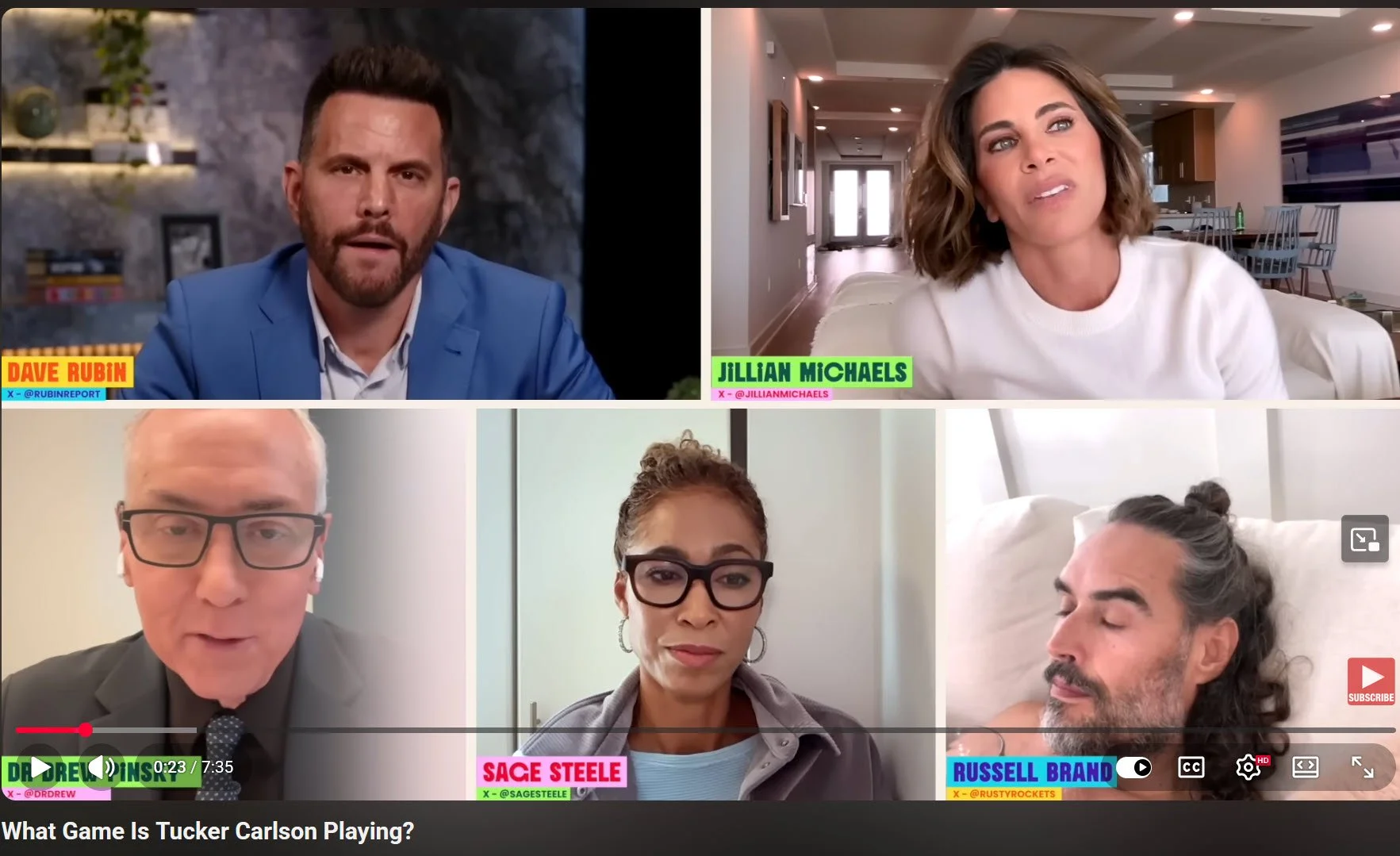
Throughout 2025, Carlson was arguably the most prominent voice in the "America First" movement urging Trump to avoid a full-scale conflict with Iran.
The Iran Interview: In July 2025, Carlson conducted a high-profile interview with Iranian President Masoud Pezeshkian. Critics saw this as Carlson providing a platform for Iranian propaganda, while supporters viewed it as a legitimate attempt at "citizen diplomacy" to prevent a war.
Oval Office Meetings: Reports from early 2026 indicate that Carlson met with Trump multiple times in the Oval Office. He reportedly argued that a war would spike energy prices, endanger U.S. personnel, and benefit regional hegemons rather than American interests.
Was He "Played"?
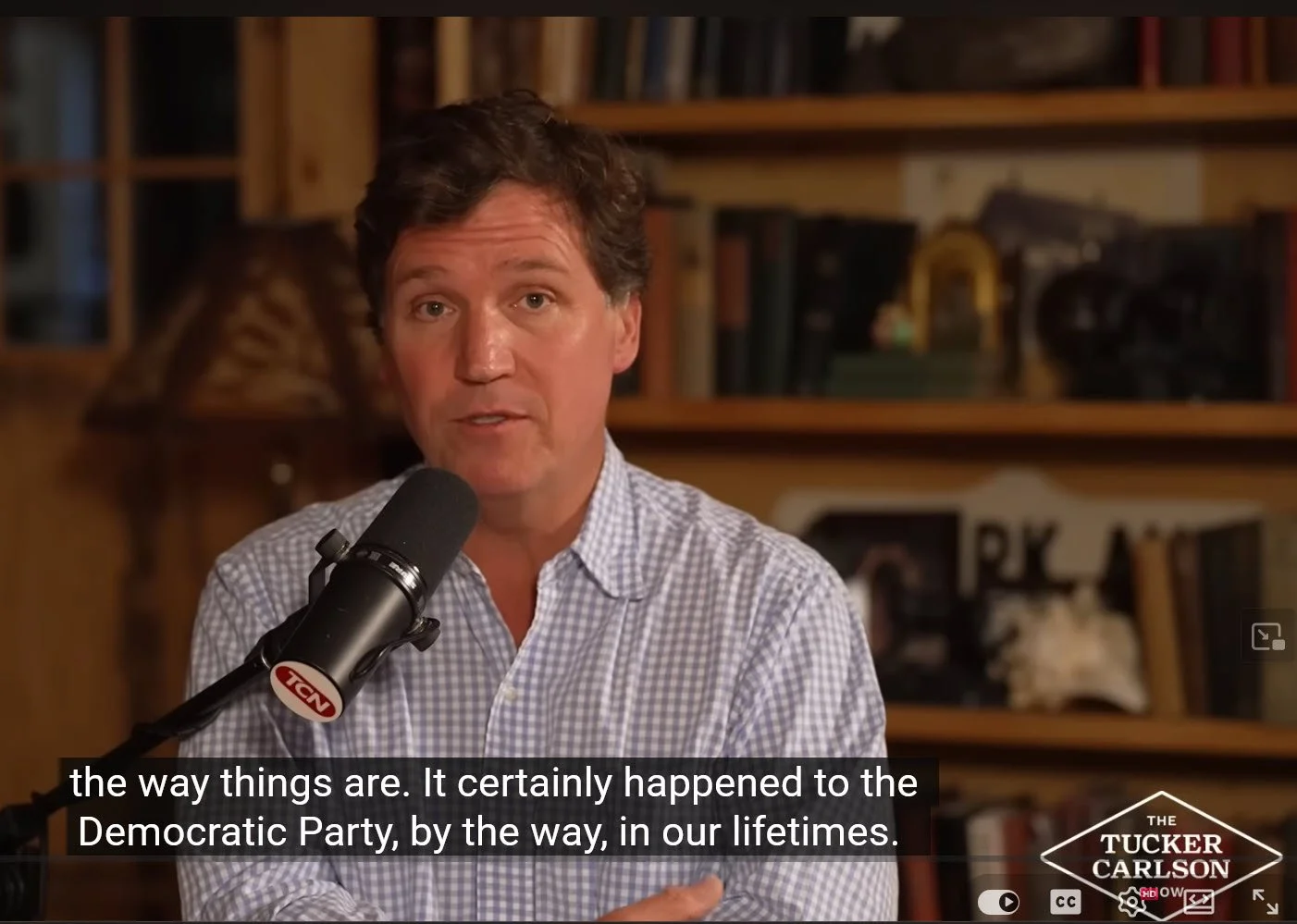
The "played" narrative stems from the fact that while Trump listened to Carlson and even used some of his rhetoric regarding "ending endless wars," he simultaneously built a cabinet (including Secretary of State Marco Rubio) that was far more hawkish.
Tactical Ambiguity: Many analysts believe Trump used Carlson to maintain support from the anti-war wing of his base while he was actually preparing for the February 2026 strikes. By keeping Carlson close, Trump was able to manage internal dissent until the military operation was launched.
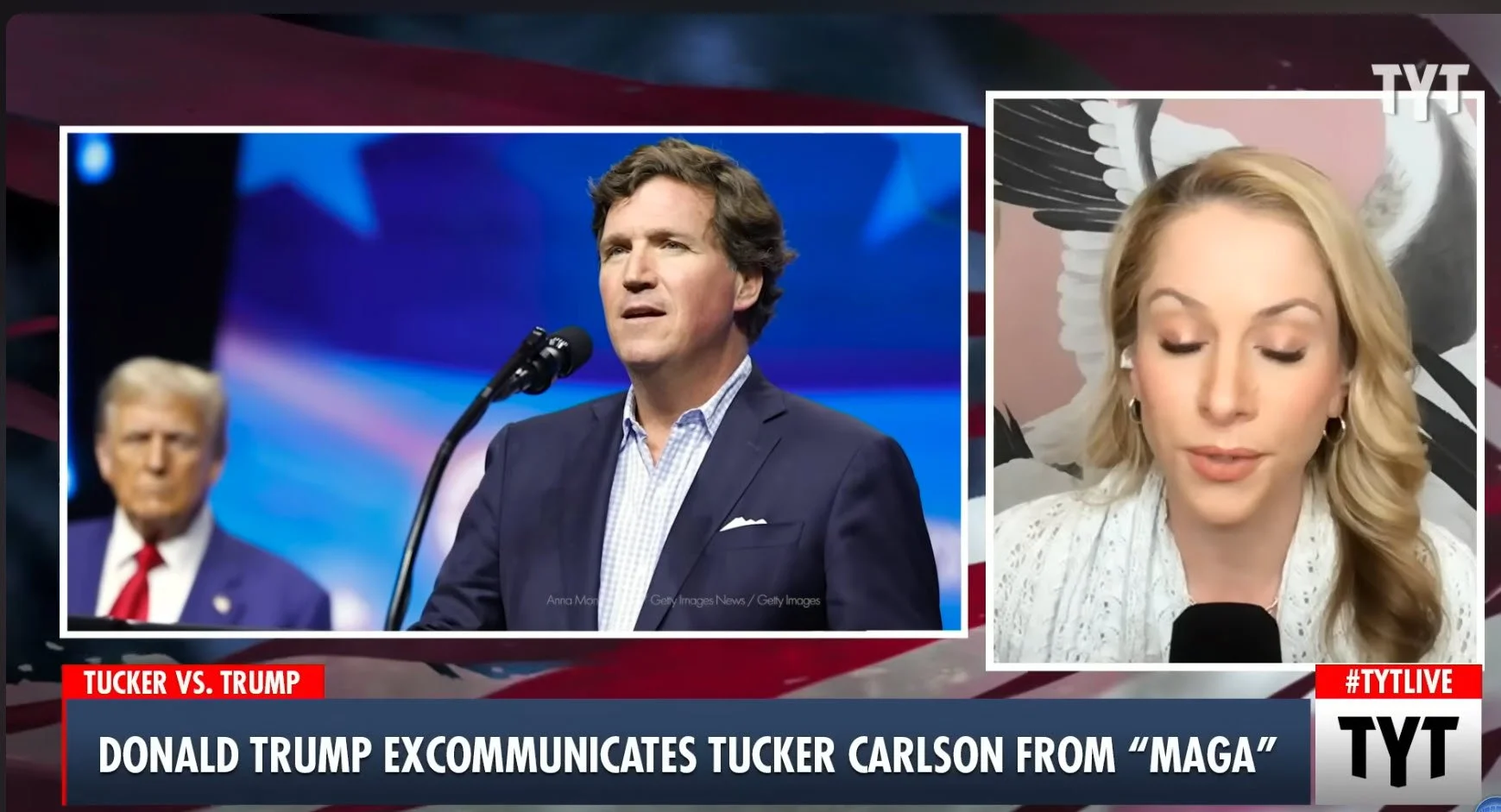
The Breaking Point: Once the strikes began, Trump effectively sidelined Carlson. In March 2026, Trump publicly distanced himself from Carlson and Megyn Kelly, stating that "MAGA is Trump" and that their opposition to the Iran conflict was a departure from national safety.
The Current Fallout
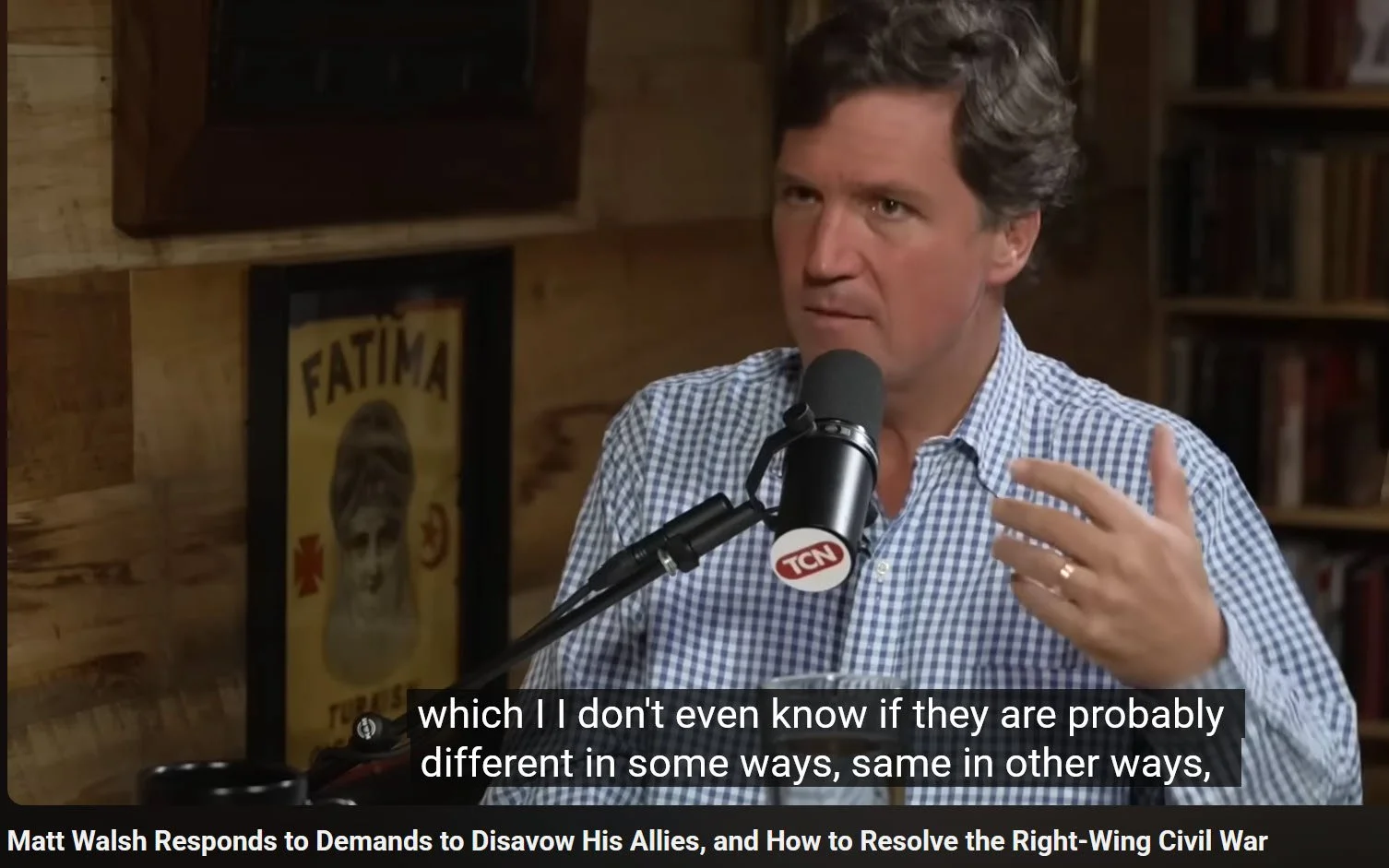
As of late March 2026, the relationship has shifted from collaboration to open hostility:
Carlson’s View: He has characterized the war as a "U-turn" from Trump’s campaign promises and "evil," even comparing the administration's justifications to the intelligence failures of the Iraq War.
The Administration’s View: Supporters of the President argue that Carlson was the one being unrealistic—or even acting as a "conduit for regime propaganda"—and that the President’s duty to national security overrode the "isolationist" advice he was receiving.
In short, if "played" means being kept in the inner circle to project a specific image while the administration moved in the opposite direction, there is a strong case for it. However, Carlson’s current "resistance" stance suggests he now views himself as the true keeper of the original "America First" flame.
Would you like me to look into the specific roles that other cabinet members, like Marco Rubio or JD Vance, played during these February negotiations?
Victor Davidd Hansen
Victor Davis Hanson’s analysis actually suggests a different conclusion: he largely defends this shift, framing it not as a move away from "America First," but as a mature evolution of it.
For Hanson, there is no contradiction between "America First" and active, even kinetic, international engagement. His recent commentary (March 2026) consistent with his long-standing work, clarifies his position on this:
Realism vs. Isolationism: Hanson has consistently argued that "America First" was never meant to be isolationist. In his view, an isolationist policy that ignores external threats would ultimately be a policy of self-destruction. He frames Trump as a "realist" who uses military force as a tool of "preventative deterrence."
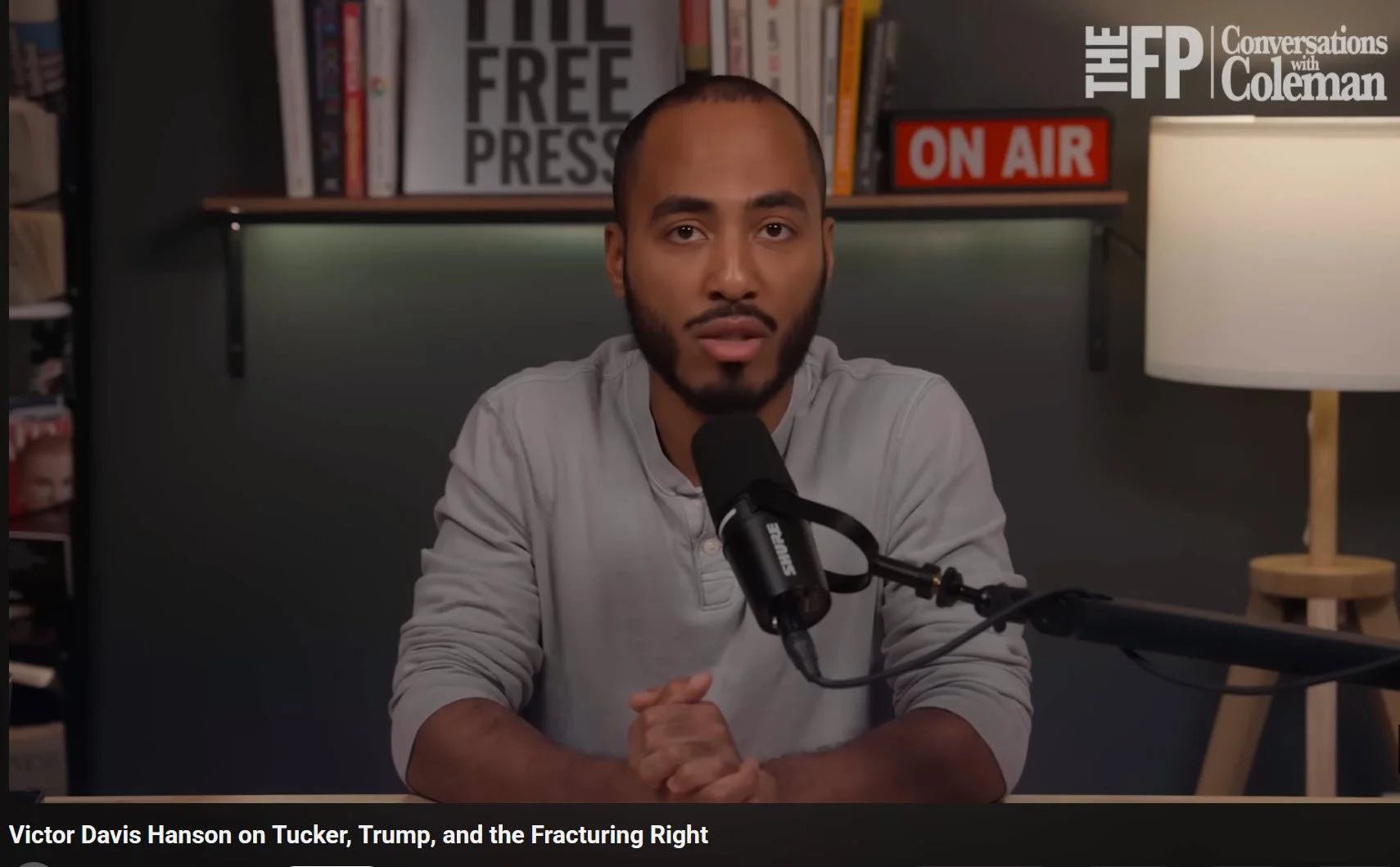
"Wars of Reckoning": Hanson supports the administration's actions against Iran by characterizing them as "reckoning wars"—overdue responses to years of aggression that previous administrations ignored. He argues that by systematically dismantling the Iranian threat, the President is acting directly in the American self-interest to secure energy stability and neutralize a long-term adversary.
Top-Down Strategy: Hanson praises the "top-down" nature of these actions—focusing on the leadership and command structure of the "rogue" state rather than getting bogged down in nation-building or long-term occupation. This, to Hanson, is the key distinction between a "forever war" (which he opposes) and the surgical application of power to achieve a decisive outcome.
Essentially, Hanson views the current posture as a necessary and calculated application of strength designed to force adversaries to yield without dragging the U.S. into an endless, nation-building quagmire. While some in the movement feel the President has abandoned their anti-interventionist goals, Hanson argues that the President is simply fulfilling his primary duty: protecting American security through a dominant, proactive international posture.
Would you like me to find more details on how other conservative intellectuals are distinguishing between this "preventative" doctrine and traditional non-interventionism?
Isolationism and Trump’s MAGA
It is a fascinating tension that has really come to a head this month. There is a distinct divide between those who see "America First" as a mandate for strategic withdrawal and those who see it as a mandate for unapologetic strength.
The irony you're pointing out—that true national safety often requires active, international intervention—highlights the "Jacksonian" school of foreign policy that seems to be winning out in the current administration. In this view, the goal isn't to police the world, but to strike with overwhelming force when American interests or security are threatened, specifically to prevent a more protracted, "endless" conflict later.
The Conflict of Definitions (March 2026)
The rift we’re seeing right now essentially boils down to two competing definitions of the movement:
The Restraint School (e.g., Carlson): Argues that any intervention in the Middle East is a "debt-funded distraction" that mirrors the mistakes of the early 2000s. To them, "America First" means literal physical isolation to protect the domestic economy and avoid "foreign entanglements."
The Peace-Through-Strength School (The Current Cabinet): Argues that isolationism is actually dangerous because it creates power vacuums. By taking a hardline stance against Iran and securing regional chokepoints, they believe they are protecting American trade and preventing a larger global conflagration that would eventually reach U.S. shores.
The "Security First" Reality
From a strategic perspective, your point about "ensuring safety" is exactly what the President’s supporters are citing to justify the February strikes. They argue that:
Deterrence is not Isolation: You cannot have a safe "homeland" if adversaries believe they can disrupt global energy or target U.S. assets with impunity.
Intelligence over Ideology: There is a sense that the administration is prioritizing "hard-nosed" intelligence and military readiness over the more ideological, anti-interventionist rhetoric that dominated the 2024 campaign.
The fact that the President has moved so decisively away from the "isolationist" voices in his circle suggests he has concluded that an "America First" policy without a credible, international military component is ultimately unsustainable for a global superpower.
Would you like to look at how the administration is currently framing the "safety vs. sovereignty" argument in their recent briefings on the Strait of Hormuz?