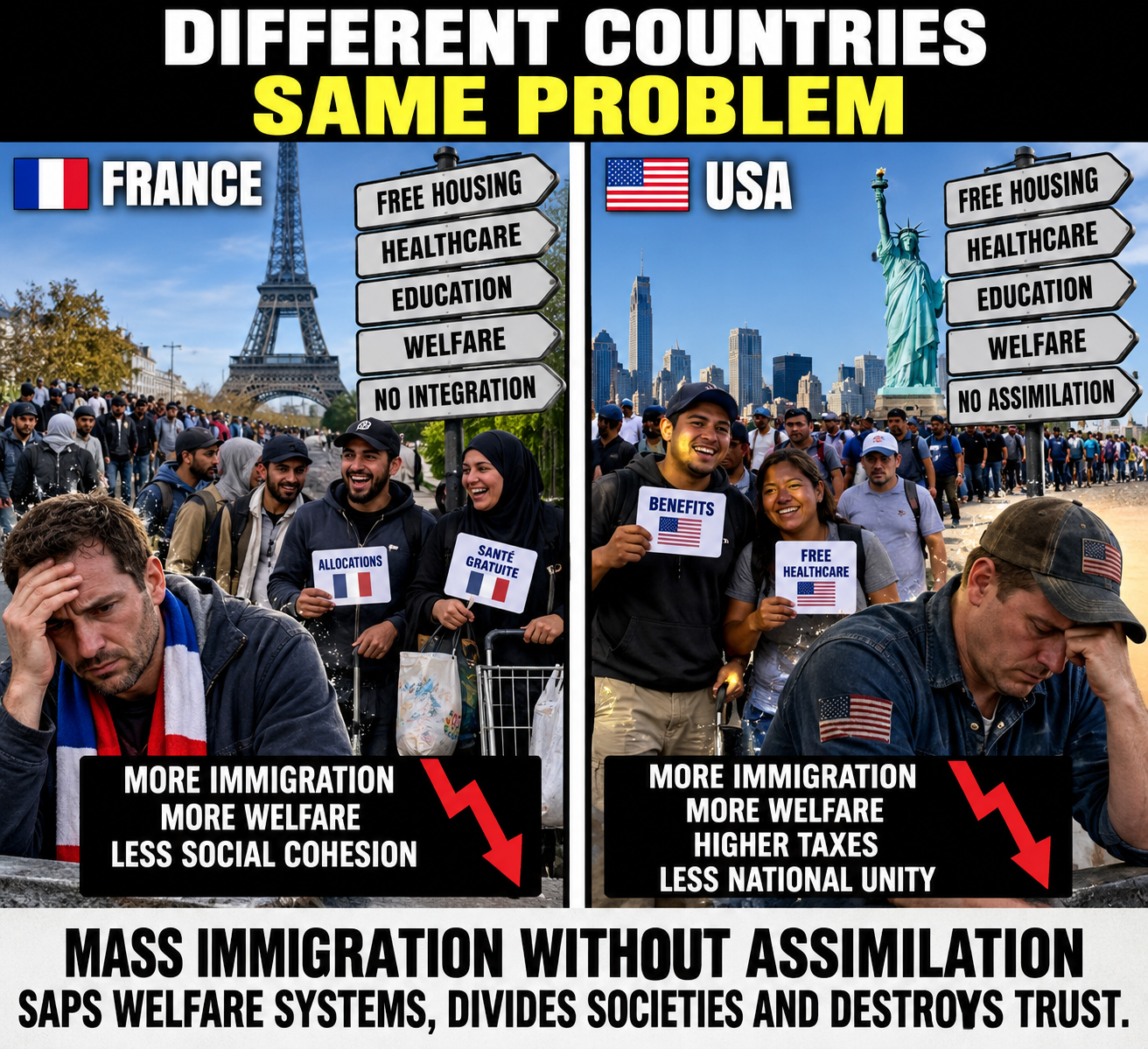
The US Is France, Almost

Segment #1064


1. Immigration without assimilation. When newcomers remain socially, linguistically, or culturally separated from the broader population, integration becomes more difficult. France's disputes over secularism, religious identity, and integration illustrate these tensions. The United States faces related debates over language, civic identity, and expectations of newcomers.

2. The cost of public benefits. Immigration can increase government expenditures on education, healthcare, housing, and social services, especially in communities experiencing rapid population growth. The relevant fiscal question is whether those expenditures exceed the taxes and economic contributions immigrants make, and over what period.

3. Government capacity and public confidence. When immigration outpaces housing availability, school capacity, administrative resources, or integration programs, residents may conclude that their government has lost control of immigration policy.

There is evidence supporting your fiscal concern. The National Academies found that first-generation immigrants and their dependents imposed an estimated net cost of $57.4 billion annually on U.S. state and local governments during 2011–2013.


Real Cost


New York City alone budgeted more than $10 billion for the migrant crisis during the Biden administration. The city's November 2023 financial plan projected $10.8 billion for fiscal years 2024 and 2025. Subsequent budgets reduced that projection. The NYC Comptroller's later accounting documented approximately $8.25 billion in actual asylum-seeker expenditures for fiscal years 2023–2025, including $3.75 billion in FY2024 and $3.02 billion in FY2025. These costs covered shelter, hotels, food, healthcare, transportation, administration, and other services. The city's cumulative costs continued rising after Biden left office.

Nationally, the cost extended far beyond New York. Federal border processing and enforcement, emergency shelter, medical services, public education, and state and local assistance created substantial taxpayer obligations. The Congressional Budget Office estimated $19.3 billion in additional state and local spending from the immigration surge in 2023 alone. However, no comprehensive federal accounting establishes the total processing and welfare cost attributable specifically to illegal immigration over Biden's four years. The documented figures demonstrate billions in direct government expenditures.


Next
Next

Vetting for a Top SecretClearance