Segment #1065
SPECIAL REPORT
Robert Gouveia, The Washington Post, and Allegations of Political Lawfare
October 21, 2026 | Political and Legal Analysis
Executive Summary
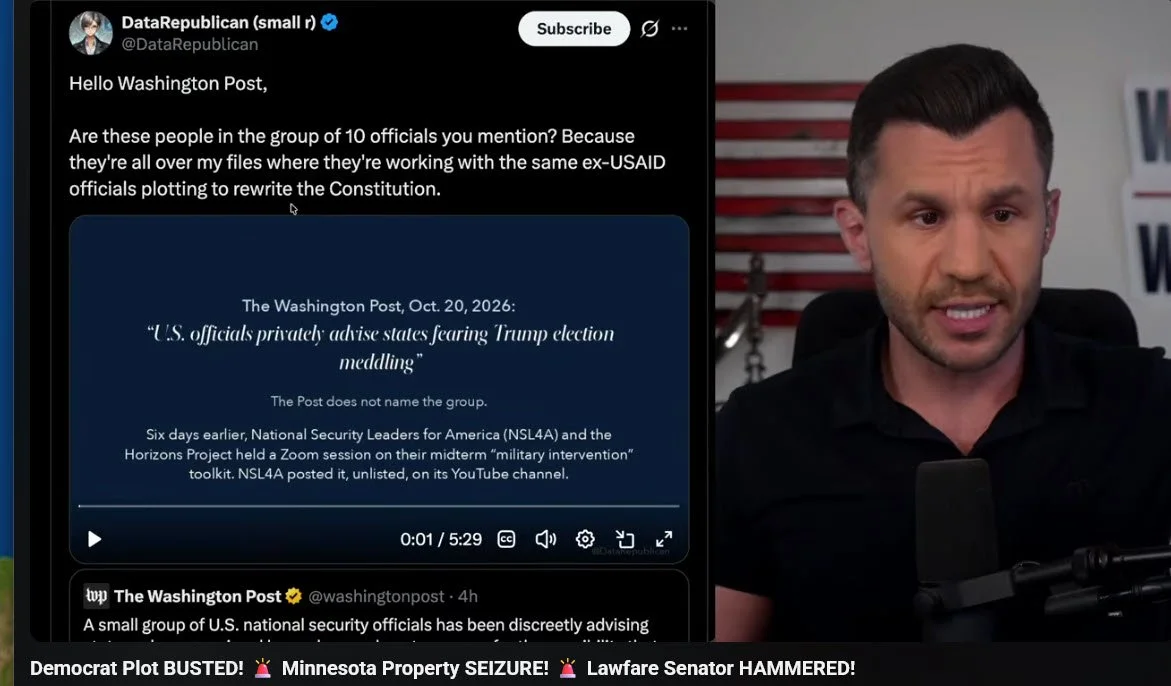
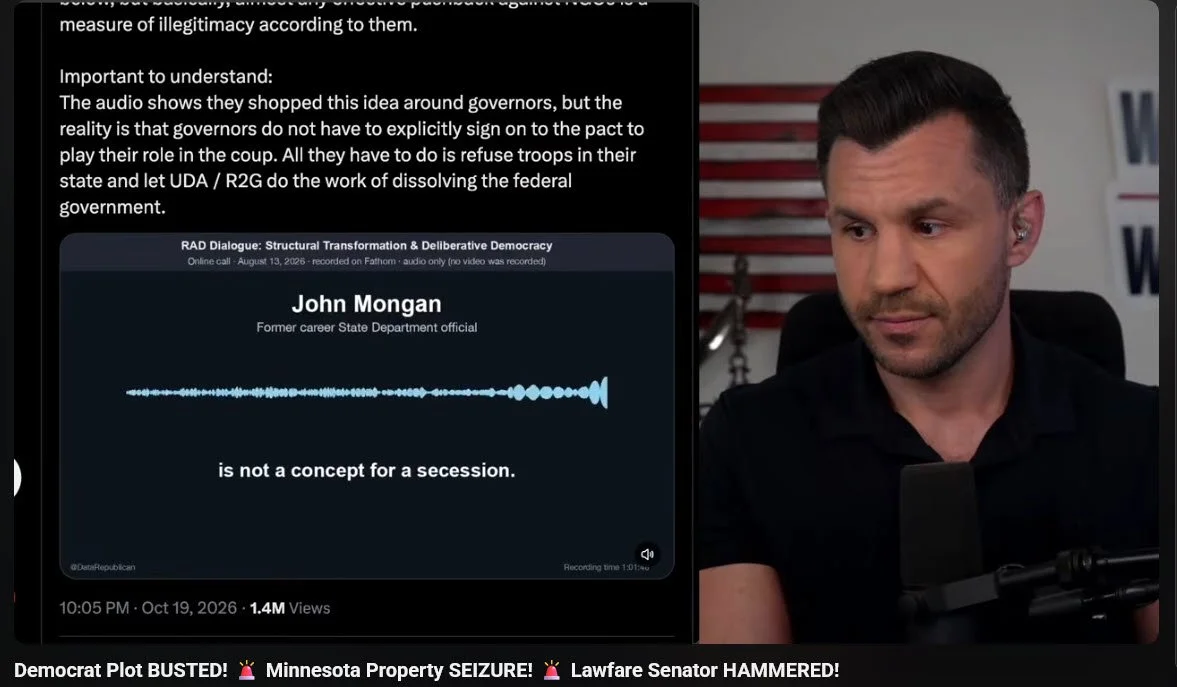
Attorney and political commentator Robert Gouveia released a livestream on October 20 titled “Democrat Plot BUSTED! Minnesota Property SEIZURE! Lawfare Senator HAMMERED!” The broadcast raises allegations of political misconduct, government weaponization, and abuse of legal authority.
The central question is whether Democratic political figures coordinated efforts to use federal investigative and prosecutorial powers against Donald Trump and his associates.
Recent reporting by The Washington Post provides important context. In particular, an October report describes a Trump administration election-fraud task force that has shifted attention toward officials who previously investigated Trump. However, the available reporting does not establish that the alleged Democratic conspiracy has been proven.
Listen to What They Are Telling You. Believe Them.
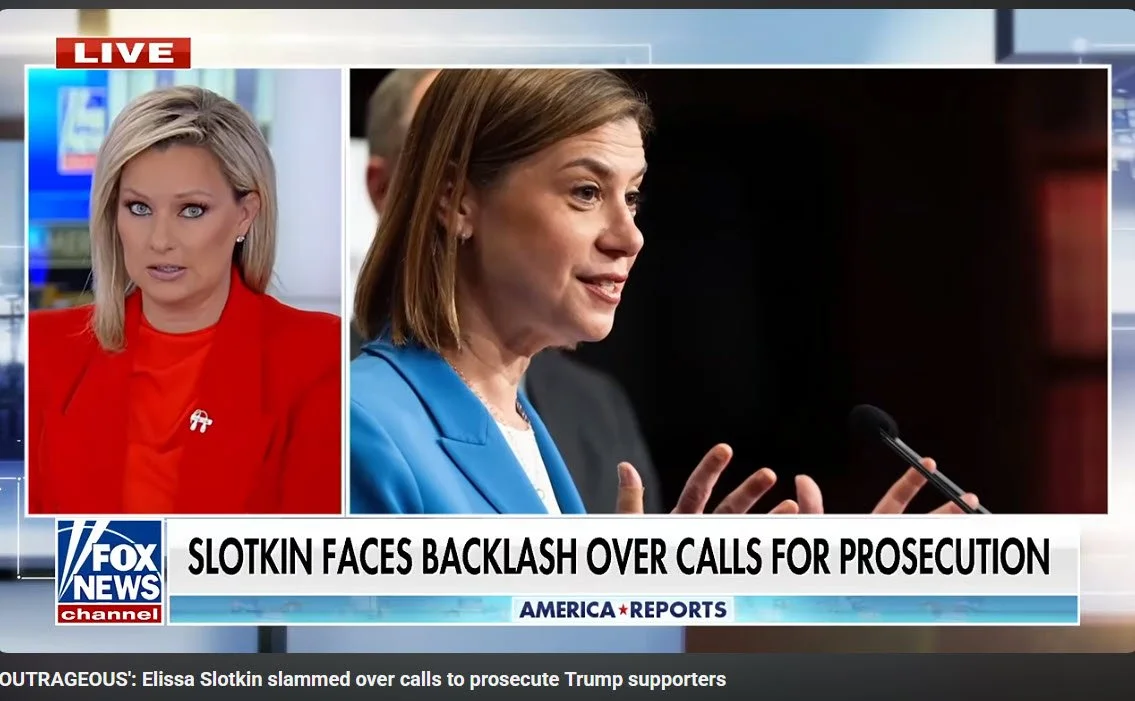
The Washington Post's reporting on alleged Democratic discussions about resisting a Trump administration, combined with Senator Elissa Slotkin's remarks about prosecuting Trump officials and discouraging young people from joining his movement, deserves serious scrutiny.
These are not statements Americans should casually dismiss as political theater. They raise fundamental questions about how far political leaders are prepared to go to defeat their opponents, punish those who serve them, and intimidate the next generation of political participants.
There is a profound difference between enforcing the law and weaponizing the law to destroy a political movement. There is an equally profound difference between legitimate political opposition and efforts to undermine a duly elected government.
The American people should pay close attention to what these politicians say, what they propose, and what they actually do. Demand the evidence. Demand accountability. And never accept political intimidation, selective prosecution, or attacks on constitutional government from either party.
Listen to their words. Examine their intentions. Hold them accountable for their actions. The warning signs of political repression should never be ignored simply because they come from people claiming to defend democracy.
Project On Government Oversight
The Alleged Democratic Plot
The allegation underlying Gouveia's political commentary appears to concern the possibility that government investigations were coordinated to damage Trump politically.
There are three separate questions that must be answered:
Did government officials communicate or coordinate their investigations for political purposes?
Did those officials improperly use prosecutorial or investigative authority?
Is there documentary evidence sufficient to establish criminal wrongdoing rather than political disagreement or ordinary interagency coordination?
These questions require internal communications, sworn testimony, court filings, and other primary evidence.
A politically consequential investigation is not, by itself, proof of an unlawful conspiracy.
What The Washington Post Has Reported
An October 20 summary by the Project On Government Oversight highlighted Washington Post reporting concerning a White House election-fraud task force.
According to that summary, the task force, initially charged with uncovering election fraud, has shifted toward releasing records that the administration is using to build a case against officials who investigated Trump.
The task force's leader, journalist John Solomon, denied working with a Florida grand jury investigation examining allegations of a longstanding conspiracy against Trump.
Project On Government Oversight
This reporting is particularly relevant because it establishes that federal officials are examining actions by previous investigators.
What remains unresolved is whether those investigations will produce evidence of a coordinated criminal scheme.
The Broader Question of Government Weaponization
The controversy extends beyond a single administration.
In May 2026, The Washington Post reported that the Trump administration had established a nearly $1.8 billion fund intended to compensate individuals claiming they were improperly targeted by federal authorities.
Acting Attorney General Todd Blanche described the initiative as a mechanism for addressing alleged government weaponization.
Critics challenged the arrangement because of its limited oversight and potential conflicts of interest. The fund itself does not establish the merits of individual claims of political persecution.The Washington Post
This development illustrates how allegations of politically motivated law enforcement have become an institutional issue involving the Justice Department, Congress, and the courts.
Minnesota: Separate Investigations and Property Seizures
Gouveia's headline also references Minnesota and property seizure.
One documented Minnesota-related case involves Representative Ilhan Omar.
Federal authorities searched her Washington residence in October 2026, seized property including her cellphone, and issued grand jury subpoenas as part of an investigation into potential immigration-document fraud. Omar denies wrongdoing, and her attorneys have challenged the legality of the search.
A separate January 2026 investigation concerned Minnesota Governor Tim Walz and Minneapolis Mayor Jacob Frey over allegations that they impeded federal immigration enforcement. Both officials characterized the investigation as politically motivated.
Neither investigation should be confused with Gouveia's allegation of a Democratic plot without additional evidence connecting the stories.
Legal and Constitutional Implications
If officials deliberately manipulated federal investigations to target political opponents, several legal issues could arise, depending on the evidence:
Abuse of official authority and violations of constitutional rights.
Obstruction of justice or interference with lawful investigations.
False statements, fabricated evidence, or improper withholding of exculpatory information.
Conspiracy charges, if an unlawful agreement and the required statutory elements could be established.
Not every breach of Justice Department policy constitutes a crime. Proving a criminal conspiracy requires substantially more than evidence of political hostility or coordinated public messaging.
Findings and Outstanding Evidence
Federal scrutiny of officials who investigated Trump - Documented in reporting
Allegations of politically motivated law enforcement - Documented
Coordinated Democratic criminal conspiracy - Not established by the reviewed sources
Minnesota investigations and seizure of property - Documented in separate cases
Specific Washington Post article cited by Gouveia - Not yet identified
Criminal liability of individuals implicated in the alleged plot - Not established
Conclusion
The central issue raised by Gouveia deserves serious examination: whether federal law enforcement authority was deliberately employed for partisan political purposes.
There is documented evidence of investigations, intergovernmental conflicts, and allegations of political targeting. The available sources, however, do not yet establish a criminal conspiracy organized by Democratic officials.
The most consequential evidence would be contemporaneous communications, instructions from senior officials, grand jury testimony, or judicial findings demonstrating that investigators knowingly departed from lawful procedures to achieve political objectives.
Until those materials are identified and evaluated, the distinction between allegations of political lawfare and proven criminal misconduct remains essential.
Sources
Research limitation: The full Gouveia livestream transcript was not available for verification. This is a sourced contextual report, not a verified reconstruction of every allegation made in the broadcast.