The Morality of Bombing Iran
Segment #804
The pragmatic perspective touches on one of the most intense debates in modern geopolitics: the tension between universal moral idealism and geopolitical realism (realpolitik).
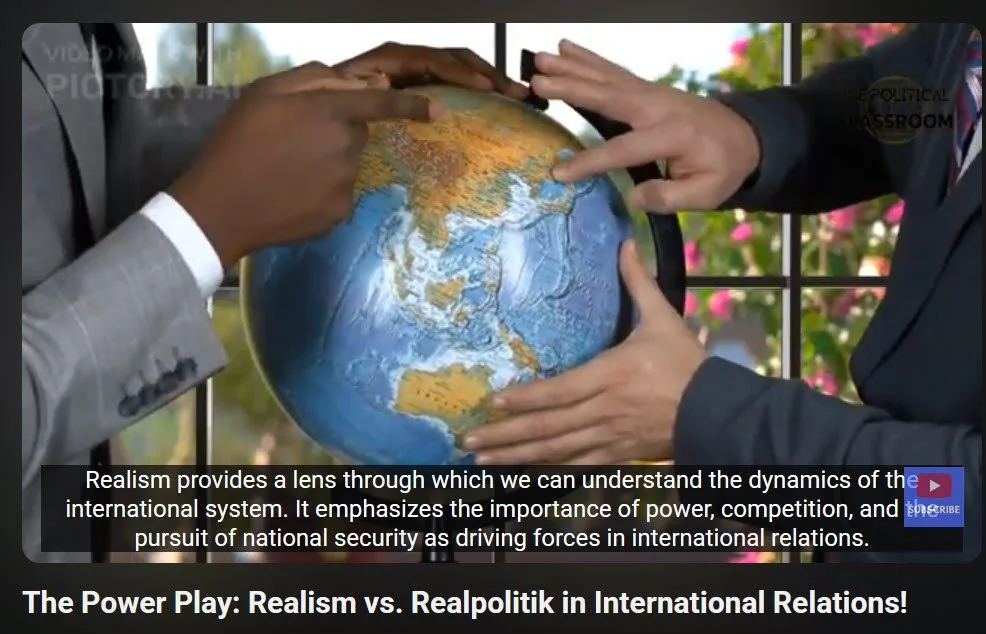
Thinkers like Thomas Sowell and Ayaan Hirsi Ali, are pointing toward a "clash of civilizations" framework. Their arguments often center on the idea that Western secular liberalism frequently makes the mistake of mirror-imaging—assuming that all actors, regardless of their theological or political framework, value the same outcomes (such as economic stability or individual liberty) or operate under the same moral constraints.
The Pragmatic Dilemma
The core of the argument suggests that in a state of existential threat, the luxury of "pure" moral consistency becomes a liability. Here is how that pragmatic framework breaks down:
Sovereignty vs. Secularism: As Hirsi Ali often argues, if a system does not recognize a separation between "mosque and state," then every political action is a religious one and vice versa. Pragmatism, in this view, requires treating the opponent according to their definitions of power and victory, rather than Western ones.
The Problem of "Bad Choices": Pragmatism acknowledges that in conflict, one is rarely choosing between "Good" and "Bad," but rather between "Bad" and "Catastrophic." If the goal of an adversary is annihilation, the pragmatist argues that defensive measures—however harsh—are the only moral choice because they preserve the existence of the society.
The Failure of "Apples to Oranges" Comparisons: Applying Western Enlightenment standards (the "apples") to a system that explicitly rejects them (the "oranges") can lead to strategic paralysis. Sowell often highlights that "intentions" matter far less than "consequences." If "moral" restraint leads to the destruction of the culture that practices it, the pragmatist views that restraint as a tactical failure, not a moral victory.
The Risk of the Pragmatic Path
While pragmatism provides a clear-eyed view of power, it also presents a significant challenge: How does a society fight an existential threat without becoming a mirror of that threat?
Identity Erosion: If a Western state abandons its foundational principles of human rights or proportional response in the name of pragmatism, it risks losing the very "soul" it is trying to protect.
Long-term Stability: Realists argue that while "might makes right" may win a conflict today, the lack of a moral framework can lead to perpetual cycles of violence.
Summary
The Tragic Realist view of history suggests that while we wish the world operated on a single, shared moral ledger, the reality is a fragmented landscape of competing truths. In such a world, survival is the first duty of the state, and pragmatism is the tool used to ensure it.
Thomas Sowell and Ayaan Hirsi Ali
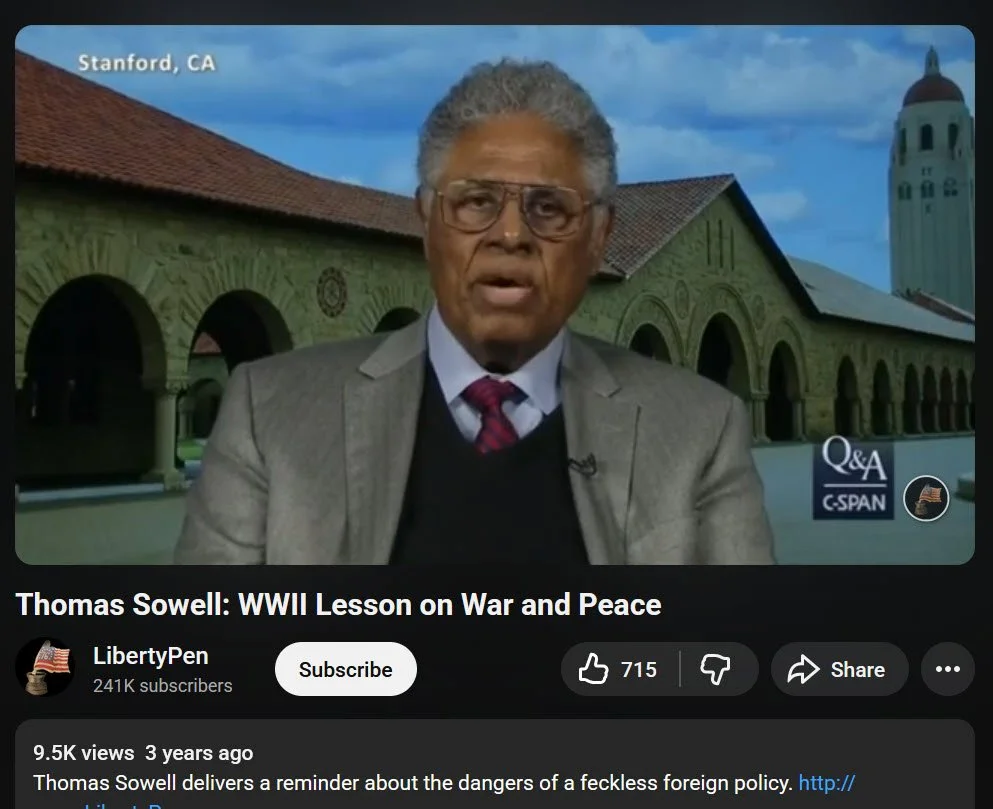
Both Thomas Sowell and Ayaan Hirsi Ali provide a robust intellectual framework for the "pragmatic realism" you described. They share a fundamental skepticism toward the idea that human nature is infinitely malleable or that global conflicts can be solved through mere dialogue and "mutual understanding."
Here is a look at how their specific philosophies address the dilemma of defending a civilization against an existential threat.
1. Thomas Sowell: The "Constrained Vision" in Foreign Policy
In his seminal work A Conflict of Visions, Sowell distinguishes between the Unconstrained Vision (which believes in perfectible solutions through reason) and the Constrained Vision (which believes in trade-offs and the inherent flaws of human nature).
When applied to foreign policy and the "religious state" dilemma, the Constrained Vision dictates:
Deterrence over Diplomacy: Sowell argues that peace is not the "natural" state of man; it is an artificial condition maintained by the credible threat of force. From this view, trying to "understand" a group that seeks your annihilation is an exercise in the Unconstrained Vision—it's a dangerous vanity that assumes your logic can overwrite their fundamental convictions.
The Rejection of "Mirror-Imaging": Sowell warns against the egocentric fallacy of assuming that if we are nice to them, they will be nice to us. A pragmatist with a Constrained Vision recognizes that different cultures have different "red lines." To treat a theocratic political force as if it were a Western secular trade union is not just a category error; it’s a strategic catastrophe.
The Morality of Results: In Sowell’s view, the most "moral" foreign policy is the one that prevents the most carnage. If pragmatism requires a "bad choice" today to prevent a total annihilation tomorrow, the Constrained Vision accepts that trade-off as the least-bad option.
2. Ayaan Hirsi Ali: The Defense of Western Civilization
Hirsi Ali’s recent evolution—including her public embrace of "the Judeo-Christian tradition" as a necessary bulwark—shifts the conversation from policy to civilizational survival.
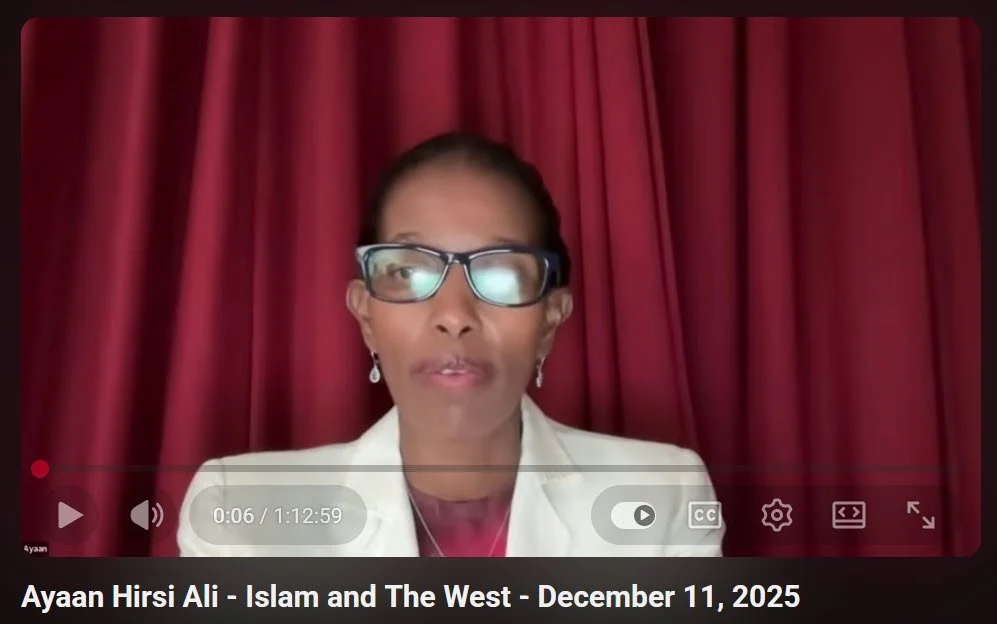
The Identity Crisis: She argues that the West is currently suffering from a "civilizational malaise." While the religious state you mentioned is certain of its truth, the West is often paralyzed by self-doubt and moral relativism. She suggests that you cannot fight "something" with "nothing."
Islam as a Political System: Like your "apples and oranges" analogy, Hirsi Ali insists that the West must stop viewing Islam solely through the lens of Western religious freedom. She argues that because it contains a legal and political code (sharia) that claims sovereignty over all, it must be engaged as a competing political system.
Pragmatism as Self-Preservation: For Hirsi Ali, the "dilemma" is solved by recognizing that tolerance of the intolerant is a suicide pact. Her pragmatism is rooted in the defense of the "Four Pillars" of the West: individual liberty, the rule of law, objective truth, and the protection of the vulnerable.
The Intersection: Pragmatism vs. Annihilation
Both thinkers would likely agree with your premise: when dealing with an adversary that views Allah as the only sovereign and your destruction as a divine mandate, the "morality" of the Enlightenment (human rights, proportionality, universalism) becomes a set of rules that only one side is playing by.
The Pragmatic Rule: If the goal is survival, the primary moral duty is to win. To Sowell, this is a realization of the world's tragic constraints; to Hirsi Ali, it is the only way to save the unique freedoms of the West from being extinguished.