Love My New Accent - Vote For Me
Segment #986
When a politician swaps accents or adopts a forced dialect depending on who is in the room, it isn't "diplomacy" or "mirroring"—it is fundamental dishonesty. It signals to voters that the candidate views them as a demographic caricature to be managed rather than people to be respected. Broadening a drawl, dropping consonants, or slipping into uncharacteristic slang for a specific audience reveals a cynical belief that voters are easily seduced by a cheap mimic. It is the ultimate display of political condescension: wearing a working-class or regional identity like a costume just long enough to extract a vote before flying back to D.C.
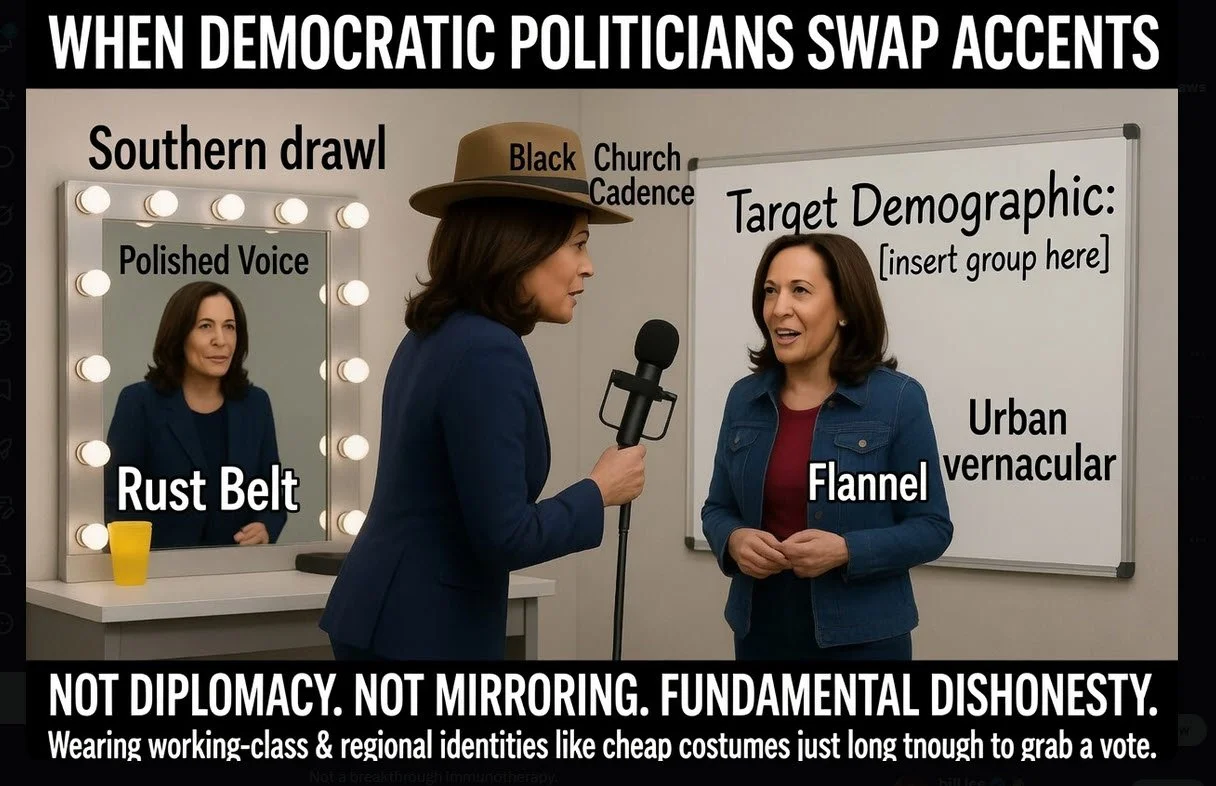
Authenticity cannot be faked, and voters instinctively recognize when a speaker’s voice doesn't match their background. When the cadence shifts abruptly between a polished committee hearing and a campaign stop in the heartland or inner city, the illusion shatters immediately. It exposes a profound lack of core identity—a politician willing to shape-shift their very voice for applause. In a profession already plagued by distrust, altering how you talk just to pander doesn't build rapport; it simply proves that who you are depends entirely on who happens to be listening. It’s campaign season again so whether it is AOC in Tennessee faking a black accent or Talerico the vegetarian suddenly discovering beef, a look back at these fake candidates should make you wonder why it continues.
High-Profile Moments of Accent & Dialect Shifts
Hillary Clinton in Selma, Alabama (2007)
The Context: Speaking at the First Baptist Church in Selma during a 2007 commemoration of the 1965 civil rights marches.
The Shift: Clinton adopted a heavy Southern drawl and a rhythmic black church cadence, quoting James Cleveland's famous gospel hymn: "I ain't no ways tired. I've come too far from where I started from..."
The Reaction: Media outlets and political opponents quickly seized on the audio clip. Critics dubbed it a forced, performative accent shift meant to mirror her immediate audience, while her campaign pointed out that Clinton spent years living in Arkansas and naturally drifted into Southern inflections.
Kamala Harris at Labor Day Rallies & Atlanta (2024)
The Context: During campaign stops in 2024—most notably addressing union members in Detroit and Pittsburgh on Labor Day, as well as a rally in Atlanta.
The Shift: Observers noted a stark difference in her pronunciation and cadence between a speech delivered to a Detroit union crowd ("You better thank a union member...") and formal press briefings in Washington. In Southern stops, she leaned into broader regional and AAVE inflections.
The Reaction: Opponents and political commentators mocked the sudden shift as staged "accent hopping". Linguists and defenders argued that Harris—having grown up in diverse multicultural spaces—was engaging in ordinary conversational code-switching to build rapport.
Alexandria Ocasio-Cortez at the National Action Network (2019)
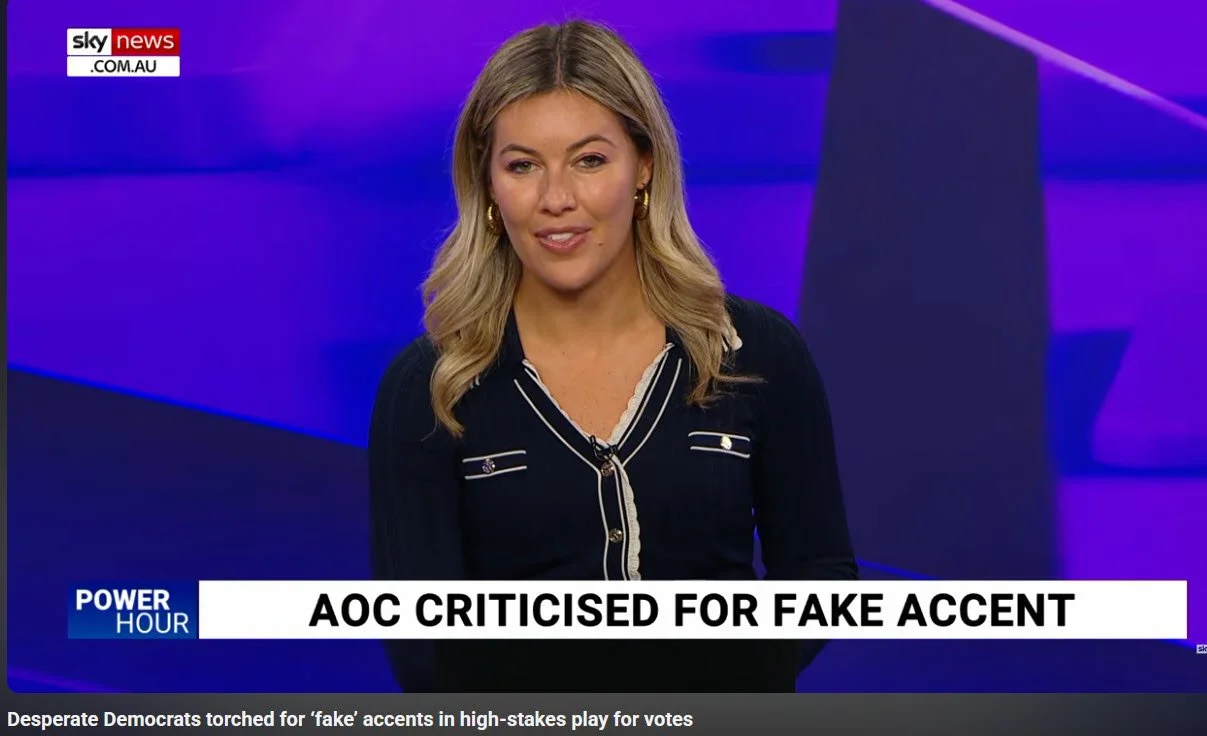
The Context: Addressing Rev. Al Sharpton’s National Action Network convention in New York City shortly after her election to Congress.
The Shift: AOC adopted an urban vernacular cadence and distinct vocal inflection while discussing her work as a former bartender: "I’m proud to be a bartender... Ain't nothing wrong with working for a living!"
The Reaction: Conservative commentators accused her of putting on a fake "hood accent" to pander to the crowd. AOC defended the shift publicly on social media, explaining that as someone raised in the Bronx and multicultural communities, her speech style naturally adapts depending on who she is talking to.
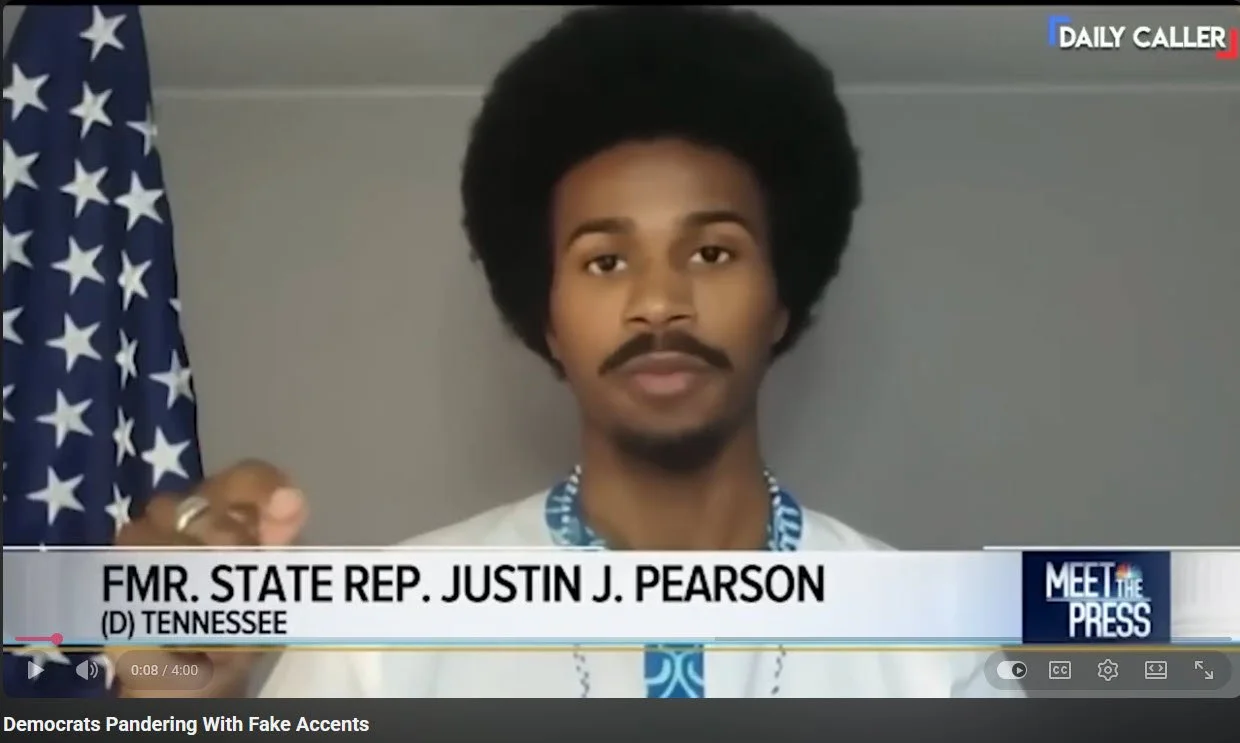
Barack Obama’s Fluid Code-Switching
The Context: Throughout his 2008 and 2012 campaigns, Obama frequently adjusted his speaking style between formal policy addresses, civil rights gatherings, and informal campaign stops.
The Shift: In front of mainstream audiences or formal debates, Obama relied on crisp Standard American English. In front of African American audiences or casual campaign diners, he dropped trailing -ing suffixes ("comin'", "goin'"), altered his pitch, and incorporated black rhetorical structures.
The Reaction: Because Obama moved fluidly between registers, linguists often praised his mastery of code-switching as a diplomatic asset. However, critics occasionally accused him of dialing up specific cadences for strategic political effect.
Joe Biden’s "Rust Belt" Cadence & Phrasing
The Context: Biden's long career in Delaware and Washington routinely collided with his campaign branding as "Scranton Joe."
The Shift: When addressing union halls, blue-collar workers, or Southern voters, Biden regularly ramped up colloquialisms ("ain't," "look, folks," "no malarkey"), adopting a rougher, working-class tone compared to his policy speeches in D.C.
The Reaction: While often seen as part of his established persona, slip-ups in these informal registers—such as his 2020 Breakfast Club interview—drew intense backlash for overreaching in an attempt to project cultural solidarity.
Kamala Harris (2024 Presidential Campaign)
During her 2024 presidential campaign, Vice President Kamala Harris became the primary focus of national debates regarding political code-switching and accent shifts. Multiple moments sparked intense scrutiny:
Detroit Labor Day Rally (September 2024): While speaking to a predominantly union crowd in Detroit, Harris adopted a distinct cadence and non-rhotic pronunciation (dropping trailing -r sounds), famously telling the crowd, "You betta thank a union member for the 8-hour work day!"
The Reaction: Political commentators and conservative media accused her of adopting an "inauthentic" accent to pander to Midwestern labor workers and Black voters. Linguists defended the moment as standard African American English (AAE) code-switching common among Black professionals.
Congressional Hispanic Caucus Institute Speech (September 2024): Addressing the CHCI Leadership Conference in Washington, D.C., Harris shifted her pitch and speech rhythm, leaning into heightened vocal inflections.
The Reaction: Critics dubbed the shift a forced effort to mirror her audience, while supporters argued she was simply matching the enthusiastic, conversational energy of the room.
Atlanta Rally (July 2024): During a campaign stop in Georgia, observers noted Harris adopting a broader Southern drawl compared to her standard debate voice.
Tim Walz & the Exaggerated "Midwestern Dad" Persona (2024)
The Context: Upon joining the 2024 Democratic ticket, Minnesota Governor Tim Walz was deployed heavily across swing states like Pennsylvania, Wisconsin, and Michigan.
The Shift: In national television appearances and stadium speeches, Walz noticeably amplified his rural Minnesota accent (slanted vowels, elongated "o" sounds) alongside exaggerated blue-collar colloquialisms ("mind your own dang business," "folks").
The Reaction: Supporters viewed it as genuine Midwestern charm that demystified progressive policies for working-class voters. Opponents framed it as a calculated, performative "folksy" caricature curated by campaign strategists to mask progressive record details.
Representative Jasmine Crockett (2023–2024)
The Context: U.S. Representative Jasmine Crockett (D-TX) rose to national prominence during televised House Oversight Committee hearings and campaign surrogate appearances.
The Shift: Crockett frequently alternates between strict legalese during formal questioning and sharp, urban Southern vernacular during exchanges with political opponents (such as her viral "bleach blonde, bad built, butch body" remark during a committee hearing).
The Reaction: Critics labeled the shifts as performative theater tailored to generate viral clips for social media algorithms. Crockett and her defenders maintained that her speech naturally reflects her Dallas constituency and authentic Black Southern identity, refusing to sanitize her voice for D.C. decorum.
Code-Switching vs. Campaign Pandering
Linguists point out that code-switching is a universal human behavior: people naturally mirror the syntax, tone, and vocabulary of the group they are communicating with to foster connection. However, in presidential and high-stakes politics, the line between authentic connection and perceived pandering comes down to execution. When the accent shift appears abrupt, exaggerated, or inconsistent with the candidate's usual public voice, voters tend to view it as calculated theater rather than genuine rapport.Hillary Clinton's accent evolution (1983–2015)This video traces the shifting regional inflections in Hillary Clinton's public speeches over three decades, illustrating how candidates adapt their spoken delivery across different regions and audiences.