Releasing Classified Information
Segment #882
During my time as a U.S. Navy officer stationed in London, I once misplaced a confidential (lowest classification) classified message. Even though the information it contained was already publicly accessible and arguably shouldn't have been classified in the first place, the loss triggered a massive internal crisis. The intensity of that search taught me a profound lesson about the weight of security protocols—a lesson that feels increasingly disregarded in today’s political climate.
By comparison, the modern era is marked by a constant stream of classified leaks coming from both military and political circles. These disclosures frequently appear to be calculated tools used by those on the left to shape and manipulate public opinion. Despite the potential for these actions to put lives at risk, politicians and high-level bureaucrats often remain shielded by legal protections that make it nearly impossible to hold them accountable for these breaches of trust.
In the United States, members of Congress—including Senator Richard Blumenthal—are subject to a unique set of legal and ethical rules regarding the handling of classified information. While the Speech or Debate Clause of the Constitution provides significant protection, it is not an absolute shield against repercussions.
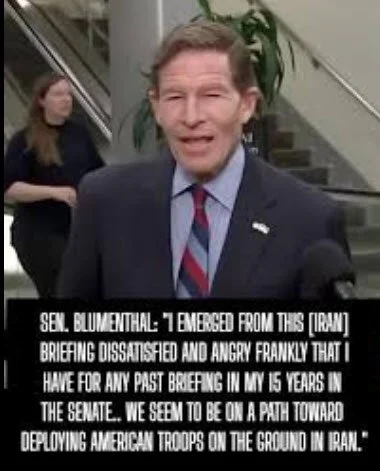
If a Senator were to release classified information without authorization, they could potentially face the following consequences:
Congressional Sanctions
The most immediate repercussions typically come from the Senate itself. Under Article I, Section 5 of the Constitution, the Senate has the authority to punish its own members.
Censure: A formal statement of disapproval that can damage a Senator’s political standing and influence.
Expulsion: The most severe internal penalty, requiring a two-thirds majority vote.
Committee Removal The Senate leadership can strip a member of their committee assignments, which is particularly significant for someone like Senator Blumenthal, who serves on high-profile subcommittees (like the Permanent Subcommittee on Investigations).
Ethics Investigation: The Senate Select Committee on Ethics can investigate violations of Senate rules, including the mishandling of sensitive data.
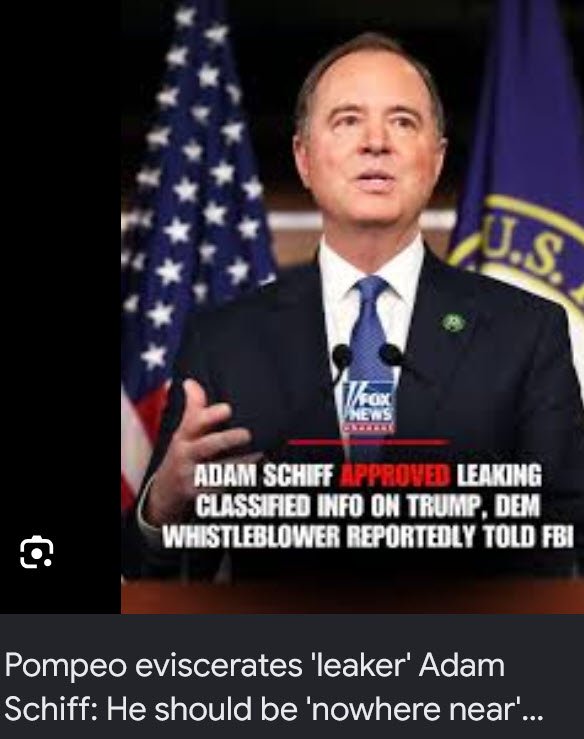
Legal and Criminal Penalties
While rare for sitting members of Congress, criminal prosecution is possible under certain statutes:
The Espionage Act (18 U.S.C. § 793): This is the primary vehicle for prosecuting the unauthorized disclosure of "national defense information."
18 U.S.C. § 798: Specifically criminalizes the disclosure of classified information related to cryptography or communication intelligence.
The "Speech or Debate Clause" Shield: This constitutional provision generally protects members from being prosecuted for "legislative acts." However, courts have historically debated whether the public release of classified documents (as opposed to discussing them on the Senate floor) constitutes a protected legislative act.
Administrative Actions
Security Clearance Access: While Senators do not hold "security clearances" in the traditional sense (their access is inherent to their constitutional office), the executive branch or Senate leadership can restrict their access to specific sensitive compartments of information or briefings if they are deemed a risk.
Current Context (2026)
As of early 2026, Senator Blumenthal has been active in releasing whistleblower documents related to ICE training cuts and has engaged in high-level inquiries regarding Binance and financial crimes. In these instances, his office typically emphasizes that the information was obtained through whistleblowers or oversight investigations rather than the unauthorized leaking of classified intelligence.
If an allegation were made that he leaked "classified" (as opposed to "sensitive" or "unreleased") info, the fallout would likely begin with a referral to the Senate Ethics Committee and a heated debate over the boundaries of the Speech or Debate Clause.
Senator Blumenthal
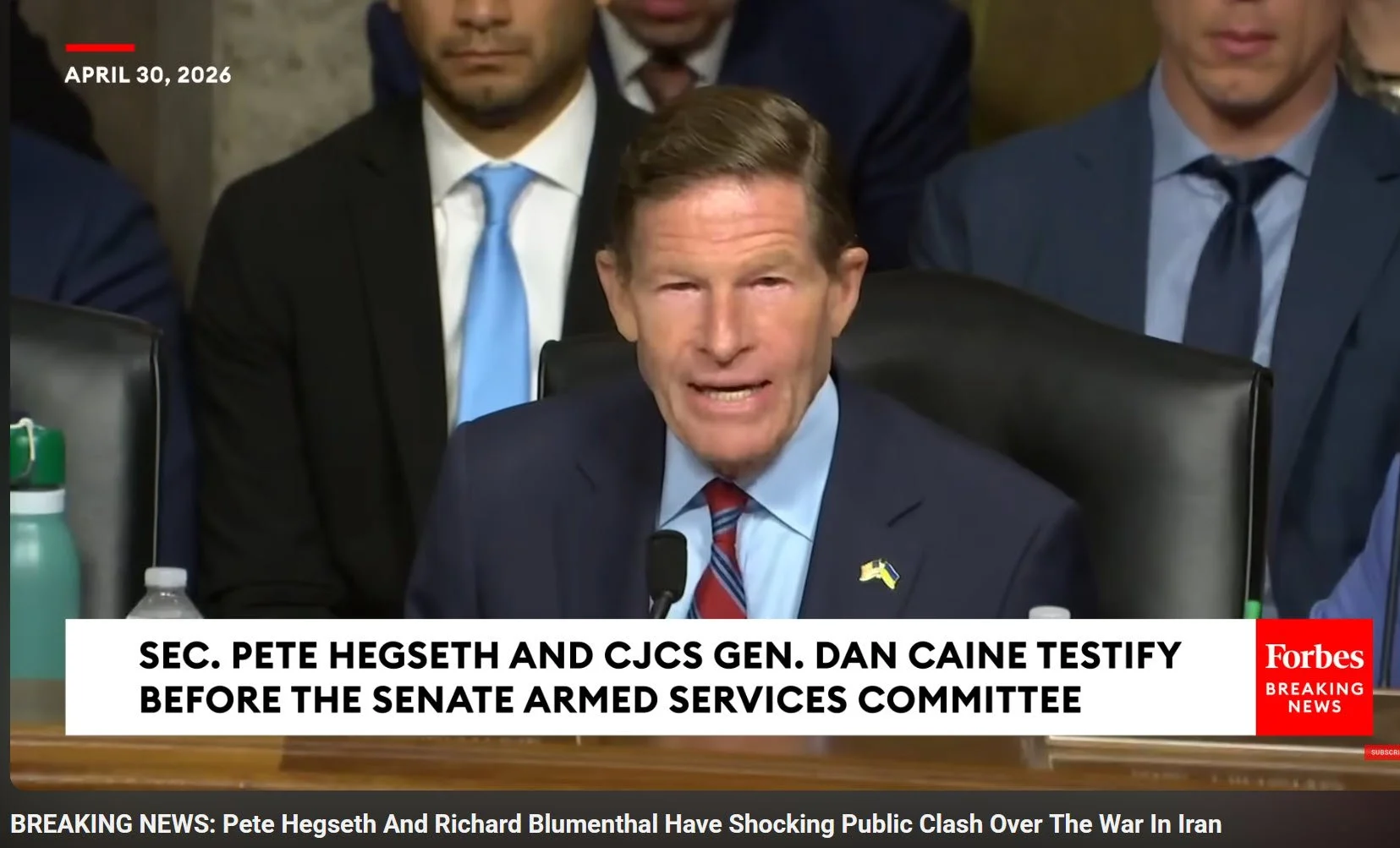
Questions regarding Senator Richard Blumenthal's character and integrity often center on documented discrepancies in his military service record and more recent allegations regarding his handling of financial disclosures and sensitive information.
Military Record Controversy
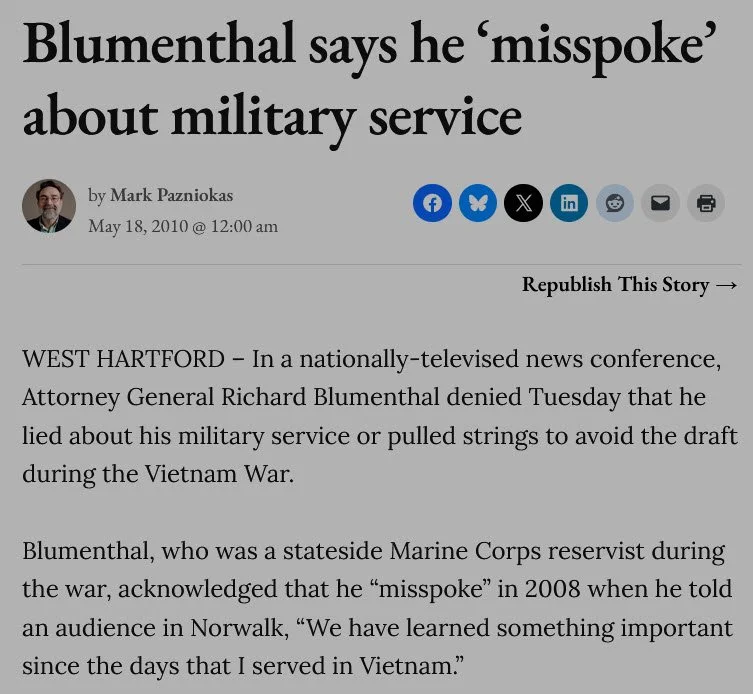
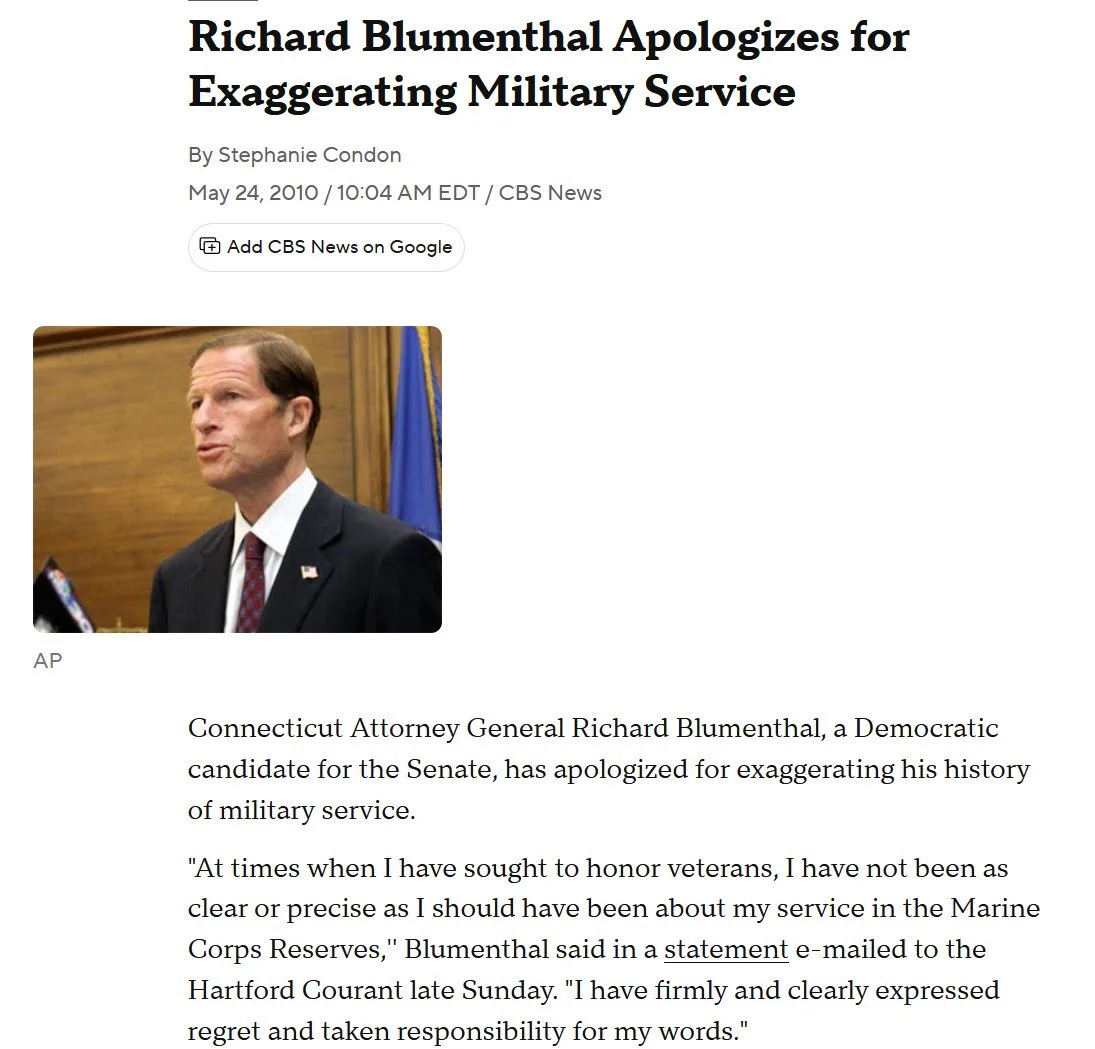
The most significant challenge to Blumenthal’s character arose during his 2010 Senate campaign when it was revealed that he had repeatedly mischaracterized his service during the Vietnam War.
The Claims: On multiple public occasions, Blumenthal stated or strongly implied that he had served in Vietnam. For instance, in 2008, he stated, "We have learned something important since the days that I served in Vietnam."
The Reality: Blumenthal never served in Vietnam. Between 1965 and 1970, he received five military deferments (educational and occupational). In 1970, he enlisted in the U.S. Marine Corps Reserve, where he served six years stateside. His unit was never deployed to Southeast Asia.
The Fallout: Major veterans' organizations, including the VFW, demanded apologies, accusing him of "stolen valor" by association. Critics argued that as the state's top law enforcement officer (then-Attorney General), he should be held to a higher standard of personal integrity. Blumenthal eventually stated he had "misspoken" and was "not clear or precise."
Allegations of Mishandling Information
Blumenthal has faced scrutiny regarding his role on the Senate Judiciary and Armed Services Committees, specifically regarding the potential for leaking or misusing non-public information.
Classified Information: Critics often point to his vocal publicizing of declassified intelligence reports (such as those regarding Russian interference) as a form of political signaling. While there is no formal conviction for leaking classified documents, political opponents argue that his aggressive use of "whistleblower" reports—sometimes before they are fully vetted by agencies—is a tactic used to circumvent standard security protocols for political gain.
Conflict of Interest (Robinhood Stock): In 2022, an ethics watchdog filed a complaint after it was discovered that Blumenthal’s family trust traded millions of dollars in Robinhood stock while he was publicly calling for a congressional investigation into the company’s trading practices. He also failed to disclose these transactions within the 45-day federal deadline, leading to accusations that he was using his legislative position to influence market conditions for personal profit.
ICE Training Documents: In February 2026, Blumenthal released internal memos detailing "drastic cuts" to ICE recruit training. Opponents characterized the release of these internal agency documents as a breach of institutional trust and a risk to operational security
Secret" ICE Policies: In January 2026, he publicized a whistleblower disclosure regarding a policy memo on Fourth Amendment applications for immigration arrests. Critics often view his pattern of releasing internal memos as a "legalized" form of leaking that undermines the executive branch's ability to maintain confidential internal deliberations.
Polymarket: In April 2026, Blumenthal launched an inquiry into the platform Polymarket, alleging it had become a "honeypot" for foreign intelligence and a marketplace for "national security secrets."
Character Criticisms Summary
The "bad character" argument against Blumenthal generally follows these points:
Dishonesty: The willingness to fabricate a war record for political advantage.
Hypocrisy: Calling for investigations into private companies (like Robinhood) while his family actively trades their stock.
Partisanship over Security: Accusations that he prioritizes damaging political opponents by releasing sensitive information or whistleblower claims over following established Senate ethics and security procedures.
Selective Transparency: Accusations that he selectively releases sensitive internal government information to the media whenever it serves a narrative against the current administration, effectively acting as a conduit for "authorized" leaks.
Stolen Valor Legacy: His 2010 military service controversy remains a foundation for critics to argue that his "public service" persona is built on a history of fundamental dishonesty regarding his record during the Vietnam era.
Institutional Subversion: Critics argue that by encouraging federal employees to bypass their chain of command and bring internal memos to his subcommittee, he is actively destabilizing the confidentiality required for government operations.