
Segment #1099
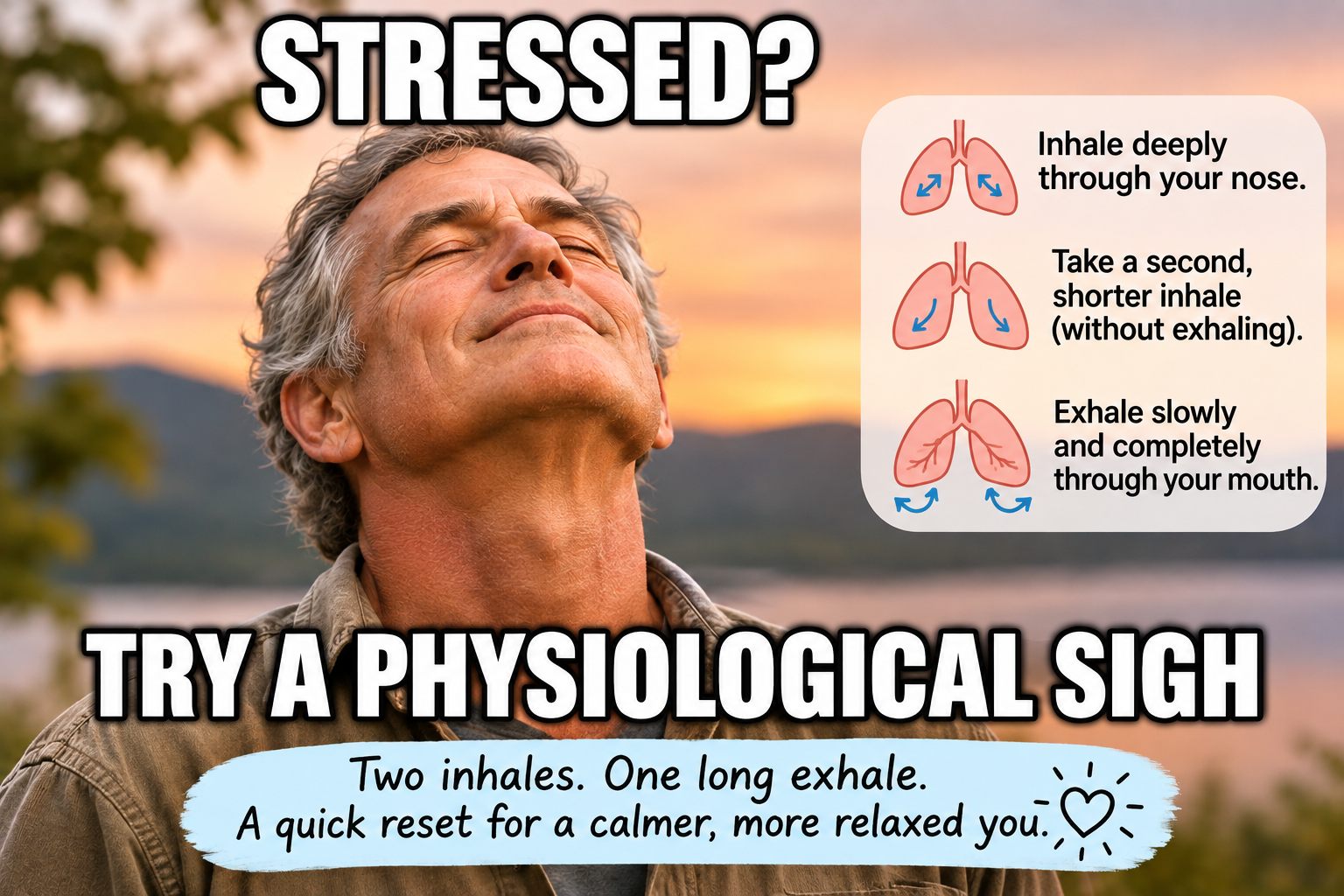
The physiological sigh is essentially a built-in biological mechanism for regulating the nervous system, maintaining lung function and reducing physiological stress. It is not simply a psychological relaxation exercise. It involves a complex interaction between the lungs, brainstem, heart and autonomic nervous system.
What makes it particularly interesting is that humans and other mammals perform sighs spontaneously, without conscious instruction. We are deliberately activating a mechanism that evolution has already provided.
What happens inside the lungs?
Simplified illustration of alveolar expansion during a physiological sigh.
The lungs contain hundreds of millions of microscopic air sacs called alveoli. During ordinary shallow breathing, some of these can become partially deflated.
The second inhalation increases lung expansion and can help recruit underinflated alveoli. The subsequent prolonged exhalation helps regulate ventilation.
This is one reason the body periodically sighs without our consciously deciding to do so.
The vagus nerve and the autonomic nervous system
Perhaps the most significant benefit of the physiological sigh for stress management involves the autonomic nervous system, which regulates many of the body's involuntary functions. Its two principal divisions, the sympathetic and parasympathetic nervous systems, perform complementary roles. The sympathetic nervous system activates the body's “fight or flight” response, increasing heart rate, heightening alertness, tightening muscles and accelerating breathing. Conversely, the parasympathetic nervous system promotes “rest and recovery,” slowing the heart rate, reducing physiological arousal, relaxing muscles and encouraging slower breathing.
The vagus nerve is a major communication pathway between the brain and internal organs, including the heart and lungs, and plays a central role in parasympathetic activity. During inhalation, the heart generally accelerates slightly, while during exhalation, parasympathetic influence increases and the heart generally slows. This naturally occurring phenomenon is known as respiratory sinus arrhythmia. By deliberately extending the exhalation, we may temporarily shift the balance of the autonomic nervous system toward a more relaxed physiological state. What makes this particularly fascinating is that conscious control of breathing provides a means of influencing bodily functions that are ordinarily beyond our direct voluntary control.
The brain actually has a sighing circuit
In 2016, researchers at UCLA and Stanford identified specialized neural circuits in mice that regulate spontaneous sighing.
These circuits involve the pre-Bötzinger complex, a region of the brainstem responsible for generating breathing rhythms.
Researchers identified two neuropeptides involved in triggering sighs:
Neuromedin B (NMB).
Gastrin-releasing peptide (GRP).
This research suggests that sighing is a distinct, biologically programmed function rather than simply a variation in normal breathing.
The research was published in Nature: The peptidergic control circuit for sighing.
Breaking the stress feedback loop
Stress can create a self-perpetuating physiological cycle. Conscious breathing provides a way to interrupt that cycle.
Unlike many autonomic functions, breathing is both involuntary and voluntarily controllable. This gives us an unusual opportunity to consciously influence a normally automatic system.
What the Stanford research actually established
The 2023 Stanford study involved 108 participants assigned to four different practices over approximately 28 days: cyclic sighing, involving a double inhalation followed by a prolonged exhalation; box breathing, using equal intervals of inhalation, breath-holding and exhalation; cyclic hyperventilation, emphasizing inhalation with breath retention; and mindfulness meditation, focusing on awareness without deliberately controlling breathing.
Participants practiced their assigned technique for just five minutes each day. Cyclic sighing produced particularly favorable results, demonstrating greater improvements in positive mood and reductions in resting respiratory rate compared with mindfulness meditation.
While these findings are promising, the study was relatively small and short-term. It did not establish that physiological sighing could cure anxiety disorders, substantially reduce cortisol levels, prevent cardiovascular disease or reliably terminate cardiac arrhythmias. Nevertheless, the research provides scientific support for the idea that a simple, consciously controlled breathing technique can positively influence both our psychological state and physiological stress response without medication, specialized equipment or significant time commitment. applications
The physiological sigh could potentially be useful in managing:
Acute anxiety and stressful situations.
Physical tension before sleep.
Public speaking and performance anxiety.
Emotional reactions during confrontation.
Stress-related elevations in heart rate.
Recovery following an emotionally demanding experience.
How quickly can it work?
A person may experience subjective relaxation within 15–30 seconds, although individual responses vary and the strongest clinical evidence concerns repeated daily practice.
The technique requires no equipment, medication or financial investment.
The broader significance is that breathing provides a direct, consciously accessible pathway into the autonomic nervous system. We cannot ordinarily command our heart to slow down or our stress response to diminish, but we can modify our breathing and potentially influence both through established physiological mechanisms.