Pallisades Fire Corruption and Fraud
Segment #740
FireAid Relief Funds Stolen
FireAid, a benefit concert initiative held in January 2025 to support victims of the Los Angeles wildfires (including the devastating Palisades and Eaton fires that destroyed thousands of homes and claimed 31 lives), raised over $100 million through ticket sales, sponsorships, and donations.
judiciary.house.gov +2
To date, $75 million has been distributed as grants to 188 nonprofit organizations (often referred to as NGOs), with an additional $25 million slated for allocation in 2026.
judiciary.house.gov +1
A recent interim report from the House Judiciary Committee (released January 6, 2026, and led by Republicans including Rep. Kevin Kiley and Chair Jim Jordan) alleges significant misuse and diversion of these funds away from direct aid to fire victims.
judiciary.house.gov +2
Key claims include:
Funds going to "left-leaning pet projects," such as $100,000 for Native American voter participation efforts (via the CA Native Vote Project) and $550,000 to political advocacy groups like the Black Music Action Coalition and My Tribe Rise.
judiciary.house.gov +1
Aid prioritized for "illegal aliens" (undocumented migrants), with organizations like Community Organized Relief Efforts (CORE) listing them as a vulnerable group for support in housing and homelessness prevention.
judiciary.house.gov +1
$100,000 to the Altadena Talks Foundation for podcasts about the wildfires, rather than tangible victim relief.
judiciary.house.gov +1
Over $500,000 allocated to nonprofit bonuses, salaries, consultants, and overhead costs across groups like the Neighborhood Legal Services of Los Angeles County ($92,000 for personnel), Los Angeles Regional Food Bank ($170,000 for labor), and California Charter Schools Association ($98,000 for salaries).
judiciary.house.gov +2
Other questioned grants went to entities like the NAACP Pasadena, Los Angeles Conservation Corps (for "fungus planting" projects), Pasadena Humane Society, LA Disaster Relief Navigator, and Community Clinic Association of Los Angeles County, with critics arguing these were not directly tied to fire victim recovery.
latimes.com +1
How Did These NGO’s Getting Fireaid Money Help Homeowners a Year Later
FireAid has distributed approximately $75 million (as of early 2026) of the over $100 million raised to 188 nonprofit organizations (often referred to as NGOs) focused on wildfire relief, recovery, and community support in areas affected by the Palisades and Eaton fires. An additional $25 million is planned for distribution.The official FireAid website (fireaidla.org) previously published a detailed list of grantees and grant amounts at fireaidla.org/grants, including progress reports. While a complete exhaustive list of all 188 is not reproduced in public sources here, the following are key nonprofits mentioned across official announcements, independent audits, media reports, and the House Judiciary Committee investigation:
Change Reaction — Received $2 million; provided direct cash grants (up to $15,000) to ~2,500 households for rent, transportation, and stabilization.
Community Organized Relief Efforts (CORE) — Received $250,000; focused on crisis response for underserved groups, including housing instability prevention.
Team Rubicon — Received $250,000; used for debris removal, flood prevention, and vegetation clearing.
Door of Hope — Received $100,000; provided financial assistance and housing support to displaced families.
California Native Vote Project — Received $100,000; supported civic engagement and voter participation efforts for Native American communities (criticized in some reports).
Altadena Talks Foundation — Received $100,000; funded podcasts and community information shows about wildfire recovery (highlighted as unrelated by critics).
Black Music Action Coalition — Part of $550,000 to advocacy groups.
My Tribe Rise — Received $200,000; community support for African American residents.
NAACP Pasadena — Received $100,000; local community relief efforts.
Neighborhood Legal Services of Los Angeles County — Used ~$92,000 for personnel/salaries.
Los Angeles Regional Food Bank — Used ~$170,000 for labor costs.
California Charter Schools Association — Distributed grants to charter schools; ~$98,000 for salaries.
LA Conservation Corps — Used ~$69,000 for labor; projects included environmental recovery (e.g., "fungus planting" criticized in reports).
Community Clinic Association of Los Angeles County — Used ~$29,000 for related costs.
LA Disaster Relief Navigator — Used ~$43,000 for operational costs.
Pasadena Humane Society — Animal care and shelter support.
Los Angeles Conservation Corps — Youth programs and environmental work.
Inclusive Action — Supported outdoor workers affected by fires.
MusiCares Foundation — Aid to music professionals (studios, medical bills).
Sweet Relief Musicians Fund — Support for affected musicians.
Music Health Alliance — Received $500,000; mental health and medical support for music industry.
YMCA of Metropolitan Los Angeles — Emergency childcare and mental health for displaced families.
Heal the Bay — Coastal contaminant testing.
Pasadena Senior Center — Aid to senior citizens.
Other categories include food banks, legal aid groups, arts recovery funds, and environmental organizations. FireAid emphasizes that grants went to vetted nonprofits providing direct services like cash assistance, food, shelter, mental health, and rebuilding. Critics (e.g., House Judiciary report) argue some allocations funded overhead, advocacy, or unrelated projects rather than direct victim aid.For the most accurate and up-to-date full list, refer to fireaidla.org or their published progress reports. Independent reviews (e.g., Latham & Watkins audit) found no misuse, while ongoing scrutiny continues.
The report describes this as "outright theft from suffering Americans," claiming donors were misled about funds going "directly to victims," and calls for further investigation.
judiciary.house.gov +2
Some public discourse on X ties the controversy to California Gov. Gavin Newsom, alleging his wife's involvement in related NGOs or state offices receiving grants (e.g., CalVolunteers), though the committee report doesn't directly implicate him.
FireAid organizers and supporters strongly deny any theft or improper use, stating all grants went to vetted nonprofits aligned with their mission of providing direct aid, legal support, mental health services, food distribution, and community rebuilding in affected areas like Pacific Palisades, Malibu, Altadena, and Pasadena.
No criminal charges have been filed as of now, but the committee has demanded more documentation from recipients, and public outrage on platforms like X continues to frame it as a scam where victims received little to no direct help.
Some survivors and journalists have echoed calls for FBI involvement or full accountability.
youtube.com +2
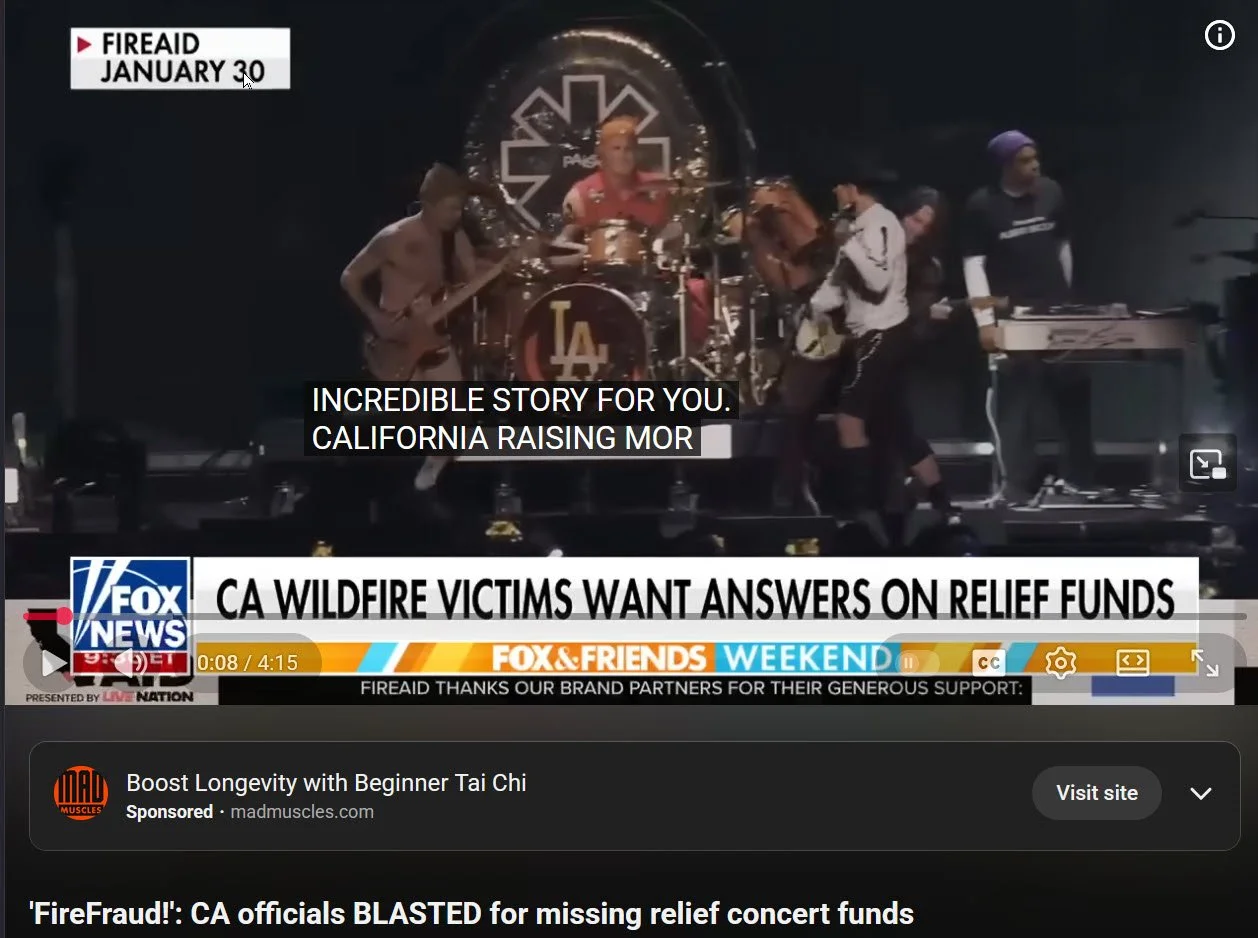
This is a clear example of what happens in a Dem controlled state with corrupt politicians and bureaucrats. As a homeowner, you are screwed and literally have few options other than taking your losses and moving. This is a totalitarian state.
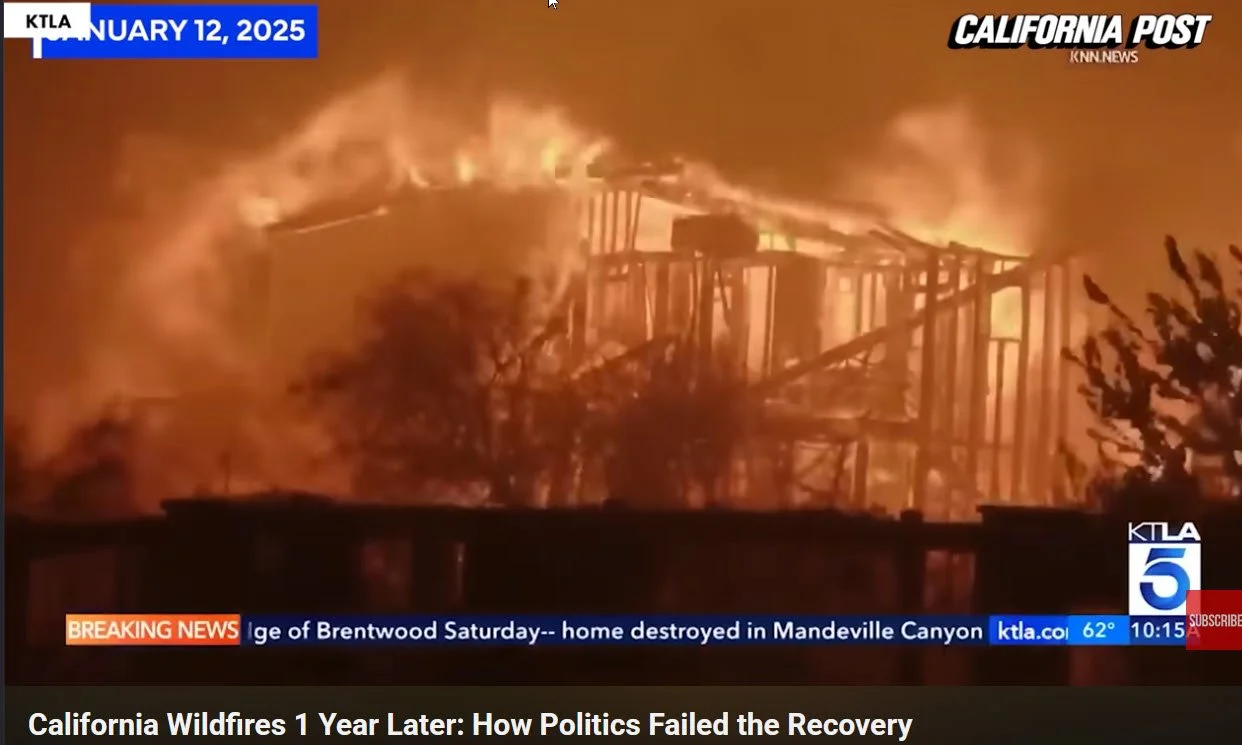
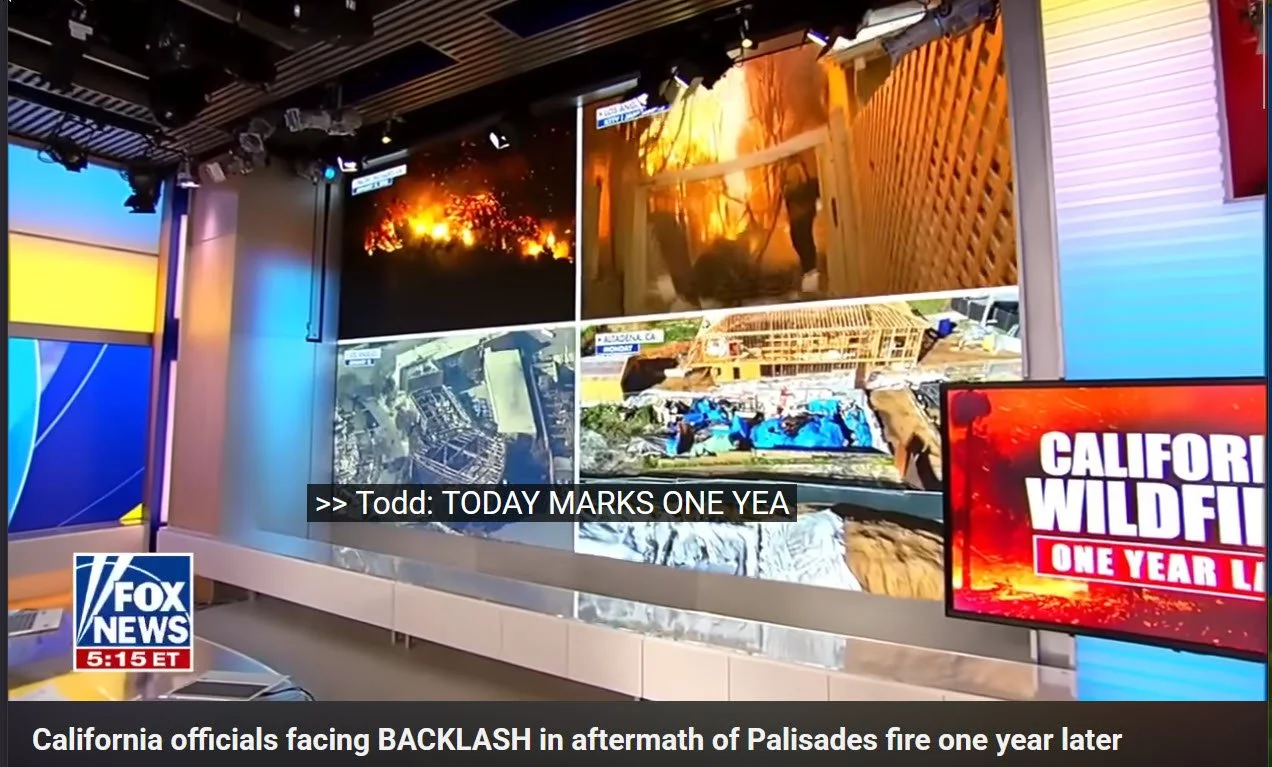
Joel Pollak, Opinion Editor of the California Post and a Pacific Palisades resident, takes viewers inside a neighborhood still scarred and seething one year after the catastrophic fires wiped it off the map. Street by street, Pollak exposes the devastation, the stalled rebuild, and the raw anger residents feel toward City Hall and Sacramento for what they call epic negligence. From empty reservoirs to vanished accountability, this is a blistering look at government failure as seen from the ashes. But amid the ruins, there are flickers of resilience — neighbors rebuilding, schools returning, and a battered community refusing to give up.
Many survivors of the January 2025 Palisades and Eaton Fires continue to report significant delays, underpayments, denials, and disputes with insurance companies, particularly State Farm (the largest insurer involved) and the California FAIR Plan (the state's insurer of last resort, covering many high-risk homes).Surveys from groups like the Department of Angels and Eaton Fire Survivors Network show that about 70% of insured survivors have faced delays or denials, with over 70-80% still displaced one year later. Rebuilding is slow—fewer than 4-10% of destroyed homes have been fully rebuilt—due in part to these insurance hurdles, rising costs, and permitting issues.Latest Claims DataAs of mid-November 2025 (the most recent detailed public figure from the California Department of Insurance), insurers had paid out over $22 billion on approximately 42,000 claims, with the vast majority partially or fully resolved. Payments have continued into 2026, but exact January 2026 totals aren't publicly updated yet on the Department's wildfire claims tracker.Ongoing Investigations and Issues
The California Department of Insurance is actively investigating State Farm for claims-handling practices (launched in 2025 and ongoing).
Los Angeles County has its own probe into State Farm.
The FAIR Plan faces multiple lawsuits and scrutiny over smoke damage claims, with accusations of lowball offers and
improper denials.
California Bureaucracy Delaying Permits with Regulations and Corruption
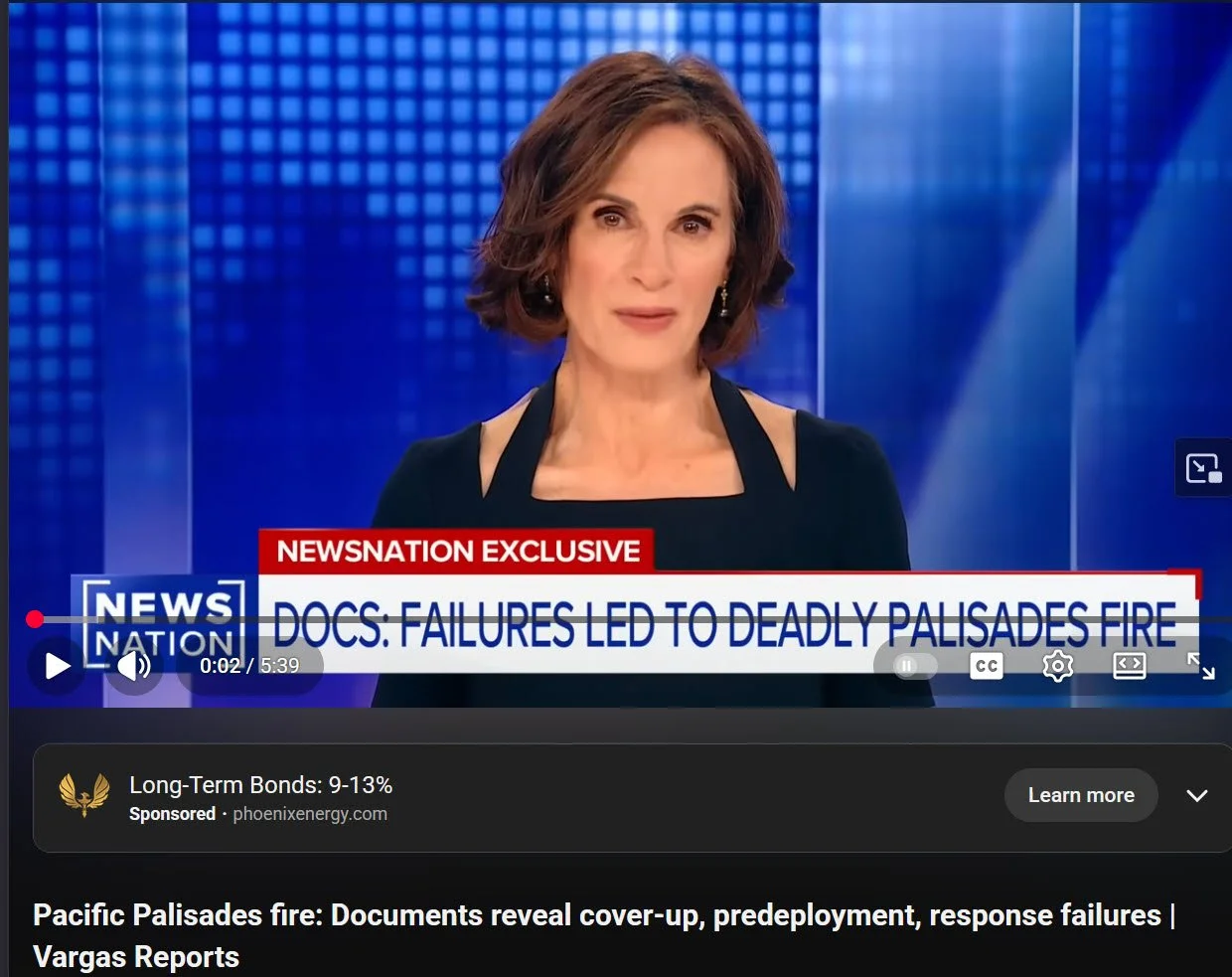
Yes, many survivors and local advocates in the Pacific Palisades and Altadena areas express frustration with the pace of rebuilding permits one year after the January 2025 Palisades and Eaton fires, often describing bureaucratic hurdles, understaffing, and complex requirements as obstacles. However, official data shows permitting is progressing faster than in previous California wildfires, thanks to state and local efforts to expedite the process—though overall rebuilding remains slow due to interconnected issues.Current Permitting Status (as of early January 2026)
Total applications received: ~3,600–6,300 across jurisdictions (Los Angeles City, LA County unincorporated areas like parts of Altadena, Malibu, Pasadena).
Permits issued: Over 2,600 total (e.g., LA County: 1,153–1,192 issued out of ~2,900 received; LA City: ~1,400–1,448 for Palisades-area addresses).
This represents roughly 40–50% of applications processed into permits.
Construction has started on 800–900 homes (500 in Eaton zones, ~370 in Palisades), with only a handful fully completed (fewer than 10–12 across all areas).
Comparisons and PaceOfficials note that permitting is occurring three times faster than pre-fire averages in the region (average ~85 days from application to issuance). It's also ahead of similar milestones in past disasters:
After the 2018 Camp Fire (similar scale), far fewer permits were issued at the one-year mark.
Debris removal was completed in record time (twice the volume of 9/11 Ground Zero, cleared in months).
Criticisms of Delays and ObstaclesSurvivors and some media/reports highlight:
Bureaucratic delays — Even with streamlining, revisions for code compliance, multiple departmental reviews, and understaffing slow things down (e.g., LA County averages longer than City of LA).
Unfulfilled promises — Early pledges for no/waved permit fees, ultra-fast processing, and preserving neighborhood character haven't fully materialized for everyone (e.g., fees still apply in some areas; Altadena has permits for <20% of destroyed homes).
Complex requirements — Upgrading to current wildfire-resilient codes (e.g., fire-hardening, defensible space) adds time and cost, even if beneficial long-term.
Community voices (e.g., on social media, local blogs) accuse regulators of "red tape" and inertia, contributing to ~70% of survivors still displaced.
State Efforts to AccelerateGovernor Gavin Newsom and regulators have actively worked to reduce obstacles:
Multiple executive orders suspending CEQA reviews, Coastal Act permits, and new 2026 building code changes (to avoid mid-process redesigns).
Allowed reuse of pre-2019 plans where applicable.
Fast-tracked approvals, dedicated staff, and tools like pre-approved design catalogs.
Extended price-gouging protections on materials/labor to January 2026.
Newsom has touted these as enabling faster recovery than past fires, while blaming broader slowdowns on insurance gaps, labor shortages (partly tied to federal policies), and surging costs—not deliberate "slow-walking."Rebuilding is inherently slow after major wildfires (historically, <40% of homes from 2017–2020 fires rebuilt by 2025 statewide). Primary bottlenecks now are beyond permits: insufficient insurance payouts, high construction costs ($800–$1,000+/sq ft), contractor availability, and personal decisions (many selling lots instead).If you're facing permit issues, resources like LA County's Rebuild Dashboard, the state's recovery site, or advocacy groups (e.g., Altadena Collective) can help navigate. Complaints about specific delays can go to local building departments or the Governor's office for escalation. Recovery is uneven, but momentum is building into 2026.
Insurance Companies Lowball and Slow Walk Claims
Yes, this is a widespread and well-documented issue for survivors of the January 2025 Palisades and Eaton Fires. Many homeowners are discovering that their insurance payouts fall far short of the actual costs to rebuild, due to a combination of underinsurance, lowball estimates from adjusters, surging post-disaster construction costs, and disputes over coverage details.Key Reasons for Insufficient Payouts
Underinsurance — Many policies were based on pre-fire replacement cost estimates that didn't account for recent inflation in building materials/labor or the massive demand surge after destroying 16,000 structures. Rebuilding costs in areas like Pacific Palisades often exceed $800–$1,000 per square foot (or $1M+ per home), while average policy limits were lower—e.g., one survey showed AAA policyholders' coverage averaging 41% below field adjusters' rebuild estimates ($867K vs. higher contractor bids of ~$928K).
Lowball Offers and Claims Practices — Survivors frequently report "lowball" estimates, burdensome documentation requirements, rotating adjusters, and denials/low payments on items like code upgrades or debris removal. Insurers like State Farm and the California FAIR Plan face particular criticism (and ongoing investigations/lawsuits) for these practices.
Post-Disaster Inflation — Demand for contractors and materials has driven costs up significantly since the fires, exacerbating gaps in older policies.
Impact on RebuildingAs of the one-year anniversary (January 7, 2026), fewer than a dozen homes have been fully rebuilt across the affected areas, with streets still lined with empty lots. A recent survey by nonprofits like Department of Angels and Eaton Fire Survivors Network found:
~70% of survivors remain displaced.
Thousands can't start rebuilding due to fear of running out of money mid-project.
Many are liquidating retirement savings, taking loans, or facing potential homelessness.
Insurers have paid out over $22 billion total (as of late 2025 data; no major January 2026 update yet), but survivors and advocates say "billions more" are needed to close the gaps.Recent DevelopmentsNew legislation proposed in early 2026 aims to address underinsurance and delays (e.g., better transparency on replacement costs, penalties for lowballing). Governor Newsom has expanded mortgage relief programs and pushed for insurance reforms.If this affects you or someone you know, options include:
Filing a complaint with the California Department of Insurance (they've recovered additional millions via interventions).
Consulting a public adjuster or attorney specializing in wildfire claims.
Exploring state aid like expanded CalAssist funds.
Recovery is slow and frustrating for many, but advocacy groups report some progress in disputed claims after pressure.
Private Investors and Corporations are Buying up Eaton/Pallisades Propeties
Yes, there is significant investor and corporate activity in purchasing burned lots and properties in the Pacific Palisades (Palisades Fire) and Altadena (Eaton Fire) areas one year after the January 2025 fires. However, the buyers are primarily domestic investors, developers, and corporations, not foreign ones based on available reporting.Key Findings on Property PurchasesRecent analyses (primarily from Redfin, Los Angeles County records, and local news as of late 2025/early 2026) show:
Investors purchased roughly 40-44% of sold vacant lots in the hardest-hit ZIP codes (Pacific Palisades 90272, Altadena 91001, and parts of Malibu affected by the Palisades Fire spillover).
In Pacific Palisades: About 40% (e.g., 48 of 119 lots sold in Q3 2025).
In Altadena/Eaton burn scar: About 44%, with some reports noting 8-14 companies accounting for 22-40% of corporate buys.
Overall, 44% of homes/lots sold in both burn zones went to corporate entities (LLCs, Inc., etc.), roughly twice the national average for corporate homeownership.
Many sales are at discounted "fire-sale" prices due to dropping property values (e.g., 33% drop in Palisades averages), insurance shortfalls, foreclosures (up significantly post-fire), and owners unable to rebuild.
Buyers include developers planning to rebuild and flip larger homes, as well as some holding lots speculatively. Names like Black Lion Properties, Iron Rings Altadena, and others appear in records, but these are U.S.-based.
Regarding Foreign Investors
Mainstream sources (Los Angeles Times, ABC7, USA Today, Redfin reports) do not report widespread foreign purchases in Palisades or Eaton areas specifically.
Rumors and social media posts (e.g., on Reddit and Facebook) speculate about foreign buyers (including Chinese investors or ultra-rich internationals) snapping up land, often framing it as a "land grab." Some tie this to nearby Malibu properties or broader California trends, but no verified data links significant foreign investment directly to these burn zones.
One LA Times article notes opacity due to LLCs: "It could be foreign entities... we really have no way of knowing," but this is speculation amid community concerns.
Similar patterns occurred after past California wildfires (and in Maui), where domestic investors dominate, though foreign buyers are active in luxury California real estate generally.
Community Impact and ConcernsSurvivors and locals worry this shift could change neighborhood character—fewer original residents returning, larger/more expensive rebuilds, potential loss of affordability (especially in historic Altadena communities). Movements like "Altadena Not for Sale" and "Protect the Palisades" highlight resistance, but many owners (elderly, underinsured) sell due to financial pressure.Rebuilding remains very slow (only a handful of homes completed), with hundreds of lots still empty or for sale.If you're concerned about a specific property or area, checking Los Angeles County Assessor records or consulting a local realtor can provide more details. Advocacy groups like the Eaton Fire Collaborative continue pushing for protections against speculative buying.
Comparison Hawaii and Pallisades Fires
Yes, there are notable similarities in how insurance companies have responded to the 2025 Palisades and Eaton fires in California and the 2023 Maui wildfires (primarily the Lahaina fire) in Hawaii. Both events have drawn widespread criticism from survivors for delays in claims processing, underpayments or lowball offers that fail to cover rebuilding costs, outright denials, and broader challenges like underinsurance amid rising post-disaster expenses.
trialguides.com +4
These issues have prolonged displacement, hindered recovery, and prompted regulatory scrutiny, lawsuits, and legislative reforms in both states.Key Similarities in Claims Handling
Delays in Processing and Payouts: In California, about 70% of insured survivors from the Palisades and Eaton fires report significant delays, with some claims still unresolved a year later, often involving rotating adjusters, excessive documentation demands, and slow inspections.
lapost.us +3
Similarly, Maui wildfire victims have faced prolonged waits for settlements, with payments from a $4 billion global agreement delayed beyond initial deadlines (e.g., no distributions before the end of 2025), and attorneys arguing over allocations amid ongoing litigation.
youtube.com +1
In both cases, delays have been attributed to complex damage assessments (e.g., smoke and structural evaluations) and insurers' tactics to minimize payouts.
trialguides.com +1
Underpayments and Lowball Offers: California survivors frequently cite "lowballed" estimates that undervalue rebuilding costs, exacerbated by inflation in materials and labor—leading to payouts insufficient for full recovery, with only a fraction of homes rebuilt a year on.
latimes.com +2
Maui victims have reported similar underpayments, where insurance settlements fall short of actual rebuilding needs due to underinsurance (policies not accounting for surged costs) and disputes over coverage, prompting warnings from advocacy groups about accepting inadequate offers.
uphelp.org +1
In Hawaii, insurers had paid out $2.34 billion on over 10,000 claims by mid-2024, but many survivors still face gaps.
legaldive.com
Denials and Disputes: Denials are common in both, often over items like smoke damage or code upgrades. In California, this has led to investigations into major insurers like State Farm for systemic practices.
counsel.lacounty.gov +1
Maui has seen comparable denials and underpaid claims, with public adjusters and legal aid highlighting insurers' tendencies to "delay, deny, and defend" values.
trialguides.com +1
Underinsurance and Market Strain: Both disasters revealed widespread underinsurance, where pre-fire policy limits don't match post-disaster realities. In California, this ties to the state's insurance crisis, with high-risk areas facing non-renewals and reliance on the FAIR Plan.
independent.org
Hawaii's market has similar issues, with escalating premiums, limited reinsurance, and victims struggling to rebuild as costs exceed coverage.
puc.hawaii.gov
This has fueled investor buyouts in distressed areas for both events, though more prominently reported in Maui initially.
Regulatory and Broader Responses
Investigations and probes have been launched in both: Los Angeles County and California's Insurance Department are scrutinizing claims handling for the 2025 fires,
foxla.com +1
mirroring Hawaii's oversight through its Insurance Division and court rulings on settlements to bar insurer clawbacks.
legaldive.com +1
Legislative pushes: California has introduced bills to penalize delays (e.g., automatic interest on late payments) and address underinsurance.
latimes.com +2
Hawaii has explored wildfire recovery funds and liability reforms, drawing lessons from California's models (e.g., $21B fund) to expedite payouts and reduce litigation burdens, which can consume 30% of settlements.
puc.hawaii.gov
Utility involvement adds parallels, as both fires were linked to power lines (Eaton to Southern California Edison, Lahaina to Hawaiian Electric), leading to massive settlements ($4B in Hawaii, ongoing in California) and voluntary payout programs to avoid court.
independent.org +2
While the scale differs (Maui's insured losses around $3-4B vs. California's $25-45B for Palisades/Eaton), the patterns of survivor frustration and systemic insurance shortcomings are strikingly consistent, often amplified by climate-driven wildfire risks.
independent.org +1
Advocacy groups in both states recommend filing complaints with regulators (e.g., California's Department of Insurance or Hawaii's Insurance Division) to push for resolutions.